



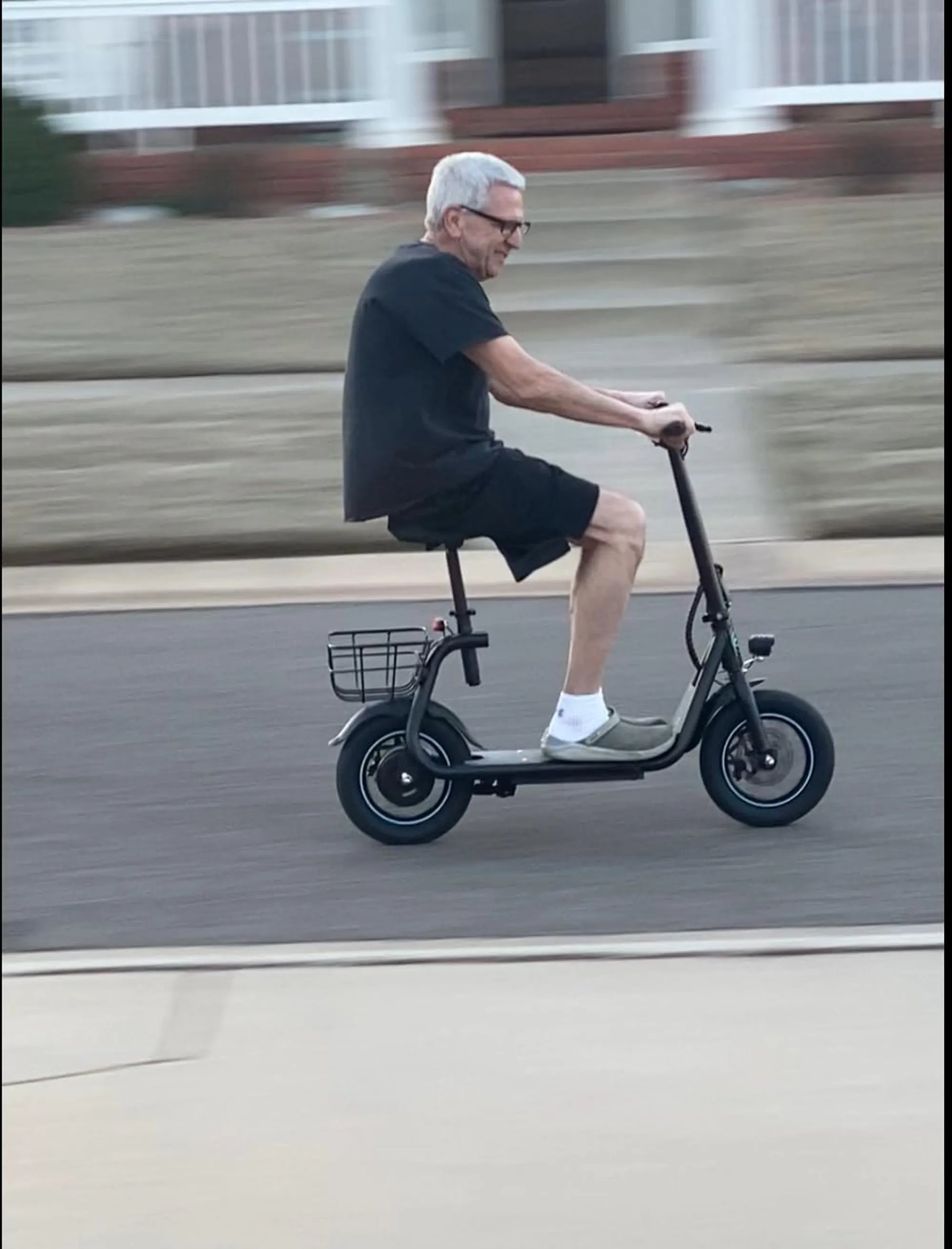
Introduction: Why Big Boy Electric Scooters Are Redefining Urban Mobility
Forget the lightweight, underpowered scooters of the past. A new class of electric personal transportation is here, built for riders who demand more: more power, more stability, more range, and more durability. This guide is dedicated to Big Boy Electric Scooters, a category defined by high weight capacities, robust motors, extended-range batteries, and larger, more stable frames.
These machines answer a clear market need. They cater to heavier riders, commuters carrying cargo or laptops, and anyone who values a planted, confident ride over minimal portability. The demand is driven by a desire for genuine utility and performance that stands up to daily, real-world use. Brands like Gyroor have responded by engineering scooters that prioritize safety and real-world performance, trusted by over 100,000 riders across North America and Europe.
This guide will decode the specifications that matter, compare performance tiers, and provide the insights you need to choose a scooter that delivers on the promise of power without compromising on safety or longevity. You will learn how motor wattage translates to hill-climbing prowess, why frame design is critical for durability, and how to interpret battery specs for your actual riding needs.
What Makes a Scooter a "Big Boy" Model? Key Specifications Decoded
Not all electric scooters are created equal. Moving from a standard commuter model to a high-performance "Big Boy" scooter involves a significant step up in several core engineering areas. These specifications aren't just numbers on a page; they directly dictate the scooter's capability, safety envelope, and suitability for your lifestyle.
The primary differentiators are motor power, weight capacity and frame construction, and battery capacity coupled with range. A true Big Boy scooter excels in all three areas, offering a balanced package rather than maximizing one spec at the expense of others. Understanding these elements is the first step to making a smart purchase.
Motor Power: From 500W to 2000W+ – What It Means for Your Ride
Motor power, measured in watts (W), is the engine of your scooter. It determines acceleration, hill-climbing ability, and top speed. A typical commuter scooter might feature a 250W to 350W motor, adequate for flat terrain at moderate speeds. Big Boy Electric Scooters start at a significantly higher baseline, often 500W for single-motor models and ranging up to 1000W, 1600W, or even 2000W+ for dual-motor configurations.
Higher wattage translates directly to torque. A 1000W motor can comfortably tackle sustained inclines of 15-20%, a common grade in many cities, without a dramatic loss of speed. Dual-motor setups provide exceptional torque for steep hills (25%+) and off-road conditions, offering all-wheel-drive traction. When evaluating power, consider your local terrain; more watts mean less strain on the motor during acceleration and climbing, which also contributes to longer component life.
Weight Capacity & Frame Design: Built for Stability and Durability
This is a defining characteristic. While many standard scooters max out at 220-265 lbs, Big Boy models are engineered to support 300 lbs or more. This isn't just about accommodating a heavier rider; it's about the engineering margin of safety. A scooter rated for 330 lbs is built with a more robust frame, thicker deck, reinforced stem, and stronger folding mechanisms than a 220-lb model.
The frame material is paramount. Aerospace-grade aluminum alloys are standard for high-quality models, offering an optimal strength-to-weight ratio. The design focus shifts from ultra-portability to structural integrity. A wider deck provides better footing, and a longer wheelbase enhances stability at higher speeds. This durable construction isn't just for weight; it means the scooter can handle the stresses of daily use, curb jumps, and uneven pavement, translating to long-term reliability and cost savings.
Battery & Range: Going the Distance on a Single Charge
Power demands a substantial energy source. Big Boy scooters require larger, higher-voltage battery packs. Look for 48V or 52V systems as a starting point, compared to the 36V common in entry-level models. Capacity is measured in watt-hours (Wh) or amp-hours (Ah). A higher number means more potential range.
However, advertised range is often a best-case scenario. Real-world range is heavily affected by rider weight, terrain, speed, and temperature. A rider at the scooter's maximum weight capacity may see a 20-30% reduction in range. This is why Big Boy scooters integrate large, UL-certified battery packs—to ensure there's enough capacity in reserve for real-world conditions. Safety is critical; UL-certification, as used by Gyroor, means the battery pack has passed rigorous testing for electrical, mechanical, and fire safety, a non-negotiable feature for high-power devices.
Top Considerations When Choosing Your High-Power E-Scooter
Selecting the right Big Boy Electric Scooter involves matching its capabilities to your specific needs and environment. It's a balance of performance, practicality, and legality. A scooter perfect for trail riding may be illegal or impractical for a city commute, and vice versa.
This decision-making process should be guided by your primary use case, an unwavering commitment to safety features, and a clear understanding of local laws. Overlooking any of these areas can lead to frustration, unnecessary risk, or legal issues. Let's break down these critical considerations.
Intended Use: Commuting, Off-Road, or Recreation?
Your daily ride dictates the ideal spec sheet. For urban commuting, prioritize a balance of power (500W-1000W), real-world range (25+ miles), and some portability (a reliable folding mechanism). Features like integrated lighting, a clear display, and good water resistance are essential.
For off-road or trail use, power and suspension take center stage. Look for dual motors (1000W+ total), high-ground clearance, full suspension systems (spring or hydraulic), and pneumatic, off-road tires with deep treads. Portability is less of a concern than sheer durability. For recreational cruising, you might prioritize comfort features like a wide deck, superior suspension, and a smooth power delivery over outright top speed.
Safety & Reliability: Non-Negotiable Features for Powerful Rides
With greater power comes a greater responsibility to prioritize safety. Key features are not optional extras; they are the foundation of a trustworthy scooter. First is the braking system. A dual or triple braking system—combining a front and rear disc brake with an electronic (regenerative) brake—is standard for high-performance models, providing confident stopping power in all conditions.
Next is water and dust resistance. An IPX5 rating, which Gyroor designs to, means the scooter can withstand low-pressure water jets from any direction. This makes it suitable for riding in rain and through puddles, a practical necessity for daily transportation. Finally, lighting: bright front and rear LEDs are vital for visibility, with additional side or deck lighting being a valuable bonus for night riding.
Local Laws and Portability: Navigating Regulations and Storage
Legality is a crucial, often overlooked, factor. Regulations for electric scooters vary wildly by city, state, and country. Common restrictions include maximum speed limits (often 15-20 mph on public roads), motor power limits (sometimes capped at 750W), and requirements for helmets, lights, and bells. Some jurisdictions do not allow scooters on sidewalks. Always check your local laws before purchasing; a 2000W off-road beast may be restricted to private property.
Portability is a practical trade-off. A true Big Boy scooter, with its larger battery and frame, will weigh 55 lbs to 80 lbs. While most feature a folding stem, lifting it regularly into a car trunk or carrying it up stairs is a significant physical task. Consider where you will store and transport it. If you need to combine power with true portability, look for models that optimize the design for a manageable weight without sacrificing core performance specs.
Performance Showdown: How Big Boy Scooters Compare
To visualize the leap in capability, it's helpful to compare electric scooters across different performance classes. The following table outlines typical specifications for three broad categories: the Standard Commuter, the Performance Model, and the true Big Boy Electric Scooter. This comparison uses generalized data to illustrate the progression, with Gyroor's high-performance models exemplifying the engineering found in the top tier.
| Feature | Standard Commuter | Performance Model | "Big Boy" / High-Performance |
|---|---|---|---|
| Typical Motor Power | 250W - 350W | 500W - 800W (Single) | 1000W+ (Single or Dual) |
| Max Speed | 15 - 18 mph | 22 - 28 mph | 30 - 40+ mph |
| Real-World Range | 10 - 15 miles | 20 - 28 miles | 30 - 50+ miles |
| Weight Capacity | 200 - 220 lbs | 265 - 285 lbs | 300 - 330+ lbs |
| Battery System | 36V, 7.8Ah-10Ah | 48V, 12Ah-15Ah | 48V/52V, 18Ah-23Ah+ |
| Key Use Case | Short, flat urban trips | Longer commutes, mild hills | Heavy-duty commuting, cargo, hills, off-road |
| Braking System | Electronic + Drum | Disc + Electronic | Dual Disc + Electronic |
| Suspension | Basic or none | Front spring or dual basic | Full hydraulic or high-end spring |
As the table demonstrates, the Big Boy category is not just an incremental improvement; it represents a different class of vehicle designed for more demanding applications and users.
Maximizing Your Investment: Maintenance and Warranty Insights
A high-performance electric scooter is a significant investment. Protecting that investment requires proactive maintenance and the security of a strong warranty. Neglecting basic care can lead to premature wear, reduced performance, and safety issues, while a weak warranty leaves you financially exposed to potential repairs.
Adopting simple, regular maintenance habits will extend the life of every component, from the battery to the brakes. Furthermore, understanding the scope and limitations of your warranty before you buy is as important as comparing motor power. Let's explore how to keep your scooter running at its peak and ensure you have support when needed.
Essential Maintenance for Peak Performance and Longevity
Regular maintenance is straightforward but critical. First, maintain proper tire pressure. Under-inflated pneumatic tires increase rolling resistance (killing your range), make the scooter harder to control, and are more prone to punctures. Check pressure every few weeks.
Second, inspect and adjust your brakes periodically. Mechanical disc brakes may need caliper alignment and pad replacement as they wear. Listen for scraping sounds and test braking response regularly. Third, check and tighten critical bolts, especially on the folding mechanism, stem, and handlebars, using the provided tools. Vibration from riding can loosen them over time. Finally, always follow proper battery care: avoid draining it to 0%, don't leave it fully charged for weeks on end, and store it in a cool, dry place.
The Importance of a Strong Warranty and Accessible Support
The warranty is your safeguard against manufacturing defects. For a complex device with electrical, mechanical, and battery systems, a comprehensive warranty is essential. Look for a minimum of a 1-year warranty that covers the core components: the battery (often with a separate cycle-based guarantee), the motor, and the electronic controller.
Accessible customer support is equally important. The ability to speak with a knowledgeable support team, access detailed manuals, and source genuine replacement parts defines the post-purchase experience. Brands like Gyroor set a benchmark by offering a reliable 1-year warranty and US-based customer support, ensuring riders have a direct line for troubleshooting and claims, which is crucial for maintaining confidence in a high-value, high-performance product.
Frequently Asked Questions (FAQ) About High-Capacity E-Scooters
Q: Are "Big Boy" electric scooters legal to ride on public roads?
A: Legality depends entirely on local regulations. Many "Big Boy" models, especially those with motors exceeding 750W or top speeds over 20 mph, may be restricted to private property or designated off-road areas in many jurisdictions. Always consult your city and state vehicle codes before riding on public roads, bike lanes, or paths. Compliance with helmet and lighting laws is also mandatory.
Q: How much slower will my scooter go if I'm at its maximum weight capacity?
A: You will experience a noticeable reduction in performance. Acceleration and hill-climbing ability will be most affected, as the motor must work harder. Top speed may also be slightly lower. The most significant impact is on range, which can decrease by 20-30% compared to the advertised range, which is typically calculated with a ~165 lb rider. For optimal performance, choose a scooter with a weight capacity at least 50 lbs above your weight.
Q: Is the IPX5 water resistance on Gyroor scooters enough for rain?
A: Yes. An IPX5 rating means the scooter's electronics are protected against low-pressure water jets from any direction. This makes it perfectly suitable for riding in rainy conditions and through occasional puddles. However, it is not waterproof or submersible. You should not ride through deep standing water, submerge any part of the scooter, or use a pressure washer to clean it.
Q: How often should I charge the battery, and how long will it last?
A: For daily use, charge after each use or when the battery drops to 20-30%. Avoid frequently draining it to 0%. For storage longer than a month, store the battery at a 40-60% charge in a cool, dry place. A quality UL-certified lithium-ion battery, like those used by Gyroor, is typically rated for 500+ full charge cycles before its capacity reduces to about 80% of its original state. With proper care, this can translate to several years of regular use.
Q: Can I carry cargo or a passenger on a high-weight-capacity scooter?
A: While the scooter may physically support the combined weight, it is strongly discouraged. Electric scooters are designed for a single rider. Adding a passenger drastically alters the center of gravity and balance, making the scooter extremely unstable and dangerous to operate. Carrying cargo is possible but should be secured in a backpack or a specially designed cargo rack (if available), ensuring it does not impede your ability to stand, balance, or operate the controls safely.
Conclusion: Finding the Perfect Balance of Power, Safety, and Value
Choosing the right Big Boy Electric Scooter is an exercise in matching robust engineering to your specific needs. It's about understanding that true performance is a holistic measure—not just top speed, but the combination of reliable power, assured safety, durable construction, and practical range. The most exhilarating scooter is worthless if it's unsafe, unreliable, or illegal where you ride.
Prioritize the fundamentals: a motor with ample power for your terrain, a frame and weight capacity that provide a safety margin, a large UL-certified battery from a reputable brand, and essential safety features like IPX5 water resistance and dual braking systems. These elements, backed by a strong warranty and accessible support, form the foundation of a worthwhile investment that will deliver miles of reliable service.
Remember, the ultimate goal is enhanced mobility without compromise. By focusing on certified safety and proven reliability, you invest in confidence on every ride. Explore engineering built for real-world demands where power is balanced with responsibility.
Ready to experience power engineered for performance and peace of mind? Browse the full Gyroor collection at gyroorboard.com.
Will Electric Scooters Become Legal in UK? Navigating the Path to Legalisation
Electric Scooters in Israel: The Future of Urban Mobility