



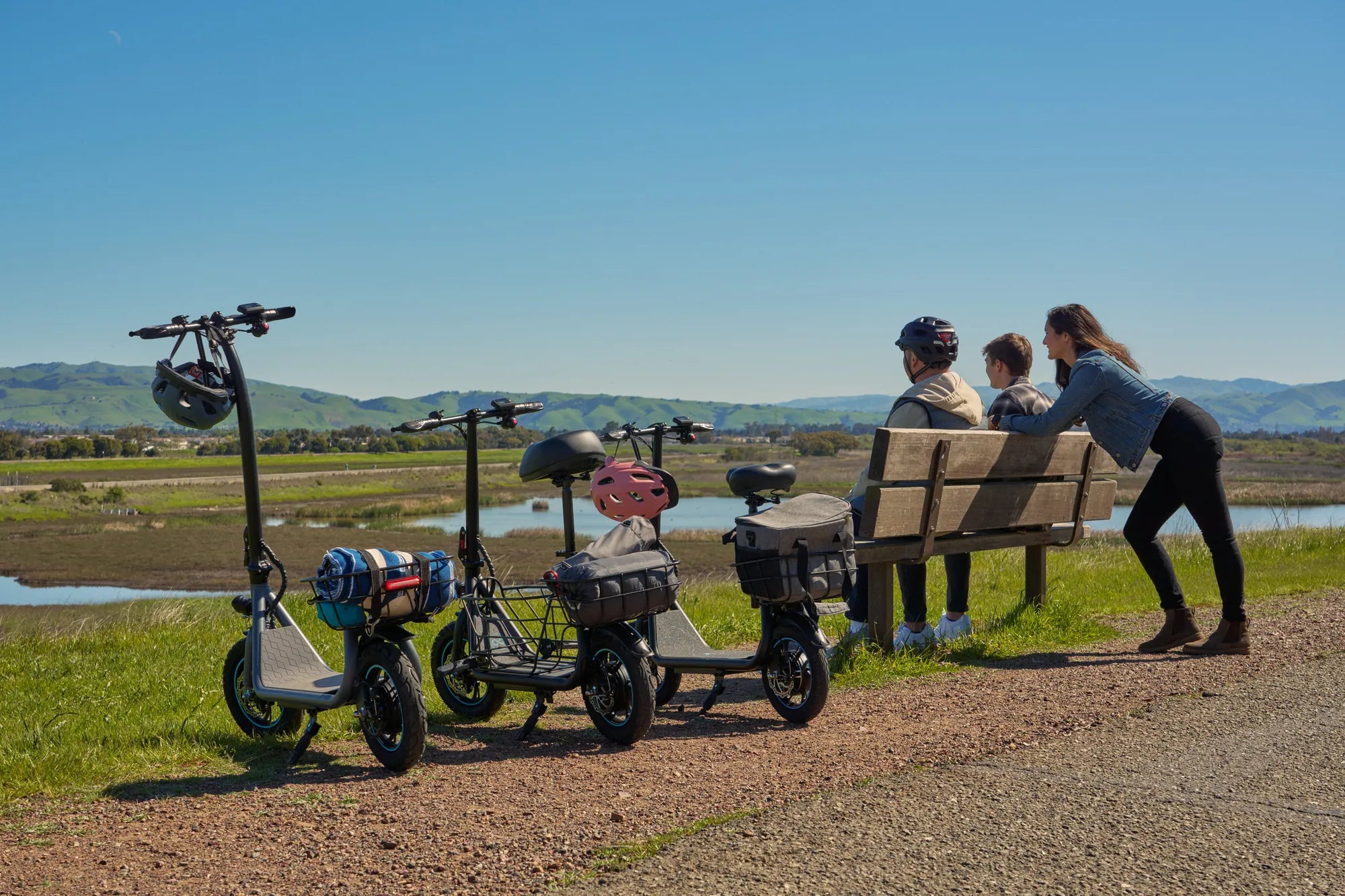
A parent's adult electric scooter is an object of fascination for many children, sparking the inevitable question: "Can I have a turn?" The direct answer, supported by safety data, engineering specifications, and legal frameworks, is a firm no. Adult electric scooters are designed for adult physiology, reaction times, and cognitive risk assessment. This article provides a comprehensive, evidence-based analysis of why mixing kids and adult e-scooters is a high-risk proposition, outlines the non-negotiable safety considerations if you're still contemplating it, and presents smart, age-appropriate alternatives to foster a love for micro-mobility safely.
Understanding the Key Differences: Adult vs. Youth E-Scooters
The core issue lies in a fundamental design mismatch. Adult and youth electric scooters are engineered for distinctly different users, with specifications that directly impact safety and control. Using a leading brand like Gyroor, trusted by over 100,000 riders for its UL-certified batteries and robust construction, as a reference point clarifies these divides. Their adult models are built for commuting and recreation for fully-grown individuals, not for the lighter weight and developing motor skills of a child.
These differences aren't minor tweaks; they are integral to the vehicle's performance envelope. A child on an adult scooter is akin to a novice driver in a high-performance sports car—the machine's capabilities far exceed the operator's skill and physical capacity to manage them. This mismatch creates multiple vectors for potential accidents, from loss of control during acceleration to inability to execute a safe emergency stop.
Recognizing these specifications is the first step in making an informed safety decision. It moves the conversation from a subjective "maybe" to an objective assessment based on horsepower, dimensions, and weight thresholds. The following sections break down these critical specifications, illustrating why they matter for a child's safety.
Speed and Power: A Critical Mismatch
Speed is the most glaring and dangerous disparity. A typical adult commuter scooter, such as many in Gyroor's lineup, has a top speed between 15 and 25+ miles per hour, powered by motors ranging from 350W to 500W or more. For perspective, 15 mph is the average speed of a recreational cyclist, and 20 mph is a brisk sprint for most adults.
A child's cognitive and physical reaction time is slower than an adult's. Faced with a sudden obstacle, a child on an adult scooter traveling at 18 mph has significantly less time to perceive the hazard, decide on an action, and execute a braking or steering maneuver. The powerful motor's instant torque can also cause a loss of balance during acceleration if the child is unprepared for the surge.
In contrast, purpose-built youth e-scooters often have speed limiters capping performance at 10 mph or less, with lower-powered motors (around 100W-250W). This controlled speed range is aligned with a child's developing reaction time, allowing a much larger margin for error and correction.
Size, Weight, and Handling Dynamics
The physical dimensions of an adult scooter create substantial handling challenges for a child. First, the deck height and handlebar height are set for an adult's leg length and standing posture. A child may need to over-extend their arms or stand on their toes, compromising their center of gravity and overall stability.
Second, the weight is a major factor. Adult electric scooters often weigh 30 to 45 pounds or more. A child weighing 70-80 pounds trying to maneuver or, more critically, stop a 40-pound machine that is top-heavy with a battery faces a serious physics problem. In a sudden stop, the scooter's momentum can easily overpower the child's strength, leading to a forward pitch or loss of control.
Finally, the wheelbase (distance between axles) and wheel size on adult models are designed for adult loads and smoother ride over imperfections. A child may struggle with the different steering geometry and the physical effort required to lean into turns safely on a larger, heavier frame not designed for their proportions.
The Multifaceted Risks: Beyond Just Falling Off
The danger extends far beyond a simple scraped knee from a tumble off a slow-moving toy. Putting a child on an adult electric scooter introduces a spectrum of severe risks encompassing physical trauma, legal consequences, and financial liability. Dismissing it as "just a scooter" underestimates the kinetic energy and complexity involved in these personal electric vehicles.
The combination of high speed, significant mass, and a child's developing physical and judgmental capabilities creates a perfect storm for serious incidents. These risks are not theoretical; they are reflected in emergency room statistics and municipal legislation designed specifically to mitigate them. Understanding these layers of risk is crucial for any parent or guardian.
Physical Injury Risk and Statistical Data
The data on e-scooter-related injuries, particularly for younger riders, is sobering. Studies published in journals like Pediatrics and data from the U.S. Consumer Product Safety Commission (CPSC) indicate a high rate of pediatric injuries associated with micro-mobility devices. While not all involve adult models, the severity correlates with speed and impact force.
Common injuries from high-speed e-scooter crashes include:
- Fractures: Wrist, forearm, and elbow fractures are extremely common as riders instinctively extend their arms to break a fall.
- Head Trauma: Concussions, traumatic brain injuries (TBI), and facial lacerations occur even with helmets, and the risk escalates dramatically without one.
- Severe Lacerations & Abrasions: Often called "road rash," these can be deep and require extensive medical care when incurred at higher speeds.
The absence of a protective cage, seatbelt, or any other safety structure means the rider's body is the primary impact absorber. An adult's larger body mass and muscle density can absorb more impact than a child's more fragile skeletal structure, making the same crash potentially more damaging for a child.
Legal and Liability Implications
Beyond physical safety, legal ramifications are a serious concern. Most cities and states that regulate e-scooters have explicit age minimums for operating them on public roads, bike lanes, and paths. These age restrictions are commonly set at 16 or 18 years old.
Allowing an underage child to ride an adult scooter in these areas is a violation of local ordinances and can result in fines. More critically, in the event of an accident, parental liability skyrockets. If a child causes injury to a pedestrian or damages property while riding an adult scooter illegally, the parents can be held financially and legally responsible.
Homeowner's or renter's insurance may not cover incidents involving vehicles explicitly prohibited for the rider's age. This legal layer adds a significant tangible consequence to the safety equation, protecting not only the child but also the family from potentially devastating lawsuits.
Long-Term Damage to Equipment
From a practical ownership standpoint, an adult electric scooter is a precision electronic device. A child's use can lead to premature wear or damage that voids manufacturer warranties. For example, Gyroor offers a robust 1-year comprehensive warranty, but it covers defects in materials and workmanship, not damage from misuse or improper handling.
Children may not understand the mechanical sympathy required for an e-scooter. This can include slamming on brakes, riding over extreme curbs, mishandling the battery charging process, or exposing the scooter to conditions beyond its IPX5 water-resistant rating. Such treatment can damage the motor, degrade the UL-certified battery pack, warp the deck, or loosen critical fasteners, leading to unsafe operation and costly repairs not covered under warranty.
Safety First: Non-Negotiable Precautions (If You Still Consider It)
The unequivocal recommendation from safety experts and this analysis is to not allow children to ride adult electric scooters. However, if, after understanding all risks, a parent decides to permit supervised, experimental use in the most controlled environment imaginable, the following protocols are absolute, non-negotiable prerequisites. Treat these not as suggestions, but as the minimum barrier to entry for an inherently risky activity.
This scenario should only be considered for older, physically large teenagers under direct, hands-on parental guidance, not for younger children. The goal here is harm reduction, not endorsement. Failure to adhere to every single point below recklessly compounds the already high level of risk.
Essential Protective Gear: The Absolute Minimum
Gear is not optional; it is critical injury mitigation. Every single ride, without exception, requires:
- Full-Face Helmet (CPSC Bicycle or ASTM F1492 Skate Standard): A standard bike helmet is insufficient for high-speed scooter falls. A full-face helmet protects the jaw, teeth, and entire skull. This is the most important investment.
- Knee and Elbow Pads: Must include a hard plastic cap over high-density foam. These are primary impact points in falls.
- Durable Gloves: Palm sliders are a key feature in quality skate/scooter gloves. They protect hands from abrasions and help prevent wrist fractures by allowing the hand to slide rather than catch on pavement.
- Sturdy, Closed-Toe Shoes: No sandals, flip-flops, or crocs. Ankle support is beneficial.
This gear must be properly fitted and worn correctly every time. Data consistently shows that proper gear dramatically reduces the severity of injuries in wheeled sports accidents.
Supervised, Controlled Environment Only
The environment is as important as the gear. The only acceptable location is a completely private, paved, traffic-free area. Ideal examples include:
- An empty, smooth school parking lot on a weekend.
- A private driveway with a long, flat section.
- A closed-off tennis or basketball court (check local rules).
Public parks with pedestrian traffic, sidewalks, streets (even quiet ones), and driveways with slopes are unacceptable. Supervision means an adult is actively engaged, watching, and able to intervene immediately—not distracted by a phone. The adult must be capable of demonstrating proper braking, steering, and dismounting techniques.
Pre-Ride Scooter Safety Check
The adult is responsible for conducting a thorough mechanical inspection of the scooter before the child touches it:
- Brakes: Test both electronic (regenerative) and mechanical (disc or drum) brakes at low speed yourself to ensure they engage firmly and smoothly without grabbing.
- Tires: Check inflation (for air-filled tires) and inspect for cracks, bulges, or excessive wear. Proper inflation is critical for traction and control.
- Fasteners: Check that the stem folding mechanism, handlebar clamp, and all visible nuts and bolts are tight and secure.
- Battery & Electronics: Ensure the battery is securely latched, charging ports are clean and dry, and the scooter powers on/off correctly. While Gyroor's IPX5 rating offers protection against water splashes, the scooter should be dry and clean before use.
- Throttle & Controls: Verify the throttle returns to zero smoothly and that any control buttons function correctly.
This checklist ensures the machine itself is in optimal safe operating condition, removing equipment failure as a variable.
The Smart Alternative: Choosing the Right E-Scooter for Your Child
The positive and safe path forward is to invest in a personal electric vehicle designed for your child's age and skill level. This validates their interest in micro-mobility while placing their safety at the forefront. The market offers excellent options that provide the thrill of electric propulsion within a managed, appropriate framework.
Choosing the right model teaches responsible ownership and builds foundational riding skills in a low-risk environment. It also eliminates the legal and liability gray areas associated with using an adult device. This is an investment in fun, freedom, and safety, all aligned with your child's capabilities.
Age-Appropriate Models and Key Features
When shopping for a youth e-scooter, prioritize these safety-oriented features:
- Speed Limiter/Cap: Look for models with a maximum speed of 10 mph (16 km/h) or less, often with multiple speed modes. A beginner mode at 5-6 mph is ideal for starting.
- Lower Deck & Handlebar Height: The scooter should allow the child to stand flat-footed on the deck with a slight bend in the knees and have handlebars at or below waist height for optimal control.
- Lightweight Frame: A scooter weighing 15-25 lbs is much more manageable for a child to control, carry, and recover from if they start to lose balance.
- UL-Certified Battery: This is non-negotiable for fire safety. Brands like Gyroor use these certified packs across all product lines, a key benchmark to look for in any youth model.
- Responsive Braking System: A reliable rear brake (often a step-down fender brake or a gentle electronic brake) that a child can operate easily without locking the wheel.
Building Foundational Skills with Non-Motorized Options
Before transitioning to an electric scooter, a critical and often overlooked step is mastery of a traditional kick scooter. This builds the essential muscle memory and neural pathways for balance, steering, leaning into turns, and using body weight to control the vehicle.
A child should be completely proficient on a kick scooter—able to navigate slight turns, stop smoothly using the brake, and look ahead while riding—before considering an electric assist. This period of skill development is invaluable. It separates the challenge of learning to ride from the challenge of managing a motor, making the eventual transition to an e-scooter far safer and more successful.
The Role of E-Bikes as a Potential Middle Ground
For older children and teenagers (typically 14+), a Class 1 pedal-assist e-bike with a step-through frame can be a safer introduction to personal electric vehicles than a stand-up e-scooter. The seated position offers greater stability, the larger wheels handle bumps better, and the requirement to pedal engages the rider more actively with the machine.
Pedal-assist systems provide power only when the rider is pedaling, which can feel more intuitive and controlled than a thumb throttle. An e-bike also more seamlessly integrates into family biking activities. Always ensure the e-bike is appropriately sized for the teen and that all local age and helmet laws are followed.
Comparison Table: Adult vs. Youth Electric Scooter Specifications
| Feature | Typical Adult E-Scooter (e.g., Gyroor Commuter) | Typical Youth E-Scooter | Safety Implication for a Child |
|---|---|---|---|
| Top Speed | 15 - 25+ mph | ≤ 10 mph (often with modes) | Adult speed exceeds child's reaction time; youth speed allows for error correction. |
| Motor Power | 350W - 500W+ | 100W - 250W | High-torque adult motor can cause instability; youth motor provides gentler acceleration. |
| Weight | 30 - 45+ lbs | 15 - 25 lbs | Adult weight can overpower a child during stops/ maneuvers; youth weight is manageable. |
| Deck Height | Higher (for adult leg length) | Lower | High deck raises center of gravity, reducing stability; low deck allows secure, flat-footed stance. |
| Wheel Size | 8" - 10" | 6" - 8" | Larger wheels are designed for adult load/speed; smaller wheels lower the deck and frame. |
| Key Safety Feature | Advanced brakes (disc/drum), lights, suspension | Speed limiters, lower center of gravity, simplified controls | Adult features manage adult risks; youth features are engineered for developmental stages. |
Frequently Asked Questions (FAQ)
1. What is the legal age to ride an e-scooter in my area?
Laws vary dramatically by city, county, and state. In many major cities that have formal scooter-share programs or regulations, the minimum age is 16 or 18. However, some areas may have no specific laws, while others may prohibit them on sidewalks entirely. You must check your specific municipal code (often under "vehicles" or "traffic" ordinances) and state law. Never assume it's permitted.
2. Can I just use a speed limiter or "beginner mode" on my adult scooter for my child?
While using a beginner mode (which often caps speed at 6-9 mph) reduces one risk factor, it does not solve the fundamental problems of size, weight, and handling. The scooter's deck is still too high, the frame is still too heavy, and the steering geometry is still designed for an adult. A child on a heavy, tall scooter at 9 mph is still at a high risk of losing control during a turn or stop, with the added mass increasing injury severity.
3. Are there any certifications I should look for in a kids' e-scooter?
Yes. The most critical certification is UL 2272 or UL 2849 for the battery and electrical system. This indicates the battery pack has passed rigorous safety tests for fire and electrical hazards. Additionally, look for a reputable brand that offers a substantial warranty (e.g., 90 days to 1 year), as this indicates confidence in the product's durability. Gyroor, for instance, uses UL-certified batteries across its lineup and backs its products with a 1-year warranty.
4. My teenager is big for their age. Can they ride my adult scooter?
Physical size is only one factor. Maturity, judgment, risk assessment, and respect for the machine's power are equally, if not more, important. Even a large 14-year-old may not have the cognitive maturity to consistently make safe decisions in traffic or unexpected situations. If considering it, treat them as a novice adult rider: enforce all gear and environment rules, start with extensive training in a controlled area, and gradually introduce complexity only as they demonstrate consistent responsibility and skill.
5. What's the best way to teach a child to ride an e-scooter safely?
Start with a non-motorized kick scooter until they are experts. When transitioning to a youth e-scooter: (1) Choose a safe, open, paved area. (2) Ensure full protective gear is on. (3) Start with the slowest speed mode. (4) Practice basic skills first: mounting/dismounting, gentle acceleration, smooth braking to a full stop, and wide, slow turns. (5) Gradually increase difficulty only after mastery. (6) Continuously reinforce rules about scanning for hazards, avoiding pedestrians, and never riding on roads.
Making the Responsible Choice for Family Mobility
The evidence is clear and consistent: adult electric scooters are engineered for adults and present significant, multifaceted risks for children. The combination of high speed, heavy weight, and a design mismatch with a child's physiology creates an unacceptable hazard profile, compounded by potential legal liabilities and warranty voidance. The temporary satisfaction of a child's request is not worth the lifelong consequences of a serious injury.
The responsible path is to channel that interest into safe, age-appropriate micro-mobility. Invest in a purpose-built youth e-scooter with critical safety features like speed limiters and UL-certified batteries, or consider a pedal-assist e-bike for older teens. Prioritize skill development on non-motorized scooters first, creating a foundation of balance and control. This approach fosters a lifelong appreciation for electric riding within a framework of safety and responsibility.
At Gyroor, our commitment to safety is foundational—from our UL-certified battery packs and IPX5 water-resistant designs to our robust 1-year warranty. This commitment extends to helping families choose the right product for every rider. We believe the joy of electric mobility should be accessible, exhilarating, and above all, safe for everyone, at every stage.
Ready to find the perfect, safe electric ride for your young adventurer? Browse the full Gyroor collection, featuring reliable and responsibly-engineered options for various ages and skill levels, at gyroorboard.com.
Electric Scooters 50mph: The Future of Urban Mobility and High-Speed Commuting
Just Electric Scooters: The Future of Urban Mobility