



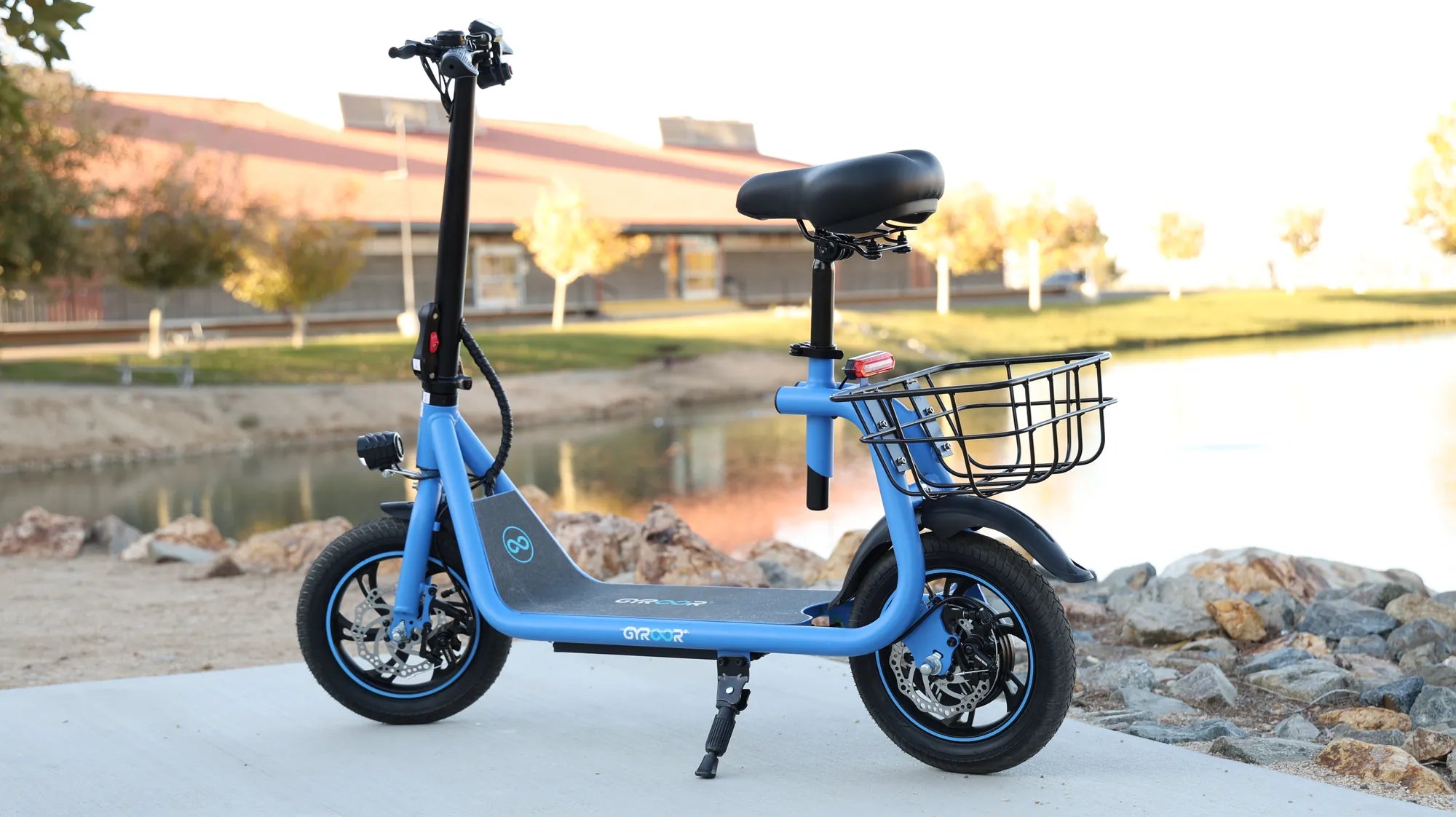
Can you ride electric scooters on the sidewalk? The direct answer is: it depends entirely on where you are. There is no single national or international rule. This guide cuts through the confusion, providing a comprehensive, data-driven look at the legal, safety, and ethical considerations of sidewalk riding. You will learn how to decipher your local ordinances, understand the significant risks of sidewalk use, discover safer alternatives, and master responsible riding practices, whether you're on a rental or a privately-owned model from a trusted brand like Gyroor.
Understanding the Legal Landscape: It's Hyper-Local
E-scooter regulations are a patchwork quilt of laws that vary not just by country or state, but often by city, district, or even specific street. The question "can you ride electric scooters on the sidewalk?" must be answered with a specific location in mind. In the United States, there is no federal law governing electric scooters; they are regulated at the state and municipal levels. Similarly, in the European Union and the UK, national frameworks exist, but local authorities have significant power to set their own rules.
This decentralization means a scooter rider can be perfectly legal on one side of a city boundary and subject to fines on the other. For instance, many major cities like New York, San Francisco, and London explicitly ban e-scooters from sidewalks, directing them to bike lanes or roads. Conversely, some smaller towns or suburban areas may have no specific laws or may permit sidewalk use under certain conditions, such as a speed limit.
The core legal classification often determines where you can ride. Most jurisdictions categorize e-scooters similarly to bicycles, designating them for use on roads, bike lanes, and multi-use paths, not sidewalks. This classification is critical because it defines your rights and responsibilities as a rider. Assuming sidewalk riding is legal without verification is the most common mistake new riders make, leading to fines and community backlash.
Therefore, the first and most crucial step for any rider is to conduct local research. Never rely on hearsay or assume rules are uniform. Your responsibility is to know the law in the specific area where your wheels touch the ground. This proactive approach is the foundation of safe and legal riding.
How to Find Your Local E-Scooter Laws
Navigating local ordinances may seem daunting, but a systematic approach makes it straightforward. Your goal is to find official, current information from authoritative sources.
Start with your city or town's official website. Look for the Department of Transportation, Public Works, or a similar agency. Search for terms like "micromobility," "electric scooter ordinance," "traffic code," or "shared mobility device." Many progressive cities have dedicated web pages for this. If you ride a rental scooter, the app itself is a valuable tool. Rental companies use geofencing technology to create no-ride or slow-ride zones, often directly correlating with sidewalk bans. If the app beeps and slows your scooter on a sidewalk, that's a clear legal indicator.
For privately-owned scooters like those from Gyroor, which are not governed by app-based geofencing, you need to dig deeper. Contact your local police department's non-emergency line or visit in person to ask for clarification. Community rider groups on social media or forums can also provide practical, up-to-date insights from experienced local riders. Remember, laws change, so it’s wise to check periodically, especially if you commute between jurisdictions.
Ultimately, the onus is on you, the rider, to be informed. Treat this research as part of your pre-ride safety check, just like putting on a helmet.
The Case Against Sidewalk Riding: Safety and Liability
Even in places where it might be technically legal, riding an electric scooter on the sidewalk is widely discouraged by safety experts and urban planners for compelling reasons. The primary issue is the inherent conflict between scooter speeds and pedestrian expectations.
Sidewalks are designed for pedestrian traffic, typically moving at 3-4 mph. Most e-scooters, even in beginner modes, can easily travel at 10-15 mph. Performance models from brands like Gyroor can reach higher speeds. This speed differential creates a high risk of serious collisions. Pedestrians, especially children, seniors, and individuals with disabilities, move unpredictably—they might stop suddenly, change direction, or step out from behind obstacles. A scooter moving 3-4 times walking speed has drastically reduced reaction time.
Furthermore, driveways and alleyways present "conflict zones" where vehicles cross the sidewalk. Drivers pulling in or out are looking for slow-moving pedestrians, not faster-moving scooters. This is a leading cause of scooter-related accidents. Similarly, riding on the sidewalk puts you directly in the path of opening car doors. The legal and financial liability in such a collision can fall heavily on the scooter rider, even if the driver is at fault, due to the rider's illegal presence on the sidewalk.
From a community perspective, sidewalk riding breeds resentment. It is perceived as dangerous and disrespectful, which can lead to stricter, more punitive regulations for all riders. Choosing to ride on the sidewalk, even if momentarily convenient, undermines the broader acceptance of e-scooters as legitimate, sustainable transportation.
The Pedestrian's Right of Way
This is both an ethical and legal cornerstone. In virtually all traffic systems, pedestrians on sidewalks and in crosswalks have the absolute right of way. Riding a motorized vehicle in their space fundamentally violates that social contract.
For people using canes, walkers, or guide dogs, or for parents with strollers, a silent scooter approaching from behind can be startling and dangerous. The sidewalk is their safe zone. By riding there, you transform it into a shared space filled with anxiety for the most vulnerable. Responsible riding means actively preserving this safe space for pedestrians, which in turn builds public goodwill for the e-scooter community.
Where Should You Ride? Navigating the "Middle Ground"
If sidewalks are problematic and roads can be intimidating, where is the right place? The ideal infrastructure for e-scooters is, in order of preference: protected bike lanes, standard bicycle lanes, and multi-use paths (often shared with cyclists and pedestrians).
Protected bike lanes, separated from vehicle traffic by a physical barrier, offer the highest level of safety and predictability. When these are available, they are the unequivocal best choice. Standard painted bike lanes are the next best option. Here, you are integrated with bicycle traffic, moving at compatible speeds and with similar visibility to drivers.
On roads without bike lanes, you often must "take the lane." This means riding in the center of the travel lane, acting like a vehicle. This is legal in most areas and is safer than hugging the curb, where you risk being hit by a car that doesn't give you enough space. It makes you more visible to drivers. On multi-use paths, you must drastically reduce your speed, yield to all pedestrians, and announce your presence politely when passing.
The key is matching your riding style to the environment. A scooter with reliable performance, like a Gyroor model with stable acceleration and responsive dual braking systems, gives you the control needed to navigate these different environments safely and confidently.
Speed and Environment Matching
Your scooter's capabilities should be matched to your route. Using a high-torque motor meant for hills on a crowded shared path is irresponsible. Conversely, a low-power scooter might be unsafe on a busy road where you need to keep pace with traffic.
When a sidewalk is the only temporarily safe option (e.g., due to a blocked bike lane or a dangerous stretch of road), you must act as a guest. Dismount and walk your scooter, or ride at a literal walking pace (under 5 mph), yielding immediately to every pedestrian. Treat this as a last resort, not a standard practice. For regular commuting, plan your route around available bike infrastructure, even if it adds a few minutes to your trip. The safety benefit is immense.
Gear, Responsibility, and Riding a Gyroor Scooter Safely
Legal compliance is just the baseline. True safety stems from rider responsibility, proper gear, and a well-maintained vehicle. Owning a scooter from a reputable brand like Gyroor, known for UL-certified batteries and robust construction, provides a reliable foundation, but the rider is the most critical safety component.
A helmet is non-negotiable. Studies show helmets reduce the risk of head injury by over 60% for micromobility users. Consider additional protective gear like knee and elbow pads, especially when learning or riding in traffic. High-visibility clothing or reflective elements are crucial for dawn, dusk, and night riding. Ensure your scooter's lights are fully functional—front and rear. Gyroor scooters feature bright LED lighting systems for this exact purpose, enhancing your visibility to others.
Regular maintenance is a safety imperative. Before every ride, perform a quick check: test the brakes, ensure tires are properly inflated, check that the folding mechanism (if present) is locked, and verify that all lights work. The peace of mind offered by Gyroor's 1-year warranty and reliable customer support means you can ride with confidence, knowing your vehicle is built to last and backed by the manufacturer.
Pre-Ride Checklist for Confident Commuting
- Know the Law: Verify local rules for your specific route.
- Gear Up: Always wear a helmet. Add reflective gear in low light.
- Machine Check: Inspect brakes, tire pressure, lights, and battery level.
- Plan Your Route: Prioritize bike lanes and calm streets. Avoid high-speed roads.
- Ride Defensively: Assume drivers and pedestrians don't see you. Never ride under the influence of alcohol or drugs.
E-Scooter Riding Surfaces: A Comparative Analysis
| Riding Surface | Legal Status (Typical) | Safety Risk Level | Recommended Rider Action | Scooter Requirements |
|---|---|---|---|---|
| Protected Bike Lane | Fully Legal & Encouraged | Low | Ride at a moderate, consistent speed. Use bell/horn when passing. | Any reliable scooter. Good brakes are key. |
| Standard Bike Lane | Fully Legal | Low to Moderate | Stay to the right, be aware of car doors. Signal turns. | Stable design, good lights for visibility. |
| Residential Street (Low Traffic) | Legal | Moderate | "Take the lane" to be visible. Obey all traffic signs. | Sufficient power (250W+ motor) to maintain safe pace. |
| Multi-Use Path | Often Legal (Check locally) | Moderate to High (due to pedestrians) | Reduce speed to <10 mph. Yield to all. Verbally announce passes. | Precise throttle control, audible bell. |
| Sidewalk | Often Illegal or Restricted | High | Dismount and walk, or ride at walking speed (<5 mph) as a last resort. | N/A - Not a recommended riding surface. |
| Major Road/Highway | Almost Always Illegal | Extremely High | Do not ride. Use an alternate route. | N/A - Not designed for this environment. |
Frequently Asked Questions (FAQ)
What if my city has no specific e-scooter laws yet?
In a legal gray area, default to the most conservative and safest interpretation. Typically, this means classifying your e-scooter as a bicycle. Ride in bike lanes or on the road, obeying all standard traffic laws, and avoid sidewalks. This demonstrates responsible riding and can positively influence the laws your city eventually adopts.
Are the rules different for rental scooters vs. privately-owned ones like Gyroor?
The traffic laws governing where you can ride are generally the same for both. However, rental companies often impose additional restrictions via geofencing in their apps, automatically slowing or disabling scooters in prohibited zones like sidewalks. As a private owner, you lack this technological nudge, making personal knowledge and discipline even more critical.
Can I walk my electric scooter on the sidewalk?
Yes, absolutely. Walking your scooter while powered off (or in walk-assist mode) is almost universally permitted and is a smart way to navigate crowded pedestrian areas, crosswalks, or short stretches where riding is unsafe or illegal. You are then a pedestrian.
What are the typical penalties for illegal sidewalk riding?
Penalties vary but commonly include fines ranging from $50 to over $200 for a first offense. In some jurisdictions, repeated offenses can lead to higher fines or even impoundment of the scooter. The financial cost, coupled with the significant safety risk, makes sidewalk riding a poor choice.
How does Gyroor's IPX5 water-resistance help with safe riding on wet roads vs. sidewalks?
Gyroor's IPX5 rating means the scooter can withstand water jets from any direction, protecting critical electrical components from rain and road spray. This allows for safer riding on wet roads or bike lanes when necessary. However, it does not make sidewalk riding in the rain safer. Wet sidewalks are slippery for pedestrians and scooter tires alike, increasing the risk of losing traction and colliding with someone. The water-resistance is for weather protection on legitimate riding surfaces, not an invitation to ride in pedestrian spaces during poor conditions.
Conclusion: Be a Leader, Not a Liability
The question of whether you can ride electric scooters on the sidewalk is answered by a mix of local law, safety science, and community ethics. The consistent theme is that sidewalk riding is generally discouraged and often illegal for excellent reasons centered on pedestrian safety. The future of micromobility depends on riders who choose to be ambassadors. This means knowing and following local laws, investing in safety gear, maintaining your vehicle, and consciously selecting bike lanes and roads over sidewalks. By riding responsibly on a well-engineered scooter, you ensure a better experience for yourself, foster public acceptance, and help shape sensible regulations that benefit everyone. Choose to ride smart, ride safe, and ride where you belong.
Ready to ride with confidence on the right path? Explore Gyroor's range of UL-certified, reliable electric scooters, designed for the real-world commute. Browse the full Gyroor collection at gyroorboard.com.
High Speed Electric Scooters: The Future of Urban Mobility
Really Fast Electric Scooters: The Future of Urban Mobility