



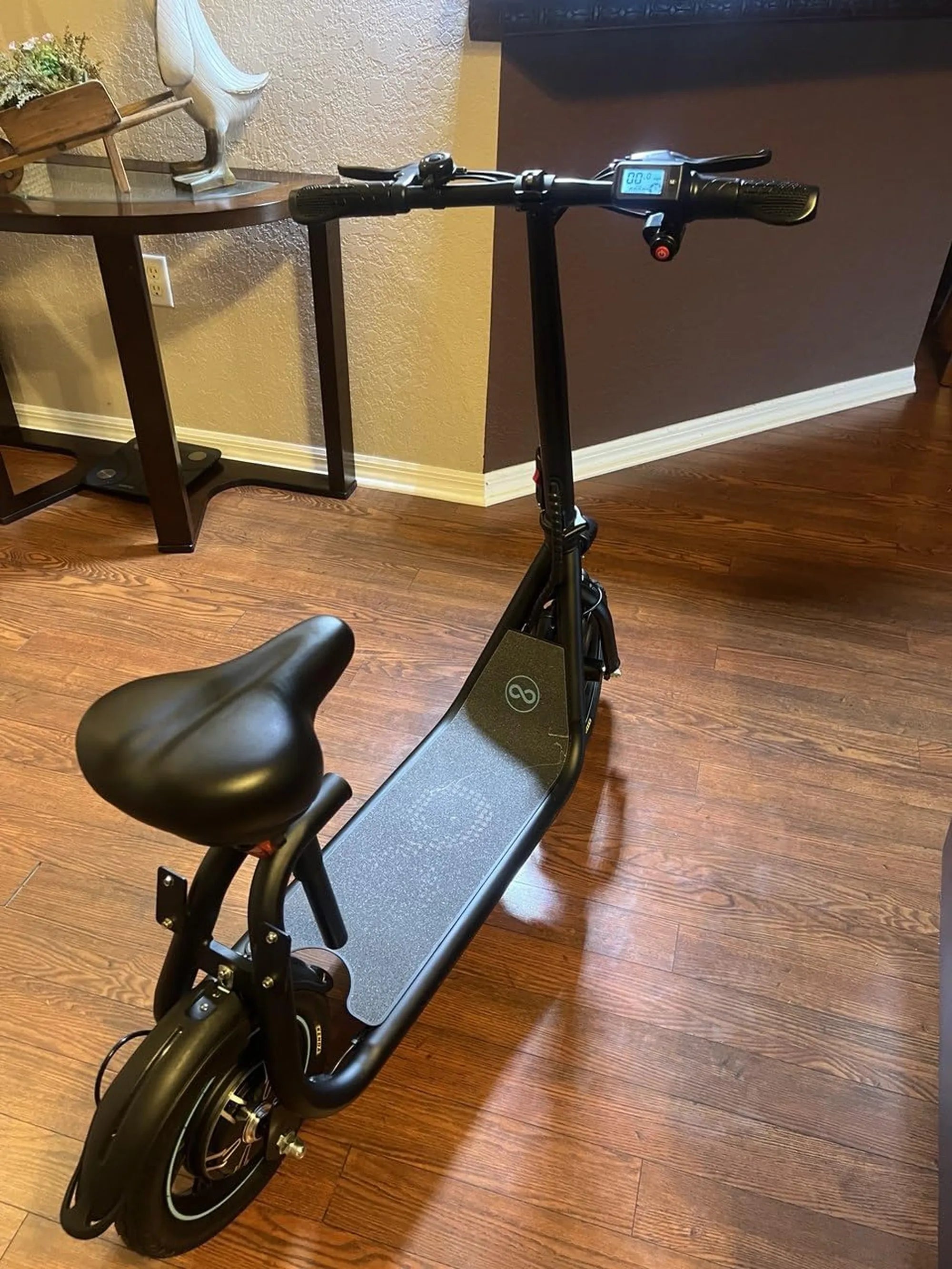
Navigating the Last Mile with Your E-Scooter
For urban commuters, the journey from the train station to the office or the bus stop to home—the "last mile"—often remains a frustrating gap. Electric scooters have emerged as a brilliant solution, offering portability and speed. But can you bridge that gap by taking your e-scooter on the bus or train with you? The answer is not a simple yes or no.
Whether you can take electric scooters on public transport depends entirely on a complex web of local transit authority rules, the type of vehicle, and even the time of day. This guide provides a clear, actionable framework for multi-modal commuting. You'll learn how to interpret policies, prepare your scooter, and navigate transit systems with confidence, turning a potential headache into a seamless travel advantage.
The Rules of the Ride: Understanding Transit Authority Policies
There is no universal law governing e-scooters on transit. Each city's or region's public transport operator sets its own regulations. Major agencies like Transport for London (TfL), the Metropolitan Transportation Authority (MTA) in New York, or the Chicago Transit Authority (CTA) have distinct policies. Generally, these rules are more lenient for personal e-scooters than for rental fleets like Lime or Bird, which are almost universally prohibited from being brought aboard.
Policies also frequently differ between transport modes. Buses often have more flexible rules than subway systems, and long-distance train services operate under entirely different baggage frameworks. The key is to never assume; what's allowed in one city may be banned in another, even on similar types of vehicles.
Key Factors Transit Agencies Consider
Transit authorities evaluate e-scooters based on specific safety and operational criteria. Understanding these factors helps you prepare and present your scooter as a compliant piece of luggage, not an obstruction.
Folded Dimensions: The single most important factor. Your scooter must fold to a compact size, typically resembling a suitcase or large bag. Agencies specify maximum size limits (often around 30" x 15" x 48") to ensure it doesn't block aisles or doors. A scooter that cannot be folded is almost never permitted.
Battery Safety: Lithium-ion batteries are a primary concern. Transit operators prioritize UL, CE, or other recognized safety certifications. A certified battery demonstrates rigorous testing for overcharge protection, thermal stability, and short-circuit prevention, significantly easing safety concerns.
Time of Day (Peak vs. Off-Peak): Many subway and commuter rail systems impose peak-hour restrictions. During rush hour (e.g., 7-10 AM and 4-7 PM), even folded e-scooters may be banned to maximize passenger capacity. Always check for these time-based rules.
Passenger Capacity and Courtesy: Ultimately, the driver or conductor has discretion. If the vehicle is overcrowded, you may be asked to wait for the next one. Your scooter must be stored so it poses no trip hazard and inconveniences no other passenger.
Pre-Board Checklist: How to Prepare Your Gyroor Scooter
Successfully taking your e-scooter on transit is about preparation. Follow this step-by-step checklist before you arrive at the station or bus stop to ensure a smooth boarding process.
First, ensure your scooter is clean and dry. Wipe down the deck and wheels, especially in wet weather, to avoid dirtying the transit vehicle. Second, power off the scooter completely. This is a non-negotiable safety step that also conserves battery life. Finally, have the transit authority's official policy bookmarked on your phone. Being able to reference the rule can help if there is any confusion with staff.
Folding and Securing Your Scooter
A proper fold is your ticket to access. Engage your scooter's folding mechanism securely. For optimal portability, use a carry strap or handle; many Gyroor models feature integrated carry handles or optional straps designed for this exact purpose.
Once folded, secure any loose cables or parts. The scooter should be a single, tidy unit. Practice folding and unfolding quickly and efficiently at home. The goal is to board swiftly without holding up the line, presenting your e-scooter as a compact, manageable piece of personal luggage.
Battery Safety and Etiquette
Always turn your scooter off before boarding. Do not charge your e-scooter on public transport, as this can pose a fire risk and is typically against the rules. The peace of mind that comes from using a brand with UL-certified battery packs, like Gyroor, cannot be overstated.
These certified packs have undergone extensive testing for over 500 charge cycles and include multiple protection systems. In the rare event a transit employee inquires about battery safety, you can confidently state your scooter uses UL-certified batteries, which are the industry gold standard for consumer electronics and e-mobility devices.
City-by-City & Transport Mode Breakdown
Policies vary dramatically. The table below provides a high-level snapshot of rules in major cities. This is for illustrative purposes only. Rules change frequently, and you must verify with your local transit authority for the most current, official policy before your journey.
| City / System | Bus Policy | Subway / Metro Policy | Key Conditions & Notes |
|---|---|---|---|
| London (TfL) | Allowed if folded | Allowed if folded | Banned on escalators. Driver/conductor discretion applies. Must not obstruct aisles. |
| New York City (MTA) | Allowed if folded | Allowed if folded, but banned during peak hours (6:30-9:30 AM & 3:30-6:30 PM on weekdays) | Considered a "package," subject to size limits. Peak hour bans are strictly enforced. |
| Chicago (CTA) | Allowed if folded | Allowed if folded | Must be carried on escalators. Cannot occupy a seat or block doors. |
| San Francisco (BART/Muni) | Allowed if folded (Muni) | Allowed if folded (BART) | Not permitted on crowded buses/trains at driver's discretion. Must be under control at all times. |
| Berlin (BVG) | Allowed if folded | Allowed if folded | Requires a ticket for the scooter (same as a bicycle ticket in some zones). Must not cause obstruction. |
On the Bus: Generally More Permissive
Buses are often the most e-scooter-friendly mode of public transport. They typically treat a folded e-scooter similarly to a stroller, suitcase, or folded bicycle. The standard procedure is to place your folded scooter in the luggage area near the front, in the wheelchair bay (if it is unoccupied and you have permission from the driver), or to hold it securely between your legs in a seat.
The critical rule is to never let it block the aisle, the front doorway, or the wheelchair access ramp. Board through the front door, inform the driver you have a folded e-scooter, and follow their instructions. Being courteous and efficient goes a long way in ensuring continued positive policies.
On Trains and Subways: Peak Hour Challenges
Subway and light rail systems present more variables. While many allow folded e-scooters at all times, major commuter networks like New York's MTA impose strict peak-hour bans to alleviate crowding. Even when allowed, your scooter must remain folded and under your control for the entire journey.
Choose your spot wisely. Stand near the end of the car or in less crowded areas, avoiding spaces reserved for wheelchairs and bicycles (unless the policy explicitly allows e-scooters there). Be prepared to hold your scooter vertically to minimize its footprint. The unwritten rule is to be as invisible as possible—your scooter should inconvenience no one.
A Note on Trains (Long-Distance Rail)
Long-distance rail services like Amtrak, Via Rail, or National Rail in the UK have formal baggage policies. E-scooters are usually classified as "special luggage" or handled under bicycle rules, which often require advance notice, reservation, and potentially a fee.
You will likely need to check your e-scooter as luggage, not carry it onboard to your seat. Battery regulations are also stricter; you must usually carry the scooter with you (not in checked baggage) and the battery must be under a certain watt-hour rating (typically 160Wh). Always contact the rail service at least 48 hours before travel to confirm their specific procedure.
Beyond the Rules: Rider Etiquette and Best Practices
Following the official rules is just the baseline. Practicing good etiquette ensures you are a welcome passenger and helps maintain positive perceptions of e-scooter commuters, influencing future policy decisions.
Your demeanor matters. Be polite, patient, and proactive. If the bus or train is exceptionally crowded, consider waiting for the next one. Your right to bring the scooter on board does not supersede the safety and comfort of other passengers. A little courtesy fosters a cooperative environment for all.
The Courtesy Compact
Adhere to this compact of considerate riding: First, always carry your folded scooter. Never roll it along platforms or through carriages, as the wheels may dirty floors or become a tripping hazard. Second, if your scooter is wet or dirty from rain, wipe it down with a towel before boarding.
Third, store it thoughtfully. Place it under your seat, between your legs, or in a designated luggage area—never on a seat meant for passengers. Finally, be aware of your surroundings. Avoid swinging the scooter when turning and be mindful of people's shins and personal space. You are an ambassador for the entire micro-mobility community.
Choosing the Right E-Scooter for Multi-Modal Commuting
Not all electric scooters are created equal for public transport integration. The ideal commuter scooter prioritizes a combination of portability, reliable folding, and certified safety features.
Portability is Paramount: Look for a scooter with a quick, secure folding mechanism and a total weight you are comfortable carrying up and down stairs or holding for extended periods. Models between 25-35 lbs are often the sweet spot between durability and lift-ability.
The Fold is Everything: The folded dimensions are more important than the unfolded ones. A scooter that folds into a long, thin profile is easier to manage in tight spaces than one that folds into a bulky cube. Test the fold's stability; it should lock securely and not wobble when carried.
Safety Certification is Non-Negotiable: A UL-certified battery is the most important feature for transit compliance. It’s your best evidence of built-in safety. Brands like Gyroor build this certification into their entire lineup, alongside features like IPX5 water resistance, which indicates a robust build quality less likely to suffer from environmental damage that could concern transit staff.
FAQ: Your Electric Scooter Transit Questions Answered
Q: Does the IPX5 water resistance rating on my Gyroor matter for transit?
A: Indirectly, yes. While not a formal transit rule, an IPX5 rating (protected against water jets) signals that the scooter is durably built and sealed against the elements. Transit staff may subconsciously view a well-constructed, water-resistant scooter as less likely to have electrical issues or leak water onto the vehicle floor, making them more amenable to allowing it on board.
Q: What if a bus driver or transit employee says no, even if I think the policy allows it?
A> Always comply politely and without argument. The operator has final discretion for safety on their vehicle. Arguing can lead to a ban and creates a negative experience for everyone. You can calmly ask for clarification on the policy for future reference, but disembark if asked. Have the official policy saved on your phone to review later.
Q: Is my e-scooter covered under the transit system's insurance if it's damaged while on board?
A> Almost certainly not. Transit authorities are not liable for lost, stolen, or damaged personal property. Your scooter is your responsibility. This underscores the importance of choosing a brand with a reliable warranty, like Gyroor's 1-year warranty, which covers manufacturer defects, and handling your scooter with care during the journey.
Q: Are rental e-scooters (like Lime, Bird) allowed on public transport?
A> Almost universally, no. Transit policies are written for personally owned, portable devices that can be folded and carried. Rental scooters are designed for point-to-point street trips and are explicitly prohibited from being taken on buses and trains in virtually every city's terms of service and transit regulations.
Q: Can I charge my e-scooter at an outlet on the train or at the station?
A> No. You should never plug in your personal e-scooter to public charging outlets or outlets on transit vehicles. This is a significant fire risk, is almost always against the rules, and is inconsiderate, as outlets are often intended for passenger emergency use. Ensure your scooter is fully charged before beginning your commute.
Empowering Your Multi-Modal Commute
Taking your electric scooter on public transport is a powerful strategy to master the first and last mile of your journey. While it requires research and preparation, the payoff is a faster, more flexible, and car-free commute. The key lies in understanding the specific rules of your local transit authority, meticulously preparing your scooter—ensuring it is folded, clean, and powered off—and adhering to the highest standards of passenger etiquette.
Brands that prioritize design for portability and invest in independent safety certifications, like Gyroor with its UL-certified batteries and robust folding mechanisms, are inherently better suited for this modern hybrid lifestyle. By being a informed and courteous rider, you not only streamline your own travel but also help shape a positive future for micro-mobility integration across all forms of public transit.
Ready to find the perfect partner for your multi-modal commute? Explore the full range of commuter-focused electric scooters, designed with portability and certified safety in mind. Browse the full Gyroor collection at gyroorboard.com to find a model that fits your journey and seamlessly integrates with your public transport routine.
Adult Electric Scooters for Men: The Ultimate Urban Commuting Solution
Electric Standing Scooters for Adults: The Future of Urban Mobility