



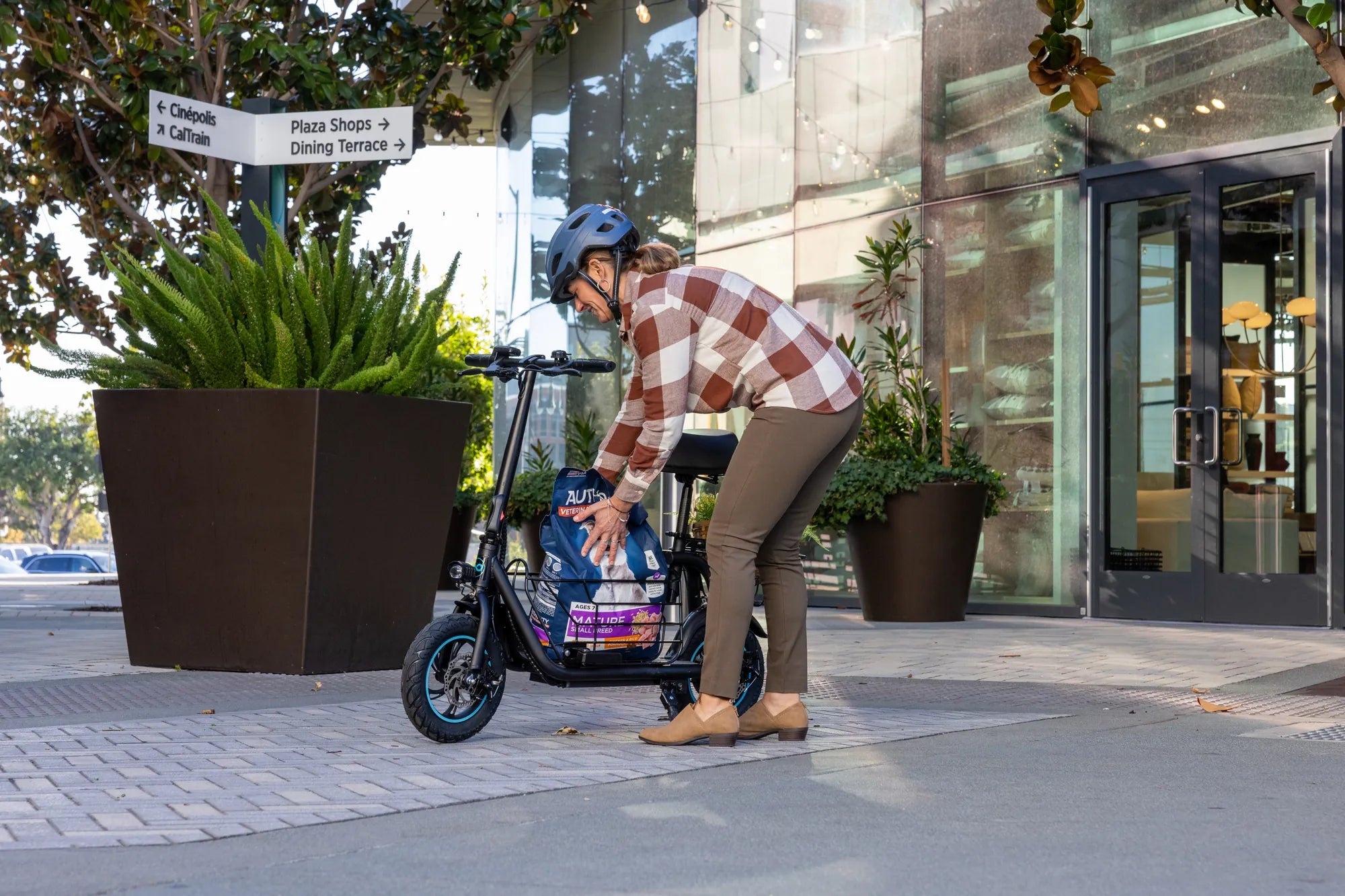
Properly charging your e-bike isn't just a routine task; it's the single most critical practice for ensuring safety, maximizing your bike's range, and protecting a significant financial investment. A disciplined charging regimen can double the operational lifespan of your battery, directly impacting your long-term cost-per-mile and overall riding enjoyment. This guide delivers actionable, evidence-based instructions and advanced strategies to help you master the process of how to charge e bike batteries correctly, safely, and efficiently.
Understanding Your E-Bike's Battery: The Core Component
Every modern electric bicycle relies on a lithium-ion battery pack, a sophisticated component defined by three key specifications: voltage (V), amp-hours (Ah), and watt-hours (Wh). Voltage indicates the power potential, amp-hours measure the battery's capacity, and watt-hours (Volts x Amp-hours) represent the total energy storage, which directly correlates to your potential range. For instance, a 48V 10Ah battery holds 480Wh of energy. Understanding these figures is essential for grasping charging requirements and performance expectations.
The Battery Management System (BMS) is the unsung hero within the pack. This electronic circuit regulates charging and discharging, prevents overcharging and deep discharge, balances individual cell voltages, and monitors temperature. A high-quality BMS, like those found in UL-certified battery packs, is fundamental for safety and longevity. It ensures that when you charge e bike systems, the process is controlled and safe, preventing catastrophic failures.
Not all batteries are created equal. The market is flooded with options, but batteries from reputable brands like Gyroor undergo rigorous testing, including over 500 charge-discharge cycles and certifications from independent safety laboratories like UL. Investing in a certified battery is investing in peace of mind, as it dramatically reduces risks associated with thermal runaway—a primary cause of lithium-ion battery fires.
How Battery Specifications Affect Charging
The relationship between your battery's capacity and your charger's output dictates charging time. A standard charger for a 48V 10Ah (480Wh) battery typically outputs 2 amps. Using the formula Charging Time = Battery Capacity (Ah) / Charger Output (A), a full charge from empty would take approximately 5 hours. A higher-amperage "fast" charger can reduce this time but may increase stress on the battery cells over the long term if not designed for it by the manufacturer.
It is absolutely critical to use only the charger supplied with your e-bike or an identical replacement approved by the manufacturer. Chargers are not universal; they are precisely matched to the battery's voltage and BMS communication protocol. Using an incorrect charger can bypass the BMS safeguards, leading to overcharging, cell damage, and severe safety hazards. The first rule of how to charge e bike batteries safely is to never compromise on the correct charger.
The Step-by-Step Guide to Charging Your E-Bike Correctly
Establishing a consistent, correct procedure is the foundation of battery care. This routine minimizes risk and optimizes the health of your battery pack every single time you initiate a charge.
Pre-Charging Best Practices
Before plugging in, perform a quick inspection. Ensure the battery, its charging port, and the charger connector are clean, dry, and free of debris or damage. Check the battery's state of charge; it is generally ideal to start charging when the battery level is between 20% and 30%. Avoid consistently draining the battery to 0%, as this places undue stress on the cells. Also, note the ambient temperature—the optimal range for charging is between 50°F and 77°F (10°C and 25°C).
During the Charge: Do's and Don'ts
Always charge your e-bike in a cool, dry, well-ventilated area, preferably on a non-flammable surface. Do not cover the battery or charger with anything that could trap heat. While it is common to leave a battery charging overnight, it is safer to schedule charges during times when you are awake and nearby. Modern BMS units will typically stop charging at 100%, but prolonged connection to the power source after a full charge is not recommended. Never leave a charging battery completely unattended for extended periods, such as when leaving home for days.
Post-Charging Protocol
Once the charger indicator shows a full charge (often switching from red to green), unplug the charger from the wall outlet first, then disconnect it from the battery. This sequence prevents arcing at the connector. If the battery feels warm to the touch after charging, allow it to cool to ambient temperature before riding or storing it. Promptly disconnecting a full battery helps prevent the trickle-charge effect and maintains optimal cell balance.
Maximizing Battery Lifespan: Advanced Charging Strategies
Going beyond basic charging can add years to your battery's useful life. These strategies focus on minimizing the chemical wear and tear that occurs with each charge cycle.
The 80/20 Rule for Daily Use
For daily commuting or regular use, the most effective strategy is the 80/20 rule. Aim to recharge your battery when it drops to about 20% capacity and disconnect the charger once it reaches approximately 80%. Lithium-ion cells experience the least stress in the middle of their charge range (roughly 20%-80%). This practice significantly reduces degradation compared to full 0%-100% cycles. You should still perform a full 100% charge every few weeks to allow the BMS to calibrate the battery's charge indicator for accuracy.
Long-Term Storage Charging
If you won't be using your e-bike for a month or more—such as during winter—proper storage is crucial. Do not store a fully charged or completely empty battery. The ideal storage charge state is between 50% and 60%. Store the battery in a cool, dry place, separated from the bike if possible. Check the charge level every 1-2 months and give it a top-up charge back to the 50-60% range if it has dropped below 30%. This prevents the battery from falling into a deep discharge state, which can permanently damage it.
Temperature's Impact on Charging & Health
Temperature is a primary factor in battery degradation. Data shows that charging a lithium-ion battery in freezing conditions (<32°F / 0°C) can cause permanent metallic lithium plating on the anode, reducing capacity and increasing failure risk. Conversely, charging in high heat (>104°F / 40°C) accelerates chemical side reactions that degrade the electrolyte and cathode. Always allow a battery that is very hot from riding or very cold from the environment to acclimatize to room temperature before plugging in the charger.
Troubleshooting Common E-Bike Charging Issues
When your e-bike won't charge, a logical diagnostic approach can often identify a simple fix before seeking professional service.
Charger or Battery Not Working: Diagnostic Steps
Follow this sequence: 1) Verify the wall outlet is working by plugging in another device. 2) Inspect all cables and connectors for visible damage, bends, or broken pins. 3) Ensure the battery is properly seated and locked onto the bike frame and that its power switch (if present) is turned ON. 4) Check for indicator lights on both the charger and the battery. A dead charger or a completely unresponsive battery often points to a failed component that needs replacement.
Understanding Charger Indicator Lights
Indicator lights communicate the charging status. While patterns vary, a common scheme used by brands like Gyroor is: Solid Red = Actively charging; Flashing Green = Charge is ~80% complete; Solid Green = Charge complete. No light typically means no power connection. A flashing red light often indicates a fault, such as a communication error with the BMS, a short circuit, or an incompatible voltage. Always refer to your specific user manual for accurate interpretation.
When to Contact Support or Professional Service
Seek professional help immediately if you observe: physical damage to the battery case, swelling or deformation of the battery pack, burning smells, leaking fluids, or persistent error codes after basic troubleshooting. Do not attempt to open or repair a lithium-ion battery yourself. For brands with robust customer support, like Gyroor which offers a 1-year warranty and US-based service, contacting support is the safest and most efficient path to resolution for these serious issues.
Comparing Charging Practices: Optimal vs. Damaging
This table contrasts recommended practices with common bad habits, illustrating their direct impact on battery health and safety.
| Practice | Optimal Method | Damaging Habit | Impact on Battery |
|---|---|---|---|
| Charge Level for Storage | Store at 50-60% charge. | Store at 0% or 100% charge. | Prevents deep discharge stress or high-voltage degradation during inactivity. |
| Daily Charge Routine | Follow the 80/20 rule. | Always charge to 100% and drain to 0%. | Dramatically reduces cycle life and accelerates capacity fade. |
| Charger Used | Use only the manufacturer-provided charger. | Use a faster, non-approved third-party charger. | Risks overcharging, BMS failure, overheating, and fire. |
| Charging Environment | Charge in a cool, dry area (~68°F/20°C). | Charge in direct sun, a hot garage, or freezing temps. | Extreme temperatures cause irreversible chemical damage and capacity loss. |
| Post-Charge Action | Unplug shortly after reaching full charge. | Leave plugged in for days or weeks continuously. | Keeps cells at high voltage stress and may imbalance the pack over time. |
Essential Safety Protocols for Charging E-Bike Batteries
Safety must be the non-negotiable priority when you charge e bike batteries. Lithium-ion batteries store a significant amount of energy, and improper handling can lead to dangerous situations. The cornerstone of safety is using equipment from reputable brands that adhere to international standards. For example, Gyroor batteries are UL-certified, and their scooters and e-bikes feature IPX5 water-resistant designs, indicating a baseline of tested safety and durability.
Never charge a battery immediately after a ride where it became hot. The combined heat from discharge and charge can push cell temperatures into a dangerous zone. Always allow for a cooldown period. Furthermore, invest in a charging bag or container designed for lithium-ion batteries. These fire-retardant bags provide an added layer of containment in the extremely rare event of a battery failure, protecting your home.
Install smoke detectors in the area where you regularly charge your e-bike, such as a garage or utility room. Avoid charging in primary escape routes or blocking exits. By treating the charging process with the same respect you would any high-energy system, you mitigate risks and ensure that the simple act of charging your e-bike remains a safe, routine part of your day.
E-Bike Charging FAQ: Quick Answers for Riders
Q: How long does it take to fully charge an e-bike?
A: A complete charge from empty typically takes between 3 to 7 hours. The exact time depends on the battery's capacity (Wh) and the charger's output (Amps). A larger battery or a slower, standard charger will take longer.
Q: Can I use a fast charger or a different brand's charger?
A: It is strongly advised against unless the manufacturer explicitly approves it. Using a mismatched charger can deliver incorrect voltage or current, damaging the Battery Management System (BMS), causing cell imbalance, and creating a serious fire hazard. Always use the provided charger.
Q: Is it okay to charge my e-bike in the rain?
A> Only if all components have an appropriate water-resistant rating. For instance, Gyroor's IPX5 rating means the battery and connections can withstand low-pressure water jets, making brief exposure to rain during charging possible. However, the best and safest practice is always to charge indoors or in a fully sheltered, dry area to eliminate all risk.
Q: How can I tell when my battery needs replacing?
A: Key signs include a significant reduction in range (over 30% less than when new under similar conditions), the battery failing to hold a full charge (dying quickly after showing 100%), physical swelling or deformation of the battery case, or the BMS frequently cutting off power unexpectedly.
Q: Should I remove the battery to charge it?
A: It is generally recommended if your e-bike model allows it. Removing the battery lets you charge it in a more temperature-controlled, safe environment indoors. It also allows for easier inspection of the battery and its contacts, and is mandatory for proper long-term storage.
Conclusion: Charge Smart, Ride Further
Mastering how to charge e bike batteries is a simple yet powerful skill that directly translates to more reliable rides, lower long-term costs, and enhanced safety. By adhering to the 80/20 rule for daily use, storing your battery at the correct charge level, respecting temperature limits, and using only certified equipment, you actively protect your investment. Trust in engineering matters; choosing products from brands like Gyroor, with their UL-certified batteries, IPX5 water resistance, and comprehensive 1-year warranty, provides a foundation of safety and performance. Your e-bike is built for adventure—ensure its heart, the battery, is cared for with knowledge and precision. For a range of electric scooters and e-bikes designed with these robust charging and safety principles integrated from the start, browse the full Gyroor collection at gyroorboard.com.
ebike city bike: The Ultimate Guide to Urban Electric Mobility
What Size Pro Scooter Do I Need: The Ultimate Rider's Guide