



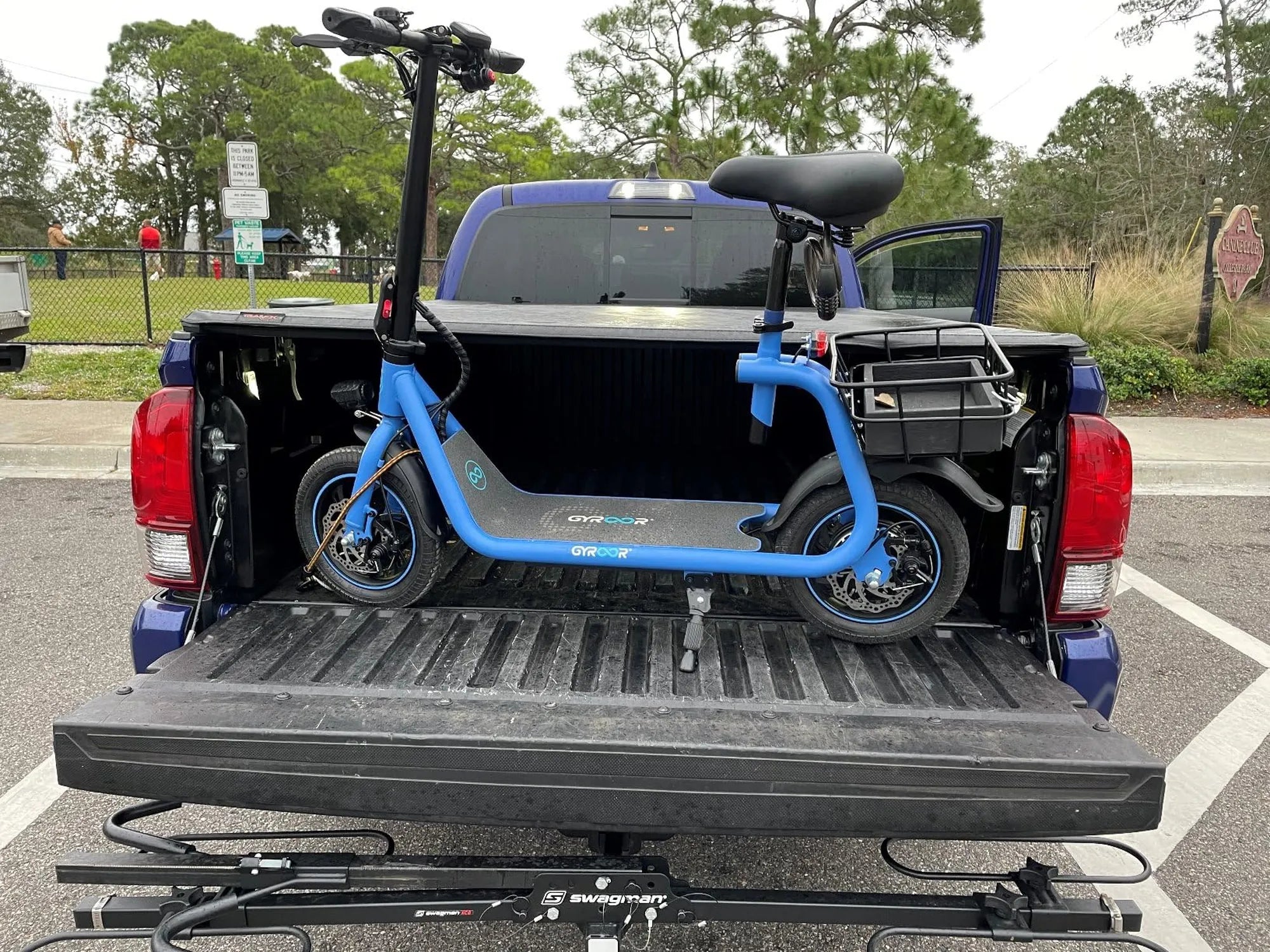
Introduction: Why Smart Charging is the Heart of Your E-Scooter's Health
Mastering the art of charging electric scooters is the single most critical factor determining your vehicle's long-term health, safety, and performance. This guide moves beyond basic plug-in instructions to explore the science of efficient and safe power management. You will learn how to interpret battery specifications, implement a longevity-optimized charging routine, and navigate complex scenarios like storage and fast charging.
Adopting these practices directly translates to more reliable rides, greater resale value, and avoidance of costly battery replacements. We'll reference industry data and engineering principles that form the foundation of these recommendations. Leading brands like Gyroor build their scooters with UL-certified batteries and robust Battery Management Systems (BMS), but ultimate battery lifespan depends on user habits.
Understanding Your E-Scooter's Battery: The Core of Power Management
Modern electric scooters predominantly use Lithium-ion (Li-ion) or Lithium Polymer (Li-Po) battery packs. These are chosen for their high energy density, relatively low self-discharge rate, and ability to handle numerous charge cycles. Understanding a few key specifications is essential for intelligent charging.
Voltage (V) indicates the battery's electrical pressure. Common configurations are 36V, 48V, or 52V. Higher voltage often correlates with more power and higher top speeds. Amp-Hours (Ah) represent the battery's capacity—how much current it can deliver over time. Watt-Hours (Wh) is the ultimate measure of total energy capacity (Volts x Amp-Hours = Watt-Hours).
For example, a 48V 10Ah battery has a 480Wh capacity. This figure is crucial for estimating range and understanding charging time. The State of Charge (SOC) is the battery's current charge level, expressed as a percentage. Managing the SOC is the cornerstone of battery preservation.
The Chemistry of Charge and Discharge Cycles
A lithium-ion cell stores energy by moving lithium ions between a cathode and an anode through an electrolyte. Charging forces ions to the anode; discharging sees them return to the cathode. This process is not perfectly efficient and causes gradual physical wear on the electrodes.
A cycle is technically defined as the process of using 100% of the battery's nominal capacity, which can occur over multiple partial charges. Deep discharges (to 0%) and holding the battery at maximum voltage (100% SOC) create significant chemical stress. This stress accelerates the formation of a Solid Electrolyte Interphase (SEI) layer and can cause lithium plating, both of which permanently reduce usable capacity.
Decoding Your Scooter's Charger Specifications
Your charger is not a generic power supply. Its label holds vital information. Look for the Output rating, typically something like 42V 2A. The voltage must match your battery's system voltage. The amperage (A) determines charging speed.
A standard charger might be 1.5A or 2A, while a fast charger could be 3A, 4A, or higher. Charging time can be roughly estimated as (Battery Ah / Charger A) + balancing time. A 10Ah battery with a 2A charger takes about 5 hours for a full 0-100% charge. Higher amperage speeds up charging but increases heat and electrochemical stress, a key trade-off for power management.
The Gold Standard Charging Routine: Maximizing Battery Lifespan
Implementing a consistent, science-backed charging protocol can dramatically extend your battery's service life, often doubling or tripling its cycle count compared to neglectful habits. This routine is built on three foundational rules.
Rule #1: The 20-80% "Sweet Spot" Rule
The most impactful practice is to avoid routinely charging to 100% or draining to 0%. Lithium-ion batteries experience the least chemical stress when operating between approximately 20% and 80% State of Charge. Keeping the battery in this "sweet spot" minimizes voltage-related degradation.
Think of it like a human athlete—operating at peak extremes is exhausting and unsustainable, while working within an optimal range preserves long-term capacity. For daily use, plug in when the gauge drops near 30% and unplug once it reaches 80-90%. Reserve full 100% charges for occasions where you anticipate needing the maximum range.
Rule #2: Temperature Matters – Charging in the "Comfort Zone"
Battery chemistry is highly temperature-sensitive. The ideal charging environment is between 50°F and 86°F (10°C and 30°C). Charging in freezing temperatures (<32°F/0°C) can cause irreversible lithium plating on the anode, permanently damaging capacity and increasing safety risks.
Charging in high heat (>95°F/35°C) accelerates parasitic side reactions that degrade the electrolyte and electrodes. Always allow a hot scooter (from a long ride) to cool to near ambient temperature before plugging in. Never charge a scooter left in direct summer sun or a freezing garage.
Rule #3: The Right Order – Scooter First, Then Wall
This simple sequence is a critical safety and longevity practice. Always: 1) Connect the charger's DC output plug securely to your scooter's charging port. 2) *Then* plug the charger's AC cable into the wall outlet. This order prevents a sudden voltage surge or spark at the DC connector, which can damage the port or the Battery Management System over time.
When charging is complete, reverse the order: unplug from the wall first, then disconnect from the scooter. This protocol is a hallmark of careful power management for all DC electronics.
Advanced Power Management: Scenarios and Solutions
Real-world usage doesn't always fit the ideal routine. Here’s how to handle common advanced scenarios with optimal battery health in mind.
Managing Long-Term Storage (Over 2 Weeks)
Storing a battery at full charge or complete depletion is highly damaging. For long-term storage, follow this procedure: Charge or discharge the battery to a 40-60% State of Charge. Power the scooter completely off. Store it in a cool, dry place with a stable temperature, ideally around 59°F (15°C).
Even in storage, lithium-ion batteries slowly self-discharge. Check the charge level every 4-8 weeks. If it has dropped near 20%, give it a brief top-up back to the 40-60% range. This maintenance prevents the voltage from falling too low, which can permanently disable the BMS.
Fast Charging: When to Use It and Its Long-Term Impact
Fast chargers (e.g., 3A, 4A) offer clear convenience, cutting charge times significantly. However, they force higher current into the battery, generating more heat and increasing the rate of cathode and anode degradation. Consistent, daily use of a fast charger can reduce total cycle life by 20-30% compared to standard charging.
The strategic approach is to treat fast charging as a tool for specific situations. Use it when you need a quick mid-day top-up for an additional errand, or on a long trip. For your regular overnight or daily charging, default to the standard, lower-amperage charger that came with your scooter to maximize long-term health.
What to Do After a Full-Depth Ride (0% Battery)
Occasionally draining the battery to 0% (where the scooter shuts off) is unavoidable. The critical action is to recharge it as soon as possible. Do not leave a fully depleted battery sitting for hours or days. The BMS maintains a small safety buffer below the displayed 0% to prevent true zero-voltage cell damage, but this buffer depletes over time.
Plug in the scooter within a few hours. Use a standard charger if possible, as the battery is in a stressed state. While modern BMS units in quality scooters like those from Gyroor offer deep discharge protection, making a habit of 0% rides is one of the fastest ways to diminish overall capacity.
Safety First: Non-Negotiable Charging Practices
Efficiency is important, but safety is paramount. These practices are non-negotiable for preventing hazards and ensuring the safe operation of your electric scooter.
Using Only the Manufacturer-Provided Charger
Always use the charger specifically designed for your scooter model. Third-party or generic "universal" chargers may have the wrong voltage, incorrect amperage, or lack proper communication protocols with the BMS. An incompatible charger can cause overcharging, leading to thermal runaway, fire, and explosion.
It also voids the warranty. Brands like Gyroor design their chargers to work in precise harmony with their battery packs and BMS, ensuring automatic cut-off at full charge. This integration is a key component of their safety-first design philosophy.
The Importance of a Proper Environment
Charge your scooter on a non-flammable surface (concrete, tile, metal rack) in a well-ventilated area. Keep it away from direct sunlight, heaters, flammable materials (like paper or curtains), and moisture. While many scooters, including Gyroor's IPX5 water-resistant models, are built to withstand riding in wet conditions, charging should always be a dry activity.
Water and electricity are a dangerous mix. Never charge in a bathroom, on a carpet, or in a cluttered garage. A dedicated, clean space minimizes risk.
Recognizing Warning Signs: When to Stop Charging
Immediately stop charging and unplug if you observe any of the following red flags: The charger or battery pack becomes excessively hot to the touch (warm is normal, hot is not). You smell burning electronics, ozone, or sweet chemical odors. You hear hissing, popping, or sparking sounds. The battery casing is visibly bulging, warped, or leaking.
The charger fails to switch to a maintenance/standby mode (often indicated by a light changing from red to green) after an unusually long time. In any of these cases, discontinue use, move the scooter to a safe outdoor area if possible, and contact the manufacturer's support.
Charging Efficiency Showdown: Good vs. Bad Habits (Data-Driven Comparison)
The long-term impact of charging habits is quantifiable. Research from battery universities and industry lifecycle tests shows clear divergence in capacity retention based on user behavior. The following table summarizes projected outcomes over an 18-month period for a typical 500-cycle rated battery.
| User Profile & Habits | Key Practices | Projected Capacity After 18 Months | Risk of Premature Failure |
|---|---|---|---|
| Ideal Power Manager | Strict 20-80% rule. Stores at 50% SOC. Uses standard charger. Charges at room temp. | 85-90% retention | Very Low |
| Average User | Frequent 100% charges. Occasional deep drains. Basic storage awareness. | 70-75% retention | Low to Moderate |
| High-Stress User | Always fast charges. Stores at 0% or 100%. Frequent deep discharges. Ignores temperature extremes. | <60% retention | High |
This data illustrates that disciplined charging is an investment. The "Ideal Power Manager" effectively doubles the practical lifespan of their battery compared to the "High-Stress User," delaying an expensive replacement by years.
Frequently Asked Questions (FAQ)
Q: Can I leave my scooter plugged in overnight?
A: With a modern smart charger that switches to a maintenance/trickle mode, it is generally safe and will not overcharge. However, for absolute best practice in maximizing lifespan, unplugging once the charger indicates a full charge (e.g., light turns green) is recommended, especially if you routinely charge to 100%.
Q: How long does a full charge from 0% to 100% typically take?
A> Use the formula: (Battery Amp-Hours) / (Charger Amp Output) + 1 hour. For a 10.4Ah battery with a 2A charger: (10.4 / 2) + 1 = 6.2 hours. The extra hour accounts for the slower balancing phase where the BMS equalizes individual cell voltages.
Q: Should I charge my new scooter to 100% before first use?
A: Yes. For the initial charge, follow the manufacturer's instructions, which usually involve a full, uninterrupted charge. This ensures the Battery Management System is properly calibrated and all cells are balanced from the start.
Q: Does frequent, partial charging ("topping off") harm the battery?
A> No. This is a myth carried over from older nickel-based batteries. For lithium-ion, partial charges within the 20-80% range are ideal and do not cause "memory effect." It is far less stressful than repeated full discharge/charge cycles.
Q: My scooter has been in storage for 6 months and won't charge. What should I do?
A: The battery may have self-discharged below the BMS's low-voltage cutoff. Contact the manufacturer's support. Some brands have specific recovery procedures. Do not attempt to "jump-start" it with another power source, as this is extremely dangerous.
Empowering Your Ride Through Smart Charging
Mastering the efficient and safe power management of your electric scooter transforms you from a passive user into an informed owner. By adopting the 20-80% rule, respecting temperature limits, using the correct charger, and prioritizing safe charging environments, you directly invest in the longevity, reliability, and value of your vehicle. These practices ensure you get the maximum performance and enjoyment that engineers designed into quality electric scooters.
View your charging routine not as a mundane task, but as the essential maintenance that keeps the heart of your scooter—its battery—strong for thousands of miles. For model-specific guidance, always consult your user manual. Ready to explore electric scooters built with these principles in mind from the start? Browse the full Gyroor collection, featuring UL-certified batteries and robust power systems, at gyroorboard.com.
Electric Scooters Vancouver: The Ultimate Guide to Eco-Friendly Commuting
Electric Scooters With Big Tires: The Ultimate Ride for Any Terrain