



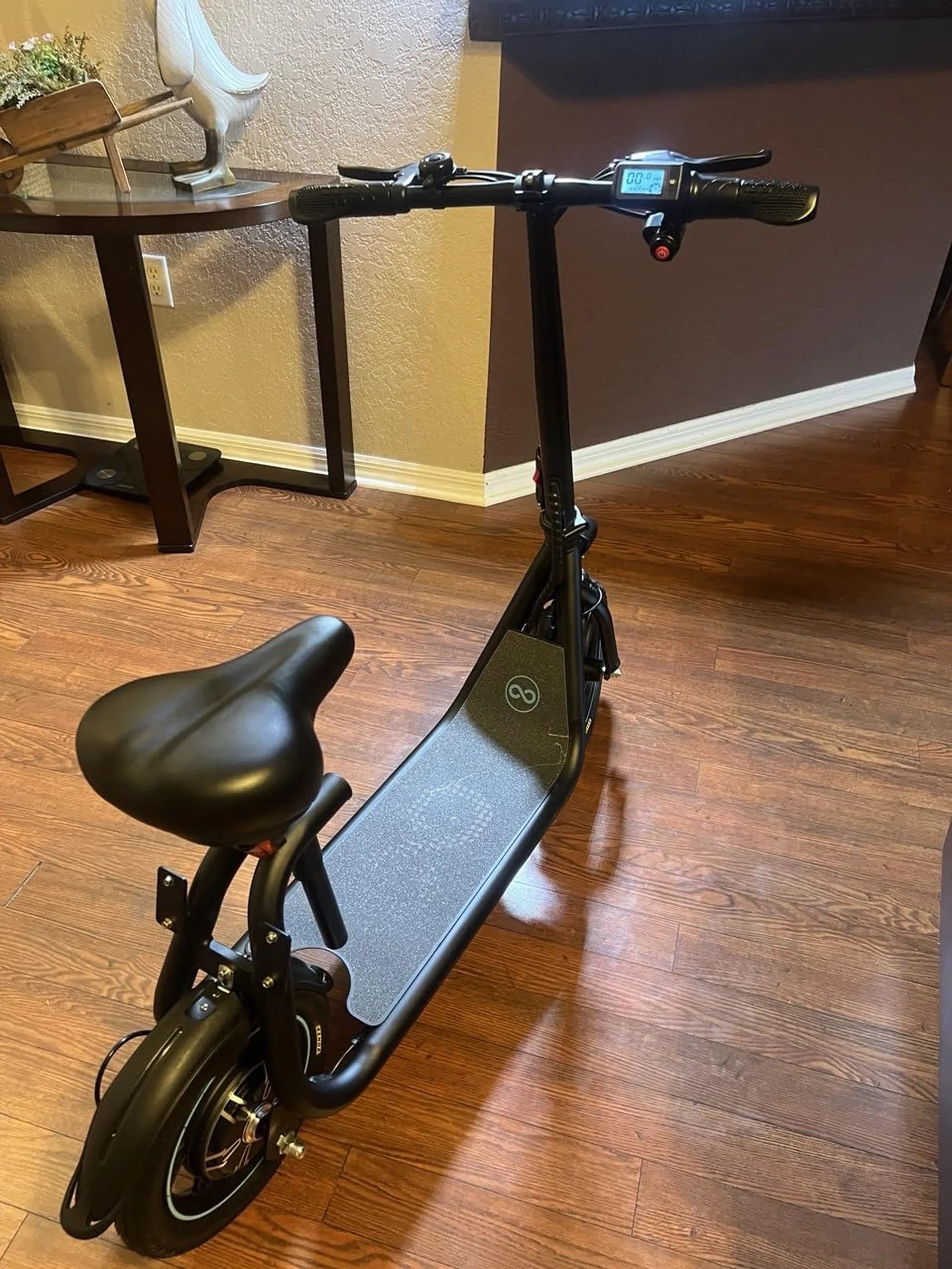
The Allure and Reality of the 50cc Scooter
For decades, the 50cc scooter has represented an accessible gateway to personal mobility. Its appeal is straightforward: a relatively low initial purchase price, simple operation, and the promise of an economical commute. The term 'cheap 50cc scooter' is a powerful magnet for budget-conscious riders seeking freedom from traffic and high fuel costs. However, the definition of 'cheap' requires careful examination beyond the sticker price at a dealership or online marketplace.
This article will dissect the true total cost of owning a gas-powered 50cc scooter, from fuel and insurance to routine maintenance and unexpected repairs. More importantly, we will compare this classic model of transport to its modern successor: the high-performance electric scooter. Brands like Gyroor are redefining value with electric scooters that compete directly on initial cost while offering superior long-term economics, enhanced safety certifications, and a hassle-free riding experience.
You will learn how to calculate your real annual expenses, understand the critical importance of battery safety, and discover why thousands of riders are switching from gas to electric. The goal is to equip you with the data needed to make the most intelligent purchase for your needs, budget, and lifestyle.
Deconstructing the 'Cheap' 50cc Scooter Sticker Price
The advertised price of a 50cc scooter can be enticingly low, often found in the range of $800 to $1,500 for basic models. This upfront cost is the primary driver behind its 'cheap' reputation. For a new rider, this seems like a small investment for a vehicle that doesn't require a motorcycle license in many regions and can achieve over 80 miles per gallon. The initial math appears compelling, but it represents only a fraction of the financial picture.
This initial price rarely includes essential add-ons, dealer fees, or the cost of proper safety gear. Furthermore, the build quality and reliability of scooters at the very bottom of the price spectrum can be questionable, leading to higher long-term costs. A truly economical vehicle must be evaluated on its Total Cost of Ownership (TCO), which includes all expenses incurred over its usable life.
When you search for a 'cheap 50cc scooter,' you are primarily evaluating the purchase price. A smarter approach evaluates the cost per mile over three to five years. This holistic view incorporates fuel, insurance, registration, maintenance, parts replacement, and depreciation. It is in this comprehensive analysis that the value proposition begins to shift dramatically.
Modern electric scooters, particularly from established brands, now enter the market at comparable or slightly higher initial price points. However, their operational cost structure is fundamentally different, which flips the script on long-term value. The key is to look past the first payment and project the ongoing financial commitment.
The Hidden Expenses: Fuel, Insurance, and Ongoing Upkeep
Owning a gas-powered vehicle, even a small 50cc scooter, commits you to a cycle of recurring expenses. Fuel is the most obvious. While a 50cc engine is efficient, averaging 80-100 MPG, you are still subject to volatile gasoline prices. At $3.50 per gallon and riding 1,000 miles annually, you'll spend approximately $35-$44 on gas each year. This seems minimal until you factor in the inconvenience of gas station trips and the environmental cost.
Insurance and registration are mandatory in most areas. While often cheaper than for a car, scooter insurance can still cost $200-$400 annually, depending on coverage, location, and rider profile. Registration fees vary by state but add another recurring cost. These are fixed expenses that continue whether you ride the scooter daily or let it sit in a garage.
The most significant variable cost is maintenance and repair. A 50cc scooter has a complex internal combustion engine requiring regular, time-sensitive service. Neglect leads to breakdowns and expensive repairs. The standard maintenance schedule includes oil changes every 500-1,000 miles, spark plug replacements, air filter cleaning, gear oil changes, and valve adjustments. Belt drives need inspection and replacement.
Annual professional servicing can easily cost $150-$300. If you perform the work yourself, you must purchase tools, fluids, and parts, and invest your time. Furthermore, components like tires, brakes, and the battery (for starting) wear out and require replacement. These hidden costs transform the 'cheap 50cc scooter' into a vehicle with steady, predictable financial drains.
A Data-Driven Three-Year Cost Breakdown
Let's quantify the true cost with a realistic three-year scenario for a $1,200 50cc scooter, ridden 1,500 miles per year.
| Expense Category | Year 1 | Year 2 | Year 3 | 3-Year Total |
|---|---|---|---|---|
| Purchase Price (after fees) | $1,350 | - | - | $1,350 |
| Fuel (@100 MPG, $3.50/gal) | $52.50 | $52.50 | $52.50 | $157.50 |
| Insurance ($250/year) | $250 | $250 | $250 | $750 |
| Registration ($50/year) | $50 | $50 | $50 | $150 |
| Basic Maintenance | $200 | $200 | $200 | $600 |
| Tire/Brake Replacement | - | $120 | - | $120 |
| Annual Subtotal | $1,902.50 | $672.50 | $552.50 | - |
| Cumulative Total | $1,902.50 | $2,575.00 | $3,127.50 | $3,127.50 |
This conservative estimate shows a three-year cost exceeding $3,100, with over $1,900 spent in the first year alone. The 'cheap' $1,200 scooter effectively doubles in cost when viewed through the lens of responsible ownership.
The Electric Alternative: Redefining Value and Performance
The electric scooter is no longer a futuristic novelty; it is a mature, high-performance alternative that directly addresses the pain points of gas-powered models. For urban and suburban commuters, a quality electric scooter offers a compelling blend of low operating cost, exceptional convenience, and instant, quiet power. The value proposition is clear when you eliminate gasoline, complex engine maintenance, and frequent oil changes.
Modern electric scooters from reputable brands like Gyroor are engineered for reliability and daily use. They feature brushless hub motors that require almost no maintenance, regenerative braking to extend range and brake life, and digital controllers for smooth acceleration. The riding experience is characterized by immediate torque from a standstill, making them surprisingly quick off the line compared to a 50cc scooter, which requires engine revving and clutch engagement.
The primary 'fuel' cost is electricity, which is remarkably inexpensive. Charging a typical electric scooter battery from empty to full costs between 10 and 30 cents, depending on local rates. This translates to a cost per mile of less than one cent, compared to roughly 3.5 cents per mile for a 50cc scooter. Over a year of commuting, this difference saves enough to cover other expenses or accelerate the return on your initial investment.
Furthermore, the convenience factor is transformative. You can charge your scooter from any standard wall outlet at home, at work, or even in a garage. There are no trips to the gas station, no smelling like gasoline, and no concerns about storing flammable fuel. For apartment dwellers or those without dedicated parking, this is a significant advantage.
Gyroor's Foundation: UL-Certified Safety and Warranty Assurance
When evaluating an electric scooter, the battery is the heart of the vehicle and the most critical safety component. Unfortunately, the market is flooded with low-cost options using uncertified, potentially dangerous battery cells. Gyroor distinguishes itself by building every scooter around a UL-certified battery pack. This independent certification means the battery has undergone rigorous testing for electrical, mechanical, and environmental safety, significantly reducing the risk of fire or failure.
This commitment to safety is a core part of Gyroor's value. It's not just a feature; it's a fundamental responsibility to the over 100,000 riders who trust the brand across North America and Europe. Paired with this is a robust 1-year comprehensive warranty on the scooter, providing peace of mind that is rarely offered with budget gas scooters. This warranty covers defects in materials and workmanship, ensuring your investment is protected.
Gyroor scooters also feature IPX5 water-resistant designs. This rating means they can withstand water jets from any direction, making them resilient in rain and wet road conditions—a practical necessity for daily commuting. This build quality, combined with certified safety and a strong warranty, creates a product that is 'cheap' in the best sense: high value for money, not low in quality or safety.
Head-to-Head Comparison: 50cc Gas vs. Gyroor Electric Scooter
This direct comparison highlights the key differences in ownership experience and cost. We'll compare a typical 50cc gas scooter to a Gyroor electric scooter in a similar price class, such as the Gyroor S1 or a comparable commuter model.
| Comparison Factor | Typical 50cc Gas Scooter | Gyroor Electric Scooter (e.g., Commuter Model) | Advantage |
|---|---|---|---|
| Purchase Price | $800 - $1,500 | $900 - $1,600 | Comparable |
| "Fuel" Cost per Mile | ~3.5 cents (gas) | ~0.3 cents (electricity) | Electric |
| Top Speed / Acceleration | ~30 mph, slow acceleration | 19-28 mph, instant torque | Gas for top speed, Electric for acceleration |
| Range per 'Fill-up' | 80-120 miles (tank) | 15-28 miles (battery) | Gas |
| Maintenance Needs | High: Oil, filters, plugs, belts, valves | Very Low: Brake pads, tires, occasional checks | Electric |
| License/Registration | Often required (varies) | Often not required for lower-speed models | Electric |
| Environmental Impact | CO2 emissions, fluid disposal | Zero direct emissions, efficient energy use | Electric |
| Weather Resistance | Varies, often poor | IPX5 rated for water resistance | Electric |
| Safety Certification | Vehicle standards only | UL-certified battery pack standard | Electric |
| Noise Level | Moderate to loud | Very quiet | Electric |
The table reveals a clear pattern. While the gas scooter retains an advantage in maximum range and sometimes top speed, the electric scoter wins in nearly every category related to cost, convenience, maintenance, and environmental friendliness. For most urban commutes under 10 miles, the electric scooter's range is perfectly adequate.
The Convenience Factor: Simplifying Your Daily Commute
The day-to-day experience of riding an electric scooter is where the theoretical advantages become tangible benefits. Imagine starting your commute without worrying about the engine being cold or having to let it warm up. With an electric scooter, you step on, press the throttle, and go—silently and smoothly. There's no clutch to engage, no gear to shift, and no stalling in traffic.
Charging is as simple as plugging in a laptop. Most Gyroor scooters fully recharge in 4-6 hours. You can do this overnight, so your scooter is always 'full' and ready each morning. This eliminates the need to detour to a gas station, wait in line, or handle messy fuel pumps. For those living in multi-story buildings, the ability to bring the scooter inside for charging (thanks to its compact size and clean operation) is a major logistical benefit.
Maintenance is reduced to the absolute basics. There is no engine oil to change, no air filter to clean, no spark plug to replace, and no exhaust system to corrode. Primary maintenance involves checking tire pressure, ensuring brakes are adjusted, and occasionally cleaning the scooter. The brushless motor is sealed and designed to last for thousands of miles without service. This saves not only money but also significant time and hassle.
Storage is also easier. Without gasoline in the tank, you can store an electric scooter in a garage, shed, or even a closet without fumes or fire concerns (beyond standard electronic device precautions). The compact and often foldable design of many electric scooters, including several Gyroor models, makes them ideal for mixed-mode commuting where you might take them on a bus or train for part of your journey.
Making the Smart Choice for Your Commute and Lifestyle
Choosing between a traditional 50cc scooter and a modern electric model is a decision that hinges on your specific needs, commute distance, and value perception. If your primary requirement is the absolute lowest possible initial cash outlay and you regularly need to travel 20+ miles between charging opportunities, a gas scooter may still be a logical, if more costly, choice. However, this scenario is becoming less common.
For the vast majority of riders—especially those in urban and suburban areas with commutes under 10 miles each way—the smart choice is electric. The long-term financial savings are substantial, the convenience is unmatched, and the environmental benefit is real. When you factor in the avoidance of insurance and registration in many locales, the first-year cost can be strikingly similar, with the electric scooter pulling far ahead in subsequent years.
The critical step is to invest in a quality electric scooter from a brand that prioritizes safety and durability. A low-priced, uncertified electric scooter can be a false economy, prone to battery issues and premature failure. Gyroor's combination of UL-certified batteries, IPX5 water resistance, and a 1-year warranty provides a benchmark for responsible manufacturing. It ensures that your 'cheap' scooter is inexpensive to own, not just to buy.
Consider your route, storage options, and local laws. Test ride if possible. Calculate your projected annual mileage and compare the three-year TCO using the framework provided earlier. You will likely find that the modern electric scooter, particularly from a trusted brand, offers a superior blend of performance, economy, and pure riding enjoyment compared to the classic 50cc model.
Frequently Asked Questions (FAQ)
Do I need a license or registration for an electric scooter compared to a 50cc scooter?
Laws vary significantly by state and municipality. Generally, 50cc scooters are classified as motor-driven cycles or mopeds, requiring a driver's license (sometimes with a motorcycle endorsement), registration, license plates, and insurance. Most electric scooters with a top speed under 20 mph are classified as "electric personal assistive mobility devices" or similar, often requiring only a standard driver's license (or none) and no registration or insurance. Always check your local Department of Motor Vehicles (DMV) regulations.
How does the range of a Gyroor electric scooter compare to a gas scooter?
A gas 50cc scooter typically has a range of 80-120 miles on a single tank of gas. A commuter-focused Gyroor electric scooter offers a range of 15-28 miles on a single charge, depending on the model, rider weight, terrain, and speed. While less on paper, this range comfortably covers the average American commute (which is under 12 miles each way). The trade-off is the incredibly low cost and convenience of recharging at home versus refueling with gas.
Is the upfront cost of a quality e-scooter really comparable to a 50cc scooter?
Yes. While you can find very basic 50cc scooters for slightly less, a reliable, brand-name 50cc scooter from a dealer typically starts around $1,200-$1,500 after fees. Gyroor's commuter and performance electric scooters start in a similar price range, from approximately $900 to $1,600. When you consider the elimination of dealer fees, immediate savings on fuel and maintenance, and potential savings on insurance/registration, the net upfront impact is highly competitive.
What does Gyroor's IPX5 water resistance rating mean for real-world use?
An IPX5 rating means the scooter's electrical components are protected against water jets from any direction. In practice, this makes the scooter safe to ride in the rain, through puddles, and on wet roads. It will withstand a typical storm or being sprayed during cleaning. This is a crucial feature for a daily commuter vehicle, as weather can be unpredictable. It provides durability and peace of mind that many budget gas scooters lack.
How long does a Gyroor battery last, and what is the replacement cost?
Gyroor uses high-quality, UL-certified lithium-ion battery packs rated for 500+ full charge cycles while maintaining strong capacity. A charge cycle is one full discharge and recharge. If you use 50% of the battery and recharge it, that's half a cycle. For a rider using 80% of the range daily, the battery should last for well over 2-3 years before any noticeable degradation. Replacement batteries are available directly from Gyroor, and their cost should be weighed against years of savings on gasoline.
Your Next Step Towards Smarter Mobility
The search for a 'cheap 50cc scooter' often leads to a realization: the most economical choice isn't about the smallest number on a price tag today. It's about minimizing total cost, hassle, and environmental impact over the years you own your vehicle. The data shows that a modern electric scooter from a reputable brand like Gyroor achieves this goal more effectively than a traditional gas-powered model.
You gain the freedom of personal transport without the chains of gas stations, oil changes, and complex mechanics. You invest in a product built with certified safety at its core, backed by a warranty, and trusted by a global community of riders. The ride is quieter, cleaner, and surprisingly exhilarating thanks to instant electric torque.
Don't just buy a scooter; invest in a smarter commuting solution. Explore the engineering, safety features, and rider-focused designs that have made Gyroor a leader in personal electric mobility. See the models that are making the 50cc scooter a relic of the past for a new generation of urban commuters.
Ready to experience the modern definition of value? Browse the full collection of high-performance, UL-certified electric scooters and e-bikes at gyroorboard.com.
3 Wheel Scooter for 4 Year Old: The Ultimate Safety & Development Guide
How Tall Is a 125cc Dirt Bike for Adult: The Complete Fit Guide