



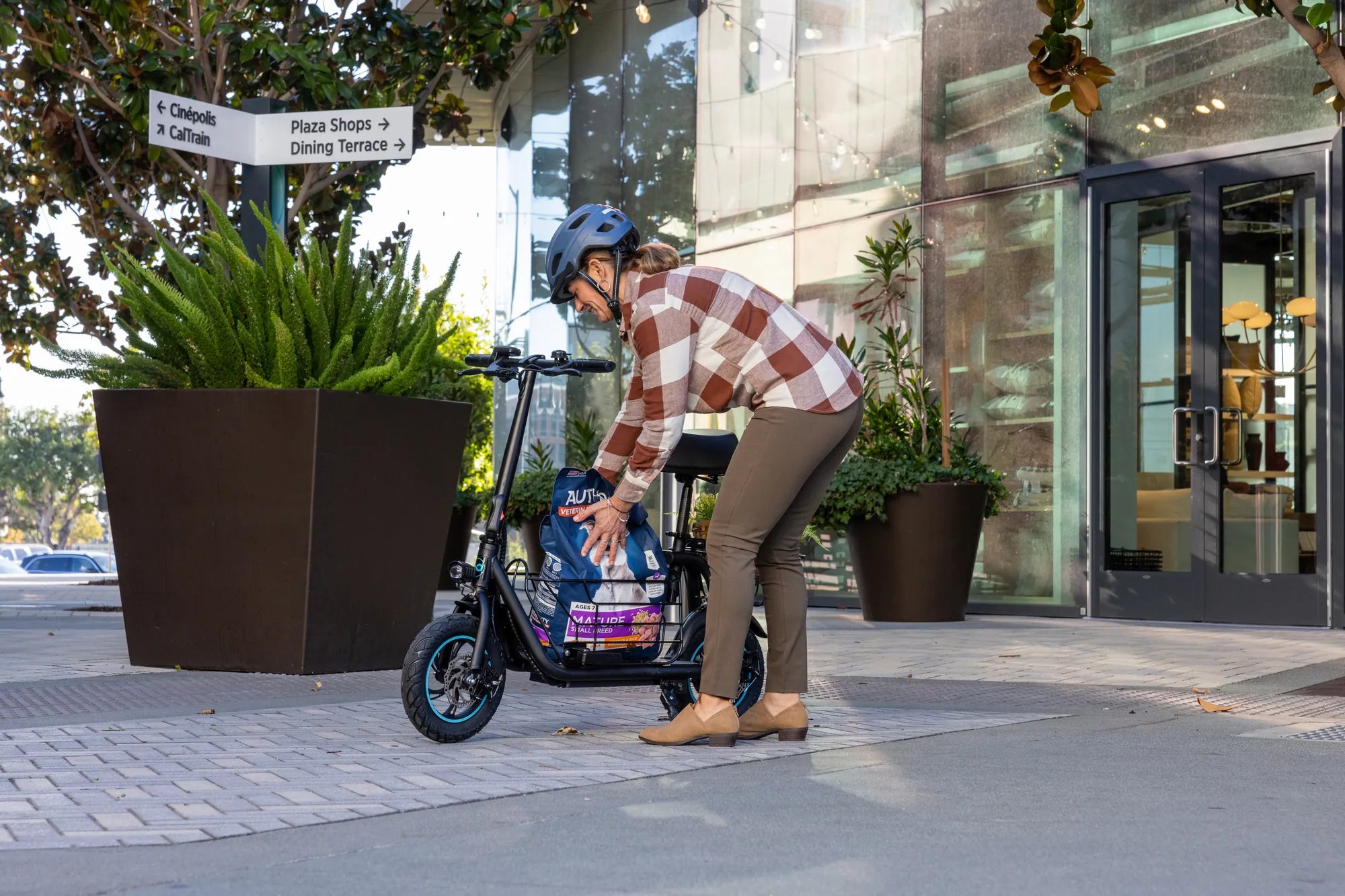
Navigating the Demand for Affordable Electric Scooters in India
The search for a cheap electric scooter in India is more than a quest for low price; it's a fundamental shift in urban mobility. With fuel prices fluctuating and city congestion worsening, millions of commuters are turning to electric two-wheelers for predictable daily costs and zero tailpipe emissions. However, the market's sheer variety presents a core challenge: identifying a scooter that is genuinely affordable without compromising on essential safety, reliability, and performance.
This article serves as a practical, data-driven guide to making that value-driven purchase. We will dissect what 'cheap' truly means, highlight the non-negotiable features for budget models, and provide a clear framework for selection. The goal is to equip you with the knowledge to invest in an affordable and eco-friendly commuting solution that stands the test of time and traffic.
Defining 'Cheap': Price Versus True Value in the Indian E-Scooter Market
In the context of electric scooters, 'cheap' must be evaluated on two axes: the Manufacturer's Suggested Retail Price (MSRP) and the Total Cost of Ownership (TCO). A low sticker price under ₹60,000 can be enticing, but if it hides a short-lived battery or nonexistent service network, the long-term expense skyrockets. True value emerges from a balance of reasonable initial investment, durability, and low operational costs.
The Indian market segments budget electric scooters broadly into two tiers. The ultra-budget segment (often under ₹60,000) typically features basic specifications. The value-packed mid-range (₹60,000 to ₹90,000) often incorporates better battery technology and more robust construction. Understanding this landscape is the first step toward a purchase that saves money for years, not just on the day of sale.
Key Features to Prioritize in a Budget-Friendly Electric Scooter
When funds are limited, prioritizing becomes critical. Certain features are non-negotiable for safety and basic functionality, even in the most affordable models. Sacrificing on these to save a few thousand rupees can lead to frustration, higher costs, and potential safety risks.
Battery & Range: The Heart of the Deal
The battery is the most critical and expensive component. Budget scooters primarily use two types: Lithium-ion (Li-ion) and Sealed Lead-Acid (SLA). Li-ion batteries are lighter, offer longer lifespan (3-5 years), support faster charging, and provide better range per charge but at a higher upfront cost. SLA batteries are heavier, have a shorter lifespan (1-2 years), and take longer to charge, but they significantly reduce the scooter's initial price.
For city commuting, a realistic range of 60-100 km per charge (as per IDC standards) is sufficient for most users. Always consider the real-world range, which can be 20-30% less than advertised, depending on rider weight, terrain, speed, and use of accessories like lights.
Motor Power & Performance: Matching City Needs
Motor power, measured in watts (W) or kilowatts (kW), dictates acceleration, hill-climbing ability, and top speed. For flat urban commutes, a 250W to 500W hub motor is typically adequate, offering top speeds of 25-45 km/h. This aligns perfectly with city speed limits and ensures regulatory compliance for vehicles not requiring registration in many states.
Focus on sufficient torque for your daily route rather than maximum speed. A scooter with good low-end torque will handle gradual inclines and start-stop traffic more efficiently than a high-speed model with poor pickup.
Build Quality & Safety: Non-Negotiables on a Budget
Build quality directly impacts safety and longevity. Examine the frame material—a robust steel or aluminum frame is essential. The braking system is paramount; a combination of disc brakes (front) and drum brakes (rear) offers reliable stopping power. Basic front suspension and adequate lighting (LED preferred for efficiency) are must-haves for Indian road conditions.
While premium brands like Gyroor set benchmarks with features like UL-certified lithium-ion battery packs and IPX5 water-resistant designs, these principles guide a smart budget purchase. Look for the best combination of durable construction, reliable braking, and weather resistance (IP54 rating or higher is advisable) within your price bracket.
Warranty & After-Sales Service: Protecting Your Investment
A strong warranty is your financial shield. Prioritize brands that offer a comprehensive warranty, with specific, lengthy coverage for the battery and motor—the two most expensive parts. A 3-year battery warranty is a strong indicator of confidence. Equally important is the brand's service network in your city or region.
Robust after-sales support, exemplified by Gyroor's 1-year comprehensive warranty on its products, transforms a mere purchase into a protected investment. Before buying, verify service center locations and read reviews about spare parts availability and repair turnaround times.
Top Contenders: Analysis of Popular Affordable Electric Scooter Segments
To navigate the market effectively, it helps to understand the typical profiles of scooters in different price bands. The following table provides a comparative overview of what to expect.
| Segment | Price Range (Approx.) | Typical Battery | Expected Range (IDC) | Key Features & Trade-offs |
|---|---|---|---|---|
| Ultra-Budget Commuters | Under ₹60,000 | Lead-Acid | 60-75 km | Basic speed (25 km/h), minimal features, lower weight capacity. Lowest upfront cost but higher long-term battery replacement cost. |
| Value-Packed Mid-Range | ₹60,000 - ₹90,000 | Lithium-ion | 75-110 km | Better speed (45-55 km/h), digital display, mobile connectivity, better suspension. Higher initial investment but lower TCO. |
The Long-Term Value Perspective: Cost of Ownership
The true economic advantage of a cheap electric scooter in India unfolds over years. A simple 5-year TCO analysis reveals stark differences. Assume a daily commute of 20 km.
- Electric Scooter (Li-ion): Upfront cost: ₹80,000. Charging cost (@₹6/unit): ~₹5,400. Annual maintenance: ~₹1,500. 5-year TCO: ~₹95,000.
- Petrol Scooter (110cc): Upfront cost: ₹85,000. Fuel cost (@₹110/litre, 50 kmpl): ~₹80,000. Annual maintenance: ~₹3,000. 5-year TCO: ~₹1,80,000.
This data-driven view underscores that even a mid-range electric scooter can offer dramatic savings, making it the truly affordable commuting solution.
Smart Buying Guide: How to Choose Your Affordable Electric Scooter
Armed with knowledge of features and costs, follow this actionable checklist to finalize your purchase confidently.
Assessing Your Daily Commute Needs
Map your regular journey. Calculate the maximum daily distance, note any significant inclines, and consider if you'll carry a passenger or heavy items. Add a 20-30% buffer to the daily distance to determine your required minimum range, accounting for battery degradation over time and occasional detours.
The Essential Pre-Purchase Checklist
- Test Ride: Assess comfort, stability, braking feel, and acceleration.
- Verify Subsidy: Confirm FAME-II and state subsidy eligibility for the model. The ex-showroom price and on-road price can differ significantly.
- Document Scrutiny: Read the warranty booklet thoroughly, focusing on exclusions.
- Research: Check online forums and reviews for real-world owner experiences with battery life and service.
Where to Buy: Online Platforms vs. Authorized Dealers
Online platforms may offer discounts and home delivery, but ensure the seller is an authorized partner to validate the warranty. Authorized dealerships provide the advantage of a physical test ride, immediate clarification of doubts, and a direct line to service. They also handle registration formalities if required. For high-value items, the dealer's proximity for future service can be a decisive factor.
Frequently Asked Questions (FAQs)
Q1: What is the actual on-road price of a cheap electric scooter after subsidies?
A1: The on-road price includes the ex-showroom price minus central (FAME-II) and state subsidies, plus registration, insurance, and road tax. For a scooter with an ex-showroom price of ₹75,000, after a ₹15,000 FAME-II subsidy and a ₹10,000 state subsidy, the base price becomes ₹50,000. Adding ₹5,000 for RTO and insurance, the on-road price would be approximately ₹55,000.
Q2: How long does the battery last, and what is the replacement cost?
A2: A quality lithium-ion battery lasts 3-5 years or 800-1000 full charge cycles. A lead-acid battery may last 1-2 years. Replacement costs vary: a new Li-ion battery pack for a budget scooter can cost between ₹15,000 to ₹25,000, while a lead-acid set is cheaper (₹5,000-₹8,000) but needs replacing more often.
Q3: Is it safe to ride in light rain given the typical IP ratings?
A3: An IP rating of IP54 or higher is recommended for Indian conditions. IP54 means the scooter is protected against dust ingress and water splashes from any direction. It is generally safe for light rain and wet roads. Avoid submerging any part of the scooter, especially the battery compartment, in water.
Q4: What is the maintenance schedule and cost compared to petrol scooters?
A4: E-scooters have far fewer moving parts. Maintenance revolves around brake adjustments, tire pressure, suspension checks, and ensuring electrical connections are clean. Annual maintenance costs are typically 50-60% lower than for petrol scooters, as there are no engine oil, spark plug, or air filter changes.
Q5: Can I get a loan for an electric scooter?
A5>Yes. Most major banks and NBFCs offer green vehicle loans for electric two-wheelers, often at a slightly lower interest rate than for petrol vehicles. The loan-to-value ratio is usually up to 85-90% of the on-road price. Documentation required typically includes proof of identity, address, income, and a quotation from the dealer.
Investing Wisely in India's Electric Future
Choosing a cheap electric scooter in India is a financially and environmentally astute decision when done with research and foresight. The most affordable option is the one that delivers reliable, cost-effective commuting for years without hidden expenses. By prioritizing a quality battery, robust safety features, and a strong warranty, you secure not just a vehicle, but a key to cleaner air, quieter streets, and significant personal savings.
This shift towards electric mobility is a powerful step for individual commuters and the nation. As you explore your options, remember that value is defined by longevity and satisfaction. For those seeking proven reliability and advanced engineering that prioritizes safety, exploring established brands with a global track record is a logical step.
Discover a range of meticulously engineered, safety-focused electric mobility solutions designed for durability and performance. Browse the full Gyroor collection at gyroorboard.com.
Are There Electric Scooters in Vancouver? A Complete Guide to Micromobility
Electric Scooters 2025 Models: The Future of Urban Mobility