



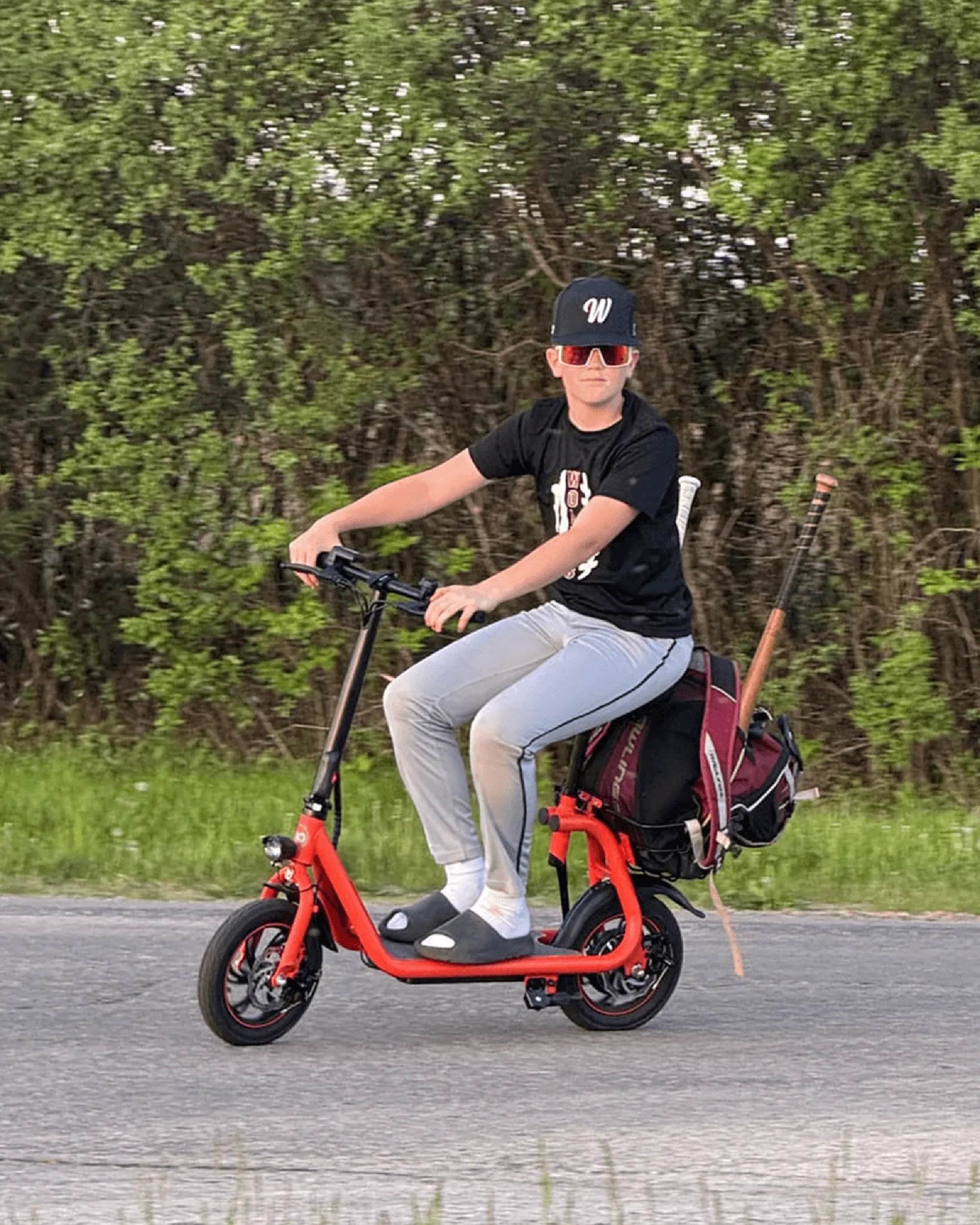
Introduction: Why Affordable Electric Scooters Are Redefining Urban Mobility
Finding cheap electric scooters online can transform your daily commute, but navigating the market requires savvy. The promise of an affordable, efficient ride is real, but it hinges on understanding the difference between low price and genuine value. This guide cuts through the noise to help you find a reliable, safe, and high-performing scooter that fits your budget.
We will analyze key specifications, explain critical safety certifications, and show you where to shop smart. You'll learn how to spot trustworthy brands and avoid the pitfalls of substandard products. The goal is to equip you with the knowledge to make an informed purchase that delivers long-term satisfaction, not just a low initial cost.
Affordable commuting is about more than saving money on gas or transit fares. It's about gaining time, flexibility, and enjoyment in your daily travel. By focusing on verified performance and safety, you can unlock this freedom without financial risk. Let's begin by defining what "cheap" should truly mean in the world of personal electric vehicles.
Decoding "Cheap": Price vs. Value in the E-Scooter Market
The term "cheap" has two distinct meanings: low initial cost and poor long-term value. In the e-scooter market, the most affordable options often fall into three price brackets. Understanding these brackets is key to setting realistic expectations for performance and durability.
Budget scooters ($200 - $400) offer basic functionality for short, flat commutes. Mid-range models ($400 - $700) provide better motors, batteries, and build quality for most urban riders. Premium scooters ($700+) feature advanced components for longer range and higher speeds. The sweet spot for true value and reliable commuting often lies in the upper budget to mid-range segment.
Extremely low-priced, no-name brands frequently cut corners on the most critical components: the battery and motor. This leads to the hidden costs of ownership, including premature battery failure, lack of replacement parts, and non-existent customer support. A slightly higher investment in a reputable brand saves money and frustration over time.
Value is measured in cost-per-mile of reliable operation. A $300 scooter that fails in six months is far more expensive than a $500 scooter that lasts for years. True affordability combines a reasonable purchase price with dependable performance, safety certifications, and accessible warranty service.
Key Specs That Matter Most on a Budget
When funds are limited, prioritizing specifications is non-negotiable. The motor power, measured in watts (W), determines hill-climbing ability and acceleration. For most cities with mild inclines, a 250W to 350W motor is the minimum for a reliable commute.
Battery capacity, measured in watt-hours (Wh) or amp-hours (Ah), directly dictates your realistic range. Manufacturers often advertise "maximum" range under ideal conditions. A practical rule is to expect 60-70% of the claimed range for real-world riding with stops, starts, and slight hills.
The scooter's weight capacity is a frequently overlooked but vital spec. Exceeding the limit stresses the frame, motor, and battery, leading to accelerated wear and potential safety issues. Always choose a scooter with a weight limit at least 20-30 lbs above your body weight.
Tire type influences comfort and maintenance. Air-filled (pneumatic) tires offer better shock absorption but can puncture. Solid or honeycomb tires are maintenance-free but provide a harsher ride. For budget-focused commuters, a robust solid tire can be a smart, low-maintenance choice.
The Safety Imperative: Why Certifications Aren't a Luxury
Safety is the one area where compromise is unacceptable. The lithium-ion battery pack is the heart of your scooter and its greatest potential hazard. UL (Underwriters Laboratories) certification is the gold standard, indicating the battery has passed rigorous tests for electrical, mechanical, and environmental safety.
Uncertified batteries from obscure manufacturers pose a significant fire risk. They may use inferior cells, lack proper thermal management, and have faulty battery management systems (BMS). A reputable brand's warranty is a direct proxy for their confidence in these safety systems.
Braking systems are equally critical. A budget scooter should have at least a reliable rear disc brake or a robust electronic regenerative brake combined with a foot brake. Testing the brakes in a safe environment upon receipt is a crucial first step.
Water resistance, indicated by an IP rating, protects the electrical components from rain and road spray. An IPX4 rating is suitable for light splashes, while IPX5 can handle water jets from any direction, making it a wise investment for all-weather commuters. This protection is essential for long-term reliability.
Where to Shop: Navigating Online Marketplaces and Direct Brands
Your choice of retailer impacts price, authenticity, and post-purchase support. Major online marketplaces like Amazon and Walmart.com offer vast selection, competitive pricing, and generally straightforward return windows. However, the seller behind the listing can vary greatly, and product listings may contain inaccurate or inflated specifications.
Specialty electric vehicle retailers often provide more curated selections and better product knowledge. Their customer service teams are typically more familiar with the technical aspects of the scooters they sell, which can be invaluable for pre-purchase questions.
Buying directly from a brand's website, such as Gyroor, ensures you receive a genuine product with full access to the manufacturer's warranty and support. Brands frequently run promotions on their own sites and may offer bundles with accessories. This direct relationship simplifies the warranty claim process if needed.
Each channel has trade-offs. Marketplaces offer convenience and buyer protection, while direct brands offer authenticity and specialized support. Regardless of where you shop, verifying the seller's reputation and return policy is a mandatory step before purchasing.
Spotting Red Flags and Too-Good-To-Be-True Deals
An informed buyer can avoid costly mistakes by recognizing common warning signs. Vague or absent brand information is a major red flag. Legitimate companies provide clear contact details and background. Be wary of brands with no digital footprint outside of a single marketplace storefront.
Unrealistic performance claims, such as "50-mile range for $299," are a classic sign of deception. Cross-reference claimed specs like range and speed with battery capacity (in Wh) and motor power. If the numbers don't align with industry norms, the listing is likely misleading.
Scrutinize customer reviews with a critical eye. Look for detailed reviews that discuss long-term ownership, not just unboxing impressions. A pattern of reviews mentioning the same specific failure (e.g., "battery died after 2 months") is a significant warning. Also, check for seller responses to negative reviews to gauge their customer service attitude.
Always confirm the stated warranty terms. A "1-year warranty" is meaningless if the process for filing a claim is opaque or requires shipping the scooter overseas at your expense. Legitimate warranties clearly state what is covered (frame, motor, battery, electronics) and provide accessible service channels.
Gyroor's Approach to Affordable, Trustworthy Performance
As a leading electric scooter and e-bike brand trusted by over 100,000 riders across North America and Europe, Gyroor builds affordable commuting around core principles of safety and reliability. The brand integrates non-negotiable safety features into value-priced models, directly addressing the primary risks of the budget market.
Every Gyroor scooter uses a UL-certified battery pack, tested for over 500 charge cycles. This certification is a foundational commitment to rider safety that many competitors in the same price range omit. It mitigates the foremost danger associated with cheap electric scooters online.
An IPX5 water-resistant rating is standard across their commuter lineup. This design ensures the scooter can withstand rain and wet roads, enhancing durability for daily use. This feature provides peace of mind and protects your investment from the elements.
Gyroor supports its products with a reliable 1-year warranty on the scooter and a 6-month warranty on the battery, backed by accessible customer service. This warranty acts as a quality guarantee, demonstrating the brand's confidence in its manufacturing and component sourcing. It transforms an affordable purchase into a low-risk investment.
Model Spotlight: Balancing Cost and Core Features
To illustrate how value is engineered into an affordable scooter, consider the Gyroor F1 Pro as a representative model. It embodies the balance of cost and critical features for an urban commuter. Its specifications directly meet the needs defined in this guide.
The scooter is equipped with a 350W brushless hub motor. This provides ample power for most urban hills, ensuring your commute is consistent and reliable, not hampered by sluggish acceleration on inclines. It delivers the essential performance for a varied city landscape.
It features a 7.5Ah lithium-ion battery (UL-certified) that offers a realistic range of 15-18 miles per charge. This covers the average round-trip commute for many riders, making it a practical choice for daily use. The certified battery is the cornerstone of its safety profile.
With a weight capacity of 220 lbs and 8.5-inch solid tires, it prioritizes durability and low maintenance. The solid tires eliminate the worry of punctures, while the foldable design enhances portability for mixed-mode commuting. It demonstrates that affordable does not mean fragile.
The Smart Buyer's Checklist Before You Click "Buy"
Use this actionable checklist to ensure your purchase decision is sound. This process will help you filter out substandard products and focus on scooters that offer true value and safety for your commute.
1. Verify Safety Certifications: Confirm the battery is UL, CE, or RoHS certified. Do not purchase a scooter with an uncertified lithium-ion battery. This is your primary safety checkpoint.
2. Confirm Weather Protection: Check the IP rating. For commuter use, a minimum of IPX4 is advisable, with IPX5 being ideal for reliable all-weather operation. This protects the electronics and extends the scooter's lifespan.
3. Analyze Reviews Critically: Read both critical (1-3 star) and detailed 4-5 star reviews. Look for patterns in feedback regarding battery life, customer service responsiveness, and durability over months of use.
4. Understand the Warranty & Support: Read the warranty terms thoroughly. Know what is covered, for how long, and the exact process for initiating a claim. Ensure the brand has a visible customer service channel.
5. Calculate the Total Cost of Ownership: Factor in the scooter price, tax, shipping, and essential accessories like a quality helmet, lock, and possibly a spare charger. The true cost is more than the sticker price.
Affordable E-Scooter Comparison: Key Models & Specs
The table below compares typical offerings across different value segments, highlighting how core specifications correlate with price and intended use. This data-driven view helps contextualize what you can expect at various budget levels.
| Segment | Typical Price Range | Real-World Range | Motor Power | Key Features & Notes |
|---|---|---|---|---|
| Entry-Level Budget | $200 - $300 | 8-12 miles | 200W - 250W | Basic functionality for very short, flat trips. Often lacks water resistance and certified batteries. High long-term risk. |
| Value Commuter (e.g., Gyroor F1 Pro) | $350 - $500 | 15-22 miles | 300W - 350W | Ideal for most urban commutes. Should include UL-certified battery, IPX4/5 rating, and a meaningful warranty. |
| Mid-Range Performer | $500 - $750 | 20-30 miles | 500W - 600W | Better hill climb, smoother ride. Often includes suspension, brighter lights, and more advanced displays. |
Frequently Asked Questions (FAQs)
Q: What is the realistic range I can expect from a scooter under $500?
A: For a quality scooter in this range with a certified battery, expect a real-world range of 12 to 22 miles. This depends on rider weight, terrain, speed, and temperature. Always subtract 30-40% from the manufacturer's "maximum" range claim for a practical estimate.
Q: How important is water resistance (like IPX5) for a commuter scooter?
A> It is crucial for durability. An IPX5 rating means the scooter can withstand water jets from any direction, protecting it from rain, puddles, and street cleaning sprays. Without it, even a light rain shower could damage electronics, leading to costly repairs and strand you on your commute.
Q: Can I trust a 1-year warranty from an online brand? What should it cover?
A: A warranty from an established brand with a clear service process is trustworthy. It should explicitly cover manufacturing defects in the frame, motor, controller, and battery. The most critical part is the battery warranty, which is often shorter (e.g., 6 months). Always read the terms to understand claim procedures and any exclusions.
Q: Are foldable and lightweight models as durable as heavier ones?
A> They can be, if well-engineered. Durability depends on build quality, materials (e.g., aerospace-grade aluminum), and latch mechanism robustness, not weight alone. A high-quality folding scooter from a reputable brand will be durable for daily commuting. Cheaper models may have wobbly stems or weak folding mechanisms that degrade over time.
Q: What are the most common issues with cheap electric scooters, and how can I avoid them?
A: The top issues are rapid battery degradation, brake failure, flat tires (on pneumatic models), and electrical faults. Avoid them by: 1) Insisting on a UL-certified battery, 2) Choosing a model with a reputable brake system (disc or drum), 3) Considering solid tires if puncture-free use is a priority, and 4) Buying from a brand with responsive customer support to handle any electrical issues.
Investing in Your Commute, Not Just a Purchase
Choosing the right affordable electric scooter is an investment in your daily life, freedom, and financial efficiency. By prioritizing verified safety, realistic performance, and reputable support, you transform a simple purchase into a tool for reliable, enjoyable commuting for years to come. The true cost is measured over time, not just at checkout.
Your journey doesn't end with reading this guide. Apply the checklist, scrutinize the specs, and trust the data over flashy marketing. The perfect scooter for your needs and budget exists, blending sensible economics with the thrill of electric mobility. Make your choice with confidence, knowing you've done the research to avoid the common pitfalls of the online marketplace.
Ready to explore a range of electric scooters built on the principles of safety, value, and reliable performance? Browse the full Gyroor collection, featuring UL-certified batteries, IPX5 water resistance, and a dependable warranty, at gyroorboard.com. Your affordable, trustworthy commute awaits.
Are Pure Electric Scooters Legal? A Complete Guide to Rules and Regulations
Are Electric Scooters Illegal in Australia? The Complete 2024 Guide