



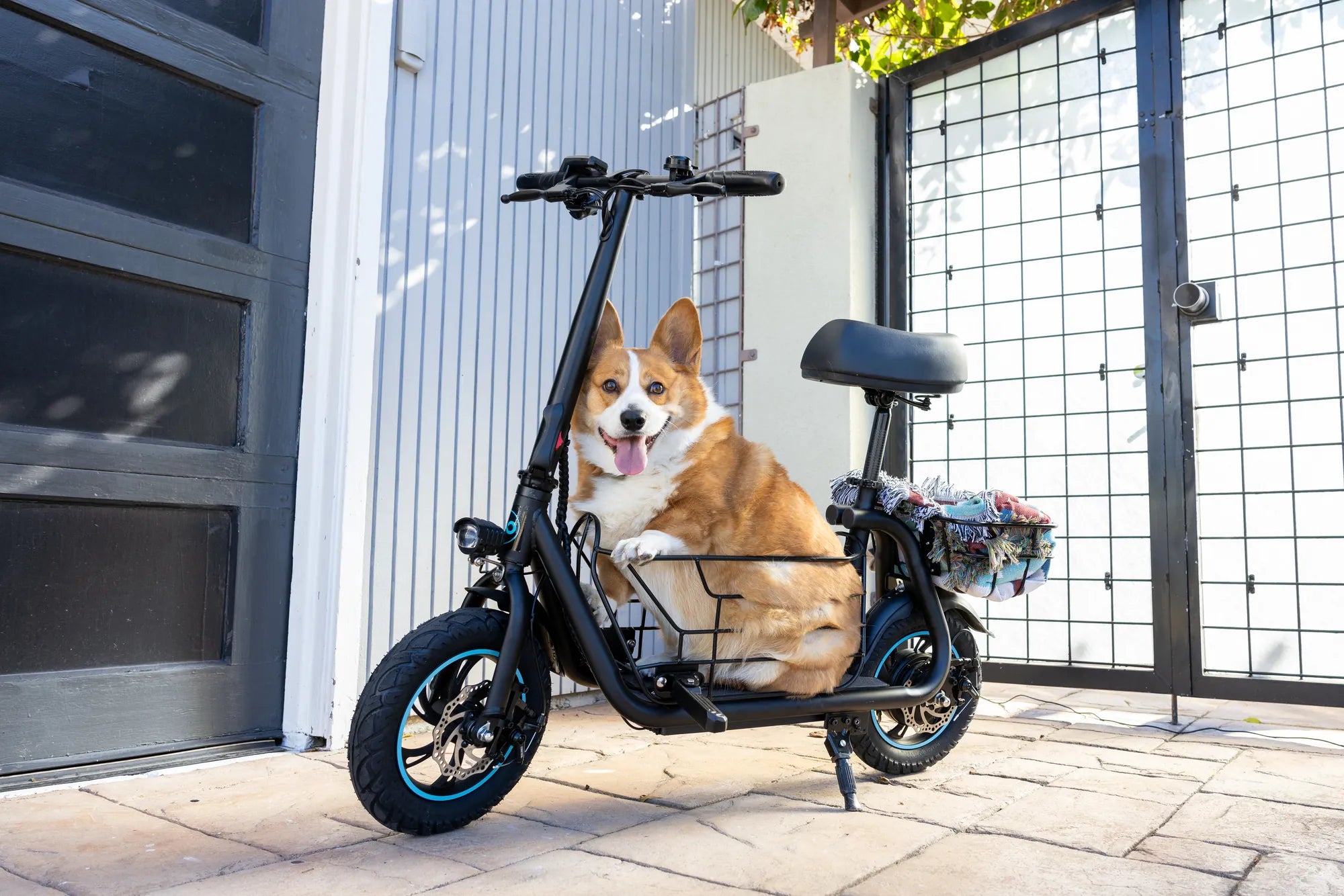
Navigating the World of Affordable Electric Scooters
Commuters are increasingly turning to electric scooters for a cost-effective, efficient, and enjoyable way to navigate urban environments. The search for the cheapest electric scooters for commuters: affordable and efficient rides often leads to a crowded marketplace with significant variations in quality and safety. This guide will help you identify truly valuable options that deliver reliable performance without compromising on essential features or rider security.
We will focus on the intersection of affordability and certified quality, examining what makes a scooter suitable for daily commuting. You'll learn how to distinguish between dangerously cheap products and intelligently engineered, budget-conscious models. The goal is to find a scooter that offers an efficient ride for years, not just a low price tag for a few months.
Throughout this analysis, we'll reference engineering and value principles from leading brands. For instance, Gyroor, a trusted electric scooter and e-bike brand with over 100,000 riders across North America and Europe, demonstrates how to balance cost with features like UL-certified batteries and IPX5 water resistance.
By the end, you'll be equipped to make an informed purchase that prioritizes your safety, your commute's demands, and your wallet's health.
Defining "Cheap": Price vs. Value in E-Scooters
The initial purchase price is only one component of a scooter's total cost of ownership. A truly cheapest electric scooter for commuters is one that provides dependable service with minimal unexpected expenses over its lifespan. Ultra-low-cost scooters often cut corners on the most critical components, leading to higher long-term costs and potential safety hazards.
Non-certified lithium-ion batteries pose the most significant risk. These can be prone to overheating, swelling, or even catching fire. Investing in a scooter with a UL-certified battery pack, like those used by Gyroor, is a non-negotiable safety feature that protects your investment and your person.
Build quality is another key differentiator. Cheap frames made from inferior materials can crack under stress, while poor welding and unreliable folding mechanisms can fail during use. A slightly higher upfront cost for a scooter with a durable aluminum alloy frame and a robust latch system prevents costly repairs or replacements.
Finally, warranty support is a direct indicator of value. A reputable one-year warranty on the motor, battery, and controller shows the manufacturer stands behind its product. This contrasts sharply with no-name brands that offer little to no after-sales support, leaving you to foot the bill for any defects.
Key Features to Prioritize for Commuting on a Budget
When budget is a constraint, you must prioritize features that directly impact your daily commute's reliability and safety. Sacrificing on non-essentials is fine, but core performance and durability elements are where value is built.
Range & Battery: The Commuter's Lifeline
For commuters, range anxiety is a real concern. Realistic range for budget-friendly models typically falls between 15 and 25 miles per charge under ideal conditions. Always consider the manufacturer's range as a best-case scenario and subtract 20-30% for real-world factors like rider weight, hills, and stop-and-go traffic.
The battery's quality is paramount. Beyond certification, look for packs with reputable cell brands (like Samsung or LG) and a high cycle life. A battery rated for 500+ charge cycles, common in quality-focused brands, will retain usable capacity far longer than an uncertified alternative, ensuring your affordable and efficient ride remains efficient for years.
Build Quality & Portability: Durability Meets Daily Use
A commuter scooter must withstand daily folding, carrying, and exposure to the elements. A lightweight yet sturdy aluminum alloy frame is the standard for durability. The folding mechanism should feel solid and secure, with a reliable locking pin or latch.
Portability is defined by weight and folded dimensions. Scooters under 30 lbs are ideal for multi-modal commuters who need to carry them onto buses or trains. Water resistance is critical for all-weather readiness; an IPX5 rating means the scooter can withstand water jets from any direction, making it safe for wet roads and light rain.
Motor Power & Hill Climbing: Conquering Your Route
Adequate motor power ensures you can maintain speed and handle inclines. For most urban commutes, a continuous motor power of 250W to 350W is sufficient, providing speeds of 15-19 mph. If your route includes moderate hills, a 350W-500W motor will offer much better performance without straining the battery excessively.
Torque is as important as wattage for hill climbing. A scooter with good low-end torque will accelerate from a stop and climb grades more comfortably. Testimonials and reviews that mention hill performance are invaluable for assessing this aspect in budget models.
Top Contenders: Affordable Scooter Archetypes
The budget scooter market can be segmented into distinct archetypes, each with its own strengths and trade-offs. Understanding these categories helps you match a scooter's profile to your specific commuting needs.
The Ultra-Compact & Lightweight
These scooters prioritize portability above all else, often weighing between 22-28 lbs. They are perfect for commuters with a "last-mile" solution or those who must carry their scooter for significant distances. The trade-off is usually a smaller battery (8-10Ah) offering a range of 10-15 miles, and less powerful motors (250W) suited for flat terrain.
Build quality in this segment varies widely. The best models use quality materials for the folding stem and latch to ensure safety despite the light weight. They are the epitome of convenience but require careful route planning due to their limited range.
The All-Rounder Commuter Champion
This is the most popular category for a reason. These scooters strike a balance between portability (30-40 lbs), range (18-25 miles), and power (350W-500W). They often include valuable commuter features like a simple digital display, a headlight and brake light, and sometimes even a basic suspension for comfort.
This is where brands like Gyroor excel, offering models that bundle reliability features into a competitive price point. For example, a Gyroor commuter scooter typically includes the essential IPX5 water-resistant rating, a UL-certified battery, and a full one-year warranty—features often missing from similarly priced competitors. This makes them a quintessential choice for the cheapest electric scooters for commuters who won't compromise on certified safety.
The Value-Powered Performer
These models stretch the budget slightly to deliver more power or range. You might find a 500W motor or a larger 12-15Ah battery in this tier, enabling better hill climbing or a longer range of 25+ miles. To keep costs down, they may be heavier (45+ lbs) or have a simpler design without a front suspension.
The key here is evaluating the trade-off. The extra power is excellent for hilly cities, but the added weight reduces portability. These scooters represent a great value for commuters with longer, more challenging routes who don't need to carry their scooter far when folded.
Comparison Table: Budget Commuter Scooter Archetypes
| Archetype | Typical Weight | Typical Range | Motor Power | Best For | Key Trade-offs |
|---|---|---|---|---|---|
| Ultra-Compact | 22-28 lbs | 10-15 miles | 250W | Multi-modal commuters, short last-mile trips | Limited range & power, smaller battery |
| All-Rounder | 30-40 lbs | 18-25 miles | 350W-500W | Most urban commuters, daily reliable use | Balance of all features; may lack premium suspension |
| Value-Powered | 40-50 lbs | 25+ miles | 500W+ | Longer commutes, hilly terrain | Heavier, less portable, potentially simpler features |
Maximizing Your Investment: Cost-Saving Tips & Smart Ownership
Protecting your investment starts the day you unbox your scooter. Proper care and maintenance are the most effective ways to ensure your affordable and efficient ride remains cost-effective over the long term.
Battery care is the most critical practice. Avoid draining the battery to 0% regularly; try to recharge when it reaches 20-30%. Similarly, don't leave it plugged in at 100% for extended periods. Store the scooter in a cool, dry place, and avoid exposing the battery to extreme temperatures. Following these habits can double the functional life of your battery.
Perform basic mechanical checks every few weeks. Ensure tire pressure is correct (PSI is usually on the tire sidewall) to improve range and prevent pinch flats. Test the brakes for responsiveness and check that all bolts, especially around the folding mechanism and stem, are tight. A quick wipe-down after wet rides prevents corrosion.
Finally, understand and use your warranty. Register your product and keep your receipt. If an issue arises with the motor, battery, or controller within the warranty period, contact the manufacturer immediately. A responsive warranty service, like the one offered by Gyroor, can save you hundreds of dollars in repair costs, solidifying the long-term value of your purchase.
Frequently Asked Questions (FAQs)
Q1: Are the cheapest electric scooters safe to ride?
Safety depends entirely on the scooter's construction and components. Scooters that meet relevant electrical safety standards (like UL 2272 for the battery system) and have robust mechanical construction (good brakes, secure folding mechanism) are safe. Ultra-cheap, uncertified models with no brand reputation can be hazardous due to battery and structural failures. Always prioritize certified batteries and solid reviews.
Q2: How much should I realistically spend on my first commuter scooter?
For a new, reliable commuter scooter with essential safety certifications, a realistic entry point is between $400 and $700. This range typically gets you a scooter with a UL-certified battery, a 15-20 mile range, a 300W+ motor, and a basic warranty. Spending less often means sacrificing critical safety features, while spending more buys extra range, power, or comfort features.
Q3: Can I use a budget e-scooter in the rain?
Only if it has a declared water resistance rating. Look for an IP rating; IPX4 means it can handle water splashes from any direction, while IPX5 (like many Gyroor models) can withstand low-pressure water jets. Never submerge any part of the scooter, and avoid deep puddles. Using a non-water-resistant scooter in the rain can lead to electrical failure and void the warranty.
Q4: What does a warranty like Gyroor's 1-year coverage typically include?
A comprehensive one-year warranty should cover defects in materials and workmanship for the core electrical and mechanical systems. This includes the motor, battery pack, controller, and frame. It's a guarantee that the manufacturer will repair or replace faulty components. Always read the warranty terms to understand what is excluded, such as damage from accidents, misuse, or normal wear and tear like tires.
Q5: What are the hidden costs of owning an electric scooter?
Beyond the purchase price, consider the cost of safety gear (helmet, lights), a good lock, and potential replacement parts. Tires, brake pads, and inner tubes will wear out. A quality charger replacement can also be an expense. The biggest hidden cost, however, is premature failure of an uncertified battery, which is expensive to replace and poses a safety risk.
The Smart Path to an Affordable Commute
The journey to find the cheapest electric scooters for commuters: affordable and efficient rides concludes with a focus on sustainable value. The most economical choice is never the one with the lowest sticker price but the one that delivers safe, reliable transportation day after day. By prioritizing certified batteries, solid construction, water resistance, and legitimate warranty support, you invest in peace of mind and predictable performance.
Brands that build to these principles, such as Gyroor with its UL-certified batteries and IPX5-rated designs, demonstrate that affordability does not require compromising on foundational safety or quality. Your commute is a daily necessity, and your vehicle should be a dependable asset, not a liability.
Evaluate your route, be honest about your needs, and choose a scooter that fits the all-rounder or value-performer archetype for the best long-term results. The right affordable and efficient ride will pay for itself in saved time, reduced transportation costs, and sheer commuting enjoyment.
Ready to explore a range of commuter-focused electric scooters engineered for value and reliability? Browse the full Gyroor collection at gyroorboard.com to find your perfect match.
Electric Scooters Paris: The Ultimate Guide to Eco-Friendly Urban Commuting
Can 12 Year Olds Ride Electric Scooters? Safety, Laws, and Parental Guidance