



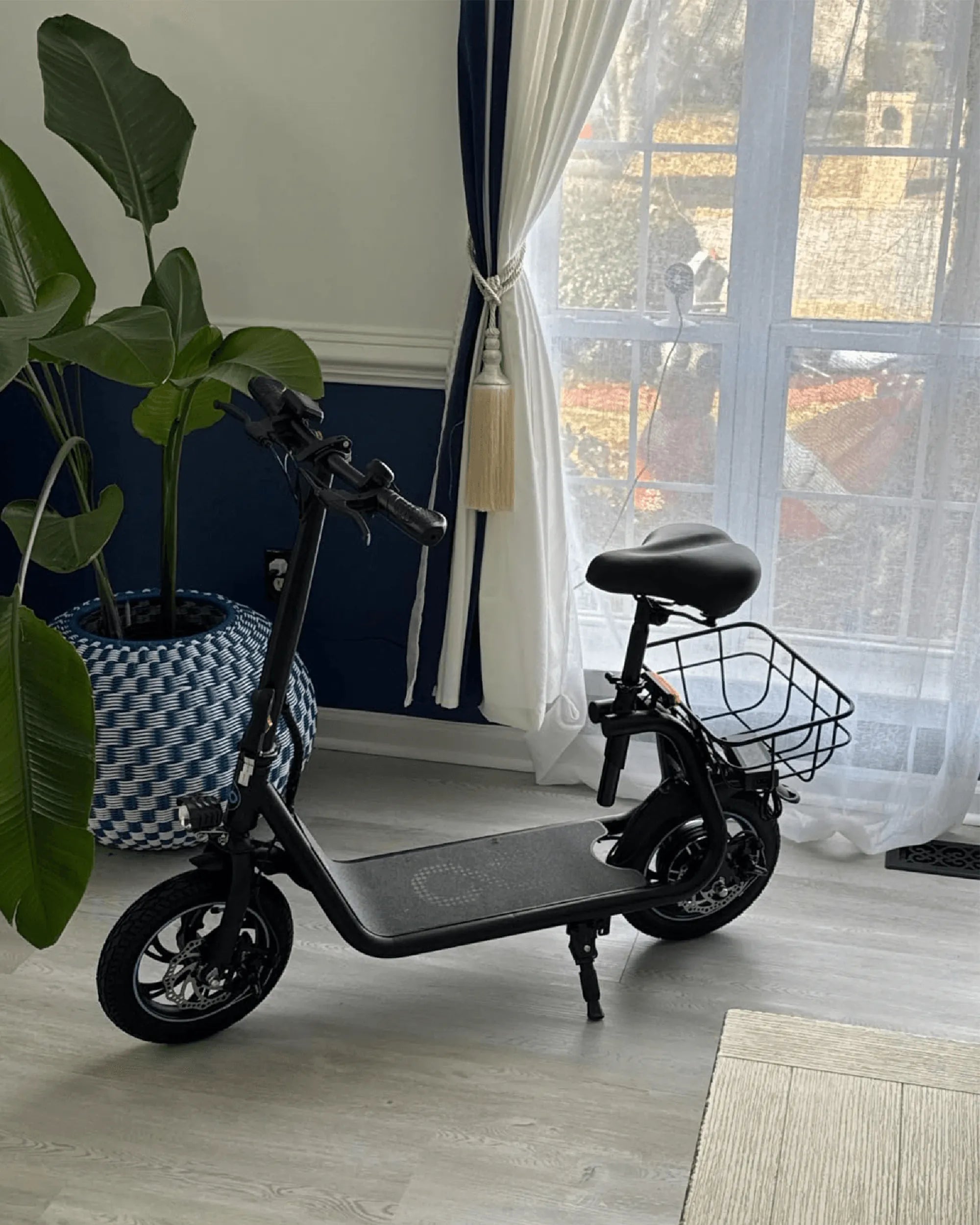
Introduction to the Modern Compact Folding E Bike
The compact folding e bike represents a revolutionary fusion of electric propulsion and ingenious portability. It is designed to collapse into a manageable size, solving core urban challenges like parking scarcity, limited storage, and the 'last-mile' gap between public transit and a final destination. This guide provides a data-driven analysis of this vehicle category, helping you make an informed decision for your mobility needs.
We will examine the tangible benefits, critical specifications, and long-term ownership considerations. As a leader in personal electric transport, Gyroor engineers its e-bikes with a focus on reliability, safety, and user-centric design, trusted by over 100,000 riders. Understanding the nuances of a quality compact folding e bike is key to a satisfying and practical investment.
Why Choose a Compact Folding E Bike? Key Benefits
Choosing a compact folding e bike is a strategic decision for modern living. The primary advantages are not merely about convenience but about fundamentally reshaping daily logistics. These bikes offer a unique combination of assisted riding, space efficiency, and transport flexibility that standard bicycles or e-scooters cannot match.
The benefits directly address pain points for city dwellers, commuters, and those with active lifestyles. From eliminating parking fees to making multi-modal travel seamless, the value proposition is clear and compelling for a wide range of users.
Ultimate Urban Mobility & Multi-Modal Commuting
The compact folding e bike is the ultimate tool for multi-modal commuting. It seamlessly bridges the gap between home, public transit hubs, and your workplace. You can ride to the train station, fold the bike in seconds, carry it aboard, and unfold it for the final leg of your journey. This eliminates the reliance on crowded bus connections or expensive ride-shares.
In dense urban cores where parking can cost hundreds per month, the ability to bring your vehicle indoors is a significant financial saving. Furthermore, it enhances security, as the bike is never left unattended in a public rack. This integrated approach makes the entire commute faster, more predictable, and less stressful.
Space-Saving Storage for Any Lifestyle
Storage is a critical constraint for many. A standard bicycle or e-bike requires a dedicated garage, shed, or bulky rack. A compact folding e bike, however, can be stored in a closet, under a desk, in an apartment corner, or even in a car trunk. This is a game-changer for apartment dwellers, those in shared housing, or anyone with limited storage space.
The folded dimensions are a key specification. High-quality models fold into a package roughly the size of a large suitcase. This not only saves physical space but also opens up possibilities, like taking your e-bike on vacation or storing it securely at work without needing special facilities.
Effortless Riding with Electric Assist
The electric assist system transforms the riding experience. A compact folding e bike uses a motor to amplify your pedaling effort, making hills feel flat and headwinds negligible. This allows you to arrive at your destination without sweating, making it ideal for commuting in work attire.
It also extends your effective range dramatically. A typical rider might manage a 5-mile commute on a traditional bike before fatigue sets in. With electric assist on a compact folding e bike, that range can easily double or triple, opening up new commuting radii. It also makes cycling accessible to a broader range of fitness levels and ages.
Critical Features to Look for in a Quality Folding E-Bike
Not all compact folding e bikes are created equal. Discerning buyers must evaluate specific features that impact performance, safety, and longevity. A focus on build quality and certified components is essential for a product you'll rely on daily.
Key areas to scrutinize include the folding mechanism, motor and battery specifications, and the overall durability of the frame and components. Investing in a model from a reputable brand like Gyroor, which emphasizes UL-certified batteries and robust warranties, ensures peace of mind.
Foldability & Portability Design
The folding mechanism is the heart of the product. Look for a design that is intuitive, quick (ideally under 15 seconds), and secure when locked in both riding and folded positions. Common types include mid-folds (hinge in the middle of the frame) and triangle folds (collapsing the rear triangle and handlepost).
Folded dimensions and weight are paramount. A truly compact folding e bike should have folded measurements under 36" x 18" x 28". Weight is equally critical; aluminum alloy frames keep weight between 35-55 lbs, making it manageable to carry short distances, up stairs, or onto transit.
Motor Power, Battery Life & Range
Motor power, measured in watts (W), determines hill-climbing ability and acceleration. For urban use, a 350W to 500W hub motor is often sufficient. Battery capacity, measured in watt-hours (Wh), directly correlates with range. A 375Wh battery may provide 20-40 miles of range depending on rider weight, terrain, and assist level.
Battery safety is non-negotiable. Insist on UL-certified battery packs, like those used by Gyroor, which have undergone rigorous testing for thermal stability and longevity (500+ charge cycles). This certification is a primary indicator of a safe, reliable product that won't pose a fire risk.
Build Quality, Durability & Warranty
The frame should be constructed from lightweight but sturdy aluminum alloy. Check the weight capacity, typically 220-265 lbs. Weather resistance is crucial for an all-commuter vehicle; an IPX5 water-resistance rating means the bike can withstand water jets from any direction, making it safe to ride in rain.
A comprehensive warranty is your safeguard. A reputable brand will offer at least a 1-year warranty on the frame, motor, and battery, like Gyroor's standard coverage. This demonstrates confidence in the product's durability for daily use and protects your investment.
Data-Driven Comparison: Folding E-Bike vs. Alternatives
Choosing the right personal electric vehicle requires understanding the trade-offs. The table below provides a clear, factual comparison between a compact folding e bike and other common urban transport options.
| Vehicle Type | Purchase Cost | Portability / Fold Size | Typical Range | Storage Needs | Multi-Modal Ease | Best For User Profile |
|---|---|---|---|---|---|---|
| Compact Folding E Bike | $$$ | Excellent (Suitcase-size) | 20-40 miles | Minimal (Indoors) | Excellent (Bus/Train) | Urban commuters, apartment dwellers, multi-modal travelers. |
| Standard E-Bike | $$-$$$ | Poor (Full-size) | 25-50 miles | Substantial (Garage/Rack) | Poor | Suburban riders, dedicated bike path users, those with secure storage. |
| Electric Scooter | $-$$ | Good (Tall, narrow) | 15-25 miles | Minimal (Indoors) | Good | Short-distance 'last-mile' trips, very dense urban cores. |
| Public Transit Only | $ (Fare-based) | N/A | Network Dependent | N/A | N/A (Core mode) | Those living and working directly on efficient transit lines. |
Analysis: The compact folding e bike offers the best balance of range, portability, and all-weather capability. While the upfront cost is higher than an electric scooter, its longer range and more comfortable riding posture make it superior for commutes over 3-4 miles. It uniquely solves the storage and transit integration problems that limit standard e-bikes.
Maximizing Your Folding E-Bike Experience: Tips & Best Practices
Proper ownership practices ensure safety, extend the lifespan of your compact folding e bike, and maximize your enjoyment. These tips are based on common maintenance schedules and rider experiences.
Adhering to a simple routine can prevent most issues and keep your bike running smoothly for years. This is especially important for a mechanical device that is folded and unfolded regularly.
Safe Riding Practices in Urban Environments
First, understand local laws. E-bikes are typically classified (Class 1, 2, or 3) with different rules for where they can be ridden. Always wear a helmet, regardless of legal requirements. Use front and rear lights, even during the day, to increase visibility.
Practice defensive riding: assume cars do not see you. Signal turns clearly. When the compact folding e bike is folded and being carried or stored, ensure the folding joints are securely locked to prevent accidental unfolding. Use the provided frame lock or a small cable lock for quick security stops.
Routine Maintenance & Care for Longevity
Follow the battery charging guidelines: avoid draining it to 0% regularly, and don't leave it at 100% charge for extended periods. Store the bike and battery in a cool, dry place. Check tire pressure weekly; properly inflated tires improve range and prevent flats.
Regularly inspect and adjust brake pads. Keep the chain clean and lubricated. Clean the frame with a damp cloth, taking advantage of its IPX5 rating for easy rinsing. When folding and unfolding, avoid forcing mechanisms; a quality compact folding e bike should operate smoothly. Lubricate hinge points as recommended in the manual.
Frequently Asked Questions (FAQ)
Q1: How heavy is a typical compact folding e bike?
A: Weight varies by model and battery size, but most quality aluminum-frame models weigh between 40 and 55 pounds (18-25 kg). This is light enough to carry up a flight of stairs or lift onto a bus rack but is a consideration for daily portability.
Q2: Can I take my compact folding e bike on a bus or train?
A: Policies vary by transit authority. Most buses with exterior bike racks are not suitable for folded e-bikes. However, many trains, subways, and intercity rails allow folded bikes at all times, treating them as luggage. Always check your local carrier's specific policy before your first trip.
Q3: How long does the battery last before needing replacement?
A>With proper care, a quality UL-certified lithium-ion battery (like those in Gyroor e-bikes) retains significant capacity for 500+ full charge cycles. For a commuter using it daily, this translates to 2-4 years before you might notice reduced range. Batteries are replaceable, extending the life of the bike itself.
Q4: Is it difficult to fold and unfold?
A: A well-designed compact folding e bike features an intuitive, tool-free mechanism. With practice, the process should take 10-20 seconds. Look for models with positive locking pins and clear indicators to ensure it is securely locked in the riding position.
Q5: Are Gyroor e-bikes covered by warranty for daily commuting use?
A: Yes. Gyroor's standard 1-year warranty covers the frame, motor, battery, and essential components for defects in materials and workmanship, explicitly including the wear and tear of daily commuting. This commitment underscores the build quality designed for real-world, reliable use.
Conclusion: Is a Compact Folding E Bike Right for You?
The decision hinges on your specific mobility challenges and lifestyle. If you face parking difficulties, have limited storage at home or work, or your commute involves combining cycling with other forms of transport, a compact folding e bike is an exceptionally smart solution. It provides electric-assisted ease without the portability sacrifices of a standard e-bike.
For those prioritizing safety, durability, and long-term support, choosing a brand with proven credentials is crucial. Gyroor's focus on UL-certified batteries, IPX5 water-resistant designs, and a robust 1-year warranty makes its e-bikes a reliable investment for transforming your daily travel. Experience the freedom of seamless urban mobility. Browse the full Gyroor collection, including our range of innovative compact folding e bikes, at gyroorboard.com.
59cc Dirt Bike: The Complete Guide to the Ultimate Starter Machine
59cc Dirt Bike: The Complete Guide to the Ultimate Starter Machine