



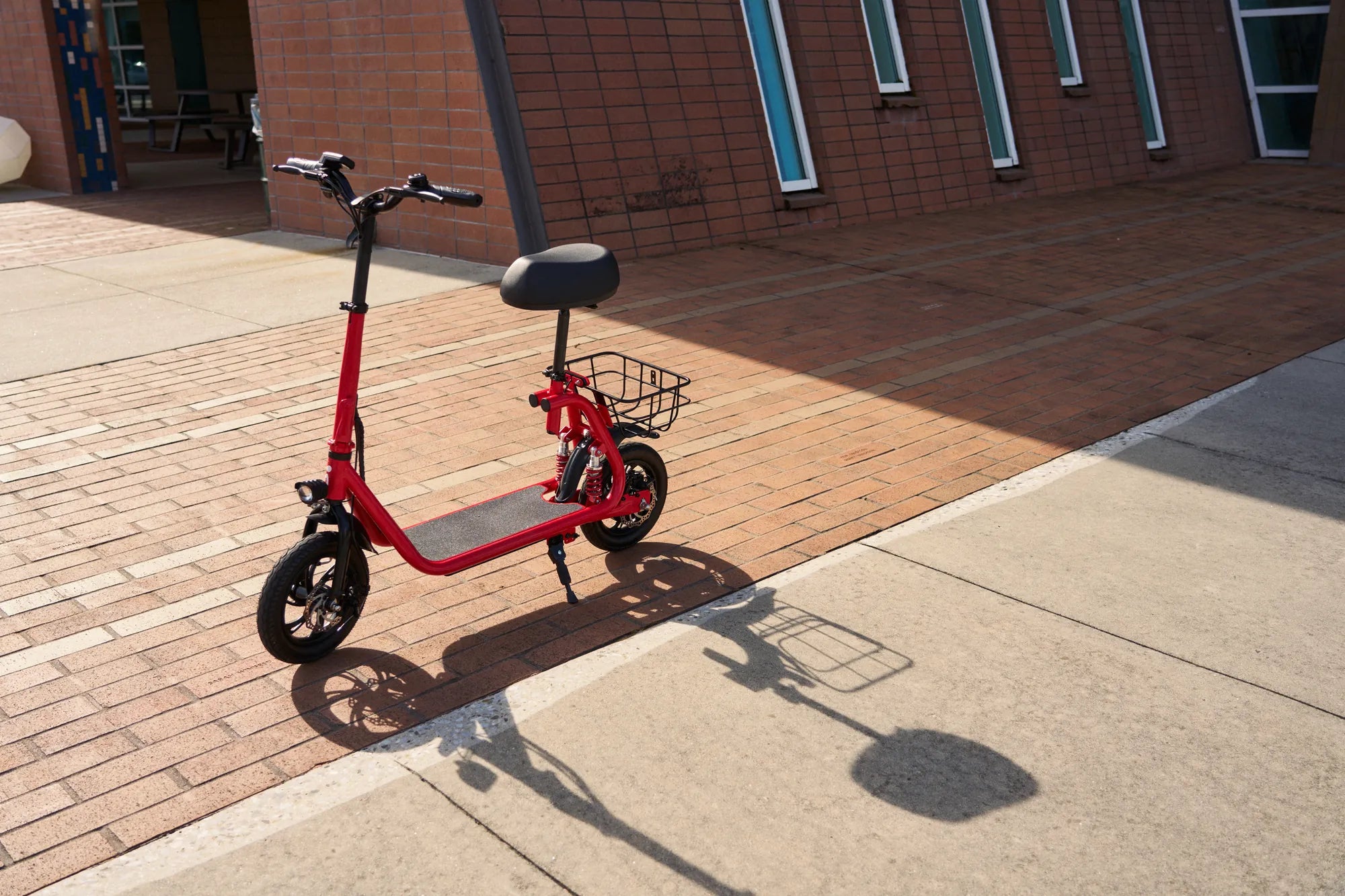
Introduction: The Uphill Reality for Electric Scooters
You're cruising smoothly on your electric scooter, and then the road tilts upward. The immediate, pressing question forms: do electric scooters go uphill? The short answer is yes, but the real answer is nuanced. Modern electric scooters are engineered to handle inclines, but their performance varies dramatically based on a core set of technical specifications and real-world conditions.
This isn't just about raw power; it's about the intelligent delivery of torque, the efficiency of the power system, and how the scooter's design interacts with gravity and weight. Brands like Gyroor, a leading electric scooter and e-bike brand trusted by over 100,000 riders, design models specifically to tackle the varied terrain of urban commutes, including those challenging slopes. This article will dissect the mechanics, provide clear data on what to expect, and equip you to choose or ride a scooter that won't leave you walking up the hill.
The Core Mechanics: Power, Torque, and the Fight Against Gravity
To understand hill climbing, you must understand the forces at play. The primary challenge is overcoming gravity's pull on the combined weight of the rider and the scooter. This requires a specific type of force from the motor: torque.
Motor power, measured in watts (W), is often the headline spec, but it tells an incomplete story. Wattage indicates the rate of energy consumption and potential work. However, torque is the rotational force that gets the wheel turning and propels you forward from a standstill or up an incline. Think of power as top speed on a flat road, while torque is the low-end grunt for acceleration and climbing.
Electric motors generate maximum torque at low RPMs, which is ideal for starting climbs. The controller, acting as the scooter's brain, manages the flow of electrical current from the battery to the motor. A higher current (amperage) delivery typically means more instantaneous torque. Therefore, a scooter's uphill capability hinges on a system designed not just for high wattage, but for robust, sustained torque output.
Decoding the Key Factors for Uphill Performance
Not all scooters are created equal for climbing. Performance is determined by a combination of hardware specifications and environmental factors. By evaluating these elements, you can accurately predict how a scooter will perform on your daily route.
Motor Power, Type, and Torque Output
Nominal motor wattage (e.g., 350W, 500W, 1000W) provides a baseline. A 250W scooter is a lightweight commuter, while a 1000W+ model is built for performance. Crucially, you must distinguish between continuous and peak power. A motor rated for 500W continuous can handle a higher peak output (e.g., 700-800W) for short bursts—exactly what's needed for a steep hill.
Motor type also matters. Most consumer scooters use hub motors integrated into the wheel. Dual-motor setups, where both wheels are powered, provide exceptional torque and climbing ability by distributing the load. Brands like Gyroor utilize high-torque hub motors engineered for better thermal management and sustained output, ensuring the motor doesn't overheat and power down mid-climb.
The Power Delivery System: Voltage and Controller Amperage
The battery and controller are the scooter's heart and brain. Battery voltage (e.g., 36V, 48V, 52V) is like water pressure in a pipe. A higher voltage system can deliver power more efficiently with less current, reducing heat buildup in wires and components. A 48V system is generally more capable than a 36V system of the same wattage.
The controller's amperage rating dictates how much current it can send to the motor. A higher amp controller unlocks more of the motor's potential torque. This is why two scooters with the same nominal motor wattage can perform differently; one may have a more conservative, efficiency-focused controller, while the other has a high-performance controller tuned for acceleration.
The Critical Role of Total Weight
This is the variable you control. The scooter's rated load capacity and the actual total weight (rider + backpack/cargo) directly and linearly impact climbing performance. Gravity pulls harder on more mass.
A scooter that can maintain 10 mph on a 10% grade with a 160 lb rider may slow to 5 mph or stall with a 220 lb rider. Always check the manufacturer's maximum load rating and be realistic. Exceeding it not only hampers performance but stresses the motor, battery, and frame, potentially voiding warranties and creating safety risks.
Traction and Stability: Tire Size and Type
Power is useless without grip. On a steep, potentially uneven incline, traction is paramount. Larger, pneumatic (air-filled) tires provide a larger contact patch and better shock absorption than small, solid tires.
This improves grip on asphalt, especially if slightly damp, and helps maintain control. Solid tires, while puncture-proof, offer less traction and a harsher ride, which can cause the wheel to slip or bounce on rough sections of a hill, sapping momentum and control.
Performance Expectations: Gradients, Speeds, and Scooter Classes
What can you actually expect? Let's translate specs into real-world scenarios. Hill steepness is measured in percentage grade (rise over run). A 10% grade rises 10 feet for every 100 feet of horizontal distance. It's steeper than it sounds.
The following table provides realistic estimates for different scooter classes on common gradients. Speeds assume a rider weight within the scooter's optimal load capacity, well-inflated tires, and a full battery charge.
| Scooter Class & Power | 10% Grade Performance | 15% Grade Performance | 20% Grade Performance | Notes & Gyroor Examples |
|---|---|---|---|---|
| Entry-Level (250W-350W) | Slow crawl (3-6 mph). May struggle with heavier riders. | Likely to stall or require kick-assist. Significant speed loss. | Not recommended. Will overheat or fail to climb. | Designed for flat to mild hills. Good for lightweight commuting on modest terrain. |
| Commuter/Standard (500W-800W) | Steady climb (8-12 mph). Manages well for most. | Moderate climb (5-8 mph). Noticeable strain but feasible. | Slow, labored climb (2-4 mph). Motor will get very warm. | The sweet spot for urban hills. Models like Gyroor's 500W+ range are built for this daily use. |
| Performance/Dual Motor (1000W+) | Strong, confident climb (12-18 mph). Minimal speed drop. | Good climb (10-14 mph). Handles consistently. | Managed climb (6-9 mph). Powerful but will consume battery rapidly. | Excels on steep, sustained hills. Dual-motor setups offer the best torque for severe inclines. |
Remember, battery drain increases exponentially under heavy load. A hill that halves your speed may triple your energy consumption per mile.
Actionable Strategies to Maximize Climbing Power
You can optimize your scooter's performance and safety on hills with smart riding and maintenance techniques.
Start with Momentum: Approach the hill at a safe, moderate speed. The kinetic energy helps carry you into the climb, reducing the initial torque demand on the motor.
Use a Steady Throttle: Apply smooth, consistent throttle pressure. Avoid "pulsing" or squeezing and releasing, as this causes erratic power delivery and inefficiency. If your scooter has multiple speed or power modes, switch to the highest (or a dedicated "hill climb") mode before ascending.
Manage Weight and Maintenance: Remove unnecessary cargo from your backpack. Ensure tires are inflated to the manufacturer's recommended PSI for optimal grip and rolling efficiency. Regularly check that brakes are in top condition—descending a hill you just climbed requires reliable stopping power.
Prioritize Safety and Know Your Limits: On extremely steep grades (over 20%), it may be safest to dismount and walk. This protects the scooter from damage and prevents a potential loss of control. Listen to your motor; if it's making a high-pitched whining sound or emitting a hot smell, stop and let it cool.
Hill Climbing and Long-Term Scooter Health
Frequent, demanding hill climbing is a high-stress activity for an electric scooter. It pushes the motor and battery to their thermal and discharge limits. This makes the quality of components critical for long-term durability.
Overheating is the primary enemy. Cheap motors with poor thermal management will throttle power or fail prematurely. This is where engineering quality matters. Gyroor scooters, for example, use motors designed for better heat dissipation and UL-certified battery packs. These batteries are rigorously tested for over 500 charge cycles and built with safety cells and management systems that protect against overheating and overcurrent during high-demand activities like climbing.
Furthermore, a robust 1-year warranty, like Gyroor offers, provides confidence that the scooter is built to handle real-world use, including regular inclines. Water resistance is another key factor; an IPX5 rating (common on Gyroor models) means the scooter can withstand low-pressure water jets, protecting vital electronics from road spray, puddles, or sudden rain you might encounter on your hilly commute.
Frequently Asked Questions (FAQ)
Q1: What does a 10% hill grade actually look and feel like?
A: A 10% grade rises 1 foot for every 10 feet of forward travel. It's a noticeable, sustained slope common in many cities—think of a typical residential street in a hilly neighborhood or a long freeway overpass. Most healthy adults would find walking up it somewhat taxing.
Q2: Can I modify or tune my scooter to climb better?
A: Generally, no. "Tuning" often involves bypassing software limits, which forces components to operate beyond their designed specifications. This dramatically increases the risk of overheating, melting wires, frying the controller, or causing battery failure, which can be dangerous. It also voids any warranty. The safe approach is to select a scooter with adequate power from the start.
Q3: Does riding uphill frequently damage the battery?
A> It accelerates wear. High-current draws during climbs create more heat and stress within the battery cells. A high-quality, UL-certified battery pack with a robust Battery Management System (BMS) is essential to mitigate this damage, regulate temperature, and ensure balanced charging. It's the difference between a battery that lasts one year and one that lasts three under the same conditions.
Q4: Are two-wheel drive (dual motor) scooters worth it for hills?
A: For riders who face steep, frequent hills, dual motors are a game-changer. They provide superior traction and torque by distributing the load across two motors. This reduces strain on each motor, keeps them cooler, and often allows for a more controlled and powerful climb compared to a single motor of equivalent total wattage.
Q5: How important is water resistance for hill climbing?
A> Very important. Hills are often part of a longer commute where weather can change. An IPX5 water-resistant rating ensures that splashes from wet roads, light rain, or even sweat won't seep into the deck and damage the battery, controller, or wiring. This reliability is crucial when you depend on your scooter to get you home, uphill, in less-than-ideal conditions.
Choosing the Right Scooter for Your Terrain
The question, "do electric scooters go uphill?" has a definitive, qualified yes. Modern electric scooters are capable hill climbers, but their prowess is precisely defined by their engineering. The critical takeaways are to prioritize motor torque over wattage alone, understand the importance of a higher voltage system (48V+), and always factor in your total weight relative to the scooter's capacity.
For urban commuters facing daily bridges and slopes, investing in a commuter or performance-class scooter from a reputable brand is essential. It's the difference between a frustrating, battery-draining crawl and a confident, reliable ascent. Brands like Gyroor build this capability into their designs, pairing high-torque motors with UL-certified batteries and water-resistant construction to deliver not just a ride, but dependable transportation for over 100,000 riders navigating real cities.
Assess the steepest hill on your regular route, be honest about your weight, and choose a scooter whose specifications match that challenge. Your commute should be liberating, not limiting. Explore a range built for real-world terrain and conquer your route with confidence.
Ready to find an electric scooter that conquers your commute? Browse the full collection of high-performance, terrain-ready models at gyroorboard.com.
Affordable Electric Scooters India 2025: The Future of Urban Mobility
Are Electric Scooters Good for the Environment? A Comprehensive Impact Analysis