

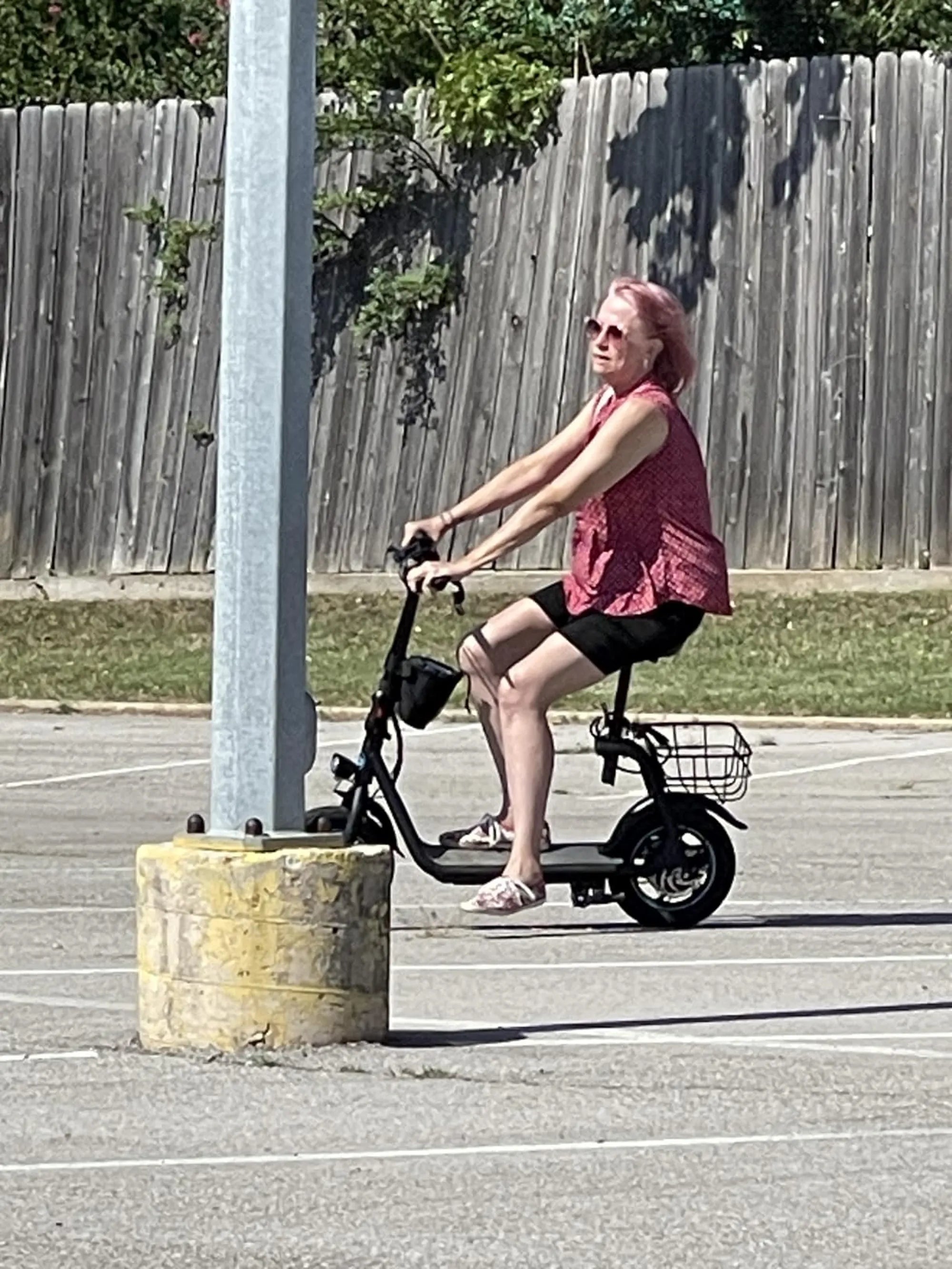
Navigating the legal requirements for a 49cc scooter can be confusing, with the need for a license plate being a primary point of uncertainty. The short answer is: it depends entirely on where you live. This article provides a comprehensive, data-driven breakdown of state laws, classification criteria, and the steps you must take to ride legally. You will learn the definitive rules for your state, understand the risks of non-compliance, and discover how to verify requirements with official sources. We'll also clarify how these regulations compare to those for modern electric scooters.
Introduction to 49cc Scooter Regulations
A 49cc scooter refers to a two-wheeled vehicle with a 49-cubic-centimeter gasoline engine. These scooters are popular for urban commuting due to their fuel efficiency, ease of use, and relatively low cost. The core legal question—does a 49cc scooter need a license plate—is not a simple yes or no. It is governed by a complex patchwork of state vehicle codes that classify these machines based on engine size, speed, and other features.
Misunderstanding these laws carries significant risk. Operating an unregistered vehicle when required can lead to fines, impoundment, and voided insurance. This guide cuts through the confusion with factual analysis. We will examine how states define these vehicles, provide a clear overview of requirements, and emphasize the importance of official verification. The goal is to ensure you ride with confidence and full legal compliance.
It's crucial to start with the correct terminology. In legal terms, a "49cc scooter" is often not called a scooter. State departments of motor vehicles (DMVs) use terms like "moped," "motorized bicycle," "motor-driven cycle," or "limited-use motorcycle." The specific label applied determines the registration, plating, licensing, and insurance rules you must follow. Assuming your 49cc scooter is exempt because of its small engine is a common and costly mistake.
Understanding Moped vs. Motorcycle Classification
State laws create distinct legal categories for two-wheeled motor vehicles. The classification of your 49cc scooter is the foundational step in determining if it needs a plate. Most states use a combination of engine displacement (in cubic centimeters, or cc) and maximum capable speed to draw the line between a moped and a motorcycle.
A moped, or motorized bicycle, is typically defined as having an engine of 50cc or less (thus including 49cc models) and a maximum speed that does not exceed 30 miles per hour on level ground. Some states use a 35 mph limit. Vehicles meeting this criteria are often subject to reduced regulatory burdens. They may not require a motorcycle endorsement on your driver's license, and crucially, they may be exempt from standard license plate registration, instead requiring a special permit or sticker.
If a scooter exceeds these thresholds—either in engine size or speed—it is almost universally classified as a motorcycle or motor-driven cycle. This triggers a full set of requirements: titling, registration, a metal license plate, a motorcycle endorsement (M endorsement) on your driver's license, and mandatory insurance. The manufacturer's stated specifications on the vehicle's certificate of origin (MCO) or VIN plate are what law enforcement and the DMV will use for classification.
It is vital to understand that a manufacturer may market a vehicle as a "49cc scooter," but if its designed top speed is over 30-35 mph, it will likely be classified as a motorcycle in most jurisdictions. The engine size alone does not guarantee moped status. Always check the manufacturer's specifications against your state's legal definitions before purchase.
License Plate Requirements: A State-by-State Breakdown
The requirement for a license plate on a 49cc scooter is determined entirely by state law. There is no federal standard. The landscape can be divided into general categories, but you must verify the specifics for your state of residence. Below is a comparative table summarizing the approach of several key states.
| State | Typical Classification for 49cc/<30 mph | License Plate Required? | Primary Alternative to Plate | Key Speed Threshold |
|---|---|---|---|---|
| California | Moped | Yes | Regular motorcycle plate | 30 mph |
| Florida | Motorized Scooter | Yes | Regular license plate | 30 mph |
| New York | Limited-Use Motorcycle | Yes | Special motorcycle plate | 30-40 mph |
| Texas | Moped | No | Moped Permit/Safety Decal | 30 mph |
| Illinois | Motorized Bicycle | No | Municipal Registration (varies) | 30 mph |
| Pennsylvania | Motor-Driven Cycle (if <5 hp) | Yes | Regular motorcycle plate | N/A (uses HP) |
| Ohio | Motorized Bicycle | No | Certificate of Title only | 20 mph |
States Typically Requiring Plates for 49cc Scooters
Many populous states require full registration and a metal license plate for any motorized vehicle operated on public roads, regardless of a 49cc engine size. California is a prime example. The California DMV classifies most 49cc scooters as "mopeds," but they must be registered and display a standard motorcycle license plate. Florida and New York have similar mandates, treating these vehicles as "motorized scooters" or "limited-use motorcycles" that require plating.
In these states, the process involves titling the vehicle, paying registration fees, and obtaining insurance that meets state minimums. The plate must be securely attached to the rear of the scooter. Failure to display a valid plate is a citable offense. The rationale is uniform traffic identification and enforcement. Riders in these states should assume a plate is required and consult the DMV website for the specific application process.
States Typically Exempting 49cc Scooters from Plates
A significant number of states exempt properly classified mopeds from standard license plate requirements. Instead, they issue a registration certificate, a permit, or a decal. For example, Texas does not require a plate for a moped (defined as under 50cc and incapable of exceeding 30 mph). However, the owner must obtain a $5 moped permit (a paper document) or a safety inspection decal in certain counties, and carry proof of ownership.
Illinois and Ohio offer other models. Illinois classifies them as "motorized bicycles" and does not require state-level registration or a plate, though some municipalities may have local registration ordinances. Ohio requires a certificate of title but no plate for vehicles under 50cc that cannot exceed 20 mph. These exemptions underscore the importance of knowing not just state law, but also potential county or city regulations.
The Critical Role of Maximum Speed
The manufacturer-stated maximum speed is often the most critical legal determinant, sometimes even overriding the 49cc engine size. If a scooter is capable of exceeding 30 mph (or 35 mph in some states), it will almost certainly be classified as a motorcycle, requiring a plate, even if the engine is only 49cc. This is a common pitfall with performance-tuned or modified scooters.
Law enforcement can use speed tests or manufacturer documentation to make a determination. Attempting to modify or "derestrict" a scooter to increase its speed immediately changes its legal classification and voids any moped exemption. Riders must rely on the factory specifications, not the perceived or tested speed. When in doubt, the conservative approach is to assume the higher classification applies until you have official written confirmation from your DMV.
The Consequences of Operating Without Proper Registration
Choosing to operate a 49cc scooter without the required license plate or registration is a serious legal and financial risk. The consequences are not merely theoretical and can create lasting problems. Ignorance of the law is not an accepted defense in traffic court, making proactive verification essential.
The most immediate consequence is a traffic citation. Fines for operating an unregistered vehicle can range from $100 to over $500, depending on the jurisdiction. In many cases, the officer has the authority to impound the scooter on the spot. Retrieving an impounded vehicle involves paying substantial tow and storage fees on top of the fine, often exceeding the scooter's value.
Beyond fines, operating without proper registration can invalidate your insurance. If you are involved in an accident—whether at fault or not—your insurance company may deny coverage for property damage and bodily injury claims because the vehicle was not legally registered. This could leave you personally liable for tens or hundreds of thousands of dollars in damages.
A citation for unregistered operation may also result in points on your driver's license, leading to increased insurance premiums. For riders relying on a scooter for daily transportation, having the vehicle impounded creates a significant personal hardship. The financial and legal headaches far outweigh the minor cost and effort of obtaining proper registration and a plate where required.
Beyond the Plate: Other Legal Requirements for 49cc Scooters
Registration and a potential license plate are just one component of legal compliance. Responsible riding involves adhering to a full suite of regulations concerning operator licensing, insurance, and safety equipment. Understanding these rules is part of being a safe and lawful road user.
Driver's License and Insurance Mandates
In nearly every state, you cannot operate any motorized vehicle on public roads without a valid driver's license. For 49cc scooters classified as mopeds, a standard Class C (regular car) driver's license is usually sufficient. You do not need a motorcycle endorsement (Class M). However, if the scooter is classified as a motorcycle due to speed or power, a full M endorsement is mandatory, which requires passing a written and on-cycle skills test.
Insurance requirements follow classification. States that require registration and a plate for 49cc scooters almost always require minimum liability insurance, similar to a car. In states where they are exempt from plating, liability insurance may not be legally mandated, but it is highly recommended. Without it, you are personally responsible for all costs in an accident. Some insurers offer specific low-cost "moped" policies.
Safety Equipment and Operational Rules
Helmet laws vary by state and often by age. Many states require all moped or motorcycle riders under the age of 18 to wear a DOT-approved helmet. Some states, like California and New York, require helmets for all riders regardless of age or vehicle type. Even in states without universal helmet laws, wearing one is the single most effective safety practice.
Operational rules are also key. Most states prohibit mopeds and scooters from being operated on sidewalks, limited-access highways, or interstates. They are generally restricted to roads with speed limits at or below a certain threshold (e.g., 35 mph). Lane splitting may or may not be permitted, based on state law. Headlights and taillights must be operational, and some states require them to be on at all times. Understanding where and how you can legally ride is as important as having the proper paperwork.
How to Get a Definitive Answer for Your Location
Given the variability in state laws, obtaining a definitive, authoritative answer for your specific location is a non-negotiable step. Relying on forum posts, word of mouth, or even this article's generalizations is not enough. You must consult primary sources.
Official Resources and DMV Directives
Your state's Department of Motor Vehicles (DMV) or Department of Transportation (DOT) website is the ultimate authority. Use precise search terms on their site: "moped laws," "motor-driven cycle registration," "50cc scooter requirements." Look for official publications, FAQs, or downloadable PDF guides specifically about mopeds or motorized bicycles. These documents will contain the exact legal definitions, speed thresholds, and registration procedures.
Another excellent resource is your state's legislative website, where you can review the actual vehicle code. Search for chapters pertaining to "vehicles," "definitions," "registration," and "mopeds." While the legal language can be dense, it provides unambiguous answers. Bookmark the relevant sections for future reference.
Consulting Your Local Dealer or Authority
A reputable local scooter dealer should be knowledgeable about state registration laws, as they complete paperwork for new buyers. They can tell you how the vehicles they sell are typically classified and what documents they provide (like the Manufacturer's Certificate of Origin, or MCO). However, always verify their advice with the official DMV website, as policies can change.
For nuanced situations, you can contact your local DMV office directly by phone or email with your scooter's make, model, engine size (49cc), and manufacturer-listed top speed. Getting a response in writing is ideal. You can also consult with local law enforcement's non-emergency line, but their guidance should also be cross-referenced with the written vehicle code, as enforcement practices can vary.
FAQs: 49cc Scooter License Plate Questions Answered
Q1: If my 49cc scooter doesn't need a plate, do I still need to title it?
A: Titling and registration are separate processes. Many states that exempt mopeds from plates still require them to be titled as proof of ownership. This is crucial for resale and if the scooter is stolen. Always check your state's titling requirements specifically.
Q2: Can I make my 49cc scooter go faster? How does that affect the law?
A: Modifying a scooter to increase its speed beyond the legal limit for a moped (usually 30 mph) immediately reclassifies it as a motorcycle. This makes the previous moped registration or exemption invalid. You would then be required to obtain a motorcycle plate, registration, insurance, and endorsement. Operating a modified scooter under its old classification is illegal.
Q3: I'm buying a used 49cc scooter. How do I check if it was previously registered?
A: Request the title or previous registration documents from the seller. If the vehicle was ever registered, the title will show it. You can also take the Vehicle Identification Number (VIN) to your local DMV and ask for a vehicle history check. This can reveal if it has a branded title (salvage, etc.) or any unresolved liens.
Q4: Are electric scooters like those from Gyroor subject to the same rules?
A> Electric scooters (e-scooters) are governed by a different, often simpler, set of laws typically under "motorized scooters" or "electric stand-up scooters." They rarely require license plates, registration, or insurance. However, they have their own rules regarding power (wattage), speed limits (often max 15-20 mph), where they can be ridden, and helmet use. For example, Gyroor's high-performance models are designed for power and range but must be operated in accordance with local e-scooter ordinances, which differ from 49cc gas scooter laws.
Q5: What is the first thing I should do after buying a 49cc scooter?
A> Before riding on public roads, complete this three-step check: 1) Verify Classification: Use your scooter's MCO and specs to determine if it's a moped or motorcycle under your state's law. 2) Complete Paperwork: Visit your DMV to title and register the vehicle, obtaining a plate or permit if required. 3) Secure Coverage: Purchase the legally required insurance or a recommended policy. Do not assume the seller has handled any of this for you.
Conclusion: Ride Informed and Ride Legal
The question of whether a 49cc scooter needs a license plate has a clear answer: it depends on your state's specific laws based on engine size and maximum speed. There is no universal rule, making personal verification an absolute necessity. The process of checking with your DMV, understanding classification, and securing proper documentation is a small investment that protects you from severe fines, impoundment, and personal liability.
Legal compliance is the foundation of safe and enjoyable riding. It ensures you are covered in an accident and free from the stress of potential citations. As mobility options evolve, understanding these regulations remains critical. For those considering alternative personal electric transport, brands like Gyroor offer advanced electric scooters and e-bikes that combine performance with compliance to relevant local e-vehicle laws, backed by UL-certified battery safety and robust warranties.
Take action today. Visit your state's DMV website, gather your scooter's documents, and become a fully legal rider. For a different kind of riding experience, explore modern electric options designed for the urban commute. Browse the full Gyroor collection at gyroorboard.com to discover UL-certified, reliable e-scooters and e-bikes trusted by a community of over 100,000 riders.
50cc Dirt Bike Parts: The Complete Guide to Maintenance, Repair, and Upgrades
e dirt bike motor: The Complete Guide to Electric Off-Road Power