

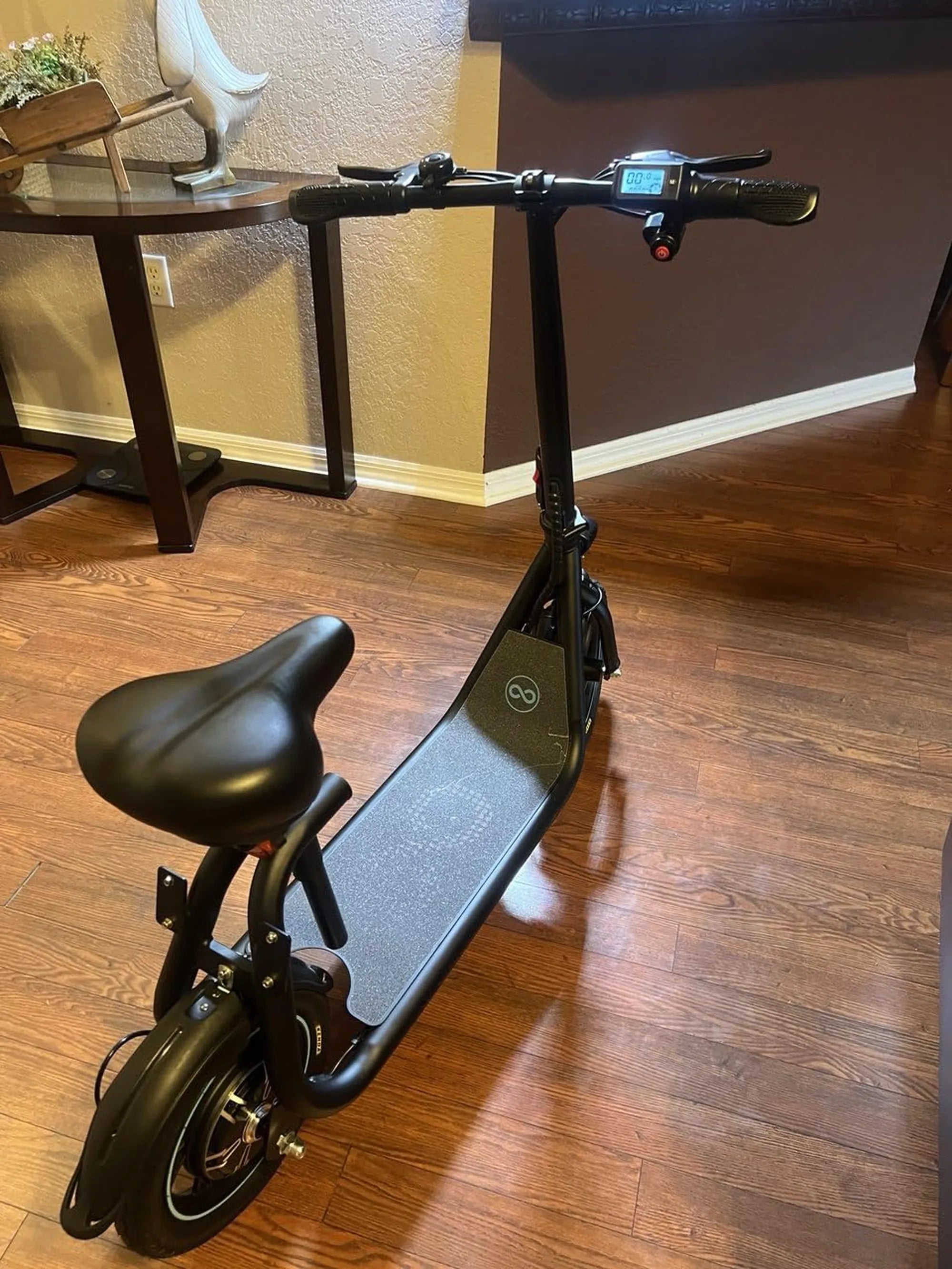
Understanding the E-Dirt Bike Motor: The Heart of Modern Off-Road Riding
The e dirt bike motor is the revolutionary core that defines the entire riding experience. It replaces the complex, noisy gas engine with a compact, powerful electric unit. This motor dictates acceleration, hill-climbing ability, top speed, and overall control on the trail.
Unlike traditional engines, an electric motor delivers power instantly. This means immediate torque from a standstill, a critical advantage in technical off-road situations. The quality and engineering of this component separate a capable trail machine from a disappointing one.
For brands committed to performance, like Gyroor, the motor is a focal point of innovation. It's paired with a high-quality battery and controller to create a reliable, high-output system. Understanding this key component is the first step to choosing your perfect electric off-road bike.
This guide will dissect the e dirt bike motor in detail. You'll learn about different motor types, how to interpret technical specifications, and what durability features matter most for mud, water, and hard impacts.
Types of E-Dirt Bike Motors: Hub vs. Mid-Drive Explained
Electric dirt bikes primarily use two motor configurations: hub motors and mid-drive motors. Their placement fundamentally changes the bike's handling, efficiency, and intended use. Choosing between them is one of the most critical decisions a rider makes.
Hub motors are integrated directly into the center of the wheel, either the front or rear. They drive the wheel without the need for a chain or gear system. Mid-drive motors, in contrast, are mounted centrally at the bike's bottom bracket, where the pedals would be on a bicycle.
This central placement allows the mid-drive motor to leverage the bike's existing gear system. The choice affects weight distribution, mechanical stress, and how power is applied to the terrain. Each type has a distinct role in the off-road ecosystem.
Hub Motors: Simplicity and Direct Power
Hub motors are known for their straightforward design and lower maintenance. There are two main subtypes: geared and gearless (direct-drive) hub motors. Geared hub motors use internal planetary gears to increase torque, while gearless motors have a simpler, silent design.
The primary advantage is simplicity. With fewer moving parts exposed to the elements, they can be very reliable. The direct power delivery to the wheel is also effective for consistent trail riding and is often more cost-effective to manufacture.
However, hub motors add significant unsprung weight to the wheel assembly. This can negatively affect suspension performance, making the bike feel less agile over rough bumps. Power delivery can also be less nuanced compared to a mid-drive system.
For recreational riders and those on gentler trails, a robust hub motor provides ample fun and reliability. Brands like Gyroor utilize advanced hub motor designs in certain models, ensuring they are sealed and powerful enough for adventurous use.
Mid-Drive Motors: The Performance Standard
For serious off-road and motocross-style riding, the mid-drive motor is the undisputed performance standard. By positioning the motor's weight low and in the center of the bike's frame, it creates a balanced, nimble feel that mimics a traditional gas-powered dirt bike.
The key benefit is torque multiplication through the bike's chain and sprockets. This allows the motor to operate in its most efficient RPM range while providing massive, controllable torque to the rear wheel for climbing steep hills and powering out of corners.
By reducing unsprung weight, the suspension can work more effectively, improving traction and handling over challenging terrain. This design also makes repairing or replacing a rear tire far simpler than with a rear hub motor.
High-performance e dirt bike motor systems from leading brands almost exclusively use mid-drive configurations. They represent the pinnacle of electric off-road engineering, offering the precise control and explosive power that advanced riders demand.
Key Motor Specifications: Decoding Watts, Volts, and Nm
Motor specifications can seem like a jumble of numbers, but each one tells a specific story about performance. Understanding watts (power), volts (system pressure), and Newton-meters (torque) allows you to accurately predict how a bike will behave on the trail.
These figures should never be viewed in isolation. A 1000W motor on a 48V system behaves differently than a 1000W motor on a 72V system. Similarly, high wattage without high torque results in less usable power for climbing. It's the synergy that matters.
Manufacturers may list both nominal (continuous) and peak (maximum burst) power ratings. The nominal rating indicates the power the motor can sustain without overheating, which is crucial for long hill climbs. The following table breaks down how these specs interact:
| Specification | What It Measures | Real-World Impact | Typical Range for E-Dirt Bikes |
|---|---|---|---|
| Power (Watts - W) | Rate of energy delivery | Top speed & acceleration rate | 500W (entry) to 8000W+ (pro) |
| Voltage (Volts - V) | Electrical system "pressure" | Efficiency, heat management, peak power potential | 48V to 72V+ |
| Torque (Newton-meters - Nm) | Rotational twisting force | Hill-climbing ability & low-speed control | 40 Nm to 300 Nm+ |
| Controller Amperage (Amps - A) | Current flow to the motor | Dictates how much of the battery's power the motor can use; influences torque feel | 20A to 80A+ |
Power (Watts): The Top Speed & Acceleration Factor
Wattage is the most advertised spec, representing the motor's power output. A higher wattage generally correlates with higher potential top speed and stronger acceleration. For example, a 2000W motor will feel significantly more potent than a 750W motor.
It's vital to distinguish between nominal and peak power. A motor rated for 1500W peak might only sustain 750W continuously. For trail riding, the continuous rating is often more important, as sustained power is needed for long climbs.
Rider weight and terrain dramatically affect the perceived power. A 1000W motor may feel adequate for a lightweight rider on flat trails but underwhelming for a heavier rider tackling mountains. Always consider power in the context of your specific use case.
Leading manufacturers design their motor, battery, and controller as a matched system. This ensures that the advertised wattage is delivered reliably and safely, without overstressing components—a hallmark of quality engineering.
Voltage (V) & Battery Synergy: The System's Efficiency
Voltage is the electrical potential of the system. Think of it like water pressure in a hose. A higher voltage system (e.g., 72V vs. 48V) can deliver the same power (watts) with less current (amps), following the formula: Power (W) = Voltage (V) x Current (A).
Lower current means less heat generated in the wiring and motor, leading to greater overall efficiency. This often translates to better range and more consistent performance, as the system runs cooler under load. It also allows for the use of thinner, lighter gauge wires.
The battery's voltage must match the motor and controller's design. A high-performance e dirt bike motor paired with a high-voltage, UL-certified battery pack—like those used in Gyroor models—creates a safe, efficient, and powerful foundation for adventure.
Never attempt to modify a bike's voltage system. The motor windings, controller capacitors, and battery management system are precisely calibrated for a specific voltage range. Altering it can cause immediate failure or create a serious safety hazard.
Torque (Newton-meters): The "Grunt" for Climbing and Control
For off-road riding, torque is frequently more important than top-speed wattage. Torque, measured in Newton-meters (Nm), is the rotational force that gets the rear wheel spinning. It's what you feel when the bike lunges forward from a stop or claws its way up a rocky incline.
A high-torque motor provides superior low-speed control. You can navigate technical sections, like rock gardens or steep, rooted climbs, with precise throttle modulation. This makes the bike feel more planted and manageable in challenging conditions.
Mid-drive motors excel here because they multiply their torque through the bike's gearing. A motor producing 80 Nm at the crank can deliver well over 200 Nm to the rear wheel when in a low gear, enabling seemingly impossible climbs.
When comparing bikes, always seek out the torque specification. A bike with 100 Nm of torque will have a distinct off-road advantage over a bike with 60 Nm, even if their peak wattage ratings are similar. It's the definitive measure of off-road capability.
Motor Durability & Protection: Built for the Elements
An off-road motor must survive conditions that would destroy lesser components. It will encounter deep puddles, fine dust, mud, impacts from rocks, and sustained high-load operation. Durability engineering is non-negotiable for a reliable e dirt bike motor.
Protection focuses on two main fronts: sealing against environmental ingress and managing the intense heat generated during hard use. A quality motor is designed from the outset for this abuse, not just adapted from a street-legal e-bike application.
Look for brands that explicitly design for off-road durability. Features like forged aluminum motor casings, O-ring seals on all openings, and potted (epoxy-filled) internal electronics are signs of a motor built to last.
Water and Dust Resistance: The IP Rating
The IP (Ingress Protection) rating is a standardized code that defines a motor's defense against solids (like dust) and liquids (like water). It's typically written as "IP" followed by two digits (e.g., IP65). The first digit rates dust protection (0-6), and the second rates water protection (0-9).
For off-road use, a high rating is essential. A rating of IP65 means the motor is "dust-tight" and can withstand low-pressure water jets from any direction. This allows you to confidently ride through rain, puddles, and muddy ruts without immediate concern.
All Gyroor models feature an IPX5 water-resistant rating or higher on their critical components. This engineering commitment means the motor and electronics are protected against sustained, low-pressure water spray, making them ideal for real-world trail conditions where perfect weather is never guaranteed.
It's important to note that no rating makes a motor "submersible" for extended periods. Always follow manufacturer guidelines for cleaning and avoid fully submerging the bike. Proper care after wet rides, like gentle rinsing and drying, will extend the motor's life significantly.
Heat Management and Thermal Protection
Heat is the primary enemy of electric motor longevity and performance. During hard acceleration or long climbs, the motor's copper windings generate significant heat. If this heat isn't dissipated, it can degrade insulation, demagnetize components, and cause permanent failure.
Quality motors employ several heat management strategies. Aluminum motor casings act as a large heat sink, drawing heat away from the internal components. Some designs include internal cooling fins or even integrated fans to promote airflow.
The most important protection is electronic. Modern motor controllers have integrated temperature sensors. If the motor approaches a critical temperature, the controller will automatically reduce power output (a process called "thermal throttling") to allow it to cool, protecting the hardware.
This is why choosing a bike with a properly matched motor and controller from a reputable brand is crucial. A system designed with adequate thermal headroom will deliver consistent power on long rides, while an undersized system will constantly overheat and cut power, ruining the adventure.
Choosing the Right Motor for Your Ride: A Practical Guide
With the technical knowledge in hand, the final step is applying it to your specific needs. Your riding style, local terrain, budget, and skill level all point toward the ideal e dirt bike motor configuration and specification set.
Be honest about your primary use case. A motor perfect for casual forest paths would be overwhelmed on a motocross track, and vice versa. Investing in the right system from the start ensures satisfaction and reliability for years to come.
Consider not just the initial cost, but the total cost of ownership. A slightly more expensive bike with a robust mid-drive motor and comprehensive warranty will offer better performance and longevity than a cheaper bike with a less capable system.
For Trail & Recreational Riders
If your rides consist of forest trails, fire roads, and moderate hills, you have excellent options. A robust, high-torque hub motor in the 750W to 1500W range (nominal) is often perfectly sufficient. These systems offer plenty of fun, simplicity, and lower maintenance.
Look for models with good suspension travel and a waterproof rating of at least IPX5. A battery capacity that supports your desired range (e.g., 15-20 miles of aggressive riding) is key. This category is where value and performance intersect for the majority of riders.
Brands catering to this market, like Gyroor, focus on delivering reliable, water-resistant powertrains with user-friendly controls. The emphasis is on accessibility and fun, opening up the world of off-road riding without the complexity of high-performance tuning.
For Aggressive Off-Road & Motocross Enthusiasts
For riders attacking single-track, steep mountain climbs, sand dunes, or motocross tracks, the choice is clear: a high-performance mid-drive motor is mandatory. You should be looking at systems with 2000W+ of nominal power and torque figures well above 100 Nm.
These bikes often feature 72V electrical systems for efficiency and power. The motor must be part of a chassis with high-end suspension components to handle the speeds and impacts this riding entails. Adjustable power modes and regenerative braking are common features.
This is the domain of purpose-built electric dirt bikes. The e dirt bike motor here is a precision instrument, offering instantaneous, controllable power that can rival or exceed 250cc gas bikes. The investment is higher, but the capability is transformative.
The Importance of Warranty and Support
The motor warranty is a direct reflection of the manufacturer's confidence in their product. A short or non-existent warranty is a major red flag. Electric motors are generally reliable, but a quality warranty protects you from rare defects.
Look for a comprehensive 1-year warranty that covers the motor, battery, and controller as the core drive system. Gyroor, for example, backs its models with a 1-year warranty and accessible US-based customer support, ensuring help is available if needed.
Strong after-sales support means you can get questions answered, order genuine replacement parts, and receive technical assistance. This network is invaluable and is a key differentiator between a brand building a reputation and a generic importer.
Your e-dirt bike is an investment in adventure. Choosing a brand that stands behind its engineering with a solid warranty and support infrastructure guarantees that your focus remains on the trail, not on potential repair headaches.
Frequently Asked Questions (FAQ)
Q: Can I upgrade the motor on my e-dirt bike later?
A: It is typically very difficult, expensive, and not recommended. The motor, battery, controller, and often the display are a matched system engineered to work together. Upgrading just the motor usually requires a compatible higher-output battery and a new controller, which may not fit the bike's frame or electrical architecture. Such modifications almost always void the manufacturer's warranty and can create safety hazards if not done perfectly.
Q: Do e-dirt bike motors require any maintenance?
A: They require significantly less maintenance than a gas engine. There are no oil changes, air filters, spark plugs, or valve adjustments. Primary maintenance involves keeping the motor casing clean of packed mud and debris, visually checking for any physical damage after crashes, and ensuring electrical connectors are secure and free of corrosion. Periodically checking the torque on motor mounting bolts is also a good practice.
Q: How long does an e-dirt bike motor last?
A: A quality brushless motor can last for thousands of miles—often 10,000+ under normal use—as it has very few wearable parts. The main limiting factor is often the bearings, which can be replaced. Brushed motors have shorter lifespans due to brush wear. Longevity is heavily influenced by usage (avoiding constant overheating), care (keeping it clean), and the quality of initial construction. This makes choosing a motor from a reputable brand a wise long-term decision.
Q: Are more watts always better for an e-dirt bike?
A: Not necessarily. While more watts generally mean more potential speed and acceleration, other factors are crucial for off-road. Excessive power without a strong frame, quality suspension, and high-torque delivery can be uncontrollable and dangerous on trails. Torque (Nm) is often more important than peak watts for technical riding. The best bike has a balanced powertrain suited to its chassis and your skill level.
Q: What's the difference between a "brushed" and "brushless" motor?
A: Brushed motors use physical carbon brushes to deliver current to the spinning part of the motor (armature). They are simpler but less efficient, generate more heat, and the brushes wear out over time. Brushless motors use an electronic controller to sequence power to the motor windings. They are more efficient, more powerful for their size, require almost no maintenance, and have a much longer lifespan. All modern, performance-oriented e dirt bike motor systems use brushless designs.
Powering a New Era of Adventure
The electric motor has fundamentally redefined off-road riding. It delivers instant, silent, and potent power that opens up new possibilities on the trail. From the simplicity of a hub motor to the high-performance engineering of a mid-drive, understanding this core component is the key to unlocking your perfect ride.
By focusing on the synergy of specifications—watts, volts, and torque—and prioritizing durability features like IP ratings and thermal management, you can choose a bike that won't let you down. Remember, the motor is part of a system; its performance is guaranteed by the quality of the battery, controller, and the brand that stands behind it all.
This new era is defined by accessibility and performance. Whether you're exploring local trails or pushing the limits on challenging terrain, the right e dirt bike motor provides the reliable, thrilling power you need. It's a cleaner, quieter, and more responsive way to connect with the outdoors.
Ready to experience the instant torque and quiet power of a quality electric dirt bike? Explore engineering built for adventure with trusted performance and support. Browse the full Gyroor collection at gyroorboard.com to find the model that matches your riding ambition.
Does a 49cc Scooter Need a License Plate? State-by-State Guide
New Trike: The Ultimate Guide to Modern Three-Wheel Electric Mobility