



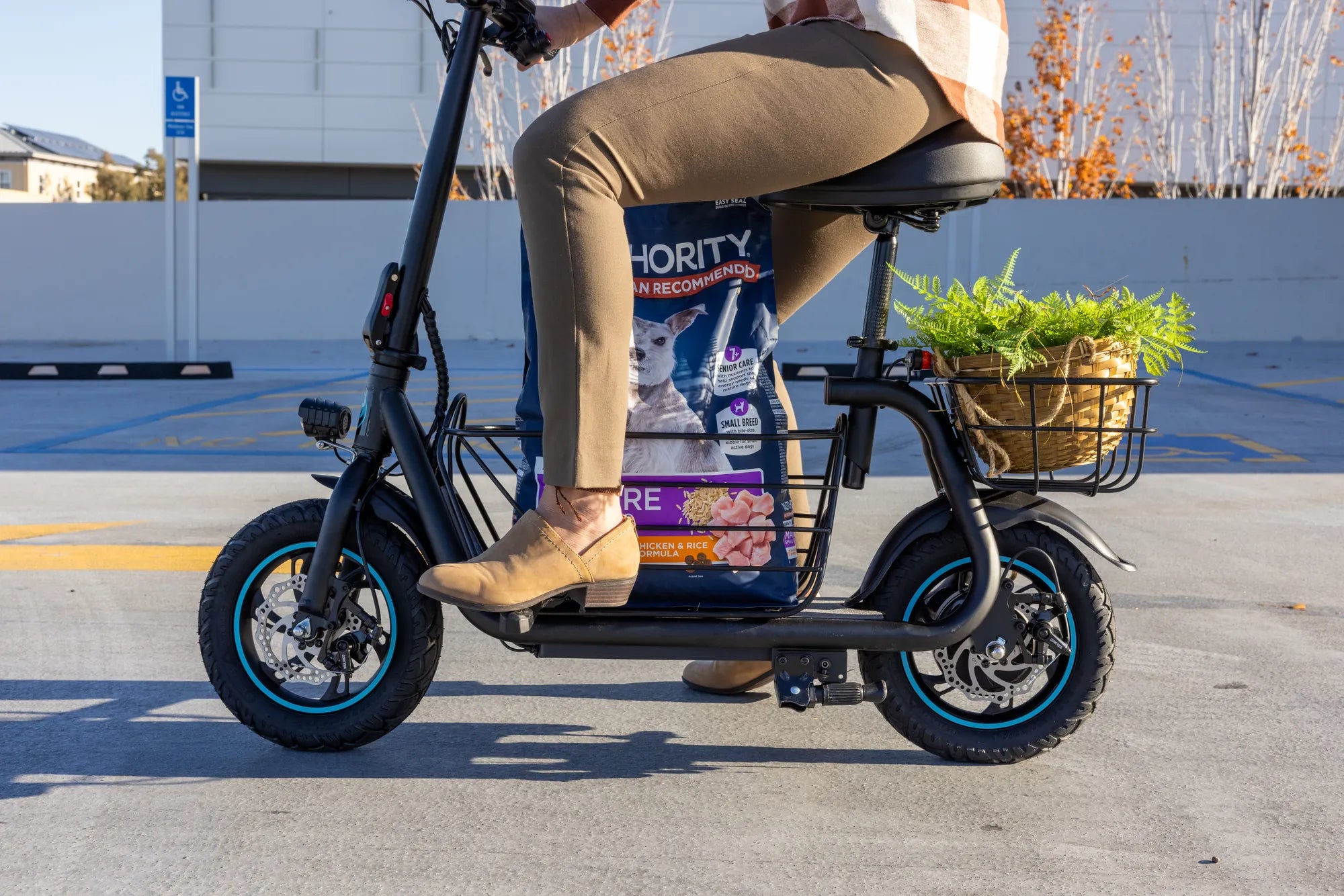
Introduction to E-Bike Handlebars: More Than Just a Place to Hold On
Your e-bike's handlebars are your primary connection to the road or trail, dictating comfort, steering precision, and overall riding posture. For urban commuters, weekend adventurers, and performance riders alike, selecting the right e bike handle bars is a crucial, often overlooked aspect of the riding experience. This guide will provide you with the data and knowledge to understand handlebar anatomy, compare popular styles, and make an informed upgrade to enhance your electric cycling journey.
We will dissect key measurements like width and sweep, explore materials from aluminum to carbon, and provide a practical installation guide. Whether you're seeking relaxed cruising posture or aggressive trail control, the right e bike handle bars can transform your ride from functional to fantastic. Let's dive into the details that connect you to your machine.
Anatomy of an E-Bike Handlebar: Key Terms and Measurements
Understanding handlebar geometry starts with mastering a few essential terms. These measurements directly influence how your e-bike handles and feels, and are critical for ensuring compatibility with your stem and controls.
The clamp diameter is the most fundamental specification. Most modern e-bikes use a 31.8mm diameter at the clamp area, though some older or specific models may use 25.4mm or 35mm. This must match your stem's clamp size. Width is measured from end to end, typically between 600mm and 800mm, and is a primary lever for steering feel.
Rise refers to the vertical height from the clamp center to the grip area, measured in millimeters or degrees. Positive rise brings the grips upward for a more upright posture. Sweep has two components: backsweep (the angle the bars bend toward the rider) and upsweep (the angle they bend upward). These angles determine natural wrist alignment.
Width: Finding Your Balance Between Control and Maneuverability
Handlebar width is a key determinant of steering leverage and stability. Wider e bike handle bars provide more control and stability, especially at speed or on technical terrain, as they offer greater leverage for steering inputs. This makes them a favorite for e-MTB and off-road use.
Narrower bars increase maneuverability and are better for filtering through tight urban traffic. A common fitting guideline is to match handlebar width roughly to your shoulder width. Riders should consider their primary use case: wide for control, narrow for agility. Many riders find experimenting within a 20mm range can fine-tune handling significantly.
Rise and Sweep: Dialing in Your Riding Posture
Rise and sweep work together to define your cockpit ergonomics. Bars with significant rise, like riser bars, promote an upright riding position. This reduces strain on the back, neck, and wrists, making it ideal for comfort-focused commuting and casual riding.
Sweep, particularly backsweep, aligns your wrists with your forearms. A typical backsweep of 5-9 degrees is common on flat bars, while cruiser bars can have over 30 degrees. The correct sweep prevents wrist fatigue and numbness on longer rides. For performance e-biking, a lower rise and minimal sweep create an aggressive, forward-leaning posture for better power transfer and aerodynamics.
Popular E-Bike Handlebar Styles: Choosing Your Ride's Personality
The style of your e bike handle bars fundamentally shapes your bike's character and intended use. From the simplicity of flat bars to the multiple positions of drop bars, each design serves a distinct purpose for the e-bike rider.
Choosing the right style involves matching the bar's geometry to your riding discipline. An incorrect choice can lead to discomfort and poor handling, while the right match enhances control, efficiency, and enjoyment. Let's compare the four most prevalent styles in the e-bike world.
Flat Bars: The Agile All-Rounder
Flat bars are the default choice for many hybrid, commuter, and entry-level mountain e-bikes. They are simple, lightweight, and offer a direct, intuitive steering feel. Their straight, minimal-sweep design provides a neutral wrist position for most riders.
This style is excellent for urban environments where quick, responsive handling is needed to navigate traffic and obstacles. The lack of rise typically means a slightly more forward-leaning posture, which can be efficient for moderate-speed commuting. Many e-bike manufacturers select flat bars for their versatility and clean aesthetic, making them a common sight on city streets.
Riser Bars: Comfort and Control for the Trail
Riser bars are essentially flat bars with built-in upward rise, often combined with increased width. This design is the standard for modern electric mountain bikes (e-MTBs). The rise elevates the rider's position, improving control and visibility on descents.
The wider profile offers superior leverage for maneuvering through technical terrain. For e-bike riders who venture off-road, riser e bike handle bars provide the confident, commanding stance needed to handle the added weight and power of an e-MTB. They also offer a more comfortable upright position than flat bars for general trail riding.
Cruiser/Beach Bars: The Ultimate in Relaxed Riding
Characterized by a significant backward sweep—often 25 degrees or more—cruiser bars promote a supremely relaxed, upright riding posture. Your hands fall naturally at your sides, reducing strain on the shoulders and lower back.
This style is perfect for casual neighborhood rides, boardwalk cruising, and comfort-focused e-bikes where the priority is leisurely enjoyment over speed or agility. The swept-back design can limit steering leverage for sharp turns, but for straight-line comfort and a classic aesthetic, cruiser e bike handle bars are unmatched. They are a hallmark of comfort-oriented and retro-style electric bikes.
Drop Bars: Efficiency for the E-Roadie
Drop bars, with their characteristic curved ends, are designed for aerodynamic efficiency and multiple hand positions. They are the domain of e-road bikes and performance-oriented gravel e-bikes. The primary hoods position offers control for climbing and cruising, while the drops provide a low, aerodynamic posture for descents and high-speed flats.
For e-bike riders covering long distances where minimizing wind resistance is key, drop bars can significantly enhance efficiency. The multiple positions also help combat fatigue on extended rides. Integrating e-bike controls (display, throttle) onto drop bars requires careful planning, but the performance benefits for the dedicated rider are substantial.
Material and Construction: Aluminum, Carbon, and Steel
The material of your e bike handle bars influences weight, vibration damping, strength, and cost. The choice is a balance of these factors, tailored to your riding style and budget.
Most e-bikes come equipped with aluminum alloy bars, typically 6061 or 7075 grade. This material offers an excellent strength-to-weight ratio, good durability, and is cost-effective. It's the standard for good reason: reliable, predictable, and suitable for everything from daily commuting to aggressive trail riding.
Carbon fiber handlebars are the premium choice, primarily for high-performance e-MTBs and e-road bikes. Their key advantage is superior vibration damping, which reduces hand and arm fatigue on rough surfaces. They are also lighter than aluminum, though this difference is less critical on a motor-assisted bike. The primary consideration is cost and the need for a precise torque wrench during installation to avoid crushing the material.
Steel handlebars are rare on modern e-bikes but are found on some vintage-style or cruiser models. They are extremely durable and offer some natural flex for comfort, but are significantly heavier than aluminum or carbon. For most e-bike applications, aluminum remains the optimal, practical choice, providing the best balance of performance, safety, and value.
The Upgrade Process: How to Choose and Install New Handlebars
Upgrading your e bike handle bars is one of the most impactful modifications you can make. A systematic approach ensures compatibility, safety, and that the final result meets your expectations for comfort and control.
This process involves careful assessment, precise measurement, and methodical installation. Rushing can lead to incompatible parts, damaged controls, or unsafe assembly. Follow these steps to ensure a successful upgrade to your new e bike handle bars.
Step 1: Assessing Your Needs and Compatibility
Begin by identifying what you want to change. Is it wrist pain, lack of control, or a desire for a different posture? This will guide your choice of width, rise, and sweep. Next, measure your existing setup. Use a caliper to determine the clamp diameter (usually 31.8mm).
Measure the width from end to end. Consider your e-bike's cabling: throttle, brake hoses, and display wires must be long enough to reach the new bar's grip positions. A significant increase in width or change in sweep may require longer cables. Also, ensure your stem's faceplate can accommodate the new bar's diameter.
Step 2: Installation Essentials and Safety Check
Gather the correct tools: a set of high-quality hex keys, a torque wrench is essential, and possibly cable cutters and housing if re-cabling. Begin by loosening the stem faceplate bolts and carefully removing the old bar. Note the positioning of all controls (brake levers, shifter, throttle, display) relative to the stem.
Transfer these components to the new e bike handle bars, applying a small amount of grease to clamp areas. Route cables neatly. Position the bar in the stem, ensuring it is centered. Tighten the stem bolts gradually and evenly in a criss-cross pattern to the manufacturer's specified torque—usually 5-6 Nm for aluminum bars. Overtightening can crack the bar; undertightening is a safety hazard. Finally, do a pre-ride safety check: ensure all controls are secure and function correctly.
Comparison of E-Bike Handlebar Styles
| Style | Best For | Typical Width | Posture | Key Advantage | Consideration |
|---|---|---|---|---|---|
| Flat Bars | Urban Commuting, Hybrid E-Bikes | 600-720mm | Moderately Forward | Direct Steering, Lightweight | Can cause wrist fatigue on long rides |
| Riser Bars | E-MTBs, Trail Riding | 720-800mm | Upright/Commanding | Control & Comfort on Rough Terrain | Wider profile less suitable for dense traffic |
| Cruiser/Beach Bars | Leisure, Comfort E-Bikes | 560-660mm | Fully Upright & Relaxed | Maximum Comfort, Low Back Strain | Reduced steering leverage for tight turns |
| Drop Bars | E-Road/Gravel, Long-Distance | 380-440mm (at hoods) | Multiple (Aero to Upright) | Aerodynamics & Hand Position Options | Complex control integration; less intuitive steering |
Why Gyroor Prioritizes Ergonomic Handlebars on Every E-Bike
At Gyroor, we understand that a great e-bike is more than just a powerful motor and a durable battery; it's a holistic system where every component contributes to the rider's experience. That's why we meticulously select and design the e bike handle bars for each of our models, ensuring they complement the bike's intended use.
For our commuter models, this means bars with a comfortable rise and sweep to promote an alert yet strain-free posture in city traffic. For our off-road capable e-bikes, we specify wider riser bars that give riders the control needed to handle extra power and weight confidently. This ergonomic focus is a core part of our philosophy, directly tied to the reliability we build into our UL-certified battery packs and IPX5 water-resistant designs.
We believe comfort enhances safety. A rider who is not fighting an awkward posture has better control and can react more quickly. This attention to the human interface is why over 100,000 riders across North America and Europe trust Gyroor. It's an integral component of the complete, reliable package backed by our 1-year comprehensive warranty, ensuring your connection to the ride is secure, comfortable, and enjoyable from the first mile.
E-Bike Handlebar FAQ
Q: Can I put any handlebar on my e-bike?
A: Not exactly. Compatibility depends on three main factors: 1) Stem Clamp Diameter (must match, usually 31.8mm), 2) Cable/Hose Length (dramatically wider or differently swept bars may require longer brake lines and electronic wires), and 3) E-bike Geometry Intent (putting ultra-wide bars on a city bike can make it unwieldy). Always check these before purchasing.
Q: How do I know if my handlebars are the right width?
A> A simple starting test is to stand in your natural riding stance and have someone measure the distance between the bony bumps on the outside of your shoulders. Your handlebar width should be within +/- 2cm of this measurement. Ultimately, the right width feels natural—you shouldn't feel overly stretched or cramped, and steering should feel controlled, not twitchy or sluggish.
Q: Are there handlebars that reduce vibration from the road?
A> Yes. Carbon fiber handlebars are renowned for their vibration-damping properties, significantly reducing high-frequency buzz from rough pavement or trails. Some aluminum bars also feature engineered flex zones or specific shapes to absorb shocks. Additionally, using high-quality, padded grips or gel inserts under your grips can further dampen vibrations transmitted to your hands.
Q: Do I need special grips for my e-bike?
A> While not "special," investing in high-quality, lock-on grips is highly recommended for e-bikes. Lock-on grips use clamping collars to prevent rotation, which is crucial given the vibrations from the motor and higher average speeds. Ergonomic grips that support the palm can drastically reduce hand fatigue, especially if you use a thumb throttle frequently. They are a small upgrade with a major comfort payoff.
Q: How often should I check my handlebar and stem bolts?
A> You should perform a quick visual and feel check before every ride, ensuring nothing is obviously loose. A formal torque check with a torque wrench should be done after the first 50-100 miles on a new bike or after any handlebar adjustment, and then periodically every few months or after a particularly rough ride. Proper torque is critical for safety.
Conclusion: Your Connection to the Ride
Your e bike handle bars are far more than a simple steering component; they are the vital interface that translates your intentions into motion and defines your comfort on every journey. Understanding the impact of width, rise, sweep, and material empowers you to tailor your e-bike to your body and your riding style. Whether you seek the relaxed ease of cruiser bars, the confident control of risers, or the efficient posture of drops, the right choice enhances safety, reduces fatigue, and increases enjoyment.
Don't settle for discomfort or poor handling. Assess your current setup, consider an upgrade, and experience how a well-chosen set of e bike handle bars can refine your connection to the road or trail. For a complete riding experience built on ergonomic design, reliable power, and trusted safety, explore the range of purpose-built e-bikes at Gyroor. Browse the full Gyroor collection, where every detail from the handlebars to the UL-certified battery is engineered for your ride, at gyroorboard.com.
Best U Lock for Scooter: The 2024 Security Buyer's Guide
Best U Lock for Scooter: The 2024 Security Buyer's Guide