



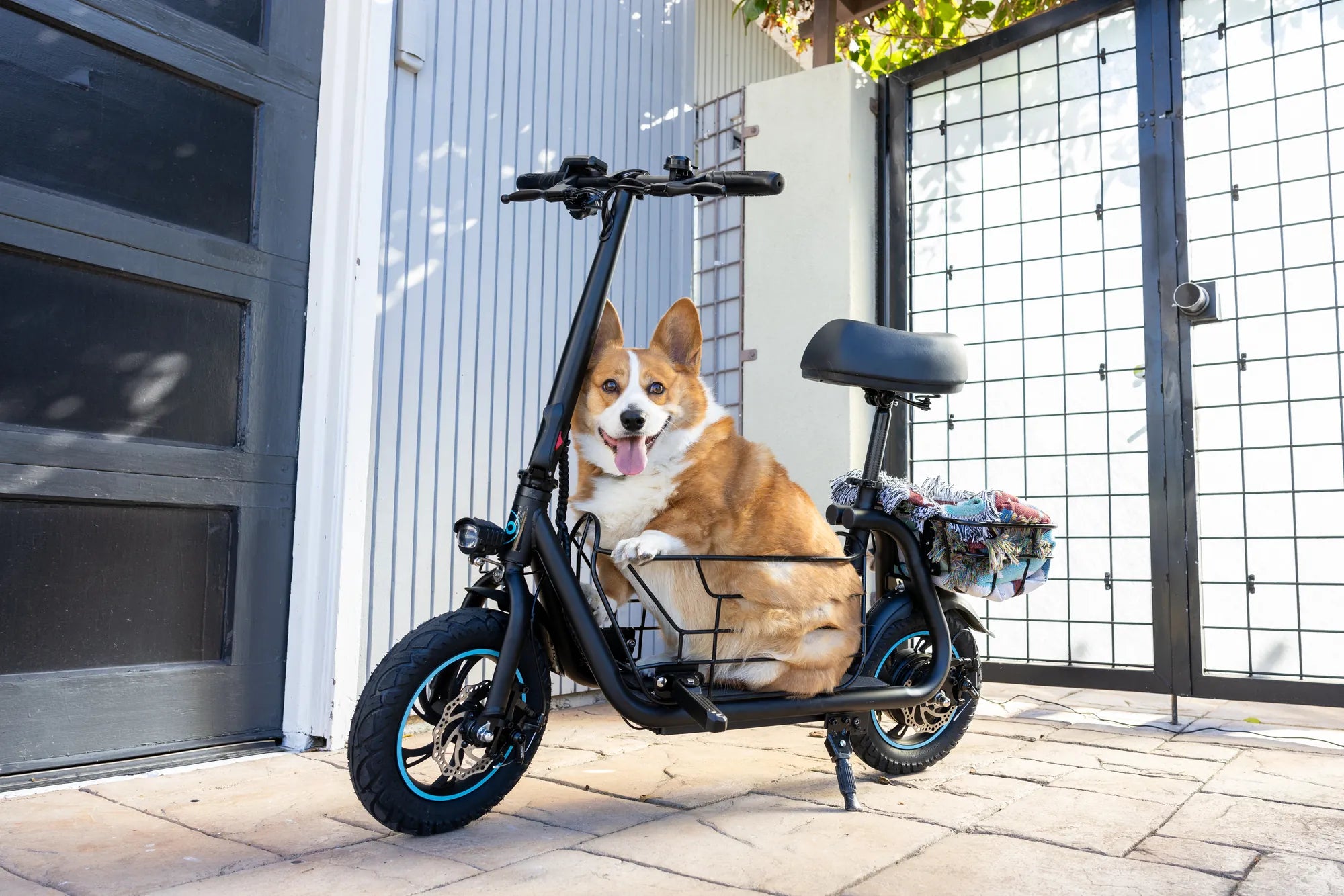
Electric mobility scooters for adults are more than just a mobility aid; they are a gateway to autonomy, social connection, and active living. This ultimate guide provides the factual, detailed information you need to make an informed decision, focusing on specifications, safety, and real-world performance. You will learn how to decode technical specs, understand essential safety certifications, and identify the features that match your daily needs, empowering you to reclaim your freedom with confidence.
Redefining Independence with Electric Mobility
The modern electric mobility scooter is a sophisticated personal transport device designed for adults seeking to extend their range and reduce physical strain. Unlike traditional medical models, today's scooters blend ergonomic design with reliable electric powertrains, enabling users to run errands, visit friends, and enjoy community spaces independently. For over 100,000 riders across North America and Europe, brands like Gyroor have redefined this category by prioritizing safety certifications and user-centric features, transforming the scooter from a simple aid into a tool for everyday adventure.
The core value proposition lies in extended range and comfort. A quality scooter can travel 15-25 miles on a single charge, covering distances impractical for walking or manual wheelchairs. This capability directly impacts quality of life, facilitating grocery shopping, attending local events, or simply enjoying a park. The psychological benefit of self-reliance cannot be overstated, fostering greater engagement with the world outside one's home.
It's crucial to distinguish these scooters from other mobility options. Power wheelchairs offer superior maneuverability in tight indoor spaces but are often heavier and less efficient for longer outdoor trips. Manual scooters require significant upper-body strength. Electric mobility scooters for adults fill a specific niche: they are ideal for users who can walk short distances, transfer safely, and desire a stable, seated platform for longer urban or suburban journeys.
The market has evolved from clunky, medical-looking devices to designs that emphasize discretion and style. This shift reflects a broader understanding that users want products that integrate seamlessly into their daily lives, not define them by limitation. The choice of an electric mobility scooter is, therefore, an investment in sustained independence and social participation.
Understanding Your Needs: Is an Electric Mobility Scooter Right for You?
Determining if an electric mobility scooter aligns with your lifestyle requires a clear assessment of primary use cases. The most common applications include routine errands (pharmacy, post office, supermarket), social visits within the neighborhood, leisurely exploration of parks on paved paths, and navigating large indoor venues like malls or museums. If your weekly activities involve these scenarios and distance or endurance is a barrier, a scooter is a viable solution.
The ideal user profile is an adult with mild to moderate mobility challenges who is otherwise able to operate simple controls, maintain a seated posture for extended periods, and has the cognitive ability to navigate safely. These scooters are not designed for full-time, all-terrain use or as a substitute for a wheelchair for users with significant transfer or balance issues. A candid self-assessment of physical capabilities is the first step toward a successful purchase.
Key Considerations Before You Buy
Before comparing models, answer these practical questions. First, what is your indoor versus outdoor use ratio? If primarily indoors, a compact, nimble model with a tight turning radius is essential. For outdoor dominance, stability, ground clearance, and weather resistance become priorities.
Second, calculate your required daily travel distance. Map your common routes and add a 20-30% buffer to the manufacturer's stated range to account for variables like hills, weight, and temperature. Third, evaluate storage space at home. Do you need a scooter that disassembles for closet storage, or do you have a garage or covered area?
Fourth, consider transportability. If you plan to take the scooter in a car, its disassembly mechanism and weight are critical. Can you lift the heaviest component? Finally, assess your own operational capabilities. Can you comfortably operate a tiller for steering and braking? Is the seat height appropriate for easy transfers? Answering these questions creates a targeted checklist for your search.
The Gyroor Advantage: Engineering Trust for Everyday Adventures
In a market with varying quality, trust is built on verifiable engineering and safety standards. Gyroor, as a leader in personal electric transport, bases its design philosophy on three pillars: certified safety, environmental resilience, and reliable support. This approach ensures that an electric mobility scooter for adults is not just a purchase but a dependable companion for daily life.
The most critical component is the battery. Gyroor utilizes UL-certified battery packs across its lineup, a non-negotiable safety standard. UL certification involves rigorous testing for overcharge protection, short-circuit prevention, and thermal stability, drastically reducing fire risk. These batteries are also rated for 500+ charge cycles, ensuring long-term value and reducing frequency of replacement, a key factor in total cost of ownership.
Weather resistance is another cornerstone. An IPX5 water-resistant rating means the scooter's electrical components are protected against water jets from any direction. This allows you to confidently navigate through puddles or light rain without fear of immediate damage, a practical necessity for real-world use. This engineering focus extends to robust frame construction and reliable motor controllers.
Finally, peace of mind is sealed with a comprehensive 1-year warranty and accessible customer support. Knowing that a brand stands behind its product with a clear warranty and has a track record with over 100,000 riders provides confidence. This combination of certified safety (UL), built-in durability (IPX5), and guaranteed support forms the foundation of a truly trustworthy electric mobility scooter for adults.
Breaking Down the Specs: A Data-Driven Buying Guide
Product specifications can be confusing. This section translates technical jargon into real-world performance, empowering you to compare models effectively. Understanding these specs prevents overpaying for unnecessary features or underestimating your needs.
| Specification | What It Means | Real-World Impact | Recommended Minimum |
|---|---|---|---|
| Motor Power (Wattage) | Power output of the electric motor. | Determines hill-climbing ability and acceleration. | 250W for flat terrain; 350W+ for mild slopes. |
| Battery (Volts & Amp-hours) | Energy capacity of the battery pack. | Directly correlates with maximum range per charge. | 36V/10Ah for 10-15 mile range. |
| Max Range (Miles/Km) | Estimated distance on a full charge. | Plan for 70-80% of stated range under average use. | 15 miles for typical suburban use. |
| Weight Capacity (Lbs/Kg) | Maximum user weight the frame supports. | Includes rider plus any carried items (purse, groceries). | Choose a model rated for at least 50 lbs over your weight. |
| Tire Type & Size | Material and diameter of wheels. | Larger pneumatic (air-filled) tires offer the best shock absorption. | 10\" pneumatic tires for comfort on varied surfaces. |
Motor Power & Terrain Handling: 250W vs. 350W+
Motor wattage is the engine's power rating. A 250-watt motor is sufficient for flat, paved surfaces like sidewalks, mall corridors, and level neighborhood paths. It provides efficient, quiet operation with good battery life. However, it may struggle on persistent inclines greater than 5-6 degrees.
A 350-watt or 500-watt motor offers significantly more torque. This translates to confident climbing of gentle hills, easier starts from a stop, and maintained speed on slight inclines. If your route includes driveway ramps, moderate park paths, or any regular slopes, investing in a higher-wattage motor is advisable. It reduces strain on the battery and provides a more consistent riding experience.
The motor type also matters. Most scooters use brushless direct current (BLDC) hub motors for their reliability, quiet operation, and minimal maintenance. Pair motor power with wheel size and type for a complete picture of terrain capability. A 350W motor with 10-inch pneumatic tires will handle packed dirt or gravel paths far better than a 250W motor with solid plastic wheels.
Battery Life & Range: Planning Your Journey
Battery capacity is measured in volt-ampere hours (V-Ah), often listed as voltage (V) and amp-hours (Ah). Multiply these numbers to get watt-hours (Wh), a true measure of energy. For example, a 36V/12Ah battery has 432 Wh. Generally, more Wh equals more range.
Manufacturer range estimates are based on ideal conditions: a lightweight rider on flat, smooth terrain at low speed. Real-world range is affected by rider weight, frequent stops and starts, terrain incline, temperature (cold reduces battery efficiency), and tire pressure. A safe practice is to assume a usable range of 70-80% of the advertised figure.
For battery longevity, follow best practices. Avoid fully draining the battery; recharge when it reaches 20-30%. Use only the manufacturer-provided charger. Store the scooter in a cool, dry place, and if not using for extended periods, maintain a charge level around 50-60%. Proper care ensures the battery reaches its full cycle life, protecting your investment.
Comfort & Stability: Seat, Suspension, and Wheel Size
Comfort is paramount for extended use. A padded, swivel seat with adjustable height and armrests allows for a personalized fit, reducing fatigue and aiding transfer. The tiller (steering column) should also be adjustable to accommodate different arm lengths and preferred steering postures.
Suspension smooths out bumps. Basic spring suspension absorbs minor cracks and imperfections. For a plush ride over larger bumps or uneven pavement, look for models with pneumatic (air-filled) tires, which act as a primary suspension system. Some premium models combine both. Without suspension, vibrations are transmitted directly to the rider, making longer trips uncomfortable.
Wheel size and type are critical for stability. Larger wheels (10 inches or more) roll over obstacles like sidewalk cracks and small curbs more easily than smaller wheels. Pneumatic tires provide superior shock absorption and traction compared to solid or foam-filled tires. The trade-off is that pneumatic tires require occasional air checks, but the comfort gain is substantial for outdoor riding.
Portability and Storage Features
Portability is defined by weight and disassembly design. Lightweight models (under 50 lbs) may be lifted as a whole into a car trunk by a capable person. Most full-size scooters require disassembly into 2-4 parts. Look for tool-free, quick-release mechanisms for the seat and battery. The heaviest single piece after disassembly is often the main frame; verify its weight is manageable for your situation.
Storage features enhance daily utility. A front basket or under-seat storage is essential for carrying personal items or groceries. Detachable baskets are useful for secure indoor storage. Consider the scooter's folded or disassembled dimensions to ensure it fits in your designated storage space at home and in your vehicle. Balancing a stable, full-featured design with practical portability is key to seamless integration into your routine.
Beyond the Scooter: Essential Accessories and Safety
Optimizing your electric mobility scooter for adults involves selecting the right accessories and adopting safe riding habits. These elements transform a basic vehicle into a customized, secure transportation solution.
Must-Have Safety and Convenience Add-ons
While many scooters come with basic lights, upgrading visibility is crucial. Adding brighter LED headlights and taillights, or even side marker lights, makes you more visible to vehicles at dawn, dusk, or in poor weather. A rearview mirror attached to the tiller is indispensable for checking traffic behind you without twisting your body.
For convenience and protection, consider a weatherproof cover for outdoor storage, a storage bag that attaches to the tiller or seat for easy access to personal items, and a phone holder for navigation. A horn or bell is a simple but vital tool for alerting pedestrians politely. These accessories are relatively low-cost but significantly enhance safety, convenience, and the overall riding experience.
Safe Riding Practices for Urban and Suburban Environments
Always perform a pre-ride check: verify tire pressure, test the brakes, ensure the battery is adequately charged, and confirm all lights are working. Familiarize yourself with local regulations; most areas permit electric mobility scooters on sidewalks and pedestrian paths, but rules can vary regarding road use.
When sharing paths, maintain a moderate speed, especially around pedestrians, children, and pets. Use audible signals before passing. Approach driveways and curb cuts at a right angle to avoid tipping. Be extra cautious in wet conditions, as braking distances increase on slick surfaces. Finally, always secure your scooter with a lock when leaving it unattended, even briefly. Proactive habits are your best defense against accidents.
Frequently Asked Questions (FAQ)
Q: Do I need a license or insurance to ride an electric mobility scooter?
A: In most jurisdictions in the US and Canada, a driver's license, vehicle registration, or insurance is not required for electric mobility scooters designed for personal mobility use and typically operated at speeds under 15 mph on sidewalks and pedestrian paths. However, local ordinances can vary, so checking with your city or county is always recommended.
Q: Can it be used on grass or gravel paths?
A>It depends on the scooter's specifications. Models with higher motor power (350W+), larger pneumatic tires (10\"+), and good ground clearance can handle firm, packed gravel and short stretches of dry, flat grass. They are not designed for soft, muddy terrain, deep gravel, or off-road use. For primarily unpaved paths, seek a scooter marketed for \"all-terrain\" or \"outdoor\" use with knobby tires.
Q: How do I maintain the battery for maximum life?
A>Follow the \"20-80\" rule when possible: avoid letting the battery drain completely and try not to charge it to 100% for every cycle. For daily use, recharge when the battery indicator shows 30-40%. Use only the OEM charger. Store the scooter in a dry place away from extreme temperatures. If storing for more than a month, charge the battery to about 50-60% first.
Q: What is the typical weight capacity, and why is it important?
A>Standard weight capacities range from 250 to 350 pounds. It is critical to choose a scooter with a maximum capacity that exceeds your body weight plus the weight of any items you'll regularly carry (e.g., groceries, oxygen tank). Exceeding the weight limit stresses the frame, motor, and battery, reduces range and hill-climbing ability, and may void the warranty.
Q: Is assembly difficult, and what about ongoing maintenance?
A>Most scooters from reputable brands like Gyroor require minimal assembly—often just attaching the handlebars, seat, and front basket, which takes 15-30 minutes with basic tools. Ongoing maintenance is light: regularly checking and inflating pneumatic tires, keeping the scooter clean and dry, and ensuring electrical contacts and charging ports are free of debris. Annual check-ups by a dealer or qualified technician are advisable.
Your Pathway to Greater Freedom Awaits
Choosing the right electric mobility scooter for adults is a significant decision that directly impacts your autonomy and daily joy. By focusing on verified safety standards like UL-certified batteries, practical features like IPX5 water resistance, and a design that matches your specific travel needs, you invest in a reliable tool for independence. The data-driven approach outlined here—from decoding motor wattage to planning for real-world range—empowers you to move beyond marketing claims and select a vehicle built for trust and performance.
Remember, the best scooter is the one that seamlessly integrates into your life, extending your reach without complication. It should feel stable, be comfortable for your typical journey duration, and come with the backing of a credible warranty. As you take this step toward greater freedom, let informed specifications and proven brand reliability be your guide. The journey to reclaiming your independence and exploring your world with confidence begins with the right vehicle.
Ready to explore models that combine safety, performance, and proven reliability? Browse the full Gyroor collection at gyroorboard.com to find the electric mobility scooter engineered for your adventures.
Top Electric Scooters: The Ultimate Guide to Choosing the Best Ride
Can Electric Scooters Get Wet? What You Need to Know Before Riding in the Rain