

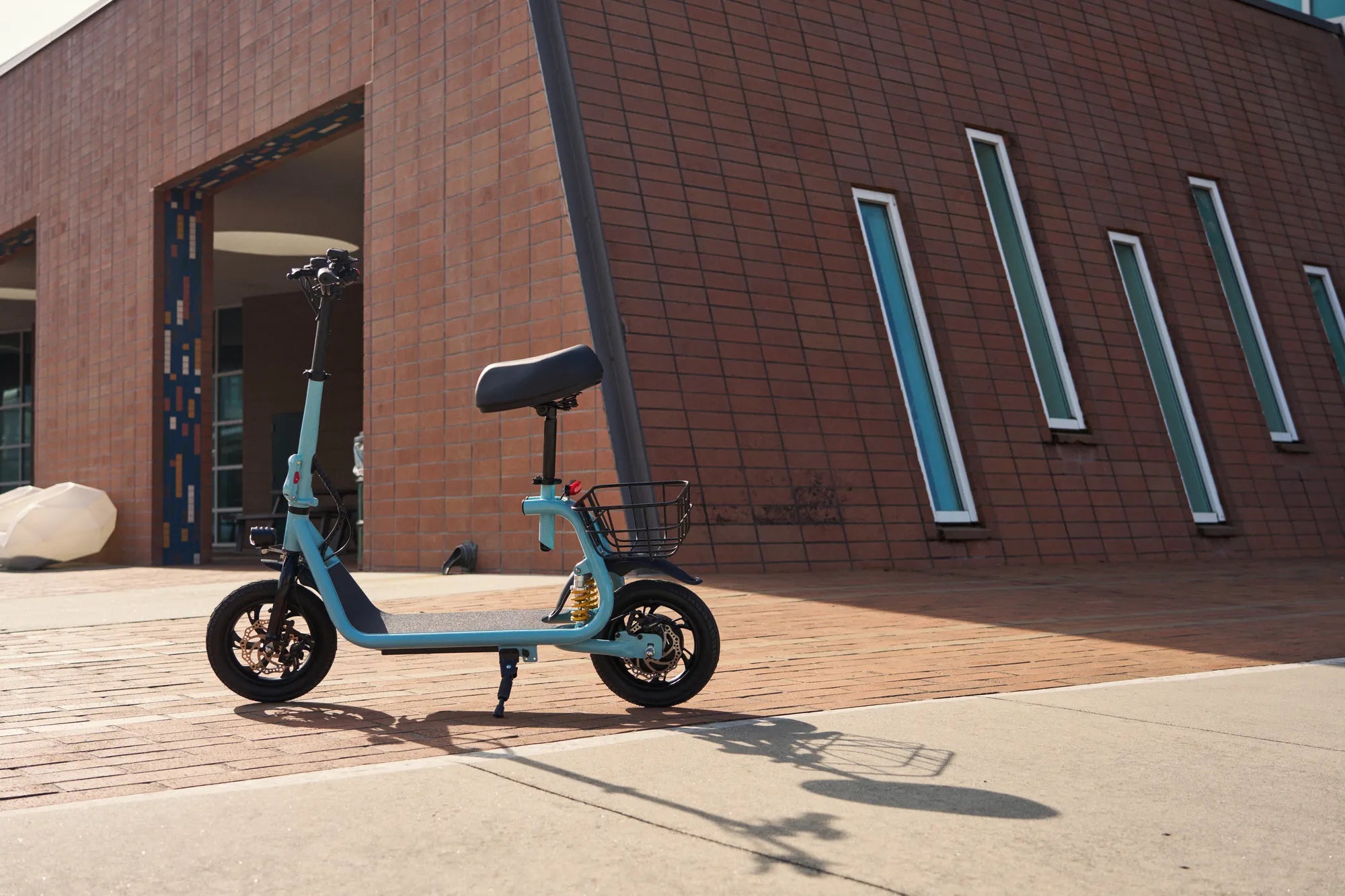
The UK's Urban Mobility Revolution
UK cities are at a crossroads. Chronic congestion, rising transport costs, and stringent air quality targets demand a smarter approach to getting around. Electric motorbikes and scooters are emerging not as a niche trend, but as a core component of the solution, offering a practical, efficient, and sustainable alternative for millions. This shift represents a fundamental change in how we perceive short-distance travel.
The adoption of electric two-wheelers directly addresses pressing urban challenges. They drastically reduce individual carbon footprints and contribute to quieter, cleaner city centres. For the rider, the benefits are immediate: slashing commute times by filtering through traffic and eliminating fuel costs. This guide will provide a detailed roadmap for understanding and embracing this revolution.
We will dissect the UK's unique regulatory landscape, compare vehicle types, and analyse the total cost of ownership. The future of urban mobility in the UK is electric, two-wheeled, and intelligent. Brands bringing reliable, certified technology to market, like Gyroor, are pivotal in ensuring this future is both accessible and safe for all riders.
Understanding the UK's Electric Two-Wheeler Landscape
Navigating the world of electric two-wheelers begins with clear definitions. In the UK context, three main categories exist, each with distinct legal and practical implications. Understanding these differences is crucial for making a compliant and suitable purchase.
Electric Scooters (E-scooters): These are compact, stand-up vehicles typically with a small deck, handlebars, and a battery-powered motor. It is vital to note that privately-owned e-scooters are currently not legal to use on public roads, cycle lanes, or pavements. Their legal use is restricted to private land with the landowner's permission. This contrasts with government-approved rental trials operating in select towns and cities.
Electric Mopeds: Classified as L1e-B vehicles, these are sit-down scooters with a maximum design speed of 28 mph (45 km/h). They require type approval, registration with the DVLA, road tax, insurance, and a valid driving licence. Riders must typically complete Compulsory Basic Training (CBT) and display L-plates unless they have a full motorcycle licence.
Electric Motorcycles: These are classified as L3e vehicles (over 28 mph). They offer higher performance and require a full motorcycle licence (category A or A1/A2 depending on power). Like mopeds, they must be type-approved, registered, taxed, and insured. They represent a direct, zero-emission replacement for traditional petrol-powered motorcycles.
The Compelling Case for Going Electric in the UK
The financial, environmental, and practical advantages of switching to electric two-wheelers are substantial and data-driven. For UK commuters and urban dwellers, the case is increasingly persuasive.
Significant Cost Savings: The primary driver for many is cost. Electricity is far cheaper than petrol. Charging a typical e-scooter or moped costs mere pence compared to pounds for fuel. Maintenance is simpler and cheaper due to fewer moving parts—no oil changes, spark plugs, or complex gearboxes. In London and other Clean Air Zones, they are exempt from daily Congestion Charges and ULEZ fees, saving riders up to thousands of pounds annually.
Environmental and Social Benefits: Electric two-wheelers produce zero tailpipe emissions, directly improving local air quality. They are also significantly quieter, reducing noise pollution. Their small physical footprint and efficiency make them an ideal solution for dense urban areas, helping to reduce overall traffic congestion and the associated economic costs.
Unmatched Practicality: Navigating city traffic becomes effortless. Filtering through stationary or slow-moving cars is legal for motorcycles and mopeds, turning a 45-minute crawl into a 15-minute glide. Parking is vastly simplified, with many councils offering free or reduced-cost parking for electric vehicles. For 'last-mile' journeys complementing public transport, portable e-scooters (used legally on private land or in rental schemes) offer seamless connectivity.
Navigating UK Regulations: What You Need to Know
UK law surrounding electric two-wheelers is specific and must be adhered to strictly. Ignorance is not a defence and can result in fines, penalty points, or vehicle seizure.
Privately-Owned E-scooters: The legal status is clear: it is illegal to use a privately-owned e-scooter on public roads, pavements, cycle lanes, or bridleways. Doing so can lead to a £300 fixed-penalty notice and six points on your driving licence. The vehicle may be impounded. They are only legal on private land with permission. This differs from the regulated, insured, and speed-limited rental scooters in approved trial areas.
Electric Mopeds & Motorcycles: These are treated as motor vehicles. They must be EU/UK type-approved, registered with the DVLA, and have a number plate. You must pay vehicle tax (currently £0 for zero-emission vehicles) and have at least third-party insurance. A valid driving licence with the correct entitlement (CBT certificate or full motorcycle licence) is mandatory. Riders and passengers must wear a safety helmet by law.
Insurance and Safety: Insurance is a legal requirement for any vehicle used on public roads. For e-mopeds and motorcycles, shop around for specialist electric vehicle policies. Even for private e-scooter use on private land, personal liability insurance is advisable. Purchasing from a reputable brand that prioritises built-in safety features is the first step in responsible ownership.
Key Features to Consider When Choosing Your E-Ride
Selecting the right electric two-wheeler involves balancing specifications with your specific needs and the UK legal framework. Here are the critical factors to evaluate.
Motor Power and Torque: Motor power, measured in watts (W) or kilowatts (kW), influences top speed and hill-climbing ability. For UK cities with steep inclines, torque is equally important. A 250W motor may suffice for flat areas, but 500W or more provides confident performance on hills. E-mopeds typically range from 1kW to 4kW.
Battery Capacity and Real-World Range: Battery capacity, measured in watt-hours (Wh), determines range. Manufacturer claims are often based on ideal conditions. For a realistic estimate, consider factors like rider weight, terrain, temperature, and use of throttle versus assist modes. A 360Wh battery may offer 15-20 miles of real-world range, while larger 500Wh+ batteries extend this significantly.
Build Quality and Safety Features: This is non-negotiable. Look for robust frame construction, reliable braking systems (disc brakes are superior), and effective lighting. Water resistance is critical in the UK; an IPX5 rating means the unit can withstand water jets, making it suitable for wet road spray. Quality brands use UL-certified battery packs, like those from Gyroor, which undergo rigorous testing for safety and longevity.
| Feature | Electric Scooter (Private) | Electric Moped (L1e-B) | Electric Motorcycle |
|---|---|---|---|
| Max Legal Speed (Public Road) | Not Legal | 28 mph (45 km/h) | Varies (e.g., 60+ mph) |
| Licence Required | N/A (Private land only) | Provisional + CBT (or full licence) | Full Motorcycle Licence (A/A1/A2) |
| Road Tax & Insurance | No | Yes (Tax £0, Insurance Mandatory) | Yes (Tax £0, Insurance Mandatory) |
| Typical Use Case | Private land, last-mile (rental) | Urban commuting, daily errands | Longer commutes, leisure riding |
| Approx. Cost Range | £300 - £1,000+ | £1,500 - £3,500+ | £4,000 - £15,000+ |
Gyroor's Commitment to Safe, Reliable UK Mobility
As a leader trusted by over 100,000 riders in North America and Europe, Gyroor designs its products with the stringent demands of modern urban mobility in mind. For the UK market, this means a foundational focus on safety, durability, and rider confidence.
Every Gyroor electric scooter and e-bike uses UL-certified battery packs. This independent certification is a gold standard for electrical safety, testing for over 500 charge cycles, thermal stability, and short-circuit protection. This not only ensures peace of mind but can also be a favourable factor for insurance considerations. It reflects a commitment to quality that goes beyond minimum requirements.
Recognising the British climate, Gyroor engineers its core models with IPX5 water-resistant ratings. This design ensures that rain and wet roads do not compromise the scooter's electronics or performance, providing reliable transportation regardless of the weather. This resilience is key for a product meant for daily use.
This commitment is backed by a comprehensive 1-year warranty and accessible customer support. For riders investing in their mobility, this support network ensures long-term ownership confidence, making Gyroor a partner in the transition to electric travel, not just a retailer.
The Future of Urban Mobility: Trends and Predictions for the UK
The evolution of electric two-wheelers in the UK will be shaped by technology, infrastructure, and policy over the coming decade. The trajectory points towards deeper integration into the transport ecosystem.
Infrastructure development is accelerating. Expect a significant expansion of dedicated micromobility charging points at transport hubs, supermarkets, and workplaces. The integration of swappable battery networks could further reduce range anxiety. Cities are likely to continue reallocating road space, creating more protected lanes for cycles and lighter electric vehicles, enhancing safety for all road users.
Technologically, batteries will see incremental improvements in energy density, offering longer ranges without increasing size. Smart connectivity will become standard, with apps providing diagnostics, anti-theft tracking, and route planning. Advanced rider assistance systems, like improved stability control, may trickle down from motorcycles to higher-end e-mopeds.
The most significant change could be regulatory. The government's rental trials are gathering data on safety and integration. A future legal framework for private e-scooters on public roads—with strict requirements on speed, power, lighting, and insurance—is a plausible outcome. This would unlock the full potential of personal electric scooters for safe, legal, and widespread use.
Frequently Asked Questions (FAQ)
Q1: Can I legally ride my own electric scooter to work in the UK?
A: No, currently it is illegal to use a privately-owned e-scooter on any public road, cycle lane, or pavement. Your only legal options are to use one from an official rental scheme in a trial area (if available) or to ride on private land with permission. For a legal commute, an electric moped or motorcycle is the appropriate choice.
Q2: Do I need a licence, insurance, and a helmet for an electric moped?
A: Yes, absolutely. An electric moped is classed as a motor vehicle. You need at least a provisional driving licence and a Compulsory Basic Training (CBT) certificate, or a full licence. Third-party insurance is a legal minimum. Wearing a safety helmet is also mandatory by law for both rider and passenger.
Q3: How much does it cost to charge an electric scooter or moped?
A>It is very inexpensive. A full charge for a typical electric scooter with a 360Wh battery costs between 10-15 pence based on average UK electricity prices. Charging an electric moped with a larger 2kWh battery might cost around 60-70 pence. This compares to several pounds for an equivalent petrol-powered journey.
Q4: Are electric two-wheelers safe in the rain?
A>Safety depends on the build quality. Models with a high Ingress Protection (IP) rating, such as IPX5, are designed to withstand water jets from any direction, making them safe for use in wet conditions and on damp roads. Always check the manufacturer's IP rating and avoid submersing any electric vehicle. Good tyres and cautious riding are also essential in the rain.
Q5: What happens when the rental e-scooter trials end?
A>The future is not yet decided. The Department for Transport will use data from the trials to inform future legislation. Possible outcomes include making the trials permanent, expanding them, or creating a new legal framework for both rental and privately-owned low-speed electric vehicles. The goal is to integrate them safely into the UK's transport mix.
Embracing a Smarter Way to Move
The evidence is compelling: electric motorbikes and scooters offer a viable, efficient, and sustainable answer to the UK's urban mobility challenges. They represent a pragmatic shift towards reducing individual transport costs, easing congestion, and cleaning the air in our city centres. The journey involves understanding the clear legal distinctions, prioritising safety and quality in your purchase, and riding responsibly.
As infrastructure and technology evolve, the role of these vehicles will only expand. Choosing a reliable partner for this journey is crucial. Brands that demonstrate a commitment to certified safety, weather-resistant durability, and strong customer support provide the foundation for a positive and long-lasting electric riding experience. The future of urban mobility is here, and it is electric, agile, and intelligent.
Ready to explore reliable, UL-certified electric mobility options designed for the demands of modern travel? Browse the full Gyroor collection at gyroorboard.com to find an e-scooter or e-bike that matches your needs for safety, performance, and style.
Does Houston Have Electric Scooters? A Comprehensive Guide to H-Town's Micromobility
Are Electric Scooters Street Legal in UK? A Complete Guide to Laws & Trials