



Introduction: Navigating the World of Electric Scooters for Young Teens
Choosing an electric scooter for kids 14 years old involves balancing a teen's desire for independence with a parent's paramount concern for safety. This pivotal age marks a transition towards more responsible mobility, but not every scooter on the market is built to meet the unique demands of a young teen's use. The right choice fosters freedom, teaches responsibility, and provides a practical mode of transport.
This guide cuts through the marketing hype to deliver a factual, data-driven framework for your decision. We will analyze the essential safety specifications that are non-negotiable, translate performance metrics into real-world scenarios, and outline the gear and rules required for safe operation. As a leader in personal electric transport, Gyroor designs its scooters with these core principles, integrating UL-certified battery safety and robust construction as standard features trusted by a global community.
Why a 14-Year-Old is Ready for an Electric Scooter: Balancing Freedom & Responsibility
Fourteen is a developmentally appropriate age to introduce an electric scooter under guided supervision. At this stage, adolescents have significantly improved motor coordination, reaction times, and cognitive ability for risk assessment compared to younger children. An electric scooter for kids 14 years and older serves as more than a toy; it's a tool for teaching practical life skills.
It offers a solution for short commutes to school, friends' houses, or local activities, reducing reliance on parental rides. This fosters a sense of independence and time management. Furthermore, riding requires constant environmental awareness, decision-making, and adherence to rules, all of which reinforce responsible behavior.
Key Developmental Milestones at This Age
Cognitively, most 14-year-olds can think more abstractly and anticipate consequences, which is crucial for navigating traffic and obstacles. Physically, they possess the strength, balance, and coordination to handle a moderately powered vehicle. Their longer attention spans and ability to follow multi-step procedures make them capable of learning and adhering to complex safety protocols and basic maintenance tasks.
The Role of an E-Scooter in a Teen's Life
Beyond independence, a quality e-scooter encourages outdoor activity and provides an eco-friendly alternative to car trips. It can be a social activity when riding with friends in safe areas. For parents, it's an opportunity to engage in ongoing conversations about safety, responsibility, and mechanical care, using the scooter as a practical teaching platform.
Critical Safety Features Every Parent Must Look For
Safety is not a single feature but a system built into the scooter's design. Prioritizing these elements is the most important step in selecting an electric scooter for kids 14 years old. Compromising on any of these core areas significantly increases risk.
The Non-Negotiable: UL-Certified Battery Safety
The battery is the most critical safety component. UL (Underwriters Laboratories) certification means the battery pack has passed rigorous independent tests for electrical, mechanical, and environmental safety. It ensures protection against overcharging, short-circuiting, and thermal runaway—a leading cause of fires in poorly made units. Gyroor uses exclusively UL-certified battery packs, tested for over 500 charge cycles, providing a benchmark for stable and durable power.
Braking Systems: Disc vs. Electronic & Why It Matters
Effective braking is paramount. A combination braking system is ideal for redundancy.
- Disc Brakes: Offer superior, consistent stopping power in both dry and wet conditions. They are less affected by water on the wheel rim.
- Electronic (Regenerative) Brakes: Use the motor to slow the scooter and can partially recharge the battery. They are low-maintenance but can be less effective on steep hills or as a sole braking system.
- Foot Brakes: Provide a mechanical backup. The best setups, like those on Gyroor models, often combine a front electronic brake with a rear disc or drum brake for maximum control.
Stability and Control: Wheel Size, Deck Size, and Suspension
Stability prevents accidents. Larger wheels (8 inches or more) roll over cracks, pebbles, and pavement imperfections more smoothly than smaller wheels, reducing the chance of a sudden stop or loss of control. A wide, textured deck allows for secure footing and easy weight shifting. Front or dual suspension absorbs impacts from bumps, keeping the tires in contact with the ground for better traction and a more controlled, comfortable ride.
Visibility is Safety: Lights and Reflectors
Active lighting is essential, not optional. A bright front headlight (200 lumens or more) and a solid or flashing rear taillight make the rider visible to others at dawn, dusk, or on overcast days. Reflectors on the sides and wheels provide passive visibility. For enhanced safety, look for additional lighting elements, such as deck or stem lights, which are integrated into many Gyroor designs.
Choosing the Right Model: Performance Specs Decoded for Parents
Technical specifications can be confusing. Understanding what they mean for daily use is key to finding a scooter that is both fun and appropriately matched to a teen's skill level.
Speed and Power: What's Appropriate for a 14-Year-Old?
Top speed should be manageable. A maximum speed of 15-20 mph is a suitable range for a beginner-to-intermediate teen rider. Crucially, the scooter should have a speed limiter, preferably adjustable via a companion app that parents can control. Motor power (e.g., 350W-500W) determines hill-climbing ability and acceleration. A 500W motor provides ample power for moderate hills without encouraging excessive speed, offering a safe performance sweet spot.
Range Anxiety for Parents: Understanding Battery Life
Advertised range is a best-case scenario. Real-world range depends on rider weight, terrain, temperature, and riding style. For a 14-year-old, a scooter with a 15-25 mile rated range ensures enough capacity for round trips to common destinations without frequent deep discharges, which prolongs battery life. It eliminates the stress of the battery dying mid-commute.
Build Quality and Durability: Withstanding Teen Use
A scooter must endure daily use. A frame constructed from aerospace-grade aluminum offers an optimal balance of strength and light weight. IPX5 water resistance rating means the scooter can withstand water jets from any direction, protecting it from puddles and light rain. Pneumatic (air-filled) tires generally provide better shock absorption and traction than solid tires, though airless tires eliminate flats.
The Gyroor Advantage: Engineered for Peace of Mind
Gyroor builds its electric scooters around the core safety and durability requirements identified in this guide. This proactive engineering philosophy translates directly into parental confidence and rider reliability.
Safety as Standard: UL-Certification and IPX5 Water-Resistance
Unlike brands where safety features are optional upgrades, Gyroor integrates them fundamentally. Every model features a UL-certified battery pack and a minimum IPX5 water-resistant construction. This means parents are not forced to choose between price and critical safety; it is inherent in the design, ensuring protection from electrical hazards and the elements from day one.
The Confidence of a Comprehensive 1-Year Warranty
Gyroor backs its engineering with a robust 1-year warranty covering the battery, motor, controller, and frame. This warranty reflects confidence in product longevity and provides a clear support path. With a customer base of over 100,000 riders and a 4.5/5 average rating, their accessible support structure is proven to resolve issues efficiently.
Recommended Gyroor Models for the 14-Year-Old Rider
Gyroor's lineup includes models well-suited for the 14-year-old demographic. For instance, commuter-focused models with speed limiters, bright lighting, and combination brakes offer ideal urban transport. More robust models with enhanced suspension and higher torque motors are suitable for areas with varied terrain. Each is built on the same foundation of certified battery safety and water-resistant durability.
Beyond the Scooter: Essential Gear and Rules for Safe Riding
The safest scooter is only one component of the safety equation. Establishing mandatory gear and immutable household rules is the parent's essential responsibility.
Mandatory Safety Gear: Helmet, Elbow & Knee Pads
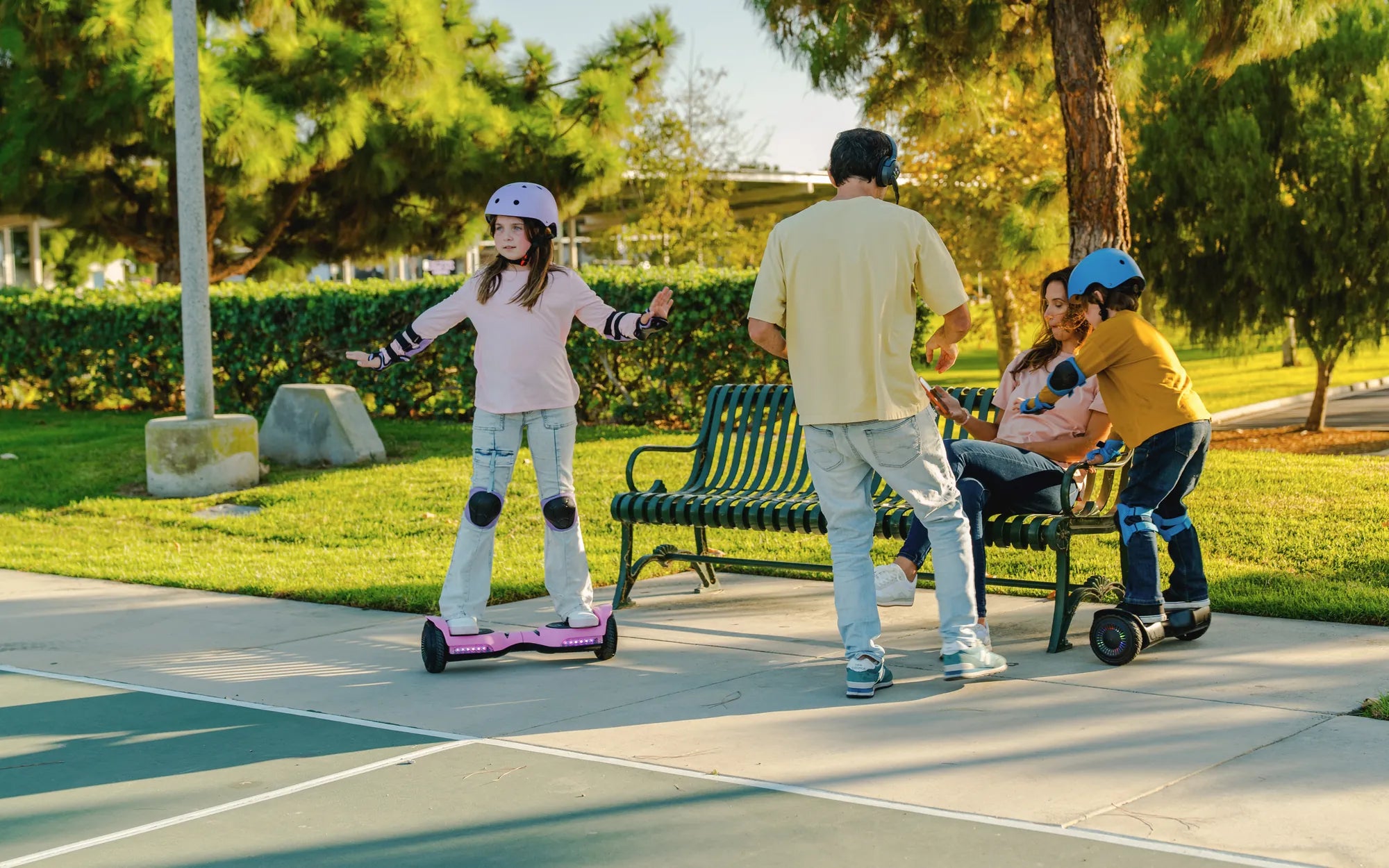
A certified multi-impact bicycle helmet is non-negotiable for every ride, without exception. Elbow and knee pads are strongly recommended, especially during the learning phase. Wrist guards can also prevent common fall injuries. This gear should be treated as part of the vehicle itself, not an accessory.
Establishing Household E-Scooter Rules
Clear, consistent rules set boundaries. These should include: designated riding areas (e.g., no busy streets initially), weather restrictions (no riding in rain, on wet surfaces, or after dark), mandatory gear use, a check-in system for destinations, and a zero-tolerance policy for riding with passengers or using headphones. The scooter's privilege should be tied to adhering to these rules.
Maintenance 101: Teaching Your Teen Basic Care
Basic maintenance fosters responsibility and ensures the scooter remains safe. Teens should learn a weekly check: inspecting tire pressure and tread, testing brake function, ensuring lights work, and checking for loose bolts. They should know to store the scooter in a dry place and to never leave the battery fully depleted or charging unattended for extended periods.
Comparison: Key Specifications for the 14-Year-Old Rider
This table compares essential criteria to consider when evaluating any electric scooter for kids 14 years and older, highlighting why certain features are prioritized.
| Feature | Minimum Recommended Spec | Why It Matters for a 14-Year-Old |
|---|---|---|
| Battery Certification | UL-Certified | Prevents fire risk; ensures stable, long-lasting power. Non-negotiable for safety. |
| Braking System | Dual System (e.g., Electronic + Disc) | Provides redundant stopping power for control in emergencies and varied conditions. |
| Max Speed | 15-20 mph (with limiter) | Balances fun with manageable control. Limiters allow parents to set a safe cap. |
| Motor Power | 350W - 500W | Provides adequate torque for hills without excessive, uncontrollable acceleration. |
| Wheel Size | 8 inches or larger | Improves stability and ride comfort over pavement imperfections. |
| Water Resistance | IPX5 Rating | Protects electronics from puddles and light rain, increasing durability and safety. |
| Frame Material | Aerospace-Grade Aluminum | Offers a durable yet lightweight build that can withstand regular teen use. |
Parental FAQ: Your Top Questions Answered
Q1: Are electric scooters legal for 14-year-olds in my area?
Laws vary by city, state, and country. Generally, many localities allow teen riders on bike lanes and roads with speed limits under 25-35 mph, but often prohibit sidewalk riding. Always check your specific municipal codes regarding minimum age, helmet laws, and permitted riding areas before purchasing.
Q2: How much should I expect to spend on a quality, safe scooter?
A reliable electric scooter for kids 14 years old with essential safety features (UL battery, good brakes, lights) typically ranges from $400 to $700. Investing in this range avoids the significant safety and reliability compromises found in cheaper, uncertified models.
Q3: What's the learning curve like for a first-time rider?
Most teens with basic bicycle balance can learn the fundamentals of throttle control, braking, and steering in 30-60 minutes in a safe, open area. Mastery of road awareness, signaling, and obstacle avoidance takes consistent practice over several weeks under supervision.
Q4: Can my child ride it to school? What should they know first?
Possibly, but only after they demonstrate proficient control and knowledge of the route. They must know all traffic rules for cyclists, how to use hand signals, how to navigate intersections, and the school's specific policy on e-scooter storage and charging. Practice the route together on weekends first.
Q5: How do I charge and store the battery safely?
Always use the provided charger. Charge the scooter on a non-flammable surface in a well-ventilated area, and do not leave it charging unattended overnight. For storage, keep the battery at approximately 50-80% charge if not used for extended periods, and store in a cool, dry place away from direct sunlight.
Conclusion: Empowering Independence, Prioritizing Safety
Selecting the right electric scooter for your 14-year-old is a significant decision that hinges on a simple formula: certified safety features + appropriate performance + mandatory gear + clear rules. By prioritizing UL-certified batteries, robust braking, and durable construction, you invest in a vehicle designed for real-world use. Brands like Gyroor build this philosophy into their core, offering parents a verified foundation of safety.
This journey is a partnership. Your role in establishing rules, supervising practice, and enforcing gear use is as critical as the scooter's engineering. When these elements align, an electric scooter becomes more than transportation; it becomes a powerful tool for teaching responsibility, granting age-appropriate freedom, and encouraging outdoor activity. Ready to explore scooters built to this standard of safety and performance?
Browse the full Gyroor collection at gyroorboard.com to find the model that matches your teen's need for adventure and your need for peace of mind.
Hoverboard Parts: The Essential Components That Keep Your Ride Smooth
Are All Hoverboard Chargers the Same? The Truth You Need to Know