



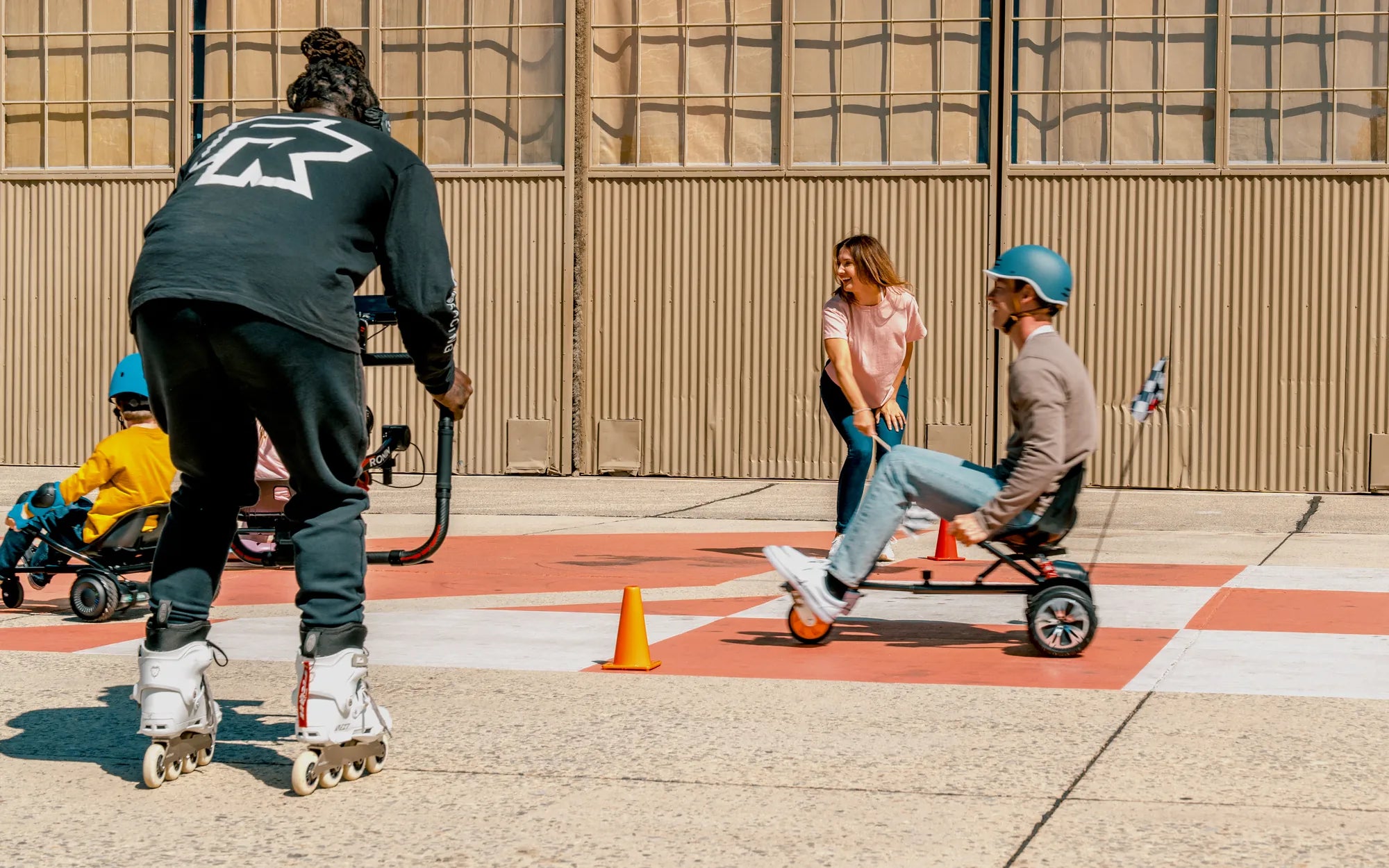
Finding the right electric scooter for kids ages 6-12 unlocks a world of outdoor adventure, physical activity, and growing independence. This guide cuts through the noise to provide parents with the data-driven insights needed to make an informed purchase, prioritizing certified safety without sacrificing fun. You will learn how to match scooter specifications to your child's developmental stage, identify non-negotiable safety features, and implement essential riding rules and maintenance routines.
Understanding the Age Group: What Makes 6-12 Year-Olds Unique Riders?
Children between the ages of 6 and 12 experience rapid physical and cognitive development. This directly impacts their capabilities as riders. A scooter that is perfect for a cautious 6-year-old may be underwhelming for a confident 12-year-old, making adjustable features critical.
Motor skills and coordination improve significantly during this period. Younger children (6-8) benefit from lower speeds, very stable platforms, and simple controls. Older kids (9-12) develop better balance, judgment, and reaction times, allowing them to safely handle slightly higher performance.
Attention spans and risk assessment also evolve. A 7-year-old might be easily distracted, necessitating a scooter with reliable, automatic braking. A pre-teen can better understand and follow safety protocols, making programmable speed limiters a valuable tool for graduated learning.
Physical growth is another key factor. An adjustable handlebar height is not a luxury but a necessity. A scooter must fit your child properly at purchase and for at least the next 1-2 years to ensure proper control and posture.
Key Safety Features Every Parent Must Look For
Safety is the paramount concern when choosing any vehicle for a child. An electric scooter for kids ages 6-12 must be engineered with specific protective features that address the unique risks young riders face. These specifications are your primary checklist.
Never compromise on verified safety certifications from recognized testing laboratories. These standards ensure the product has passed rigorous tests for electrical, mechanical, and thermal safety under defined conditions.
Speed Controls and Limiters
Adjustable speed modes are the most important feature for a child's first electric scooter. A beginner mode, typically capped between 5-7 mph (8-11 km/h), allows a child to learn balance and steering in a controlled manner.
As skills improve, parents can unlock intermediate and sometimes advanced modes, often reaching 10-12 mph (16-19 km/h) for older kids. This "grow-with-me" functionality extends the scooter's useful life and matches speed to ability.
Braking System: Electronic vs. Disc vs. Foot Brakes
The braking system must be intuitive and provide progressive, predictable stopping power. For this age group, a combination of brakes is often ideal.
Electronic (E-Brakes): Engage when the throttle is released, providing smooth, automatic deceleration. Excellent for beginners as a primary or backup system. Disc Brakes: Offer strong, consistent stopping power in various conditions but require occasional adjustment. Foot Brakes: A simple rear fender brake activated by foot pressure; a reliable mechanical backup. The best electric scooter for kids ages 6-12 often pairs an electronic brake with a physical disc or foot brake for redundancy.
Stability and Design: Wheel Size, Deck, and Handlebar
Stability is dictated by the scooter's physical geometry. Larger wheel diameters (6.5 to 8.5 inches) roll over small cracks and debris more easily than smaller wheels, providing a smoother, safer ride.
A wide, textured deck gives your child a confident, balanced stance. The handlebar should be a T-bar style (not foldable at the stem for young riders) with a width appropriate for the child's shoulder span, ensuring precise steering control.
The Critical Importance of UL-Certified Batteries
The battery is the heart of the scooter and the component where safety cannot be assumed. A UL-certified battery pack has undergone independent testing by Underwriters Laboratories for risks like overcharging, short-circuiting, overheating, and impact.
Brands like Gyroor use these UL-certified batteries as a core safety standard. This certification is a clear indicator of a brand's commitment to safety over cost-cutting, providing essential peace of mind that the power source is reliable and protected.
Durability and Weather Resistance (IP Rating)
Kids will ride through puddles and on damp pavement. An Ingress Protection (IP) rating defines a product's resistance to dust and water. A rating of IPX4 or higher (like Gyroor's IPX5) means the scooter can withstand water splashes from any direction.
This protects the electrical components from light rain and wet roads, greatly enhancing the scooter's longevity and reliability. A rugged, welded aluminum frame is also essential to withstand the bumps and occasional drops of active use.
Choosing the Right Model: A Data-Driven Comparison for Ages 6-12
To make an informed choice, parents must compare key specifications side-by-side. The following table outlines critical features to evaluate when selecting an electric scooter for kids ages 6-12. These specifications are illustrative of the categories you should compare across brands.
| Feature | Importance for Age 6-9 | Importance for Age 10-12 | Ideal Specs / Notes |
|---|---|---|---|
| Max Speed & Modes | Critical. Must have a beginner mode ≤7 mph. | High. Needs multiple modes, max ~12 mph. | 3 speed modes. Speed limiter via parental PIN or app. |
| Motor Power | Moderate. 100-150W sufficient for flats. | Higher. 150-250W for mild inclines. | Brushless hub motor for efficiency & reliability. |
| Battery & Range | Moderate. 5-7 mile range is adequate. | Higher. 7-10 mile range for longer adventures. | UL-certified Lithium-ion. 1-3 hour charge time. |
| Max Weight Limit | Check. Minimum 120 lbs capacity. | Check. Minimum 150 lbs capacity. | Always choose a scooter with a limit well above your child's current weight. |
| Wheel Size & Type | High. Larger (≥6.5"), air-filled or wide PU for stability. | High. 8-8.5" wheels for better terrain handling. | Front and/or rear suspension adds comfort on rough paths. |
| Braking System | Critical. Redundant systems recommended (E-brake + foot). | Critical. Disc brake + electronic brake offers strong control. | Test brake responsiveness and progressive feel. |
| IP Rating | High. IPX4 minimum for puddle resistance. | High. IPX5 or higher for greater durability. | Ensures scooter survives real-world use. |
| Warranty & Support | Critical. Look for comprehensive 1-year coverage. | Critical. Covers battery, motor, and frame. | Gyroor provides a reliable 1-year warranty with US-based support. |
Beyond the Scooter: Essential Gear and Riding Rules
The safest electric scooter is only one component of the safety equation. Proper protective gear and established rules are equally vital to prevent injuries and foster responsible habits from the first ride.
The Non-Negotiable Safety Kit: Helmet, Pads, and Visibility
A CPSC-certified bicycle helmet is an absolute must for every ride, no exceptions. It should fit snugly and be replaced after any significant impact.
For beginners and all riders under 10, a full set of protective gear—knee pads, elbow pads, and wrist guards—is highly recommended. These drastically reduce the severity of scrapes and fractures in a fall. For evening rides, add reflective clothing or stickers and ensure the scooter has bright front and rear LED lights.
Establishing Your Family's Riding Rules
Clear, consistent rules set boundaries for safe fun. Establish these before the first ride and review them regularly.
- Gear is Mandatory: No helmet, no riding.
- Supervised Zones Only: Define approved areas (e.g., driveway, sidewalk on quiet street, park path). Absolutely no riding on public roads or near traffic.
- Weather Watch: No riding in rain, on wet surfaces, or after dark.
- Pre-Ride Check: Make it a habit to check tire pressure, brakes, and loose bolts before riding.
- Respect for Others: Yield to pedestrians, maintain a safe speed around people and pets, and never ride double.
Parent's Checklist: Pre-Purchase and Maintenance Guide
Use this step-by-step checklist to navigate the buying process and ensure the long-term health of your child's electric scooter.
Pre-Purchase:
- Measure your child's height and inseam to compare with scooter deck height and handlebar range.
- Check your local municipality's laws regarding electric scooter use on sidewalks and bike paths.
- Verify key specs: UL battery certification, IP water resistance rating, and weight capacity.
- Read verified customer reviews focusing on durability, customer service, and real-world battery life.
- Confirm the warranty details—what is covered (battery, motor, frame) and for how long.
Ongoing Maintenance:
- Battery Care: Follow the first-charge instructions. Avoid draining to 0%. Store in a cool, dry place.
- Tire Pressure: Check air-filled tires weekly; inspect solid PU tires for wear and cracks.
- Mechanical Check: Monthly, tighten all bolts (handlebar, stem, wheels). Test brake responsiveness and adjust if needed.
- Cleaning: Wipe down with a damp cloth. Never use a high-pressure hose, even on water-resistant models.
- Off-Season Storage: Charge battery to 50-70% before storing for more than a month.
Fostering Independence with Confidence
An electric scooter for kids ages 6-12 is more than a toy; it's a tool that promotes outdoor activity, coordination, and responsible decision-making. The joy and sense of freedom it provides are immense, but they must be built on a foundation of verified safety and parental guidance.
By choosing a scooter with certified components like a UL-rated battery, robust construction, and adjustable speed controls, you invest in fun that lasts. Pairing that quality hardware with consistent safety rules and protective gear allows you to say "yes" to adventure with greater confidence.
Ready to find the perfect match for your young rider? Start your search with brands that prioritize transparency and safety certifications. Explore the engineering and family-focused designs in the full Gyroor collection at gyroorboard.com, where over 100,000 riders have begun their journey.
Frequently Asked Questions (FAQ)
Q1: What is the right age for a first electric scooter?
Most children are ready for a beginner-friendly electric scooter around age 6 or 7, provided it has a speed-limited mode (≤7 mph), a stable platform, and they consistently wear full safety gear. Readiness depends more on the child's maturity, coordination, and ability to follow safety rules than on age alone.
Q2: How fast should an electric scooter for a 10-year-old go?
A 10-year-old can typically handle a scooter with a maximum speed of 10-12 mph (16-19 km/h), but it should have multiple speed modes. They should start in a slower mode and only advance when they demonstrate full control and responsibility. Parental speed limiters are a key safety feature for this age.
Q3: Are electric scooters safe for kids?
Electric scooters can be safe for kids when selected and used correctly. Safety hinges on three pillars: 1) Choosing a scooter with certified safety features (UL battery, speed limiters, reliable brakes), 2) Mandating a CPSC helmet and protective gear every time, and 3) Enforcing strict riding rules in safe, supervised areas.
Q4: How long does the battery last, and how do I maintain it?
A quality lithium-ion battery should provide 300-500 full charge cycles before significant capacity loss. For a typical kid's scooter, this translates to 2-4 years of regular use. To maximize lifespan: avoid complete discharges, don't leave it fully charged for extended periods, and store it with a 50-70% charge in a temperate environment.
Q5: What does a comprehensive 1-year warranty cover?
A strong warranty, like the one offered by Gyroor, typically covers defects in materials and workmanship for the frame, motor, battery, and electronic controller for one year from purchase. It is a direct signal of the manufacturer's confidence in their product's durability. Always read the warranty terms to understand claim procedures and what is considered normal wear and tear.
Should I Buy a Self Balancing Scooter? A Complete Guide to Making the Right Choice
Kids Electric Scooter Parts: A Complete Guide for Safety and Performance