


Introduction: Why Kids' E-Scooter Safety is a Parent's Top Priority
Electric scooters have surged in popularity among children and teens, offering a thrilling sense of freedom and a practical mode of transport. This excitement, however, is matched by a sobering reality: a significant rise in emergency room visits related to scooter accidents involving minors. Data from the Consumer Product Safety Commission indicates that children under 16 account for a disproportionate number of these injuries. This guide exists to bridge the gap between fun and safety.
Our mission is to demystify the complex web of age laws, gear requirements, and riding etiquette. We will equip you with the knowledge to make informed decisions, from purchase to daily use. Understanding electric scooter rules for kids is not about restricting joy but about enabling safe, confident adventures. Your role as a parent is the most critical safety feature on any ride.
This complete safety guide for parents will walk you through every crucial step. We cover local legislation, essential scooter features, non-negotiable protective equipment, and foundational riding skills. By the end, you'll have a clear framework to establish safety as a family priority. Let's ensure every ride begins with preparation and ends with a smile.
Understanding the Legal Landscape: Age Limits and Local Laws
The legal framework for electric scooter rules for kids is a patchwork that varies dramatically by city, county, and state. There is no single national law, making it the parent's first and most critical responsibility to research local ordinances. Assuming rules are lax or universal can lead to fines and, more importantly, unsafe riding conditions. Your child's legal ability to ride depends entirely on your zip code.
Common themes emerge across jurisdictions. Many cities set minimum age limits, frequently at 12, 14, or 16 years old for riding on public roads or bike lanes. Rules for sidewalk riding are even more varied, with many areas prohibiting motorized vehicles on sidewalks entirely. Speed limits for minors are also common, often capping scooter speed at 10-15 mph in public spaces, regardless of the scooter's maximum capability.
It is vital to distinguish between legal minimums and manufacturer recommendations. A scooter brand may recommend its product for ages 8 and up, but your local law may prohibit public riding until age 14. The manufacturer's guideline speaks to the physical ability to operate the scooter; the law dictates where and when that operation is permitted. Always defer to the stricter of the two standards.
Key legal areas to investigate include: minimum age requirements, mandatory helmet laws, permissible riding locations (sidewalks, bike lanes, roads), maximum speed limits, and whether a driver's license or learner's permit is required. Ignorance of these electric scooter rules for kids does not excuse violation. Proactive research is the foundation of safe and legal riding.
How to Find Your Local E-Scooter Regulations
Finding your local regulations requires a methodical approach. Start with a targeted internet search using phrases like "[Your City Name] electric scooter ordinance" or "[Your County] micromobility laws." The official website of your city's Department of Transportation or City Clerk's office is the most authoritative source. These sites often have dedicated pages for emerging transportation technologies.
If online searches are unclear, contact your local police department's non-emergency line or your city council member's office. They can direct you to the specific municipal code sections. Don't overlook school district resources; some districts have specific policies regarding students riding e-scooters to school, including where they can be parked on campus.
For a broader view, check your state's vehicle code. While cities often have home rule, state laws can set baselines for equipment like lights and brakes. Compile your findings into a simple reference sheet for your family. Understanding these electric scooter rules for kids transforms legal compliance from a chore into a clear set of guardrails for safe exploration.
Choosing the Right Scooter: Safety Features Over Flashy Speeds
Selecting your child's first electric scooter is a decision where safety must trump all other factors. The allure of high top speeds and aggressive styling is strong, but for young riders, controlled power and stability are paramount. A scooter designed with safety in mind will have features that help manage a child's developing judgment and coordination, providing a safer platform for learning.
Prioritize models with robust, integrated safety systems. A reliable dual braking system—typically combining an electronic brake and a mechanical disc or foot brake—is essential for controlled stopping in all conditions. A wide, textured deck provides stable footing, while a lower deck height lowers the center of gravity, making the scooter less tippy. Bright front and rear LED lights, plus reflective side decals, are non-negotiable for visibility.
The most critical feature for kids is a configurable speed limiter with easy-to-use parental controls. This allows you to set a low maximum speed (e.g., 8 mph) for a beginner and gradually increase it as their skills and responsibility grow. Proper sizing is also crucial; your child should be able to stand comfortably with both feet on the deck without crowding, and the handlebar should be at or just below chest height for optimal control.
Finally, consider the scooter's overall build quality and durability. A sturdy frame made from aerospace-grade aluminum can withstand the bumps of learning. Pneumatic (air-filled) tires offer better shock absorption and traction on uneven surfaces compared to solid tires. These features collectively create a safer riding experience, directly supporting the electric scooter rules for kids you will establish at home.
Why Gyroor's Kid-Focused Designs Prioritize Responsible Riding
As a leading electric scooter and e-bike brand trusted by over 100,000 riders, Gyroor engineers its models with a fundamental understanding of rider safety, especially for younger users. This philosophy translates into specific design choices that align perfectly with a parent's primary concerns. Safety is not an add-on; it's integrated into the product's DNA.
First and foremost, every Gyroor scooter uses UL-certified battery packs. This certification, tested for over 500 charge cycles, is a critical fire-safety benchmark that provides peace of mind far beyond generic battery claims. Furthermore, an IPX5 water-resistant rating means the scooter can safely handle wet pavement and unexpected puddles, protecting the electrical systems from short circuits—a common failure point in lesser models.
Gyroor models suitable for younger riders often feature speed limiters accessible via simple button combinations or companion apps, giving parents direct control. The brand's commitment to a reliable 1-year warranty and robust customer support ensures that any performance issue is addressed promptly, maintaining the scooter's safety integrity over time. These features represent a holistic approach to safety, from battery chemistry to after-sales service.
Choosing a brand like Gyroor means investing in a platform designed for responsible growth. It allows parents to confidently say "yes" to the fun of electric scooters, knowing the product itself is a partner in upholding the family's electric scooter rules for kids. It's about enabling adventure without compromising on foundational safety standards.
The Non-Negotiable Gear: Helmet Law and Beyond
When discussing electric scooter rules for kids, the helmet is the single most important element. You must enforce a strict "no helmet, no ride" policy, regardless of whether your local law requires it. Head injuries are the most serious risk in any wheeled sport, and a properly fitted helmet can reduce the risk of severe brain injury by nearly 70%. This is non-negotiable.
The helmet must be certified for bicycling or multi-sport use. Look for a CPSC (Consumer Product Safety Commission) sticker inside the helmet, which indicates it meets the U.S. federal safety standard. For added assurance, an ASTM F1492 certification is also a strong marker of quality. The helmet must fit snugly, sitting level on the head and covering the forehead without rocking. Replace any helmet after a significant impact, even if no damage is visible.
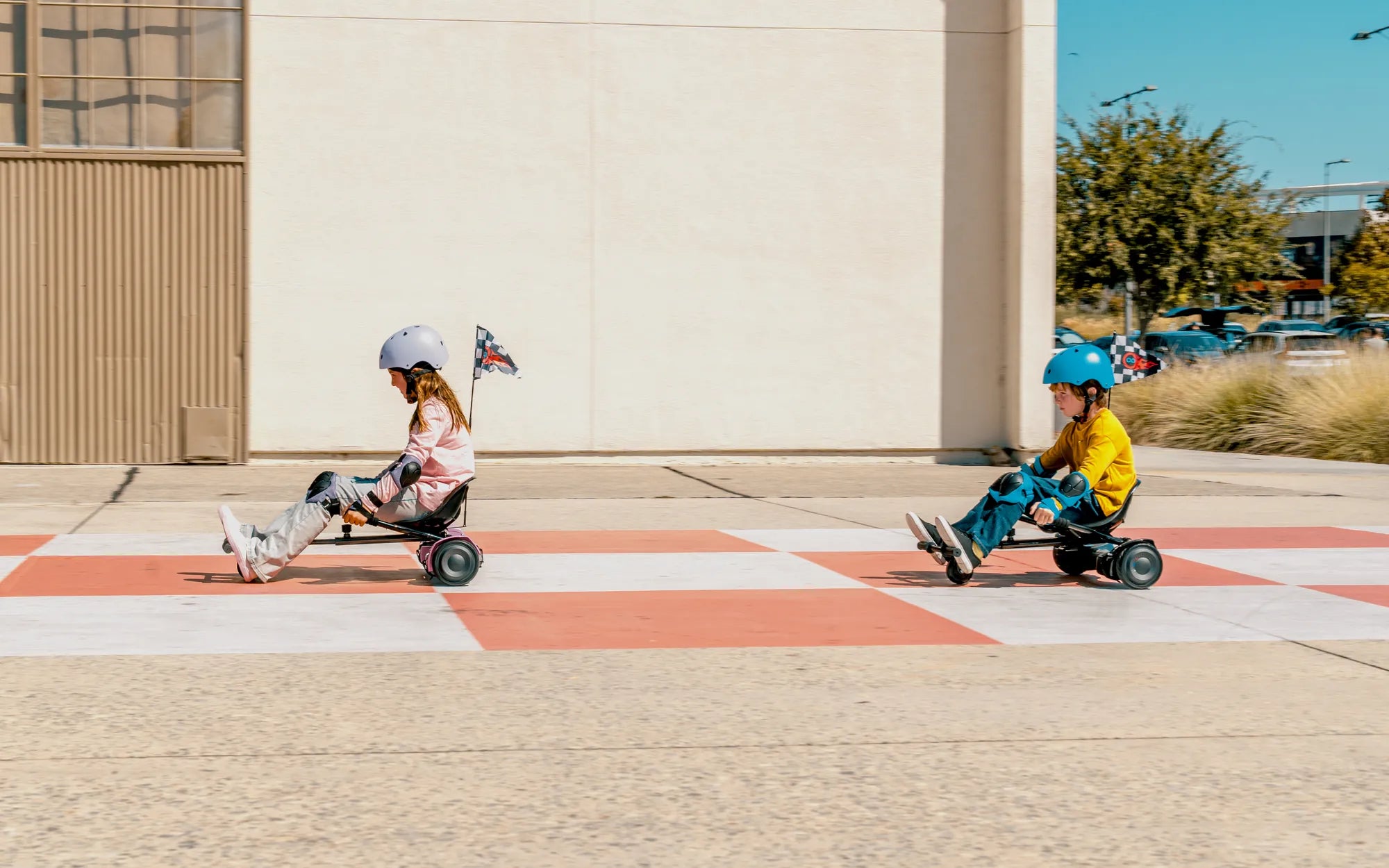
The safety uniform extends far beyond the helmet. Knee and elbow pads are essential for protecting joints during falls, which are a near-certainty in the learning phase. Wrist guards are arguably the second-most important piece of gear after a helmet, as wrist fractures are the most common e-scooter injury. This gear transforms a painful, trip-ending fall into a simple get-up-and-try-again moment.
Complete the gear with sturdy, closed-toe shoes (never sandals or flip-flops) and bright, reflective clothing, especially for riding near dusk or dawn. Make gearing up a non-negotiable ritual, as automatic as putting on a seatbelt. This consistent practice ingrains the mindset that safety equipment is an integral part of the ride itself, not an optional accessory.
Teaching Responsible Riding: Rules of the Road and Etiquette
Handing over the keys, so to speak, is only the beginning. Your most important ongoing role is to teach and model responsible riding behavior. Start in a completely controlled environment like an empty parking lot. Focus on the fundamentals: smooth acceleration and braking, making wide, controlled turns, and scanning the path ahead for cracks or debris. Mastery here builds confidence for more complex environments.
Once basic control is established, teach the rules of the road. This includes riding in the same direction as traffic when in a bike lane, obeying all traffic signals and stop signs, and using hand signals for turns. Instill the habit of constant hazard scanning—looking for opening car doors, pedestrians stepping out, and cars at intersections. Assume that drivers do not see you.
Sidewalk etiquette is equally critical. If local laws permit sidewalk riding, the rule must be: pedestrians have absolute right of way. Teach your child to slow down to walking speed when passing pedestrians and to audibly say "passing on your left" as a courtesy. Riding on sidewalks requires extreme caution at driveways and intersections, where cars may not be looking for a fast-moving scooter.
Finally, establish clear rules about distractions. Absolutely no headphones or earbuds while riding, as hearing is a critical sense for detecting approaching vehicles. Mobile phones should be stowed away, not used for texting or calls. Also, teach proper parking: never block sidewalks, ramps, or building entrances. These lessons in respect and awareness are the practical application of your family's electric scooter rules for kids.
Data & Comparison: How Safety Rules Reduce Injury Risk
Data from organizations like Safe Kids Worldwide and the National Highway Traffic Safety Administration (NHTSA) paints a clear picture: adherence to safety rules dramatically alters risk profiles. Studies indicate that over 80% of reported e-scooter injuries involve factors like lack of a helmet, riding on uneven surfaces, or first-time riders. This isn't about fear-mongering; it's about empowering parents with facts to make safety compelling.
For children, the most common injury patterns involve fractures to the upper limbs (often wrists and forearms), followed by head injuries and lower limb abrasions. The simple act of wearing a helmet and wrist guards directly targets these two most common and severe injury types. The data shows that the severity of injuries is significantly lower when protective gear is worn, often turning a potential hospital visit into a minor incident.
The environment also plays a key role. A majority of collisions occur at intersections or when entering roadways from driveways or alleys. Teaching specific intersection protocol—stopping, looking left-right-left, and making eye contact with drivers—addresses this high-risk scenario directly. Furthermore, most accidents happen after dark; using lights and reflectors reduces this risk exponentially.
| Risky Ride Scenario | Common Injury Risk | Safe Ride Practice | Risk Reduction Outcome |
|---|---|---|---|
| Riding without a helmet | Severe traumatic brain injury, concussion | Always wearing a CPSC-certified helmet | Up to 70% reduction in severe head injury risk |
| First-time rider on public road | Loss of control, collision with object/vehicle | 10+ hours of practice in empty lot, mastering brakes & turns | Builds muscle memory & confidence; drastically reduces rookie errors |
| Riding at dusk without lights | Low visibility to drivers, leading to side-impact collision | Using built-in LED lights + reflective gear; avoiding night rides | Makes rider visible from 500+ feet away, giving drivers time to react |
| Distracted riding (headphones, phone) | Failure to perceive auditory/visual hazards (horns, sirens, cars) | Zero-tolerance policy for distractions; phone on silent in backpack | Maximizes use of critical senses for situational awareness |
This comparative analysis demonstrates that electric scooter rules for kids are not arbitrary restrictions. They are direct, evidence-based countermeasures to known and quantifiable risks. Implementing these rules systematically builds layers of protection around your child, transforming data into daily safety habits.
Parental Checklist: Pre-Ride Safety Inspection and Agreement
Consistency is the key to safety. Implementing a pre-ride checklist creates a ritual that ensures no critical step is missed. This should be a shared activity between parent and child, reinforcing that safety is a team effort. Go through this list together before every single ride, turning responsibility into routine.
Gear Check:
• Is the CPSC helmet on, snug, and strapped?
• Are knee pads, elbow pads, and wrist guards securely fitted?
• Is the child wearing closed-toe shoes and bright/reflective clothing?
Scooter Check:
• Are tires properly inflated and free of cracks or excessive wear?
• Do both the electronic and mechanical brakes engage firmly and smoothly?
• Are the front and rear lights functioning?
• Is the folding mechanism (if applicable) fully locked in the open position?
• Is the speed limiter set to an appropriate level for the planned route?
Route & Conditions Check:
• Has a safe route been planned, avoiding high-traffic roads if possible?
• Is the ride taking place in daylight and good weather (dry pavement, clear visibility)?
• Does the child have a way to communicate (phone) and a plan if they get a flat tire or lost?
Consider formalizing this with a simple "Safety Rider Agreement." Have your child sign a document that lists the core electric scooter rules for kids: I will always wear my helmet and gear. I will obey traffic laws. I will not ride on prohibited sidewalks. I will not use my phone or headphones while riding. This tangible contract reinforces that riding is a privilege earned through demonstrated responsibility.
Conclusion: Empowering Safe Adventures
The journey to responsible e-scooter ownership is built on four unwavering pillars: knowing and following the law, choosing a scooter designed for safety, wearing all protective gear every single time, and committing to ongoing education and practice. These electric scooter rules for kids are the framework that transforms a potentially hazardous activity into a source of healthy, independent fun. Your vigilance as a parent is the engine of that transformation.
Safety is not the opposite of freedom; it is the foundation of it. By investing time in research, practice, and consistent habit-building, you grant your child the true freedom to explore their neighborhood, visit friends, and develop coordination and judgment—all within a secure boundary of well-understood rules. The confidence they gain extends far beyond simply riding a scooter.
View this guide as a living document. Revisit the checklist before rides. Discuss near-misses as learning opportunities. As your child grows, revisit local laws and adjust scooter settings to match their maturity. The goal is to foster a lifelong mindset of situational awareness and responsible mobility, whether on two wheels or four.
Ready to find a scooter that partners with you on safety? Explore the full Gyroor collection at gyroorboard.com, where UL-certified batteries, robust parental controls, and durable, water-resistant designs are standard. Choose a platform that lets you say "yes" to adventure with confidence.
FAQ: Quick Answers to Common Parent Questions
Q1: What is a good age for a child's first electric scooter?
A: There is no universal "right" age, as it depends more on maturity, coordination, and judgment than chronological age. Many manufacturers design models for ages 8+, but this is a minimum for operating the scooter, not necessarily riding in public. Legally, many cities set minimum ages of 12-16 for public riding. A responsible starting point is between 10-12, with intense supervision in controlled environments, assuming the child demonstrates good balance and can consistently follow complex safety rules.
Q2: Can my child ride an e-scooter to school?
A: This depends entirely on three factors: local laws, school district policy, and your child's demonstrated skill. First, verify that the route is legally permissible (e.g., are there bike lanes or are sidewalks allowed?). Second, contact the school to ask about their policy on student-owned e-scooters—where they can be parked and locked. Finally, ensure your child has extensively practiced the exact route with you during light traffic, understands all intersections, and is committed to wearing full gear. Never assume it's automatically allowed.
Q3: Are electric scooters safe for kids on sidewalks?
A: Sidewalks present a mixed safety profile. While they separate the rider from car traffic, they introduce conflict points with pedestrians, driveways, and intersections. Many cities prohibit motorized vehicles on sidewalks for this reason. If it is legal, safety requires treating the sidewalk as a shared space. Your child must ride at a very slow speed (near walking pace), yield absolutely to all pedestrians, and exercise extreme caution at every driveway and cross street, as cars may not see a fast-moving scooter entering the roadway.
Q4: What should I do if my child's e-scooter gets wet?
A: First, check the scooter's IP water-resistance rating. A model with an IPX5 rating, like many from Gyroor, is protected against water jets from any direction and can handle wet roads and puddles safely. If the scooter is caught in heavy rain or submerged, power it off immediately. Wipe it down with a dry cloth and allow it to air-dry completely in a well-ventilated area for at least 24-48 hours before attempting to turn it on or charge it. Never charge a wet scooter. For scooters without a stated water-resistance rating, assume they are not water-safe and avoid riding in damp conditions.
Q5: How do I use the speed limiter on my Gyroor scooter?
A: The specific method varies by model, so always refer to your user manual. Commonly, on Gyroor scooters, you can engage a speed limiter by holding the Mode button and the Power button simultaneously for a few seconds until the display shows a lower speed setting (e.g., "L" for limited). Some newer models connected via Bluetooth allow you to set a precise speed limit through a companion smartphone app, giving you remote parental control. Engaging the limiter is a crucial step in tailoring the scooter's performance to your child's skill level and your local electric scooter rules for kids regarding speed limits.
24V Hoverboard Battery: The Ultimate Guide to Power and Performance
Hoverboard for 12 Year Old Girl: The Ultimate Guide to Fun and Safety