


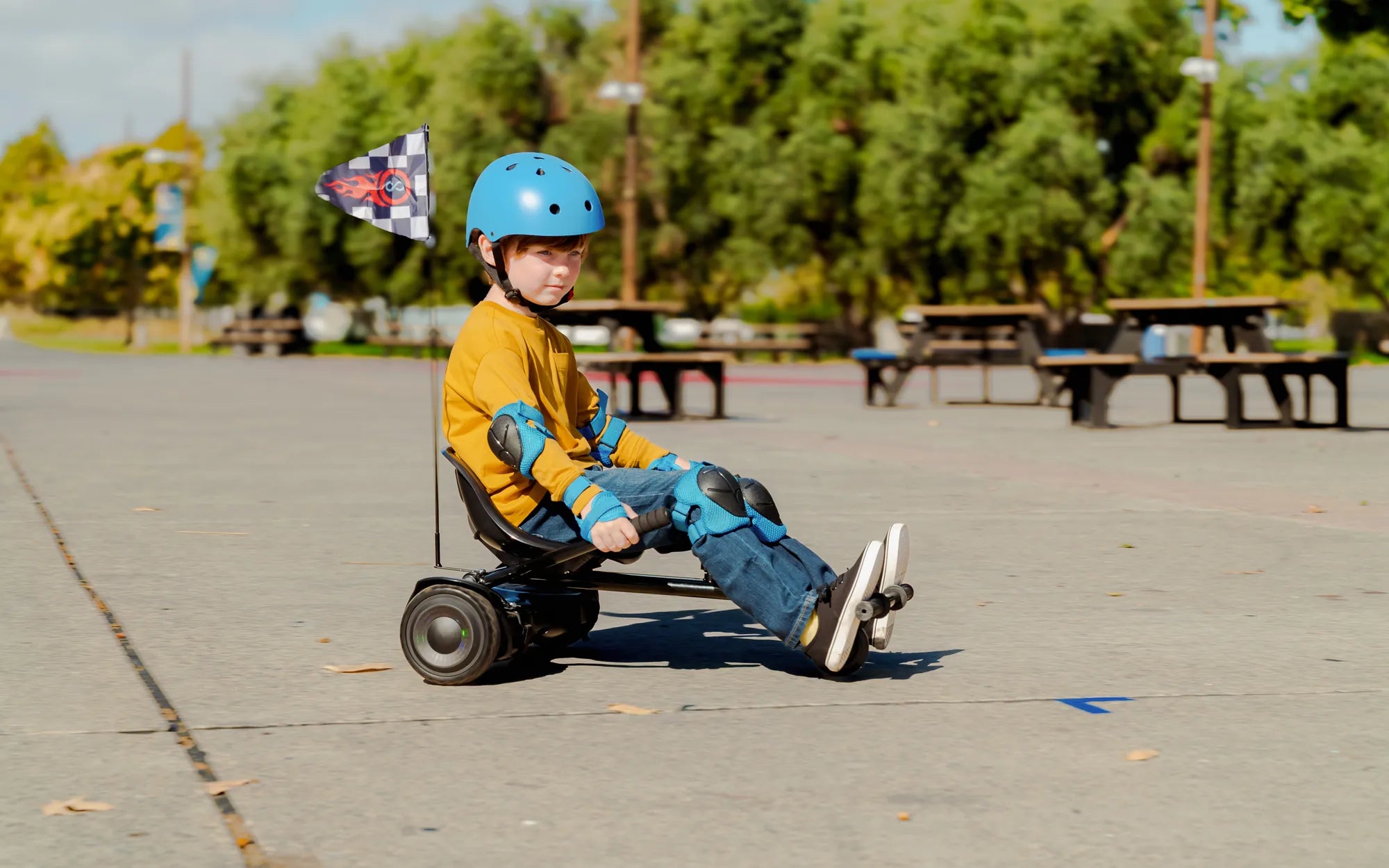
Finding the perfect hoverboard for 12 year old girl means balancing exhilarating fun with uncompromising safety. This guide delivers the definitive roadmap. You'll learn the critical safety features that are non-negotiable, discover the exciting elements that create lasting memories, and get actionable advice on gear, practice, and responsible riding. We'll connect these requirements to the engineering and reliability standards of leading brands, giving you the confidence to choose a gift that promotes independence and outdoor play safely.
Why a Hoverboard is the Perfect Gift for a 12-Year-Old Girl
At twelve, girls are seeking new forms of independence, social connection, and outdoor activity. A hoverboard uniquely meets these developmental needs. It's a tool for personal transportation that builds confidence, coordination, and a sense of freedom, all while encouraging time away from screens.
The social appeal is significant. Hoverboards are a centerpiece for fun with friends, whether cruising the neighborhood or showing off tricks in a driveway. This shared experience is invaluable for pre-teens. The activity itself promotes core strength, balance, and spatial awareness in a way that feels like play, not exercise.
Choosing the right model is paramount. The goal is to unlock this world of fun without introducing unnecessary risk. This requires a deliberate focus on certified safety mechanisms, age-appropriate design, and durable construction from a reputable manufacturer. The following sections detail exactly what to look for.
Brands that prioritize these factors, like Gyroor—a leading electric scooter and e-bike brand trusted by over 100,000 riders—design products where safety and reliability are foundational, not an afterthought. This allows the fun to be the sole focus of every ride.
Key Safety Features Every Parent Must Look For
Safety is the absolute priority when selecting any motorized vehicle for a child. A hoverboard's fun factor is irrelevant if its basic safety architecture is flawed. These features are the minimum standard for responsible purchasing.
Overlooking any of these elements can lead to preventable accidents or device failures. The market has matured, and these protections are now expected from quality manufacturers. They work together to create a secure riding platform for a learning rider.
UL 2272 Certification: The Non-Negotiable Standard
UL 2272 certification is the most critical safety benchmark. This rigorous standard, developed by Underwriters Laboratories, tests the entire electrical system—battery, charger, and circuitry—for fire and electrical shock hazards.
Hoverboards without this certification have a documented history of catastrophic battery fires during charging or use. The certification ensures the lithium-ion battery pack is manufactured with proper quality controls, includes a robust Battery Management System (BMS), and uses stable cell chemistry.
Always verify the certification. It should be clearly marked on the product, its packaging, and the manufacturer's website. Gyroor, for instance, utilizes UL-certified battery packs in its models, tested for over 500 charge cycles, providing a fundamental layer of safety and peace of mind.
Stable and Responsive Learning Modes
A hoverboard for a first-time rider must have a dedicated beginner or training mode. This feature limits the top speed, often to 4-6 mph, and makes the acceleration and turning less sensitive. It allows the rider to build muscle memory and confidence in a controlled environment.
Stability is further determined by wheel size and gyroscope calibration. Larger wheels (6.5 inches or more) provide more stability and smoother rides over small cracks. The gyroscopes and self-balancing sensors must be highly responsive to subtle shifts in weight to prevent lag that can cause falls.
Look for models that advertise a "learning mode" or "beginner speed lock" as a key feature. This electronic control is as important as the physical design for a safe initial experience.
Durable and Age-Appropriate Build Quality
The hoverboard must be built to withstand the demands of a pre-teen. Check the maximum weight limit; for a 12-year-old girl, a limit of at least 150 lbs is recommended. This provides a safe performance buffer as she grows and ensures the motors and frame are not overstressed.
The deck should have a textured, non-slip surface to provide secure footing. The overall weight of the board matters too—if it's too heavy, it becomes difficult to carry or maneuver when not riding. The housing should be made of high-impact ABS plastic that can survive the occasional bump or tip-over.
This durable construction ensures the hoverboard remains a reliable companion throughout her early teen years, not a fragile toy that breaks after a few uses.
Top Features for Endless Fun and Style
Once safety is assured, the feature set defines the enjoyment and personal expression the hoverboard offers. For a 12-year-old girl, these elements transform the device from a simple transporter into a prized possession for social and personal fun.
These features enhance the riding experience, encourage creativity, and allow for customization that reflects personal style. They are the difference between a product that is used occasionally and one that becomes a daily source of joy.
Bluetooth Speakers & LED Light Shows
Integrated Bluetooth speakers are a huge hit. They allow riders to stream music or podcasts directly from their smartphone, turning a solo cruise into a mobile dance party or a group ride into a shared experience. The sound quality need not be concert-level, but it should be clear and loud enough for personal enjoyment.
LED lights are equally important for style and safety. Look for multi-color LED wheels, under-deck ambient lighting, and front/rear directional lights. Many models allow color and pattern customization via an app. These dazzling light shows are a major point of pride, especially for evening rides, and increase visibility to others.
Smooth Ride & All-Terrain Capability
A smooth ride expands where she can go. While classic hoverboards have solid rubber tires, models with larger (8.5-inch or 10-inch) air-filled or rugged rubber tires absorb bumps from sidewalks, cracked pavement, and grass much more effectively.
This "all-terrain" or "off-road" capability isn't for mountain biking, but it handles driveway transitions, park paths, and slightly uneven surfaces with ease. It reduces fatigue and increases confidence, encouraging longer, more adventurous outings. The motor power should be sufficient for these surfaces—dual 300W motors are a good baseline for a rider of this age.
App Connectivity and Customization
A companion smartphone app adds a layer of tech-savvy control. For parents, the app can often lock the top speed, monitor battery life, and track the board's location. For the rider, it can be used to customize LED light patterns, check riding statistics (distance, speed), and sometimes even control the board remotely for tricks.
This connectivity makes the hoverboard feel like a modern, intelligent device. It also allows for firmware updates from the manufacturer that can improve performance or add new features over time, extending the product's relevance.
Gyroor’s Commitment: Safety and Reliability Built-In
Understanding brand philosophy is crucial when the product carries your child. Gyroor's approach, developed across its range of electric scooters and e-bikes, directly applies to creating a trustworthy hoverboard for a young rider. Their commitment is to engineer out risks and build in durability.
This results in a product where parents don't have to compromise. The fun-enhancing features are supported by an architecture designed for real-world use and longevity. This built-in reliability is what has earned the trust of a large customer base.
UL-Certified Battery Packs and Smart Battery Management
Gyroor's use of UL-certified battery packs is a cornerstone of their safety promise. These batteries undergo extensive testing for thermal stability, overcharge protection, and short-circuit prevention. The integrated Smart Battery Management System (BMS) constantly monitors cell voltage, temperature, and current.
This BMS actively manages charging to maximize battery lifespan—often rated for 500+ cycles—and prevents the dangerous conditions that lead to failure. It’s an invisible but critical layer of protection that ensures the power source is as safe as it is powerful.
IPX5 Water-Resistant Design for Real-World Use
Kids ride in the real world, where puddles, damp grass, and unexpected sprinklers are part of the adventure. An IPX5 water-resistant rating means the hoverboard's casing can withstand low-pressure water jets from any direction.
This protection guards the internal electronics and battery against splashes and light rain, significantly reducing the risk of water damage from everyday use. It’s a practical feature that acknowledges how and where hoverboards are actually used, providing durability that cheaper models lack.
1-Year Warranty and Accessible Customer Support
A comprehensive 1-year warranty signals confidence in product quality. It covers defects in materials and workmanship, providing a long-term safety net for your investment. This warranty is backed by accessible, U.S.-based customer support.
Having reliable support for troubleshooting or parts questions is invaluable for parents. It transforms the hoverboard from a disposable gadget into a supported product, ensuring that any issues that arise can be resolved promptly and professionally.
Essential Safety Gear and Riding Best Practices
The safest hoverboard is only one part of the equation. Proper gear and educated riding habits are equally vital. Instituting these practices from day one creates a culture of safety that lasts.
This section provides a clear, actionable checklist for parents to implement. Making safety gear cool and establishing clear rules are key to ensuring they are followed consistently.
The Non-Negotiable Safety Kit: Helmet, Pads, and More
Full protective gear is mandatory, especially during the learning phase. The cornerstone is a properly fitted, multi-impact skateboarding or cycling helmet. It should sit level on the head and snugly secure with a buckle.
Knee pads and elbow pads are crucial for protecting joints during inevitable falls. Wrist guards are highly recommended, as instinct leads to putting hands out to break a fall. Many brands offer gear in vibrant colors and stylish designs, which can make wearing them more appealing to a style-conscious pre-teen.
Finding the Perfect Practice Spot and Supervision Tips
The first rides should happen in a controlled, hazard-free environment. Ideal locations include empty tennis or basketball courts, smooth driveways, or quiet cul-de-sacs. The surface should be flat, paved, and free of gravel, sand, or significant cracks.
Parental supervision is essential initially. An adult can provide physical support for balance, offer verbal encouragement, and ensure the practice area remains safe. The focus should be on mastering mounting, dismounting, gentle acceleration, and basic turning before progressing to more complex environments.
Rules of the Road: Teaching Responsible Riding
Establish clear rules before street-adjacent riding begins. First: never ride on public roads with car traffic. Hoverboards belong on sidewalks, bike paths (where permitted), and parks. Second, respect pedestrians by slowing down, giving audible warning (a polite "excuse me"), and passing carefully.
Ride only in daylight or well-lit conditions. Avoid wet, icy, or sandy surfaces that compromise traction. Maintain a safe, controllable speed, and always be aware of surroundings—no headphones at full volume that eliminate situational awareness. These rules foster respect for the device, the rider's safety, and the community.
Hoverboard Comparison: Key Features at a Glance
This table compares general hoverboard specifications to help parents understand the range of options and how they align with the needs of a 12-year-old rider. Always verify specific model details before purchase.
| Feature | Entry-Level / Basic | Recommended Mid-Range (Ideal for 12 Y/O) | High-Performance / All-Terrain |
|---|---|---|---|
| Wheel Size & Type | 6.5" Solid Rubber | 8.5" - 10" Rugged Rubber or Hybrid | 10"+ Air-Filled (Pneumatic) |
| Motor Power (Dual) | 250W | 300W - 350W | 400W+ |
| Max Speed | 7-8 mph | 9-10 mph (with Beginner Mode) | 12+ mph |
| Range per Charge | 6-8 miles | 9-12 miles | 12-15 miles |
| Key Features | Basic LEDs, Non-App | Bluetooth Speaker, App Control, Custom LEDs, Good Water Resistance | All-Terrain Tires, Advanced App, Extended Range |
| Ideal For | Smooth indoor/outdoor flat surfaces | Versatile neighborhood & park use, daily fun | Rough pavement, gentle grass/dirt trails |
Frequently Asked Questions (FAQs)
What is the right hoverboard weight limit for a 12-year-old?
Choose a hoverboard with a maximum weight limit of at least 150 lbs. The average weight for a 12-year-old girl ranges, but this limit provides essential headroom for growth, carrying a backpack, and ensuring the motors operate efficiently without strain, which is crucial for safety and longevity.
How long does the battery last, and what's the charge time?
For quality models like those from Gyroor, expect a realistic range of 7 to 12 miles on a full charge, depending on rider weight, terrain, and speed. A full charge typically takes 3 to 4 hours. Teaching your daughter to charge the board after it cools down and avoiding complete discharges will help maintain battery health for years.
Are hoverboards difficult to learn?
Most children and adults find they can learn the basics of balancing, starting, and stopping within 30 to 60 minutes of practice in a safe area. The self-balancing technology does most of the work. Using the beginner mode is key. Mastery of smooth turns and more advanced maneuvers comes with a few days of consistent practice.
Can it be used on grass or gravel?
Standard hoverboards with small, solid wheels struggle on loose or soft surfaces. Models marketed as "all-terrain" with larger, wider, and often air-filled tires (8.5 inches or larger) can handle hard-packed dirt, dry grass, and fine gravel comfortably. Always check the manufacturer's specifications for intended surface use.
What maintenance does a hoverboard require?
Maintenance is minimal but important. Regularly check tire pressure (if applicable) and tread for wear. Keep the charging port clean and dry. Wipe down the board with a damp cloth; avoid direct high-pressure water sprays. Store it in a cool, dry place away from extreme temperatures, and avoid leaving it at full or empty charge for extended periods.
Conclusion: Confidence in Every Ride
Selecting the ideal hoverboard for a 12 year old girl is an investment in fun, freedom, and developmental growth. By prioritizing UL 2272 certification, stable learning features, and durable construction, you lay an unshakable foundation of safety. Pairing that with fun elements like lights, music, and all-terrain capability creates a gift that will be cherished for years. Trusting a brand with a proven commitment to these principles, such as Gyroor with its UL-certified batteries, IPX5 water resistance, and strong warranty, allows you to step back with confidence. You're not just giving a toy; you're granting a passport to adventure, responsibility, and joyful movement. Ready to explore models that meet this high standard?
Browse the full Gyroor collection at gyroorboard.com to find the perfect, safety-first hoverboard for your child's next adventure.
Electric Scooter Rules for Kids: A Complete Safety Guide for Parents
Best Kids Electric Scooter for 6 Year Old: The Ultimate Safety & Fun Guide