



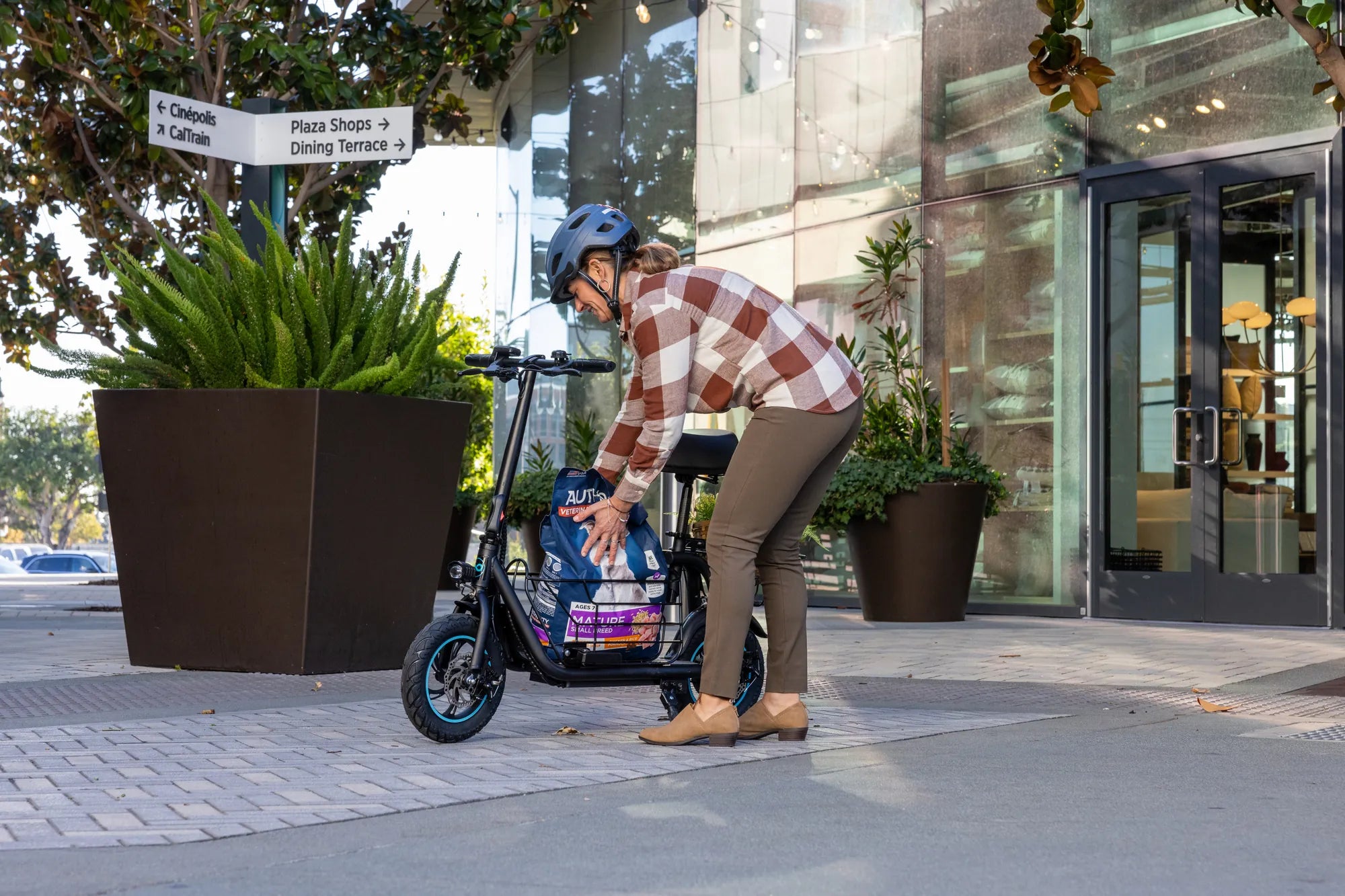
Introduction to 500W Electric Scooters
Navigating the electric scooter market requires understanding where power meets practicality. The 500W electric scooter has emerged as the definitive sweet spot for urban commuters and recreational riders, offering a compelling blend of acceleration, hill-climbing capability, and efficient range. This guide, Electric Scooters 500W: The Ultimate Guide to Power and Performance, will provide the data-driven insights you need. We'll dissect why this motor rating dominates city streets and how brands like Gyroor engineer their models around this powerful yet balanced core, prioritizing certified safety and reliable performance for over 100,000 riders.
Why 500W is the Ideal Power Rating for Most Riders
A 500W motor is not an arbitrary number; it's the calculated intersection of legal compliance, practical performance, and energy efficiency. For many North American and European municipalities, 500W often aligns with local regulations for personal electric mobility devices on bike lanes and paths. Beyond legality, it delivers tangible benefits: sufficient torque for confident starts at intersections, a top speed that keeps pace with urban traffic flow, and a power draw that allows for compact, manageable battery packs. This balance makes the 500W scooter a versatile tool, equally adept at a daily 8-mile commute or a weekend exploration.
Choosing a scooter with a 500W motor means opting for a vehicle designed for real-world conditions, not just peak performance metrics. It avoids the excessive weight and cost of ultra-high-wattage motors while providing substantially more power and reliability than entry-level 250W models. This wattage represents a commitment to thoughtful engineering, where every component—from the battery management system to the braking hardware—is calibrated for sustainable, safe operation at this power level.
Performance vs. Efficiency: The Perfect Balance
The 500W motor excels by delivering robust performance without crippling energy consumption. Typically, a well-tuned 500W scooter can achieve top speeds between 19-25 mph (30-40 km/h), allowing riders to maintain the pace of city traffic safely. This speed range is achieved efficiently, maximizing the potential of common battery capacities (e.g., 36V 10.4Ah or 48V 7.8Ah). In contrast, higher-wattage motors (1000W+) may offer greater top-end speed but often at a significant cost to range and require heavier, more expensive batteries.
Efficiency translates directly to range predictability. A rider can trust a 500W scooter with a quality battery to deliver a consistent 15-25 miles per charge under mixed conditions, depending on rider weight, terrain, and speed. This predictability is crucial for planning a reliable commute. Brands focused on this balance, like Gyroor, optimize their motor controllers and battery systems to extract smooth, linear power delivery, ensuring you get the advertised performance without unexpected voltage drops or premature power loss.
Conquering Urban Terrain: Hill Climb Capability
A primary advantage of a 500W motor over lower-wattage options is its competent hill-climbing ability. While not a mountain climber, a 500W scooter with proper torque can reliably handle gradients of 10-15%. This covers the vast majority of urban inclines, including highway overpasses, bridge approaches, and moderate neighborhood hills. The motor's sustained power output prevents the frustrating crawl or complete stall that can occur with underpowered models.
Performance on inclines is a function of torque, not just wattage. Scooters like those in the Gyroor lineup are designed with motors that provide high torque at lower RPMs, giving you a strong, steady pull when you need it most. For a 180 lb rider, a quality 500W scooter should maintain a speed of 8-12 mph on a 10% grade, allowing you to ascend confidently without dismounting. This capability transforms the scooter from a flat-land novelty into a legitimate transportation solution.
Key Features to Look for in a 500W Electric Scooter
The motor is just the beginning. The overall quality, safety, and longevity of your 500W electric scooter are determined by a suite of interconnected features. Discerning these components on the spec sheet is key to avoiding disappointment. Prioritize models that transparently list battery certifications, frame material, IP ratings, and braking system details. A high-wattage motor paired with a substandard battery or weak brakes creates a dangerous and unreliable vehicle.
Investment in these core features is an investment in daily safety and long-term value. A scooter built with aviation-grade aluminum, a UL-certified battery pack, and dual braking systems may have a higher upfront cost but will outlast and outperform cheaper alternatives many times over. This holistic approach to design is what separates reputable brands from generic market entries, ensuring that the promised 500W performance is delivered safely and consistently for years.
The Heart of the Scooter: Battery and Range
The battery is the most critical safety and performance component. Its capacity, measured in Watt-hours (Wh), directly dictates your potential range. A typical 500W scooter might feature a 374 Wh (36V 10.4Ah) or 374 Wh (48V 7.8Ah) battery, offering a real-world range of 15-22 miles. However, the chemistry and certification of the battery cells are paramount. Insist on models with UL 2271 or UL 2849 certified battery packs, like those used by Gyroor.
UL certification involves rigorous testing for overcharge, short circuit, and thermal stability, drastically reducing fire risk. With over 500 charge cycle tests, these batteries are engineered for longevity, retaining capacity over time. An uncertified battery is a significant liability, posing safety hazards and often failing to meet its advertised capacity. Your scooter's range is only as reliable as the battery that powers it, making this the foremost feature to verify.
Built to Last: Frame, Build Quality, and Water Resistance
The frame is the skeleton that must withstand daily stresses. A high-quality 500W scooter will utilize a forged or extruded aluminum alloy frame, providing an optimal strength-to-weight ratio. This material resists corrosion and fatigue, ensuring the scooter remains rigid and responsive. Pay attention to the folding mechanism's design and robustness, as this is a high-stress point that impacts both safety and portability.
Water resistance is non-negotiable for a practical commuter. An IP rating defines protection against solids and liquids. An IPX5 rating, as found on Gyroor scooters, means the scooter can withstand water jets from any direction, making it safe to ride in light rain or on wet roads. This protection safeguards the motor, controller, and battery compartment from moisture ingress, preventing electrical failures and extending the scooter's operational life. Never confuse this with "waterproof," but know that a good IP rating adds immense practical utility.
Safety and Control: Braking Systems and Warranty
Effective braking is essential for managing 500W power and 20+ mph speeds. A combination braking system is ideal. Common setups include a front electronic regenerative brake (which recovers some energy) paired with a rear disc or drum brake. Disc brakes generally offer stronger, more consistent stopping power in varied conditions, while drum brakes require less maintenance. The key is having two independent systems for redundancy.
A manufacturer's warranty is a direct reflection of their confidence in the product's build quality. A comprehensive 1-year warranty on the frame, motor, battery, and controller, like Gyroor's standard offering, provides peace of mind. It signals that the company uses durable components and stands behind its assembly. A short or limited warranty often indicates hidden compromises in component quality that will lead to repairs and costs down the line.
500W Scooters in Action: Real-World Use Cases
Theoretical specs come to life on pavement. The 500W electric scooter's versatility shines across multiple scenarios, proving it's more than a niche gadget. It's a legitimate tool for urban mobility, reducing commute times, bypassing traffic, and eliminating parking hassles. Its performance profile is tailored to the rhythms of city life, offering enough power for agility in traffic while remaining efficient enough for daily use without constant recharging.
From the professional needing a reliable last-mile solution from the transit station to the student navigating a large campus, the 500W scooter adapts. Its manageable weight (typically 30-45 lbs) allows for carrying up stairs or onto buses when needed. This blend of power, portability, and practicality is why this category has seen explosive growth, moving from recreational toy to essential commuter vehicle for a growing demographic.
The Daily Commuter's Companion
For the daily commuter, a 500W scooter transforms a multi-modal journey. Imagine a 6-mile commute: a 500W scooter covers this in 20-25 minutes, door-to-door, regardless of traffic. It easily handles curbs, potholes, and inclines that would challenge weaker models. At your destination, its folding design allows for compact storage under a desk or in a closet. The cost savings are substantial, eliminating fuel, parking fees, or daily transit passes, with the scooter often paying for itself within a few months.
The commute is also about consistency. A 500W scooter with a quality battery provides a dependable range that won't leave you stranded. Features like water resistance mean a sudden rain shower doesn't cancel your trip home. Integrated lighting (powered by the main battery, not separate cells) ensures visibility at dawn or dusk. This reliability makes it a true car replacement for many urban dwellers.
Weekend Exploration and Recreational Riding
Beyond the commute, the 500W scooter unlocks the city for exploration. Its speed and range are perfect for touring park pathways, running errands across neighborhoods, or meeting friends at a downtown cafe. The power provides a fun, engaging riding experience, with enough acceleration to feel thrilling yet controlled. The stability at higher speeds, afforded by a solid frame and often 8.5-inch or larger air-filled tires, makes longer rides comfortable and secure.
This recreational use highlights the scooter's dual nature. It's a practical machine that also delivers joy. The ability to cover 15-20 miles of mixed terrain on a single charge opens up routes and destinations that are impractical on foot and tedious by bike in stop-and-go traffic. It encourages spontaneous adventure while remaining an utterly practical piece of personal transportation.
Making the Smart Choice: Gyroor's 500W Advantage
When selecting a 500W electric scooter, the brand's philosophy matters as much as the spec sheet. Gyroor designs its scooters around a core principle: balanced performance backed by uncompromising safety. This means every 500W motor is paired with a UL-certified battery, housed in an IPX5 water-resistant frame, and protected by a comprehensive 1-year warranty. This integrated approach ensures that no single component is a weak link, delivering on the full promise of the 500W category.
The alternative—choosing a generic scooter based solely on wattage and price—carries hidden risks. Uncertified batteries, vague or non-existent IP ratings, and skeletal warranties are common. These scooters may offer similar peak performance for a short time but lack the durability and safety engineering for long-term, reliable use. The Gyroor advantage lies in certified quality controls and a commitment to rider safety, making the 500W performance not just accessible but also dependable.
Beyond the Spec Sheet: The Importance of Certification and Support
The true cost of a scooter includes its safety and its total lifespan. Certification from independent bodies like UL is not a marketing feature; it is an audited guarantee of electrical and fire safety. Gyroor's use of UL-certified batteries across its lineup is a non-negotiable standard, addressing one of the most significant concerns in the micro-mobility industry. Similarly, a clear IPX5 rating provides a verifiable standard for weather resistance.
After-sales support completes the value proposition. A reputable brand offers accessible customer service and honors its warranty. Gyroor's support structure and standard 1-year warranty mean that if an issue arises, you have a clear path to resolution. This support network is invaluable, turning a product purchase into a long-term transportation solution. In the 500W scooter market, this holistic commitment to quality, safety, and support is what defines a premium offering.
500W vs. Other Motor Classes: A Detailed Comparison
Understanding where 500W stands relative to other motor classes clarifies its ideal use case. The table below compares key performance and practicality metrics across common motor ratings.
| Motor Power | Typical Top Speed | Hill Climb Ability | Best Use Case | Weight & Portability |
|---|---|---|---|---|
| 250W - 350W | 15 - 18 mph | Low (5-8% grade) | Flat urban paths, light recreational use | Very Light (25-35 lbs) |
| 500W (Focus) | 19 - 25 mph | Moderate (10-15% grade) | Daily urban commuting, mixed terrain | Moderate (30-45 lbs) |
| 800W - 1000W+ | 28 - 40+ mph | High (15-20%+ grade) | Performance riding, steep hills, off-road | Heavy (45-70+ lbs) |
As shown, the 500W motor occupies the center ground, forfeiting the extreme portability of lower-wattage models and the top-speed thrills of high-wattage ones in exchange for the best all-around performance for city living. Its moderate weight still allows for carrying when necessary, and its speed is sufficient for traffic integration without venturing into legally questionable or dangerously fast territory in many jurisdictions.
Maintenance and Safety Tips for Your 500W Scooter
Proper care maximizes the lifespan and safety of your investment. Regular maintenance is simple but crucial. Before each ride, perform a quick check: verify tire pressure (for air-filled tires), test brake lever responsiveness, ensure the folding mechanism is locked, and check that all lights are functional. Keep the scooter clean, especially the braking surfaces and deck, to maintain grip and control.
Safety extends beyond the scooter to the rider. Always wear a helmet. Use appropriate hand signals when turning. Be hyper-aware of road conditions, as small wheels are sensitive to potholes and debris. Ride defensively, assuming cars may not see you. Store and charge the scooter in a dry, temperate area away from flammable materials, and only use the manufacturer-provided charger. Following these practices ensures you and your scooter remain in top condition.
Frequently Asked Questions (FAQs)
Q: How fast can a 500W electric scooter go?
A: Most quality 500W electric scooters have a top speed between 19-25 mph (30-40 km/h). The exact speed can be influenced by rider weight, terrain, battery charge level, and local speed limiters set by the manufacturer for regulatory compliance.
Q: Is a 500W scooter powerful enough for hills?
A> Yes, for typical urban hills. A 500W motor provides enough torque to handle gradients of 10-15% comfortably. While speed will decrease on an incline, a rider should be able to maintain 8-12 mph on a 10% grade, which is sufficient for most bridges, overpasses, and neighborhood streets.
Q: How far can I ride on a single charge with a 500W scooter?
A> Real-world range varies based on battery capacity, rider weight, speed, and terrain. With a standard 36V 10.4Ah (374 Wh) battery, expect 15-22 miles per charge. Riding at top speed, uphill, or with a heavier rider will reduce range, while conservative riding on flat ground can extend it.
Q: Are 500W electric scooters legal in my city?
A> Laws vary significantly. In many US cities and European countries, 500W falls within legal limits for electric scooters on bike lanes and paths, often with a speed limit of 20 mph. Always check your local municipal and state/provincial regulations regarding motor power, top speed, helmet requirements, and where you are permitted to ride.
Q: Why is a UL-certified battery so important?
A> A UL certification (UL 2271 or UL 2849) means the battery pack has passed rigorous independent safety tests for electrical, mechanical, and environmental hazards, including overcharge, short circuit, and thermal runaway. It is the strongest assurance against battery fires, ensuring the cells and battery management system are built to stringent safety standards. Never compromise on this feature.
Q: Can I ride a 500W scooter in the rain?
A> This depends entirely on the scooter's IP (Ingress Protection) rating. A scooter with an IPX5 rating, like those from Gyroor, is designed to withstand water jets from any direction, making it safe for riding in light rain and on wet roads. Scooters without a stated IP rating or with a low rating (e.g., IPX4) should be kept dry to avoid water damage and electrical shorts.
The Verdict on 500W Electric Scooters
The 500W electric scooter stands as the most rational, high-utility choice in the personal micro-mobility landscape. It delivers the necessary power for an efficient, engaging commute while maintaining a focus on safety, durability, and legal compliance. As this guide has detailed, the key to a great experience lies in choosing a model that complements its motor with a UL-certified battery, robust construction, proper water resistance, and reliable manufacturer support. This is the formula for a vehicle that serves you daily, without compromise or concern.
When these elements align, the 500W scooter ceases to be just a product and becomes a transformative tool for urban life. It offers freedom from traffic, a reduction in transportation costs, and a more connected experience with your city. The ultimate performance of a 500W scooter isn't just its top speed—it's the consistent, safe, and reliable transportation it provides day after day. For those ready to experience this balance of power and practicality, the journey begins with choosing a scooter built to a higher standard. Discover engineering built around this perfect balance—browse the full Gyroor collection at gyroorboard.com.
Electric Scooters Under 50000: Smart, Sustainable Urban Mobility
Top Rated Electric Scooters 2024: The Ultimate Guide for Every Rider