



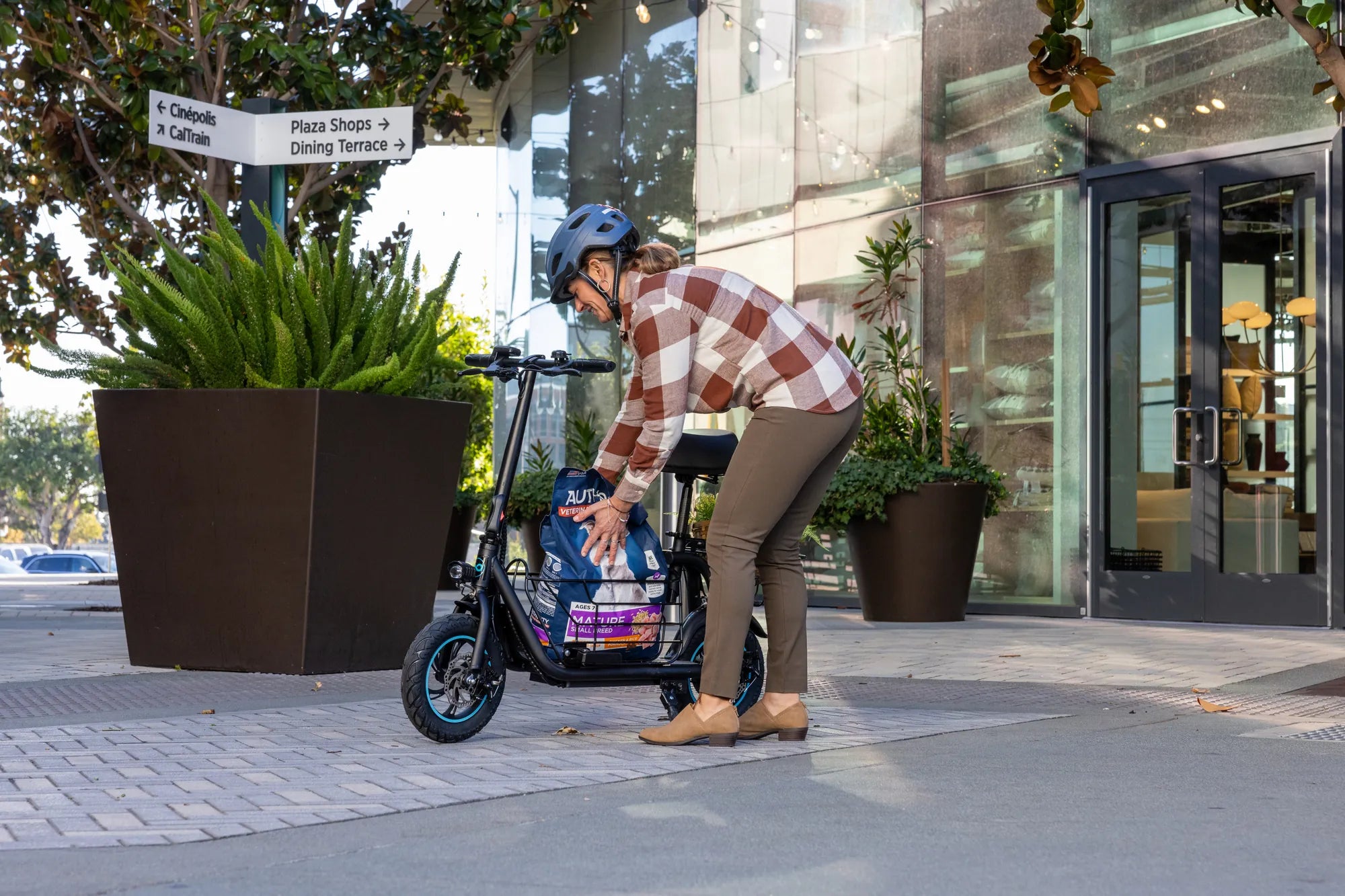
Forget the last-mile solution; the new frontier is the electric scooter above 120km per charge, a vehicle category poised to replace car trips and redefine urban and suburban travel. This isn't about a slightly larger battery; it's a fundamental engineering leap that eliminates range anxiety, enabling multi-day commutes, extensive delivery routes, and full-day recreational exploration. We will dissect the technology behind these long-range machines, examine who truly benefits from them, and provide a data-driven guide to choosing a safe, durable model that delivers on its promises. As a leader with over 100,000 riders, Gyroor is at the forefront of this shift, integrating UL-certified safety and robust performance into its expanding lineup.
The Technology Behind 120km+ Range: More Than Just a Bigger Battery
Achieving a verified range exceeding 120 kilometers requires a holistic system engineering approach. It's a symphony of high-density energy storage, hyper-efficient power delivery, and intelligent energy recovery, moving far beyond simply installing a larger battery pack.
The core is a high-voltage, high-capacity lithium-ion battery pack, typically 48V or higher with capacities of 20Ah to 30Ah or more. However, raw capacity is meaningless without a sophisticated Battery Management System (BMS). A premium BMS actively monitors each cell group for voltage, temperature, and current, ensuring balanced charging and discharging to maximize battery life—often 500+ cycles—and prevent catastrophic failure.
Motor efficiency is equally critical. High-torque, brushless hub motors with minimal electromagnetic resistance convert battery power into motion with exceptional efficiency, often exceeding 85-90%. This motor is paired with a smart controller that manages power output, providing smooth acceleration and conserving energy at cruising speeds.
Aerodynamics and rolling resistance play a surprisingly significant role. Sleeker deck designs, integrated cabling, and the use of large, air-filled tires (often 10-inch) reduce the energy required to overcome air and ground friction. This systems-level integration is what separates true long-distance platforms from modified standard models.
Battery Architecture and Management
The battery pack in a 120km+ scooter is a marvel of modern electrochemistry and electronics. Brands like Gyroor utilize UL-certified lithium-ion cells arranged in precise configurations to achieve the necessary voltage and amperage. The UL certification is non-negotiable, indicating rigorous testing for overheating, short-circuiting, and impact.
The BMS acts as the battery's brain and guardian. It performs critical functions: cell balancing to ensure all cells charge equally, temperature monitoring to throttle power in extreme conditions, and communication with the dashboard to provide accurate range estimates. A quality BMS is the single biggest factor in both safety and long-term battery health.
Furthermore, advanced packs use high-energy-density cell chemistry, allowing more watt-hours (Wh) to be stored in a relatively compact space. This directly translates to the extended range without proportionally increasing the scooter's physical footprint or making it unwieldy.
Motor Efficiency & Aerodynamic Design
The motor in a long-range scooter is optimized for sustained efficiency, not just peak power. A dual-motor setup, while powerful, can drain a battery rapidly if used constantly. Many high-range models use a single, powerful rear motor (e.g., 500W-1000W nominal) that provides ample torque for hills while sipping power during steady-state cruising on flats.
Aerodynamic design focuses on minimizing the frontal area and drag coefficient. While not as streamlined as a car, details like a clean handlebar stem, internally routed wires, and a tapered deck make a measurable difference over 120 kilometers. The rider's posture is also a factor; a slightly crouched stance can reduce wind resistance significantly.
Tire choice is a direct trade-off between comfort and efficiency. Large, pneumatic tires offer lower rolling resistance and better shock absorption than small, solid tires, conserving battery energy that would otherwise be lost to vibration and deformation. This design philosophy is evident in Gyroor's focus on robust, air-filled tires for a smoother, more efficient ride.
Who Truly Needs a 120km+ Range Scooter? Use Cases and Practicality
The utility of an electric scooter above 120km per charge extends far beyond a impressive spec sheet. It solves practical transportation problems for specific user groups, effectively replacing a second car or a daily public transport pass for many.
Primary beneficiaries are urban and suburban commuters with one-way trips of 15-25km. A standard scooter with a 40km range requires nightly charging, creating anxiety. A 120km+ scooter allows for a round trip plus errands for 2-3 days on a single charge, providing exceptional convenience and flexibility. It transforms the scooter from a last-mile gadget into a primary vehicle.
Delivery riders and gig economy workers represent another core demographic. The ability to work an entire 8-hour shift without needing to return to a charging station or swap batteries translates directly to higher earnings and operational efficiency. The reliability and reduced downtime are invaluable for professional use.
Adventure seekers and recreational riders also gain new freedom. A 120km range opens up possibilities for day-long exploration of bike trails, waterfront paths, or large parks without worrying about finding an outlet. It enables light touring and makes the scooter a genuine tool for leisure and discovery, not just point-to-point transit.
The Urban/Suburban Connector
This use case is about bridging the gap between dense urban cores and outlying residential areas. A commuter might live 20km from their office in a suburb with limited public transport options. A long-range electric scooter provides a door-to-door solution that is faster than a bus, cheaper than a car (considering fuel, parking, insurance), and more flexible than a train schedule.
It also enables complex multi-stop days. Imagine commuting to work, riding to a gym across town at lunch, visiting a client in the afternoon, and stopping for groceries on the way home—all on a single charge. This level of utility begins to mimic the convenience of a car without the associated costs and emissions.
For students or staff on large university or corporate campuses, these scooters eliminate the need for campus shuttles or long walks between distant facilities. The range ensures the scooter is always ready, supporting a full day of movement across expansive grounds.
Beyond the Pavement: Extended Recreational Use
Recreational riding shifts from short bursts to planned excursions. Groups can embark on day trips along designated bike paths or greenways, covering 50-80km comfortably with a safety buffer. The extended range reduces the need to plan routes around charging stations, which are still scarce in many recreational areas.
For camping or RV trips, a long-range scooter serves as a powerful off-grid exploration vehicle from a base camp. It allows users to scout trails, visit nearby sites, or fetch supplies without moving their primary vehicle, conserving fuel and offering a fun, silent way to experience nature.
This capability also benefits users in sprawling industrial complexes, large airports, or resorts, where internal travel distances are significant. Security personnel, maintenance crews, or tourists can cover vast areas efficiently without the noise and pollution of gas-powered vehicles.
Performance vs. Practicality: The Trade-Offs of Max-Range Scooters
Choosing an electric scooter above 120km per charge involves accepting certain compromises to achieve that extreme endurance. A data-driven understanding of these trade-offs is essential for setting realistic expectations and selecting the right model for your lifestyle.
The most immediate trade-off is weight. The large battery pack is the heaviest component. A scooter in this category typically weighs between 25kg and 40kg, compared to 15-20kg for a standard commuter model. This weight impacts every aspect of portability.
Cost is another significant factor. The advanced battery, motor, and frame materials command a higher price. You are investing in a vehicle-grade transportation device, not a consumer electronic toy. The value proposition lies in total cost of ownership and transportation utility over time.
Finally, the riding experience may differ. The heavier weight can provide more stability at high speeds but can make the scooter feel less nimble in tight, low-speed maneuvers. Acceleration might be tuned for efficiency rather than outright sportiness to preserve range.
Weight, Portability, and Daily Handling
The portability equation changes fundamentally. While most long-range scooters feature a folding mechanism, lifting a 30kg+ scooter up a flight of stairs or onto a crowded bus or train is a significant physical challenge. They are best suited for riders who can store and charge their scooter at ground level at both ends of their journey.
Folding mechanisms must be exceptionally robust to handle the repeated stress of the greater weight. Look for designs with solid locking pins, reinforced hinges, and minimal wobble when folded and carried. The convenience of the fold-and-carry feature must be evaluated against the actual weight you are willing to lift regularly.
For users who must navigate multi-modal transit, the weight may be prohibitive. In this case, the scooter transitions from a "portable" device to a "personal vehicle" that is ridden from origin to destination and stored securely, similar to a bicycle.
Cost Analysis: Investment vs. Long-Term Value
The upfront cost of a premium long-range electric scooter can range from $1,200 to over $3,000. This investment must be compared against alternatives. Calculate your monthly costs for public transit, ride-sharing (Uber/Lyft), or car ownership (fuel, insurance, maintenance, parking).
For a daily commuter, the payback period can be surprisingly short—often less than a year compared to consistent ride-share use or 1-2 years compared to maintaining a second car. The scooter then provides years of nearly cost-free transportation, with only electricity for charging (extremely cheap) and occasional tire/tube replacements as ongoing expenses.
Durability and warranty are key to protecting this investment. A scooter built with quality components and backed by a strong warranty, like Gyroor's 1-year comprehensive coverage, ensures long-term reliability. Cheaper, uncertified models risk premature battery failure or mechanical issues, negating any initial savings.
Key Features to Prioritize When Choosing a Long-Range E-Scooter
Navigating the market for an electric scooter above 120km per charge requires a focus on features that guarantee safety, durability, and real-world performance. Prioritizing these elements ensures your investment delivers reliable transportation for years.
Safety is paramount and starts with the battery. Insist on UL 2272 certification for the battery pack and, ideally, UL 2849 for the entire electrical system. This certification is your assurance that the battery has passed rigorous tests for electrical, mechanical, and environmental safety. Gyroor's commitment to UL-certified batteries is a core brand differentiator for a reason.
Water resistance is critical for all-weather reliability. A rating of IPX5 or higher means the scooter can withstand water jets from any direction, making it safe to ride in rain or through puddles. This protects the sensitive electronics and battery from moisture ingress, which is a leading cause of failure.
Braking performance must match the scooter's increased weight and potential speed. A dual-brake system—combining electronic (regenerative) braking with a robust mechanical disc brake—is essential for controlled, reliable stopping power in all conditions. Look for large, ventilated disc rotors for better heat dissipation.
Safety and Durability Non-Negotiables
Beyond certifications, examine the build quality. The frame should be made of aerospace-grade aluminum or steel, with visible, robust welding. The stem should have minimal flex when shaking it at speed. Check the quality of the folding mechanism; it should lock securely with no play.
Lighting is a vital safety feature for dawn, dusk, or night riding. A bright, focused headlight (300+ lumens), a clear rear brake light, and integrated side or deck lights dramatically increase visibility to other road users. Automatic brake light activation is a valuable addition.
Suspension is not just for comfort; it protects the scooter itself. A good suspension system (spring or hydraulic) absorbs impacts from rough roads, reducing stress on the frame, electronics, and battery connections. This directly contributes to the long-term durability and reliability of the vehicle.
Warranty and Support: Protecting Your Investment
The warranty terms reveal a manufacturer's confidence in their product. A comprehensive 1-year warranty that covers the battery, motor, and frame is the industry standard for reputable brands. Be wary of warranties that are excessively short or that prorate coverage, especially for the battery.
Accessible customer support is crucial. Before purchasing, test the responsiveness of the company's support channels. Are there clear guides, video tutorials, and a parts store? Gyroor, for instance, supports its over 100,000 riders with a dedicated service network and readily available documentation.
Finally, consider the availability of replacement parts. Tires, tubes, brake pads, and even fenders are wear items. A brand with an established ecosystem of parts ensures your scooter remains operational and minimizes downtime, protecting your investment in the long run.
Comparing Leading Long-Range Electric Scooter Categories
To illustrate the trade-offs and positioning, the following table compares three conceptual categories of long-range scooters based on their primary design focus: Ultra-Endurance, Balanced Commuter, and Performance-Touring. This data helps contextualize where specific models, like those in Gyroor's lineup, might fit.
| Feature / Category | Ultra-Endurance Focus | Balanced Commuter Focus | Performance-Touring Focus |
|---|---|---|---|
| Primary Goal | Maximize Range | Optimize Range & Portability | Maximize Speed & Ride Quality |
| Typical Claimed Range | 140km+ | 120-140km | 100-120km |
| Typical Weight | 35-40kg | 28-33kg | 30-35kg |
| Motor Power | 500-750W (Single) | 500-800W (Single) | 800-1200W (Dual Possible) |
| Top Speed | 25-35 km/h | 30-40 km/h | 40-55 km/h |
| Suspension | Basic to Moderate | Full (Front & Rear) | Advanced Full Suspension |
| Ideal User | Delivery Riders, Extreme Commuters | Suburban Commuters, Students | Enthusiasts, Recreational Tourers |
| Brand Example Philosophy | Maximized battery capacity, efficient tuning. | Gyroor's approach: UL-safe batteries, IPX5 rating, robust build for daily reliability. | High-performance components, sportier tuning, premium brakes. |
The Future of Long-Distance Micro-Mobility
The proliferation of electric scooters above 120km per charge signals a maturation of the micro-mobility market. We are moving from novelty and last-mile solutions toward legitimate, practical alternatives to private car ownership for a wider range of trips. This shift has profound implications for urban planning, congestion, and emissions.
Technological advancements will continue to push boundaries. We can expect gradual improvements in battery energy density, making these ranges achievable with lighter packs. Motor and controller efficiency will see incremental gains. More integrated smart features, like GPS theft recovery, advanced ride metrics, and predictive maintenance alerts, will become standard on premium models.
Infrastructure must evolve in parallel. Cities and businesses will need to provide more secure, covered parking and charging options for these higher-value vehicles. Regulatory frameworks will need to adapt, potentially creating new classifications for these faster, longer-range personal electric vehicles that don't fit traditional bicycle or moped categories.
Ultimately, the success of this category hinges on safety and reliability. Brands that prioritize certified components, durable construction, and strong customer support—as Gyroor does with its UL-certified batteries and 1-year warranty—will build the trust necessary for widespread adoption. This trust transforms the scooter from a risky purchase into a dependable transportation asset.
FAQ: Electric Scooters with 120km+ Range
Q1: Is a 120km range achievable in real-world riding conditions?
Manufacturer ranges are typically tested under ideal conditions: a light rider (70kg), flat terrain, warm weather (20-25°C), and constant low speed (15-20 km/h). Real-world range is affected by variables. Rider weight and cargo can reduce range by 10-20%. Hills, frequent stops/starts, and headwinds can cut range by 20-30%. Riding at top speed consistently can halve the range. A realistic expectation is 60-80% of the claimed range under normal mixed-use commuting. Therefore, a scooter rated for 120km will reliably deliver 75-100km for most riders, which is still transformative for commuting.
Q2: How long does it take to fully charge a scooter with this large a battery?
Charging time depends on battery capacity (Wh) and charger output (Amps). A typical 48V 20Ah (960Wh) battery with a standard 2A charger takes approximately 10 hours (Battery Ah / Charger A = 20/2 = 10h). Using a faster 4A or 5A charger can reduce this to 4-5 hours. Some premium models offer fast-charging capabilities that can bring the battery to 80% in 2-3 hours. It's crucial to use only the manufacturer-provided or recommended charger to avoid damaging the Battery Management System and voiding the warranty.
Q3: Are these high-capacity scooters safe? What should I look for?
Safety is directly linked to component quality and certification. The single most important safety feature is a UL 2272 certified battery pack. This certification ensures the battery has passed rigorous tests for electrical, mechanical, and environmental hazards. Look for a robust Battery Management System (BMS), proper fusing, and quality wiring. The scooter's frame and brakes must be engineered for the increased weight and speed. Brands like Gyroor build safety into their DNA by using UL-certified batteries and IPX5 water-resistant designs to mitigate key risks.
Q4: Can I use a long-range scooter for shorter daily commutes without harming the battery?
Yes, and it can be beneficial. Modern lithium-ion batteries (like the UL-certified packs used by Gyroor) do not suffer from "memory effect." It is actually better for long-term battery health to avoid consistently draining the battery to 0% or charging to 100%. For a daily commute that uses 30-40% of the capacity, charging when the battery reaches 40-50% and stopping at 80-90% can significantly extend the overall lifespan of the battery pack, potentially beyond the rated 500+ cycles.
Q5: What maintenance does a long-range electric scooter require?
Maintenance is relatively low but essential. Regular checks include: tire pressure (weekly), brake pad wear and adjustment (monthly), bolt tightness on the stem, folding mechanism, and brakes (monthly), and cleaning the deck and mechanical parts. The battery requires care: store in a cool, dry place, avoid leaving it at full or empty charge for extended periods, and use only the official charger. Annually, a professional check of bearings, suspension, and electrical connections is advisable. Following these steps ensures the scooter remains safe and reliable for its entire service life.
The era of the electric scooter as a serious commuting vehicle has arrived. Models exceeding 120km per charge offer the freedom, efficiency, and cost savings that make ditching a car a realistic choice for millions. By focusing on certified safety, durable construction, and real-world performance, riders can invest with confidence in a greener, more flexible future of personal transport.
Ready to explore models that combine extreme range with proven safety and reliability? Browse the full Gyroor collection, featuring UL-certified batteries, IPX5 water resistance, and a 1-year warranty, at gyroorboard.com.
Does Vancouver Have Electric Scooters? A Complete Micromobility Guide
Electric Scooters Townsville: The Future of Urban Mobility