



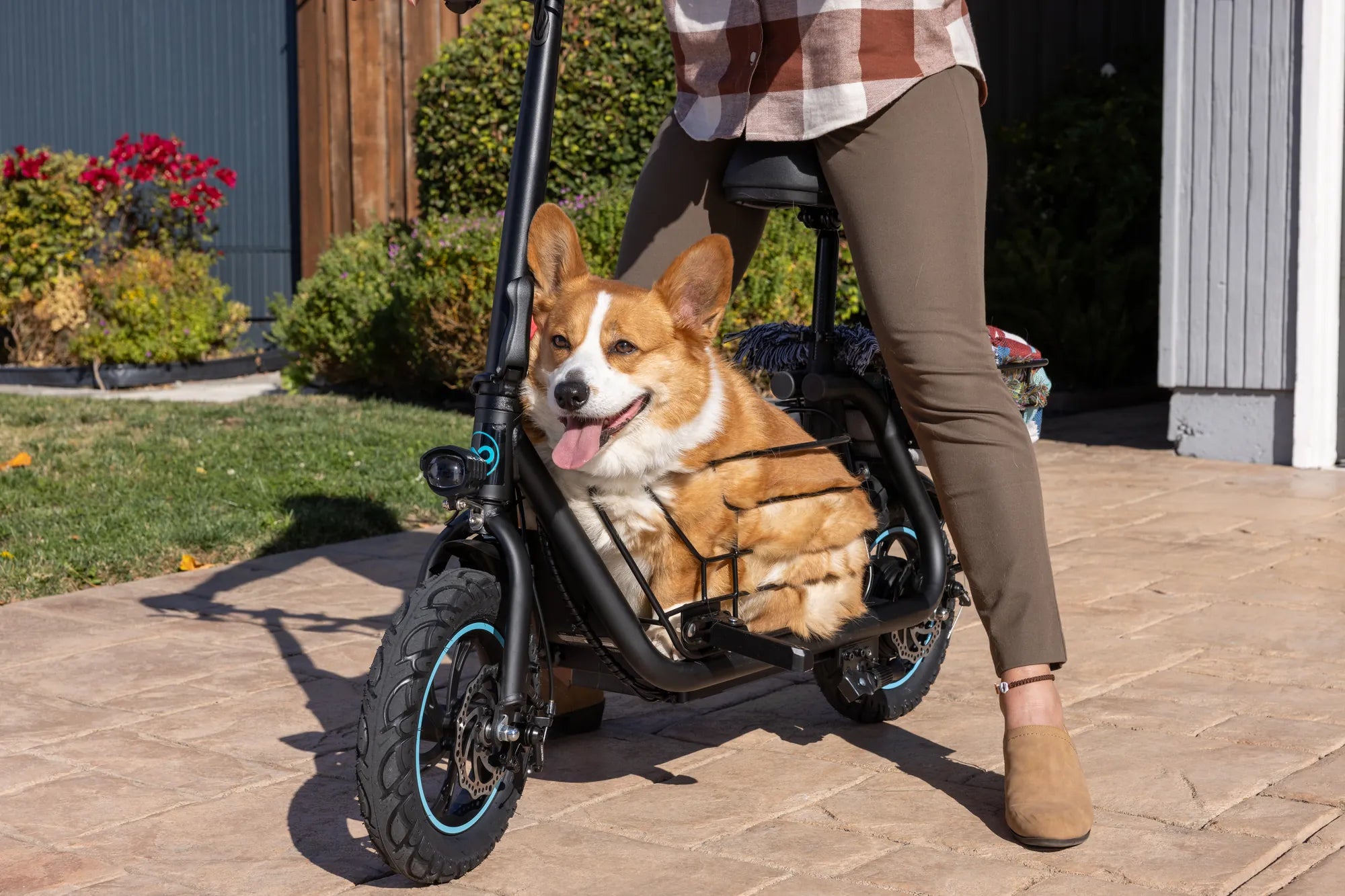
Bangkok's legendary traffic congestion transforms a short commute into a multi-hour ordeal. For residents and expats alike, navigating the urban sprawl requires a smarter solution. Electric scooters have emerged as the definitive tool for reclaiming time, saving money, and traversing the city with unprecedented freedom. This guide delivers the actionable insights and technical knowledge you need to master urban mobility in Bangkok. You will learn how to select the right scooter for local conditions, understand the legal landscape, discover optimal routes, and implement critical safety practices. Electric Scooters Bangkok: The Ultimate Guide to Urban Mobility is your blueprint for a faster, more efficient daily life.
Why an Electric Scooter is Your Best Commute in Bangkok
The economic and practical case for adopting an electric scooter in Bangkok is overwhelming. Traditional transport modes are either expensive, unreliable, or both. An e-scooter provides a personal, on-demand transit solution that bypasses the city's most persistent problems.
Financially, the savings are immediate and substantial. Compared to daily rideshare fares or taxi meters stuck in traffic, the cost-per-kilometer of an e-scooter is negligible. It eliminates fuel costs, parking fees in crowded commercial districts, and repetitive BTS or MRT fares for short trips. The initial investment pays for itself within months for a regular commuter.
Operationally, the benefit is time. An e-scooter turns fixed-route dependence into flexible point-to-point travel. It seamlessly connects your home to the nearest mass transit station, your office to a lunch spot, or your condo to a local market. This "first and last mile" connectivity is the missing link in Bangkok's otherwise extensive transit network.
Finally, the convenience factor is transformative. The compact, foldable design of a quality electric scooter means it can be stored under a desk, in a condo closet, or carried into a cafe. It grants you complete control over your schedule, freeing you from the unpredictability of Bangkok's traffic flows and taxi availability.
Bangkok's Traffic & Transit: The E-Scooter Advantage
To understand the advantage, one must examine the data. During peak hours, average car speeds in central Bangkok can drop below 10 kilometers per hour. A study by the Thailand Development Research Institute found that traffic congestion costs the city billions of baht annually in lost productivity.
An electric scooter, capable of 25 km/h, consistently outperforms cars in dense urban corridors. For a typical 5km commute from a Sukhumvit soi to a Sathorn office, a car may take 45-60 minutes. An e-scooter, using a combination of sois and bike lanes, can complete the same journey in 15-20 minutes. This time saving compounds daily.
The cost comparison is equally stark. Consider a daily 10km round-trip commute:
| Transport Mode | Approx. Cost (THB) | Time (Peak) | Flexibility |
|---|---|---|---|
| Taxi / Ride-Hail | 250 - 400 | 50-70 min | Moderate |
| BTS / MRT | 70 - 100 | 40 min (incl. walk) | Low |
| Motorcycle Taxi | 120 - 200 | 25 min | High |
| Electric Scooter | ~5 (electricity) | 20-25 min | Maximum |
This table highlights the e-scooter's unrivaled efficiency. It directly addresses the gaps in the public transit system, providing a private, efficient link between stations, offices, and homes that are just beyond comfortable walking distance.
Choosing the Right E-Scooter for Bangkok's Streets
Not all electric scooters are created equal, and Bangkok's unique environment demands specific features. Prioritizing the wrong specifications can lead to a frustrating and unsafe experience. The ideal Bangkok e-scooter balances power, range, durability, and portability.
Motor power is critical for handling the city's humid heat, which can reduce motor efficiency, and for tackling the occasional incline on bridges or overpasses. A continuous power rating of at least 350W is recommended for adult riders. Battery range must align with real-world use; a minimum of 25 kilometers per charge is essential to avoid range anxiety for typical urban trips.
Portability, defined by weight and foldability, is a non-negotiable feature for Bangkok living. You must be able to lift it into a BTS carriage during allowed hours, carry it up a flight of stairs, or store it in a compact apartment. Deck size and tire diameter also contribute to stability and comfort on uneven surfaces.
Ultimately, the choice should be driven by a blend of performance specs and build quality tailored to local challenges. Compromising on core durability features for a lower price point is a false economy in this demanding urban setting.
Essential Features: From Monsoon Puddles to Potholes
Bangkok's streets present a specific set of hazards: sudden tropical downpours, deep puddles, uneven pavement, and unpredictable road surfaces. Your e-scooter must be engineered to withstand these conditions.
The single most important feature is a high water-resistance rating. An IPX5 rating is essential, indicating protection against water jets from any direction. This is crucial for riding through monsoon rain or wet roads without risking critical electrical failure. Brands like Gyroor design their scooters with this level of ingress protection, ensuring the scooter's electronics are sealed against the elements.
Robust suspension is necessary for comfort and control. A combination of front and rear spring or hydraulic suspension absorbs shocks from potholes, cracks, and curb transitions, maintaining stability and reducing rider fatigue. Paired with pneumatic (air-filled) tires, which provide better traction and shock absorption than solid tires, it makes for a much safer ride.
Braking system reliability is paramount in chaotic traffic. A dual-braking system, typically combining an electronic (regenerative) brake and a mechanical disc or drum brake, offers redundant stopping power. In a hot, humid climate, the thermal stability of disc brakes can be advantageous. Finally, the battery itself must be a safety priority. UL-certified battery packs, like those used by Gyroor, undergo rigorous testing for short-circuit, overcharge, and thermal stability. This certification is a critical safeguard, especially when the scooter is stored or charged in a confined condo space.
The Legal Landscape: Riding an E-Scooter in Bangkok
As of 2024, Thailand's national laws regarding electric scooters are evolving. There is no specific national legislation classifying low-powered, personal electric scooters as motor vehicles, which means a driver's license is not currently required. However, riders must exercise caution and follow common-sense rules based on existing regulations for similar devices and local ordinances.
The primary rule of thumb is to ride respectfully and defensively. E-scooters are generally not permitted on sidewalks, where they pose a danger to pedestrians. The recommended riding areas are bicycle lanes, where they exist, and the far-left side of roads, similar to bicycles. In parks like Benjakitti or along specific riverfront paths, always adhere to posted signs.
While not mandated by national law for e-scooters, wearing a helmet is strongly advised for personal safety. Given Bangkok's traffic density, high visibility clothing or accessories are also recommended, especially for night riding. A functional front light and rear reflector or brake light are essential safety features that also demonstrate responsible riding.
Local authorities may enforce rules about public nuisance or dangerous riding. Therefore, maintaining a moderate speed (well below 25 km/h in shared spaces), yielding to pedestrians, and avoiding reckless maneuvers is crucial. The legal situation can change, so staying informed via local expat forums or transport authority announcements is a best practice for every rider.
Gyroor in Bangkok: Built for Reliability and Peace of Mind
Selecting a brand with a proven track record in quality and safety is paramount. Gyroor, a leading electric scooter and e-bike brand trusted by over 100,000 riders across North America and Europe, designs its products with the rigorous demands of urban commuting in mind. Their approach aligns perfectly with the needs of a Bangkok rider.
Central to this is the commitment to safety through certification. Every Gyroor scooter utilizes UL-certified battery packs tested for 500+ charge cycles. This is not just a performance claim; it is a fundamental safety standard that ensures battery integrity in Bangkok's consistently hot and humid climate, mitigating risks associated with inferior power cells.
Furthermore, Gyroor models feature an IPX5 water-resistant design. This engineering specification means the scooter is built to handle the sudden, heavy rains of the monsoon season, not merely light drizzle. This level of protection is critical for electronics longevity and rider safety on wet roads.
To protect your investment, Gyroor backs its scooters with a reliable 1-year comprehensive warranty and accessible customer support. For a rider in Bangkok, this peace of mind is invaluable. It ensures that your mobility solution is supported, allowing you to focus on the commute rather than worrying about repair costs or component failures. The brand's 4.5/5 average customer rating reflects a focus on durability and user satisfaction.
Top Routes and Safety Tips for Bangkok E-Scooter Riders
Knowing where to ride enhances both enjoyment and efficiency. Bangkok offers several scenic and practical routes that are well-suited for electric scooters. The dedicated bicycle and pedestrian path along the Chao Phraya River, stretching from Rama VII Bridge southward, provides a stunning, traffic-free route. The green corridors connecting Benjakitti Park to Lumpini Park offer a serene commute through the city's lungs.
For practical commuting, the network of "sois" (small streets) parallel to major arteries like Sukhumvit or Silom can be ideal for avoiding main road traffic. Always plan your route beforehand using a map to identify quieter roads and potential bike lanes. Connecting from your residence to the nearest BTS station is often the most frequent and valuable trip.
Safety must be an active, daily practice. Always perform a pre-ride check: test brakes, ensure tires are properly inflated, verify lights are working, and confirm the folding mechanism is locked. Adopt a defensive riding posture; assume cars and motorcycles may not see you. Never ride with both headphones in, so you can hear surrounding traffic.
For night riding, beyond the mandatory front light, add reflective strips to your scooter or backpack and wear a reflective vest. When parking in public, use a robust secondary lock (like a U-lock) through the frame, even if just for a few minutes. Finally, slow down in wet conditions, as braking distances increase significantly on slick surfaces.
Maintenance and Care for the Tropical Climate
The tropical environment of Bangkok accelerates wear and tear on any mechanical device. A consistent maintenance routine is essential to ensure the longevity, safety, and performance of your electric scooter. This goes beyond simple charging.
Post-ride care after exposure to rain or wet roads is crucial. Even with a high IPX5 rating, wipe down the scooter with a dry cloth, paying attention to the deck, stem, and wheel hubs to prevent rust on screws and bearings. Avoid directing high-pressure water jets at the scooter during cleaning, as this can compromise seals over time.
Regular mechanical checks are vital. Inspect tire pressure weekly; pneumatic tires lose pressure naturally and faster in heat. Check for wear or embedded debris. Monthly, inspect all bolts and fasteners, especially on the folding mechanism and handlebars, for tightness (vibration can loosen them). Listen for new creaks or rattles that may indicate a need for lubrication or adjustment.
Battery care is the most important aspect. Avoid leaving the scooter or battery pack in direct sunlight for extended periods. Store and charge the scooter in a cool, dry place. Do not deplete the battery to 0% regularly; try to recharge when it reaches 20-30%. Likewise, avoid leaving it plugged in at 100% for days on end. Following these practices will maximize the lifespan of the UL-certified battery pack.
FAQ: Electric Scooters in Bangkok
Q: Do I need a license or registration for my electric scooter in Bangkok?
A: As of now, no. Personal electric scooters are not classified as motor vehicles under Thai law, so no driver's license, vehicle registration, or tax is required. This could change, so stay informed.
Q: Where can I charge my e-scooter in Bangkok?
A> The most convenient place is at home or your office. The battery is removable on most quality models. Public charging stations for e-scooters are rare, so planning your daily range is key. Many cafes and malls are accommodating if you ask politely to plug in.
Q: Can I take my electric scooter on the BTS or MRT?
A: Policies vary. Generally, folded e-scooters are allowed during non-peak hours. They must be folded, and you should avoid blocking aisles or doors. Check the latest rules on the transit authority's website or look for signage at stations. Always be courteous to other passengers.
Q: How do I handle my e-scooter during heavy monsoon rain?
A> If caught riding, slow down significantly, avoid large puddles (which may hide deep potholes), and use both brakes gently. If you have an IPX5-rated scooter like Gyroor's, it is designed to handle this. However, the best practice is to seek shelter if the rain is extremely heavy, as visibility is low for all road users.
Q: Is theft a major concern, and how can I prevent it?
A> As with any valuable portable item, theft is a risk. Always use a high-quality secondary lock (U-lock or heavy-duty chain lock) to secure the scooter frame to a fixed, immovable object. If possible, park in well-lit, high-traffic areas. The folding feature allows you to take it indoors, which is the safest option.
Embrace Efficient, Eco-Friendly Mobility
The transformation of your daily commute in Bangkok is within reach. An electric scooter is more than a gadget; it is a practical tool that delivers tangible improvements in time, cost, and personal freedom. By choosing a model built for the specific challenges of the city—with certified water resistance, a safe battery, and durable construction—you invest in reliable, long-term mobility.
This shift also represents a step towards a more sustainable urban lifestyle, reducing your reliance on fossil-fueled transport for short trips. The knowledge of safe routes, legal etiquette, and proper maintenance empowers you to ride with confidence. Bangkok's vibrant, dynamic streets are waiting to be explored on your terms.
Ready to experience the freedom of a smarter commute? Explore a range of electric scooters engineered for durability and safety in urban environments like Bangkok. Browse the full Gyroor collection at gyroorboard.com to find the model that matches your commute and conquers the urban jungle.
Why Are Electric Scooters Illegal in the UK? Exploring the Legal Landscape
Top Electric Scooters Under 300: Your Guide to Smart Budget Mobility