



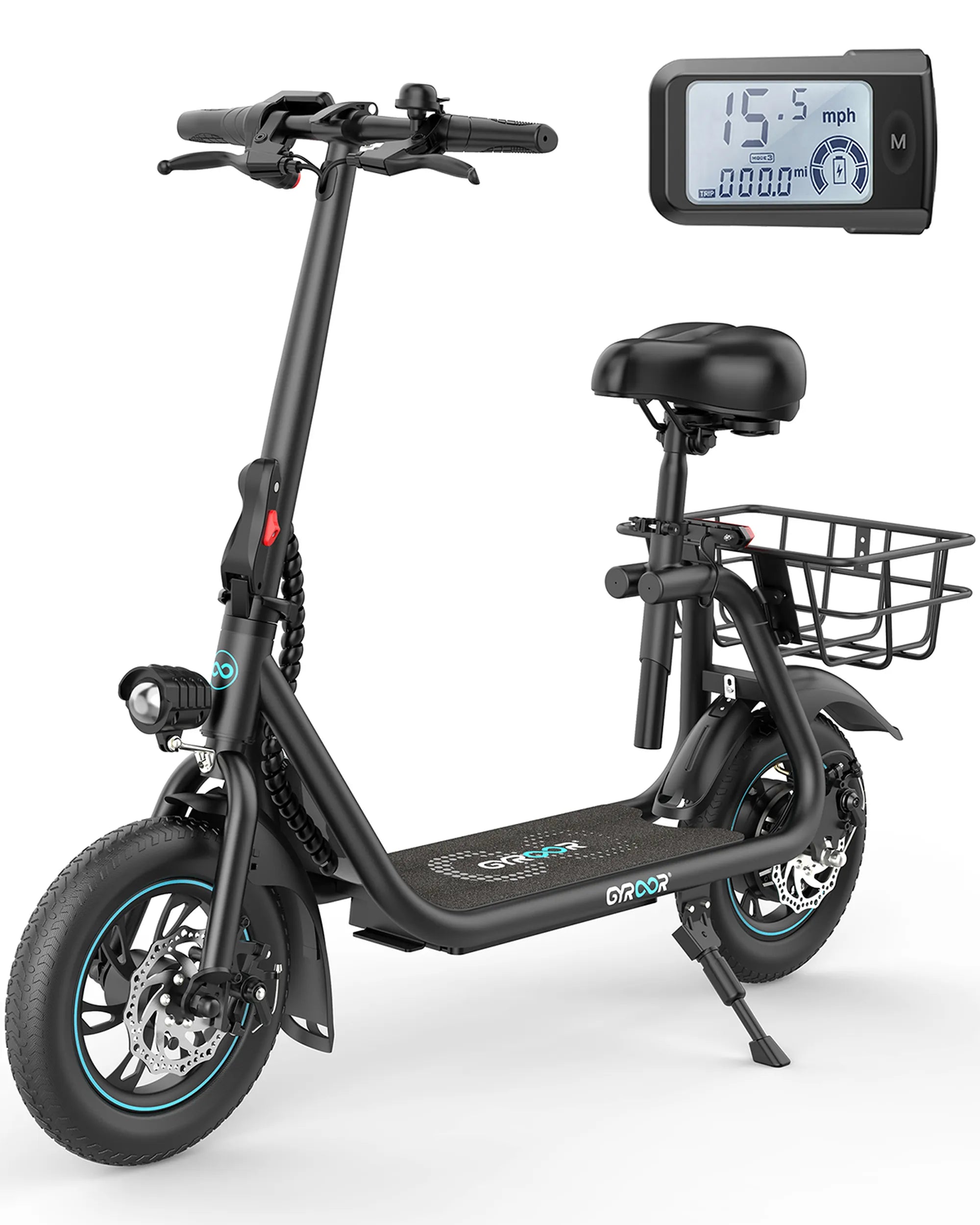
Introduction: Why Weight Capacity Is a Critical Safety Metric
Choosing an electric scooter when you weigh over 100kg (220lbs) requires moving beyond marketing claims and understanding fundamental engineering. Standard consumer scooters, often built for riders up to 100kg, operate at their performance limit for heavier adults, leading to premature wear, reduced safety, and a disappointing ride. This guide focuses exclusively on Electric Scooters for Adults Over 100kg: The Ultimate Guide to Heavy-Duty Rides, providing the technical knowledge to identify a scooter built for durability, power, and stability. We will analyze the key components that define a true heavy-duty ride, from motor torque to frame integrity, ensuring your investment delivers both safety and long-term value.
For brands like Gyroor, engineering for a diverse rider base is a core principle. This means designing models that not only meet but exceed standard weight limits, incorporating robust components and rigorous testing. The goal is to provide every rider, regardless of size, with a reliable and confident commuting solution. Understanding the "why" behind the specifications is the first step toward a satisfying ownership experience.
Decoding the Specs: The Engineering of a Heavy-Duty Scooter
A scooter's maximum weight rating is a composite result of its weakest component. For riders over 100kg, every part—from the deck bolts to the axle—must be over-engineered. A true heavy-duty electric scooter integrates a powerful motor, a high-capacity battery, a reinforced frame, and superior brakes into a cohesive system. This section breaks down the non-negotiable specifications that separate a capable commuter from a toy.
Ignoring these specs risks mechanical failure, such as a cracked deck or stem, which can lead to a loss of control. The market for electric scooters for adults over 100kg demands transparency about materials, motor constants, and battery discharge rates. We will translate these technical terms into practical performance expectations you can trust.
Motor Power & Torque: The Foundation of Performance
Motor wattage (e.g., 500W, 800W, 1000W) is often highlighted, but continuous power output and torque are more critical for heavier riders. A high-torque motor provides the necessary rotational force to accelerate a greater mass from a stop and maintain speed on an incline. A 500W motor may suffice on flat ground for a lighter rider, but a rider over 100kg will benefit significantly from a 800W or 1000W dual-motor system for consistent performance.
Torque is what you feel when you twist the throttle—the immediate push. Insufficient torque results in sluggish starts and an inability to climb hills, forcing the motor to work harder, overheat, and drain the battery rapidly. For confident urban commuting that includes bridges or slight gradients, prioritizing torque is essential. This is a fundamental pillar in the search for reliable electric scooters for adults over 100kg.
Battery Life & Real-World Range Under Load
Advertised range figures are almost always based on ideal conditions: a 75kg rider, flat terrain, warm weather, and slow, steady speeds. Physics dictates that moving more mass requires more energy. A rider weighing 100kg+ can realistically expect a 25-35% reduction in the advertised range due to increased motor load.
Therefore, battery capacity is paramount. Look for a battery rated at least 15Ah (450Wh) or higher. A larger battery not only provides a better buffer for your weight but also reduces the depth of discharge per cycle, which extends the overall lifespan of the battery pack. For brands committed to safety like Gyroor, this is paired with using UL-certified battery cells, ensuring stable performance even under the high-current demands of accelerating a heavier load.
Frame & Deck Construction: The Backbone of Durability
The frame is the scooter's skeleton. For heavy-duty use, materials like aircraft-grade aluminum alloy or reinforced steel are mandatory. The welding points, folding mechanism, and stem latch must be engineered with significant safety margins. A wider and longer deck (minimum 20 inches long) is not just about comfort; it provides a stable platform for a larger stance, improving control and weight distribution.
A deck that flexes under weight is a sign of inadequate construction. The stress from regular riding, especially over bumps, will eventually lead to metal fatigue. A rigid, reinforced deck ensures that the energy from impacts is managed by the suspension and tires, not the frame itself. This construction quality is what defines a durable heavy-duty ride built to last for years, not months.
Braking Systems: Managing Increased Momentum
Stopping power must scale with mass and potential speed. A heavier rider generates more kinetic energy. Relying on a single, entry-level braking system is a significant safety compromise. A combination of dual braking systems—such as a front disc brake and a rear drum or electronic (regenerative) brake—provides reliable, redundant stopping power.
Disc brakes, particularly hydraulic ones, offer superior modulation and consistent performance in various weather conditions compared to mechanical brakes. Effective braking is non-negotiable for navigating urban environments safely. When evaluating electric scooters for adults over 100kg, the quality and combination of brakes should be a top-tier priority.
Top Features to Prioritize for Riders Over 100kg
Beyond core specs, certain design features dramatically enhance safety, comfort, and longevity for heavier riders. These elements address the real-world experience of commuting on varied surfaces and in different conditions.
Tire Type & Size: The Critical Contact Point
Tires are your primary interface with the road. For riders over 100kg, larger diameter tires (10 inches or more) and pneumatic (air-filled) tires are highly recommended. Larger tires roll over obstacles more easily and provide better stability. Pneumatic tires offer crucial shock absorption, smoothing out cracks and bumps, which reduces fatigue on both the rider and the scooter's frame.
While solid (airless) tires eliminate the risk of flats, they transmit far more vibration to the deck and offer less traction, especially on wet surfaces. The comfort and added suspension benefit of air-filled tires typically outweigh the maintenance concern for most heavy-duty commuters. This choice directly impacts the quality of your heavy-duty ride.
Suspension Systems: Protecting Rider and Machine
A robust suspension system is not a luxury; it's a necessity for durability. It absorbs impact energy that would otherwise be transferred through the wheels to the frame and deck. For a heavier rider, this stress is amplified. A good suspension—whether spring-based, hydraulic, or a combination—preserves the scooter's structural integrity and provides greater control and comfort.
Look for dual suspension (front and rear) to effectively manage bumps from both wheels. This system allows the tires to maintain better contact with the road, improving traction and braking efficiency. It's a key feature that separates commuter-grade scooters from those built for consistent, load-bearing use.
Weight Capacity & the Importance of Safety Margins
Always choose a scooter with a maximum load capacity that provides a healthy buffer above your actual weight. If you weigh 105kg, a scooter rated for 120kg offers a 15kg safety margin for a backpack, groceries, or unexpected dynamic forces from riding over a pothole. This margin reduces stress on every component, from motors and batteries to bearings and bolts, ensuring the scooter operates within its designed parameters for reliability.
Operating a scooter at or near its absolute weight limit accelerates wear and can void warranties. Selecting a model engineered for heavier loads, like several in Gyroor's lineup which are tested beyond their stated limits, is a prudent long-term investment. This is a core principle when searching for the right electric scooter for adults over 100kg.
Performance Realities: Setting Accurate Expectations
Managing expectations is key to satisfaction. Here is a realistic data-driven look at what a rider weighing 100-120kg can anticipate from a well-specified heavy-duty scooter.
Speed: Top speed will be slightly less affected than range, but acceleration will be noticeably slower than for a lighter rider. A scooter that hits 40 km/h (25 mph) with an 80kg rider may achieve 35-37 km/h (22-23 mph) with a 110kg rider. The more critical metric is the ability to maintain a stable cruising speed (e.g., 30 km/h) without the motor straining.
Range: As noted, expect a 25-35% reduction. If a scooter advertises a 40 km (25 mi) range under ideal conditions, a 110kg rider should plan for a realistic range of 26-30 km (16-19 mi) per charge, factoring in stops, starts, and mild hills.
Hill Climbing: This is where motor torque and power are truly tested. A scooter with a single 500W motor may struggle on a 10% grade with a heavier rider, slowing to a crawl. A dual-motor 1000W+ setup or a high-torque single motor (800W+) is recommended for consistent hill-climbing ability. Expect speed to decrease on inclines.
| Specification | Standard Scooter (Max 100kg) | Heavy-Duty Scooter (120kg+) |
|---|---|---|
| Motor Power (Typical) | 350W - 500W Single | 800W - 1000W+ Single or Dual |
| Frame Material | Standard Aluminum | Reinforced/Aluminum Alloy |
| Deck Size | ~18" Long | 20"+ Long, Wider |
| Braking System | Single Disc or Drum | Dual Disc (Hydraulic Preferred) |
| Tire Recommendation | 8.5" Solid/Pneumatic | 10"+ Pneumatic |
| Suspension | Basic or None | Front & Rear Dual Suspension |
| Realistic Range for 110kg Rider | 40-50% of Advertised | 65-75% of Advertised |
Why Gyroor is Engineered for Confidence and Durability
Gyroor designs its premium electric scooters and e-bikes with a focus on real-world durability and safety, principles that directly benefit the heavier rider. With a customer base of over 100,000 riders, their engineering choices are informed by diverse use cases and a commitment to reliable performance.
UL-Certified Battery Packs: The Standard for Safety
Every Gyroor scooter uses UL-certified lithium-ion battery packs. This third-party certification is crucial, especially under the consistent high-demand use of a heavier rider. It validates that the battery cells, BMS (Battery Management System), and pack construction meet rigorous safety standards for electrical, mechanical, and environmental stress, reducing risks associated with overheating or failure.
IPX5 Water-Resistant Design: Built for Commuting
The IPX5 rating means the scooter's electrical components can withstand water jets from any direction. In practice, this translates to reliable operation in wet conditions—riding on damp roads, through puddles, or in light rain. This durability is essential for a daily commuter vehicle that cannot be sidelined by weather, ensuring the heavy-duty ride remains dependable year-round.
Comprehensive 1-Year Warranty & Support
Gyroor backs its products with a robust 1-year warranty on the frame, motor, battery, and controller. This warranty, supported by US-based customer service, provides significant peace of mind. For a rider investing in a primary transport solution, knowing that the company stands behind the durability of its components is a key factor in the purchase decision for a true electric scooter for adults over 100kg.
Rider Tips & Maintenance for Longevity
Proper care maximizes the lifespan and performance of any vehicle, especially one operating under heavy loads. These practices are essential for riders over 100kg.
Pre-Ride Checks and Optimal Riding Practices
Develop a quick pre-ride routine: check tire pressure (crucial for pneumatic tires), test brake lever responsiveness, ensure the folding mechanism is securely locked, and listen for any unusual noises. When riding, practice smooth acceleration rather than jamming the throttle from a stop. Anticipate stops to use brakes progressively. This gentler approach reduces peak stress on the drivetrain and battery.
Essential Maintenance for Heavy-Duty Use
Adhere to a regular maintenance schedule. Inspect brake pads for wear every month, as heavier use leads to faster wear. Keep tires properly inflated to the manufacturer's recommended PSI (often higher for heavier riders) to prevent pinch flats and improve efficiency. Clean the scooter regularly, especially after riding in wet or dirty conditions, paying attention to the brake discs and calipers. Tighten critical bolts (stem, handlebar, wheels) every few months, as vibrations can loosen them over time.
Frequently Asked Questions (FAQ) for Heavier Riders
Q: Is it safe to ride an electric scooter if I weigh 110kg (240lbs)?
A: Yes, absolutely, provided you choose a scooter specifically engineered and rated for that weight. The key is selecting a true heavy-duty model with a stated maximum load of 120kg or more, a powerful motor, and a reinforced frame. Never ride a scooter at or above its weight limit.
Q: How much will my weight reduce the advertised scooter range?
A: You can expect a 25-35% reduction from the manufacturer's ideal-condition rating. Always base your range expectations on battery capacity (Wh) and prioritize larger batteries (15Ah/450Wh+) to mitigate this reduction.
Q: Can I carry a backpack or groceries on top of my own weight?
A: Yes, but this combined weight must be within the scooter's maximum load capacity. This is why a safety margin is critical. If you weigh 100kg and the scooter is rated for 120kg, you have 20kg of capacity for cargo. Always factor in the total weight.
Q: Are pneumatic tires worth the risk of flats for a heavier rider?
A> For most, yes. The superior shock absorption, comfort, and traction of pneumatic tires significantly improve ride quality and reduce stress on the scooter. Use tire sealant and maintain proper pressure to minimize flat risks. The benefits for a heavy-duty ride generally outweigh the drawbacks.
Q: Do I need a special license or insurance to ride a heavy-duty e-scooter?
A> Regulations vary by city, state, and country. Typically, electric scooters with top speeds under 25-32 km/h (15-20 mph) do not require a license. However, you must always check your local laws. Insurance is rarely mandatory but is recommended for theft or liability protection.
Finding Your Perfect Heavy-Duty Match
The journey to finding the right electric scooter for adults over 100kg is defined by prioritizing engineering over aesthetics. Focus on the triad of motor torque, structural integrity, and braking performance. A scooter that excels in these areas will provide the safety, durability, and confidence required for daily commuting or recreational riding. Setting realistic expectations for range and speed ensures long-term satisfaction with your purchase.
Remember, a heavy-duty scooter is an investment in reliable personal mobility. By choosing a model built with high-grade materials, certified safety components, and a clear weight buffer, you secure not just a vehicle, but a dependable partner for your journey. Explore scooters designed with these principles from the ground up.
Ready to find a scooter engineered for your needs? Browse the full collection of durable, high-performance electric scooters and e-bikes at gyroorboard.com, where every model is built to deliver a confident and reliable ride.
Electric Scooters in Vegas: The Ultimate Guide to Riding in Sin City
Electric Scooters in Orissa: The Future of Urban Mobility