



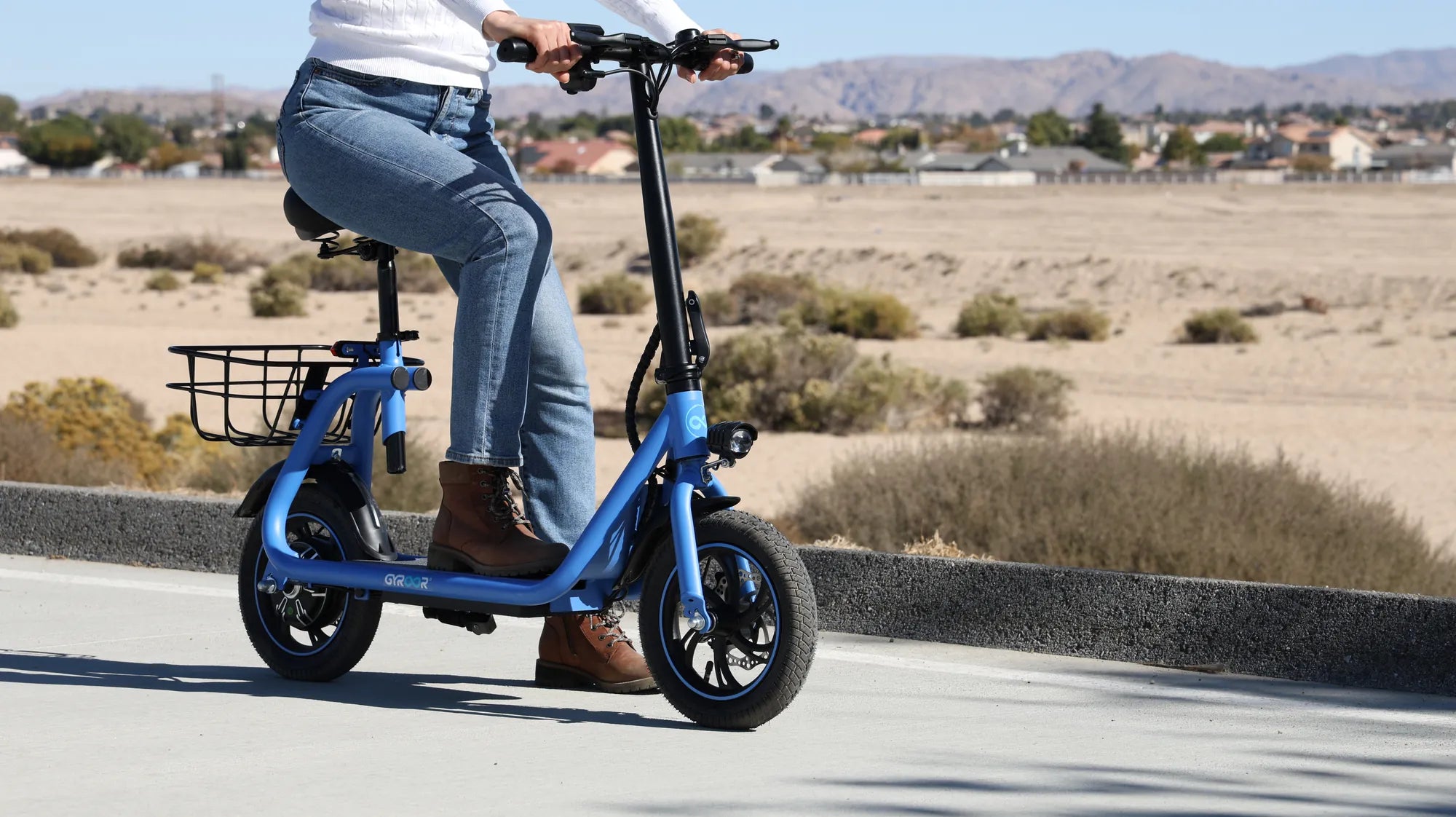
Introduction: Navigating Kerala's Evolving Urban Landscape
Kerala's cities, from Thiruvananthapuram to Kochi, are renowned for their vibrant culture but also for their notorious traffic congestion and rising fuel costs. For students, professionals, and business owners, the daily commute is often a significant expense and source of stress. The electric scooter emerges not just as a trendy alternative, but as a practical, economical, and sustainable solution perfectly tailored to Kerala's dense urban fabric and environmental consciousness. This guide will provide a detailed breakdown of electric scooters in Kerala price, performance, and ownership costs, empowering you to make an informed decision. We'll explore why brands like Gyroor, with a focus on safety and durability, are becoming a trusted choice for over 100,000 riders seeking reliable electric mobility.
Understanding the Electric Scooter Market in Kerala
The adoption of electric two-wheelers in Kerala is accelerating rapidly, driven by a powerful confluence of factors. Soaring petrol prices directly impact household budgets, making the low running cost of e-scooters highly attractive. Concurrently, a growing collective awareness about air pollution and climate change is pushing consumers towards greener choices.
State and central government policies, such as the FAME II subsidy, can reduce the upfront cost, though specific state-level incentives in Kerala are evolving. The typical rider profile is diverse: college students navigating campus towns, office-goers battling city traffic, and local shopkeepers making short delivery runs. For all, the core appeal lies in slashing commute costs while contributing to cleaner air.
Key Factors Influencing Electric Scooter Prices in Kerala
The sticker price of an electric scooter is a sum of its parts and technologies. Understanding these components explains why prices vary and helps you identify true value for your investment in the Kerala context.
Battery Capacity and Range
The battery is the heart and most expensive component. Capacity, measured in Amp-hours (Ah) or Watt-hours (Wh), directly determines range—how far you can travel on a single charge. For Kerala's mix of city commutes and occasional hilly terrain, a scooter with a real-world range of 40-60 km is often sufficient for daily needs.
More critical than raw capacity is battery quality and safety. Investing in a scooter with a UL-certified battery pack, like those used in Gyroor models, is non-negotiable. These batteries undergo rigorous testing for over 500 charge cycles, ensuring longevity, stability in humid conditions, and protection from fire hazards, offering peace of mind that far outweighs a slightly lower upfront cost from an uncertified brand.
Motor Power and Performance
Motor power, measured in watts (W), dictates acceleration, hill-climbing ability, and top speed. A 250W motor is adequate for flat, urban roads, while 350W to 500W motors provide the necessary torque for Kerala's gentle slopes and bridges, especially with a pillion rider.
A higher-wattage motor typically increases the price but delivers a more confident and versatile riding experience. It’s essential to match motor power with your typical load and route profile to avoid underperformance or overspending.
Build Quality and Durability Features
Kerala's tropical climate, characterized by heavy monsoon rains and high humidity, demands exceptional build quality. A scooter's frame, wiring, and electronic components must withstand consistent exposure to moisture.
This is where an IPX5 water-resistance rating becomes a critical feature, not a luxury. An IPX5-rated scooter, a standard in Gyroor's design, can withstand water jets from any direction, making it safe to ride through typical Kerala downpours and puddles. Robust suspension, pneumatic tires, and corrosion-resistant materials also contribute to durability, preventing frequent repairs and adding to the scooter's long-term value.
Brand, Warranty, and After-Sales Service
The brand name carries the weight of its reputation for reliability and customer support. Established brands invest in research, quality control, and after-sales networks. A comprehensive warranty, such as a standard 1-year warranty on the vehicle and battery, is a direct indicator of the manufacturer's confidence in its product.
In Kerala, where service accessibility is key, choosing a brand with a dependable service partner or clear support channels in your city is crucial. It ensures that any technical issues can be resolved promptly, protecting your investment over its entire lifespan.
Electric Scooter Price Range Breakdown in Kerala (2024)
To navigate the market effectively, it's helpful to segment available options into clear price tiers, each catering to different needs and budgets. Here is a comprehensive overview of what you can expect.
Entry-Level (₹25,000 - ₹45,000)
This segment includes basic models ideal for very short, predictable commutes. Specifications typically feature a lower-capacity battery (10-15 Ah), offering a real-world range of 20-35 km, and a 250W motor. Features are minimal, often with analog displays and basic lighting.
These scooters suit students for campus travel or for secondary, short-distance errands in your locality. The trade-off is limited range, slower speeds, and often less robust construction that may not fare as well in heavy rain without a proper IP rating.
Mid-Range (₹45,000 - ₹70,000)
This is the sweet spot for most daily commuters in Kerala, balancing performance, features, and price. Expect batteries in the 15-20 Ah range, delivering 40-60 km per charge, paired with more powerful 350W-500W motors for better hill performance.
Enhanced features include digital dashboards, LED lighting, improved suspension, and essential water resistance (IPX5). This is where brands like Gyroor position their core models, offering reliability, safety certifications, and a comprehensive warranty, representing strong long-term value for regular office or college commutes.
Premium (₹70,000 and Above)
Premium electric scooters offer top-tier performance and technology. They boast large-capacity batteries (20+ Ah) for ranges exceeding 70-100 km, high-torque motors (500W+), and advanced features like dual suspension, disc brakes, smartphone app connectivity, and superior comfort.
This segment is for riders with longer daily commutes, those who frequently travel with a pillion, or enthusiasts who prioritize performance and advanced features. The investment is significant but delivers a near-petrol-scooter-like experience with minimal running costs.
The True Cost of Ownership: Beyond the Sticker Price
To appreciate the genuine affordability of electric scooters in Kerala, one must look beyond the showroom price and calculate the Total Cost of Ownership (TCO) over, say, five years, compared to a petrol scooter.
| Cost Factor | Electric Scooter (Est.) | Petrol Scooter (Est.) |
|---|---|---|
| Fuel/Electricity (Per Km) | ₹0.10 - ₹0.20 | ₹2.50 - ₹3.50 |
| Annual Maintenance | ₹1,000 - ₹2,500 | ₹3,000 - ₹5,000 |
| Insurance (Annual) | ₹500 - ₹1,500 | ₹500 - ₹1,500 |
| Major Servicing | Minimal (No engine oil, spark plugs) | Periodic (Engine overhaul, etc.) |
As the table illustrates, the savings on "fuel" are profound. Charging an e-scooter overnight costs a fraction of a litre of petrol. Maintenance is simpler and cheaper due to fewer moving parts—no engine oil changes, air filters, or complex transmission systems. When potential central and state subsidies are factored in, the long-term economic argument becomes overwhelmingly strong.
Making the Right Choice: A Buyer's Checklist for Kerala
Arm yourself with this practical checklist to translate research into a confident purchase decision suited for Kerala's conditions.
Assess Your Daily Commute
Map your exact daily travel distance, including any detours. Note the terrain—is your route predominantly flat, or does it include regular slopes like bridges or mild inclines? Consider your typical load: will you usually ride solo, or with a backpack or pillion? This assessment directly dictates your minimum required range and motor power.
Prioritize Non-Negotiable Features
For Kerala, an IPX5 water-resistance rating is mandatory, not optional. Determine your minimum acceptable range by adding a 20% buffer to your daily commute distance. Scrutinize the warranty document—ensure it clearly covers the battery, motor, and controller for at least one year. A UL-certified battery should be a top priority for safety.
Test Ride and Compare
Visit authorized dealers to experience the scooters firsthand. Test the acceleration, braking, and comfort on different road surfaces. Pay attention to the build quality, switchgear feel, and display readability. Compare the real-world feel against the specifications on paper for at least 2-3 shortlisted models within your budget.
Finalize Budget and Financing
Set a firm budget that includes the on-road price (scooter + registration + insurance). Explore financing options if available through the dealer or your bank. Crucially, allocate funds for essential safety gear—a good-quality ISI-certified helmet is a must-have, not an accessory.
Frequently Asked Questions (FAQs)
Q1: Are electric scooters powerful enough for Kerala's hills and bridges?
Yes, provided you choose an appropriate model. Scooters with a motor rated 350W or higher, preferably 500W, provide sufficient torque to handle typical slopes and bridges in cities like Kochi or Thiruvananthapuram, even with a rider and pillion. Always check the manufacturer's specified gradeability.
Q2: How do I charge my e-scooter, and what is the electricity cost in Kerala?
E-scooters charge using a standard home charging cable plugged into a regular 220V socket. A full charge for a mid-range model typically takes 4-6 hours. With Kerala's domestic electricity tariff, a full charge costs between ₹10 to ₹20, translating to a running cost of about 10-20 paise per kilometer, drastically lower than petrol.
Q3: Is the IPX5 rating sufficient for heavy monsoon rains?
Absolutely. An IPX5 rating means the scooter's electrical components are protected against low-pressure water jets from any direction, which covers riding through heavy rain and road spray. It is the industry-standard rating for vehicles designed to withstand wet weather conditions reliably.
Q4: What is the process for registration and insurance in Kerala?
Electric scooters with a top speed below 25 km/h and motor power below 250W may not require registration in some interpretations, but for higher-spec models, registration is mandatory. The dealer usually facilitates the process. Third-party insurance is compulsory and can be obtained along with the registration at the RTO. Always carry the documents advised by your dealer.
Q5: Where can I get reliable servicing in my city?
Before purchasing, inquire about the brand's authorized service network in your district or city. Reputable brands have tie-ups with service centers across major towns. Gyroor, for instance, ensures accessible service support for its riders. Confirm the availability of spare parts and the typical turnaround time for repairs.
Conclusion: Embracing a Smarter, Greener Commute in Kerala
The journey to owning an electric scooter in Kerala is an investment in financial prudence, personal convenience, and environmental stewardship. By understanding the key factors that influence electric scooters in Kerala price—from battery safety and water resistance to warranty support—you can select a model that offers not just low upfront cost but genuine long-term value and reliability. Choosing a scooter built for Kerala's climate, with certified safety features and dependable after-sales, transforms your daily commute from a costly chore into an affordable, enjoyable, and sustainable part of your day. The road to smarter mobility in God's Own Country is electric.
Ready to explore models that combine Kerala-ready durability with proven safety standards? Browse the full Gyroor collection at gyroorboard.com to find your perfect electric companion.
Electric Scooters Netherlands: The Future of Urban Mobility
Electric Scooters Netherlands: The Future of Urban Mobility