



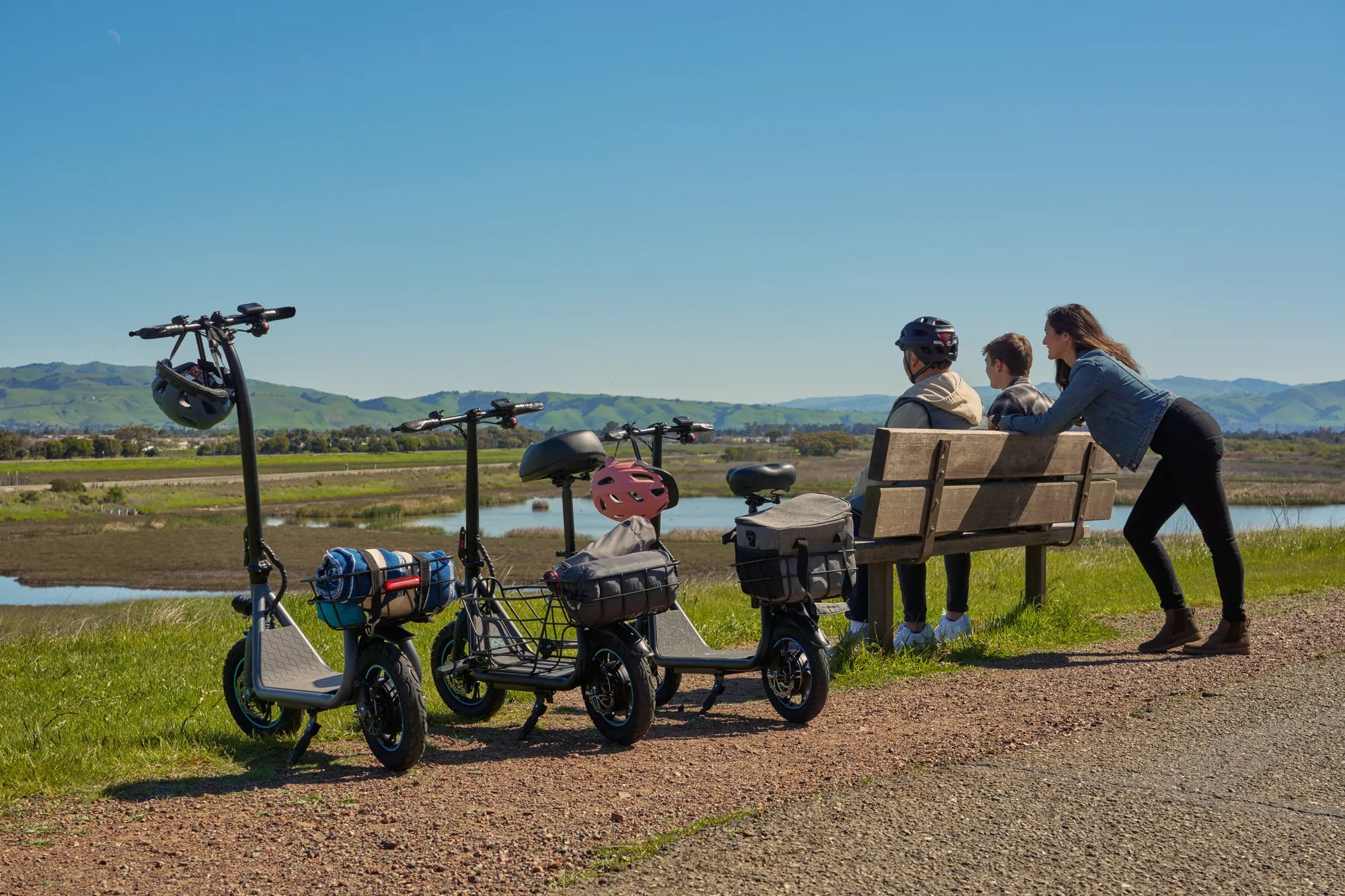
Navigating Stockholm on Two Wheels
Stockholm’s urban landscape, defined by islands, waterways, and a sprawling public transport network, presents a unique mobility puzzle. The solution for thousands of residents and visitors is the electric scooter. This guide provides the definitive resource for using e-scooters in Stockholm, from selecting the right model to mastering local etiquette. You’ll learn how to integrate this efficient mode of transport into your daily life, ensuring a safe, legal, and enjoyable ride through the Swedish capital. Electric Scooters in Stockholm: The Ultimate Guide to Urban Mobility begins with understanding why this city and this technology are a perfect match.
Stockholm’s ambitious Green City 2030 goal accelerates the shift towards sustainable transport. Electric scooters offer a zero-local-emission alternative that bridges the notorious ‘last-mile’ gap between subway stations, bus stops, ferry terminals, and final destinations. For a brand like Gyroor, trusted by over 100,000 riders across North America and Europe, Stockholm represents the ideal proving ground for durable, weather-resistant personal electric vehicles designed for modern city life.
Why Stockholm is Perfect for Electric Scooters
Several structural and cultural factors converge to make Stockholm a premier city for electric scooter adoption. The infrastructure is already in place, and the citizenry is predisposed to eco-friendly transport solutions, creating an environment where e-scooters can thrive as a legitimate commuting tool rather than just a recreational gadget.
First, the city boasts over 760 kilometers of designated bicycle paths, which e-scooters are legally permitted to use. This extensive, well-maintained network connects boroughs (stadsdelar) seamlessly, often providing more direct and scenic routes than car roads. Second, Stockholm’s terrain is predominantly flat with manageable inclines, making it ideal for standard scooter motors without requiring excessive power drain. Third, the archipelago geography means frequent ferry trips; a portable e-scooter carried aboard solves the first-and-last-mile challenge at each dock.
Furthermore, the cost of public transport, while efficient, adds up. A single adult ticket is 39 SEK. For short, cross-district trips, an owned e-scooter’s cost-per-kilometer rapidly approaches zero after the initial investment. The city’s compact yet spread-out nature means many trips are between 3 to 8 kilometers—the sweet spot for e-scooter range and convenience, outpacing walking and often matching or beating bus times when door-to-door travel is considered.
Choosing the Right Electric Scooter for Stockholm's Terrain and Climate
Not all electric scooters are built for Stockholm’s specific demands. Selecting a model with the right specifications is crucial for year-round reliability, safety, and integration into your daily routine. Key considerations must include battery performance, portability, and robust construction to handle the local environment.
Investing in a reputable brand like Gyroor, known for UL-certified batteries and IPX5 water-resistant designs, is a strategic decision for Stockholm riders. This ensures your vehicle meets the high standards needed for durable daily use, backed by a reliable 1-year warranty for peace of mind in the Swedish market.
Battery Range & Hill Climbing Power
Advertised range is a theoretical maximum. In real-world Stockholm conditions—colder temperatures, occasional headwinds, and stop-start traffic—effective range can be 20-30% lower. For reliable daily commuting, a scooter with a manufacturer-stated range of 25-40 km (15-25 miles) is ideal. This comfortably covers most round-trip needs within the inner city and surrounding areas like Solna or Hägersten.
Motor power directly impacts hill-climbing ability and acceleration from stops. While Stockholm isn’t mountainous, bridges like Västerbron and streets in areas like Södermalm present sustained inclines. A continuous motor rating of at least 350W is recommended to maintain a stable speed on these slopes without straining the battery. Gyroor models with robust motors ensure consistent performance, whether crossing the Karlberg canal or navigating the rise up to Observatorielunden.
Portability & Public Transport Integration
The true utility of an e-scooter in Stockholm is its multimodal potential. The best scooter is one you can easily take on the tunnelbana (metro), a pendeltåg (commuter train), or a Waxholmbolaget ferry. This requires a balance between sturdiness and weight.
Look for a folding mechanism that is quick, secure, and one-handed. A folded scooter should have a compact footprint and, crucially, a weight under 15 kg for manageable carrying up subway stairs and onto crowded transport during rush hour. Lighter models around 12-13 kg, like several in Gyroor’s lineup, offer the best compromise between durability and portability for seamless integration with SL’s network.
Weather Resistance is Non-Negotiable
Stockholm’s weather is unpredictable, with rain, slush, and road spray present for a significant portion of the year. An electric scooter’s Ingress Protection (IP) rating is its first line of defense. A minimum of IPX4 is acceptable, but IPX5 or higher is strongly advised for true peace of mind.
An IPX5 rating, signifying protection against water jets from any direction, is a core feature of Gyroor scooters. This means riding through a light rain shower or wet streets from morning sprinklers won’t compromise the scooter’s electronic systems. This level of protection combats the moisture, salt, and grime that can cause corrosion and electrical failures in lesser models, making it a critical investment for the local climate.
Understanding Local Rules & Etiquette: Riding Legally and Safely
Sweden has clear regulations for electric scooters, classified as “electric assistance cycles” (elsparkcyklar) when their maximum designed speed does not exceed 20 km/h. Adhering to these rules is essential for your safety, the safety of others, and to avoid fines. Beyond the law, following unwritten etiquette ensures harmony on shared paths.
Ignorance of local norms is a primary cause of conflict with cyclists and pedestrians. A respectful rider preserves access and goodwill for all e-scooter users. This section outlines what you must know to be a responsible participant in Stockholm’s traffic ecosystem.
Official Regulations (Speed, Parking, Helmet Laws)
The legal maximum speed for e-scooters on bicycle paths and roads is 20 km/h. On pedestrian sidewalks, the speed must be adjusted to walking pace. It is illegal to ride on sidewalks in a manner that obstructs or endangers pedestrians; generally, sidewalks are to be avoided for riding whenever a bike path is available.
Parking is a major point of regulation. Scooters must not block pedestrian paths, wheelchair ramps, building entrances, or public transport accesses. Look for designated parking zones for bikes and scooters, often marked with signs or painted areas. Haphazard parking can result in your scooter being impounded by the city. Helmets are legally mandatory for riders under the age of 15, but are strongly recommended for all ages. Front and rear lights are required in darkness and poor visibility.
Unwritten Rules of the Bike Lane
Stockholm’s cyclists are disciplined and expect predictable behavior. Always keep to the right on paths, allowing faster cyclists to pass on the left. Use a bell or audible signal well before overtaking pedestrians or other riders. When in a group, ride single file, not side-by-side.
At intersections, clearly signal your intentions. Be extra cautious around tram (spårvagn) tracks in areas like Djurgården to avoid getting your wheel caught. When docking your scooter, ensure it is securely parked and upright in a designated area, not leaning against building walls or trees where it could fall. This considerate practice maintains public space and reduces anti-scooter sentiment.
Data-Driven Comparison: E-Scooter vs. Other Transport in Stockholm
To quantify the value proposition of owning an electric scooter, we analyze a typical 5km cross-city journey (e.g., St. Eriksplan to Medborgarplatsen) across four key metrics: cost, time, door-to-door convenience, and carbon footprint. The comparison assumes an owned e-scooter with a mid-range purchase price amortized over two years of daily use.
| Transport Mode | Avg. Cost (5km trip) | Avg. Door-to-Door Time | Convenience Factor | CO2e Emissions |
|---|---|---|---|---|
| E-Scooter (Owned) | ~3 SEK (electricity & depreciation) | 18-22 minutes | High: On-demand, direct, no parking search | ~5 g (grid electricity) |
| Public Transport (SL Card) | 39 SEK (single ticket) | 25-35 minutes (incl. walking/wait) | Medium: Fixed schedules, walking to/from stations | ~65 g (average for bus/train) |
| Ride-Sharing (Uber/Bolt) | 120-180 SEK | 15-25 minutes (traffic dependent) | Medium-High: On-demand but costly, subject to traffic & surge pricing | ~1,200 g (gasoline car) |
| Traditional Biking | 0 SEK | 20-25 minutes | Medium: Free & healthy, but requires effort & sweat, storage concerns | 0 g |
The data shows that an owned Electric Scooter in Stockholm: The Ultimate Guide to Urban Mobility highlights a superior balance of low cost, competitive speed, high convenience, and minimal environmental impact for this common urban trip distance. It outperforms public transport on cost and directness, demolishes ride-sharing on cost and emissions, and matches biking for time while reducing physical exertion.
Maintaining Your Scooter for Swedish Seasons
Proactive maintenance is key to maximizing the lifespan and safety of your electric scooter in Stockholm’s varied climate. A small routine of checks and care can prevent major issues, ensuring reliable performance through spring blossoms, summer sun, autumn rains, and winter chills.
Gyroor’s 1-year warranty covers manufacturing defects, but proper user maintenance is essential for handling wear and tear from daily use. Following these tips will keep your scooter in optimal condition and help you get the most from its durable construction.
Year-Round Care Tips
Regularly check tire pressure. Under-inflated tires increase rolling resistance, drastically reducing battery range and making the scooter harder to control. Inspect brakes monthly; ensure brake pads have sufficient material and that the braking system engages smoothly and effectively.
After riding on wet or salted streets, wipe down the scooter frame, stem, and deck with a damp cloth to remove corrosive grime and salt residue. Pay special attention to the folding mechanism and brake calipers. A periodic check of all bolts and screws for tightness is recommended, as vibrations from cobblestone streets (like those in Gamla Stan) can loosen them over time.
Cold Weather Battery Best Practices
Lithium-ion batteries, used in all quality e-scooters, are sensitive to cold. Capacity and performance temporarily decrease in low temperatures. Never store your scooter or its battery pack outdoors or in an unheated garage during winter. Always bring it indoors to room temperature.
Avoid charging a battery that is below 0°C. Allow it to warm up to room temperature for a few hours before plugging in. Try not to let the battery fully discharge in the cold. Store it with a charge between 40-80% if not using the scooter for an extended period in winter. Following these practices with Gyroor’s UL-certified battery packs will ensure they deliver their full 500+ charge cycle lifespan even in Nordic conditions.
FAQ: Electric Scooters in Stockholm
Q: Can I ride my e-scooter in Gamla Stan (the Old Town)?
A: Yes, but with extreme caution. Riding on the narrow, crowded cobblestone sidewalks is impractical and frowned upon. You may ride on the low-speed vehicle roads, but be prepared for uneven surfaces and many pedestrians crossing. It is often best to walk your scooter through the busiest parts of Gamla Stan.
Q: Where can I charge my scooter in the city?
A> The primary method is charging at home or in your office. Public charging ports specifically for e-scooters are rare. Some central bicycle parking facilities may have outlets. Planning your trips around your scooter’s range and charging overnight is the standard practice. Gyroor scooters with long-range batteries minimize the need for mid-day charging.
Q: Is theft a big concern, and how can I prevent it?
A> Theft is a concern for any valuable portable vehicle. Always use a high-quality, hardened steel U-lock or heavy-duty chain lock to secure your scooter to a fixed, immovable object in a well-lit, busy area. Never rely on a cable lock alone. Use the scooter’s built-in electronic lock if available, and consider a GPS tracker for high-value models. Removing the display or using a security screw for the clamp can be additional deterrents.
Q: Does Gyroor’s warranty cover international purchases used in Sweden?
A> Gyroor offers international warranty coverage, but terms may vary based on the region of purchase and local service centers. It is crucial to check the specific warranty policy for the region where you buy the scooter and confirm the process for support in Sweden. Purchasing from an authorized European retailer often simplifies warranty claims.
Q: Are there any areas in Stockholm where e-scooters are banned?
A> There are no blanket borough-wide bans. However, they are prohibited in specific pedestrian-only zones, inside large parks like Djurgården on pedestrian paths (bike paths are okay), and on certain nature trails. Always look for posted signage. Riding in underground pedestrian passages or inside shopping malls is also illegal.
Embrace Effortless and Eco-Friendly Commuting
Mastering urban mobility in Stockholm means choosing a tool that aligns with the city’s geography, climate, and sustainability ambitions. A well-selected electric scooter is more than a gadget; it’s a practical, efficient, and enjoyable key to navigating the archipelago city. By prioritizing key features like weather resistance, reliable range, and portability, you invest in a solution that pays dividends in saved time, money, and carbon emissions every day.
The data is clear: for short to medium urban trips, a personal e-scooter offers an unrivaled combination of convenience and low environmental impact. By following local regulations and etiquette, you become part of the solution for a greener, less congested Stockholm. Choosing a robust brand built for durability, like Gyroor with its UL-certified batteries and IPX5 rating, ensures your vehicle is a reliable partner through all seasons, supporting the city’s Green City 2030 vision with every silent, emission-free kilometer.
Ready to transform your Stockholm commute? Explore a scooter engineered for the demands of Nordic urban life. Browse the full Gyroor collection, featuring models with the range, power, and weatherproofing essential for Stockholm, at gyroorboard.com.
Used Electric Scooters for Elderly: A Smart & Affordable Mobility Guide
48V Electric Scooters: The Ultimate Guide to Power and Performance