



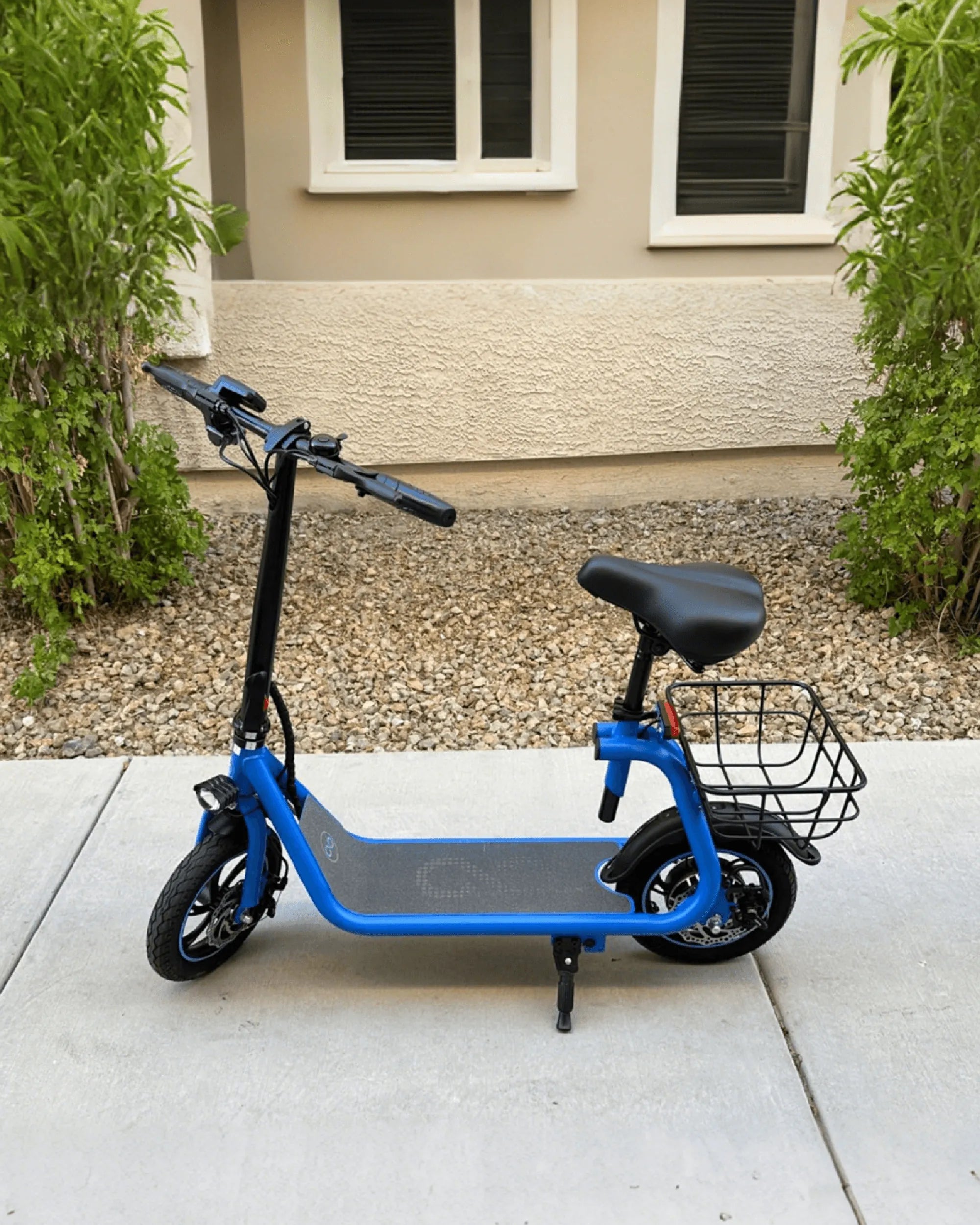
Introduction to Urban Mobility in the UAE
Dubai, Abu Dhabi, and Sharjah face a defining urban challenge: rapid growth coupled with intense traffic congestion. Traditional car-centric infrastructure strains under peak-hour gridlock, impacting productivity, air quality, and quality of life. The solution emerging on Corniches, Marina walkways, and business district pavements is the electric scooter, a compact, agile form of micro-mobility.
Electric Scooters in UAE: The Future of Urban Mobility is not a speculative slogan but an observable trend backed by government policy and shifting consumer habits. This shift directly supports the UAE's ambitious sustainability agendas, including the UAE Net Zero by 2050 Strategic Initiative and Dubai's Smart City ambitions, which prioritize reducing emissions and enhancing urban efficiency.
For residents and tourists, the appeal is immediate. E-scooters provide a practical escape from traffic snarls, a cost-effective alternative for short trips, and a seamless connection to public transit hubs. The evolution from novelty to integrated transport option has been swift, driven by a perfect alignment of technological readiness, regulatory foresight, and environmental necessity.
This article provides a comprehensive analysis of the e-scooter revolution in the Emirates. We will examine the regulatory frameworks, dissect the critical features for the local environment, and demonstrate how choosing a correctly engineered scooter is paramount for safety and performance in the UAE's unique climate.
Why the UAE is Embracing Electric Scooters
The adoption of electric scooters across the UAE is propelled by a powerful convergence of top-down vision and bottom-up demand. Government strategies are explicitly creating an enabling environment for clean, smart transportation. Dubai's RTA (Roads and Transport Authority) has been proactive, launching pilot schemes, designating specific riding zones, and formalizing rental partnerships to integrate e-scooters into the multimodal transport ecosystem.
Environmental targets are a primary driver. With a national commitment to net-zero emissions, reducing the carbon footprint of urban transport is critical. E-scooters, especially when charged via the UAE's growing solar energy infrastructure, present a near-zero operational emission alternative to short car trips, directly contributing to cleaner air in urban cores.
From a user perspective, the benefits are tangible. Commuters save significant time and money by bypassing traffic jams and avoiding fuel, parking, and ride-hailing costs. The convenience factor is immense for first- and last-mile connectivity—bridging the gap between a metro station and one's final destination, which is often too short for a car and too long for a comfortable walk, especially in the summer heat.
Furthermore, a cultural shift towards tech-enabled, healthy, and sustainable lifestyles, particularly among younger demographics and expatriates, has accelerated acceptance. The e-scooter is viewed not just as a tool, but as a symbol of modern, efficient urban living, aligning perfectly with the forward-looking identity of the UAE's major cities.
Navigating UAE Regulations: A Rider's Guide
Operating an e-scooter legally and safely requires understanding the emirate-specific rules. While federal guidelines are forming, regulations are primarily set by individual emirates' transport authorities. Compliance is non-negotiable for personal safety and to avoid substantial fines.
In Dubai, the RTA has designated specific areas for e-scooter use, including 21 districts such as Downtown Dubai, Dubai Internet City, and Al Rigga. Riding is generally permitted on dedicated cycling tracks and certain shared-use paths. On public roads, it is restricted to streets with a speed limit of 60 km/h or less, and riders must use the dedicated lane when available. Helmets are mandatory for all riders.
Abu Dhabi's Department of Municipalities and Transport (DMT) has also established clear rules. E-scooters are allowed on cycling and shared paths but are prohibited on sidewalks to ensure pedestrian safety. Riders must be at least 16 years old, wear a helmet, and use front and rear lights at night. The emirates of Sharjah and Ajman have launched similar regulated schemes, with designated zones and mandatory safety gear.
Key universal regulations include:
- Age Limit: Typically 16+ for riders.
- Speed Limits: Usually capped at 20-30 km/h on paths, with lower limits in crowded areas.
- Safety Gear: Helmets are mandatory; reflective vests and knee/elbow pads are highly recommended.
- Parking: Scooters must be parked in designated areas to avoid clutter and pedestrian hazards. Improper parking can result in fines and impoundment.
- Prohibited Acts: Carrying passengers, using phones while riding, and riding under the influence are strictly forbidden.
Key Considerations for Choosing Your E-Scooter in the UAE
Selecting the right e-scooter for the UAE demands careful evaluation of specifications that match the local environment. Not all scooters are built to withstand the region's unique demands.
First, durability and heat resistance are paramount. Prolonged exposure to high temperatures can degrade cheap plastic components and overheat poorly engineered battery systems. Look for scooters with robust, aerospace-grade aluminum frames and advanced battery management systems (BMS) that regulate cell temperature.
Second, water and dust resistance is crucial. While rain is rare, dust storms are common, and scooters will need occasional cleaning. An IP rating (Ingress Protection) indicates resilience. An IPX5 rating, for example, means the scooter can withstand water jets from any direction, offering protection against dust and accidental splashes.
Third, assess your range and performance needs. Calculate your typical daily commute distance and add a 30-40% buffer. A scooter with a 25-30 km real-world range is often sufficient for urban commuting. Motor power (measured in watts) determines hill-climbing ability and acceleration; a 350W-500W motor is suitable for most urban terrains in the UAE.
Finally, consider portability and convenience. If you plan to combine scooting with metro or bus travel, a foldable model with a reasonable weight (under 18 kg) is essential. Also, prioritize models with reliable braking systems (disc + electronic), good suspension for comfort on varied pavement, and bright lighting for visibility.
Gyroor E-Scooters: Engineered for UAE Conditions
For riders in the UAE, choosing a brand that proactively designs for extreme climates and rigorous use is critical. Gyroor, a leading electric scooter and e-bike brand trusted by over 100,000 riders across North America and Europe, builds its products with these exact challenges in mind.
The cornerstone of reliability in high-heat environments is battery safety. All Gyroor models utilize UL-certified battery packs, which have undergone rigorous independent testing for safety and performance. These batteries are engineered to perform reliably across a wide temperature range and are tested for 500+ charge cycles, ensuring long-term durability—a vital feature under the UAE sun.
Furthermore, Gyroor scooters feature IPX5 water-resistant designs. This rating provides significant protection against dust ingress and powerful water jets, making them suitable for the dusty conditions and allowing for safe cleaning. This build quality directly addresses the environmental realities of the Gulf region.
Consumer confidence is bolstered by a reliable 1-year comprehensive warranty, covering the battery, motor, and controller. In a market where product longevity is a key concern, this warranty underscores the brand's commitment to quality. With a diverse range of 20+ models, from compact commuters to powerful performance scooters, Gyroor offers solutions tailored to different urban mobility needs in the UAE.
Model Comparison: Finding Your Perfect UAE Commute
To make an informed choice, compare key specifications against your personal commuting needs. Below is a comparison of hypothetical Gyroor models designed for different urban profiles in the UAE.
| Feature | City Commuter (e.g., Gyroor F1 Pro) | Long-Range Explorer (e.g., Gyroor Z8) | Performance All-Terrain (e.g., Gyroor H20) |
|---|---|---|---|
| Max Real-World Range | 25-30 km | 45-55 km | 35-40 km |
| Top Speed | 25 km/h | 30 km/h | 40 km/h |
| Motor Power | 350W | 500W | 800W Dual Motor |
| Weight | 15 kg | 22 kg | 28 kg |
| Key Feature for UAE | Ultra-portable, fast-folding, IPX5 | High-capacity UL battery, dual suspension | All-terrain tires, superior suspension, high IP rating |
| Ideal User | Metro commuter, student, last-mile rider | Long-distance commuter, delivery rider | Off-path explorer, rider on varied surfaces |
The City Commuter is ideal for multimodal travel, easily carried onto public transport. The Long-Range Explorer eliminates range anxiety for longer commutes across cities like Dubai. The Performance All-Terrain model offers versatility for those who may encounter less-than-perfect pavement or wish to explore beyond the city's core paths.
The Practical Rider: Cost, Convenience, and Connectivity
The economic argument for e-scooter ownership in the UAE is compelling. When compared to the costs of car ownership (fuel, Salik tolls, parking, maintenance, depreciation) or frequent ride-hailing, an e-scooter's cost-per-kilometer is exceptionally low. Electricity costs for charging are minimal, and maintenance typically involves little more than tire inflation and brake checks.
Convenience is the other major win. E-scooters provide door-to-door travel without the search for parking, which can be a costly and time-consuming endeavor in commercial districts. They offer the freedom to bypass traffic entirely, turning a 30-minute car crawl into a 10-minute breezy glide. This time-saving benefit directly enhances daily productivity and reduces commute-related stress.
Connectivity is where e-scooters truly integrate into the smart city framework. They solve the "first and last mile" problem that plagues even the most efficient public transport systems. A rider can scoot from home to the metro station, take the train across the city, and scoot from the destination station to the office—a seamless, efficient, and affordable journey.
This integration is actively encouraged. Transport authorities are increasingly designing infrastructure with micro-mobility in mind, creating interconnected networks of cycling and scooter paths that link residential areas with business hubs and transit stations, making the e-scooter a central component of the future urban transport mix.
Frequently Asked Questions (FAQs) on E-Scooters in the UAE
Q1: Are e-scooters legal on all sidewalks and pedestrian walkways like the Dubai Marina Walk?
A1: No, they are not. In designated zones like parts of Dubai Marina, e-scooters are permitted only on specifically marked cycling and shared paths, not on sidewalks intended solely for pedestrians. Always look for signage and path markings. Riding on pedestrian-only sidewalks can result in fines.
Q2: How should I handle and maintain my e-scooter during the intense summer heat?
A2: Avoid leaving your scooter exposed to direct sunlight for prolonged periods, especially during peak afternoon heat. When not in use, store it in a shaded, cool place. The battery is particularly sensitive; consistent exposure to extreme heat can accelerate degradation. Use only the manufacturer-provided charger and allow the scooter to cool before charging after a ride.
Q3: Where can I purchase a certified and legally compliant e-scooter in the UAE?
A3> Certified e-scooters are available through authorized retailers, specialty sports stores, and official online channels of reputable brands. Ensure the model meets local specifications (e.g., speed cap compliance) and has the necessary safety certifications. Purchasing from an authorized dealer also guarantees valid warranty support.
Q4: What are the penalties for illegal parking of e-scooters?
A4> Penalties vary by emirate but are enforced to keep pathways clear. In Dubai, for instance, improperly parked e-scooters (blocking walkways, access points, or not in designated corrals) can be impounded, with a release fee imposed on the rider or rental company. Fines can range from AED 100 to AED 300.
Q5: Can I use my e-scooter for my entire daily commute, and is it safe on roads?
A5: For many urban commutes under 15-20 km, an e-scooter with sufficient range is a viable primary vehicle. Safety on roads is conditional: only ride on roads where permitted (typically those with speed limits ≤60 km/h), always use the furthest right lane, wear full safety gear, and use hand signals. Using dedicated cycling paths is always safer and recommended where available.
Conclusion: Your Next Step Towards Smarter Mobility
The evidence is clear: Electric Scooters in UAE: The Future of Urban Mobility is a present-day reality. They are a key tool in decongesting cities, reducing emissions, and providing affordable, efficient personal transport. The regulatory framework is maturing, infrastructure is expanding, and public adoption is accelerating.
Your journey begins with informed selection. Prioritize durability, battery safety certified for high-heat operation, and water resistance. Understand and respect the local laws to ensure your safety and the safety of others. The right e-scooter is not a toy but a reliable, daily transport solution engineered for the demands of the environment.
As the UAE continues to pioneer smart, sustainable urban living, embracing micro-mobility positions you at the forefront of this transformation. Assess your commute, review the specifications that matter, and choose a partner in mobility known for reliability and safety engineering.
Ready to redefine your urban commute? Explore a range of scooters built with the rigor required for UAE conditions. Browse the full Gyroor collection, featuring UL-certified batteries, IPX5 water-resistant designs, and a reliable 1-year warranty, at gyroorboard.com.
Do Electric Scooters Have Locks? Exploring Security Features and Best Practices
Cheap Fast Electric Scooters 30mph: The Ultimate Guide to Affordable Speed