



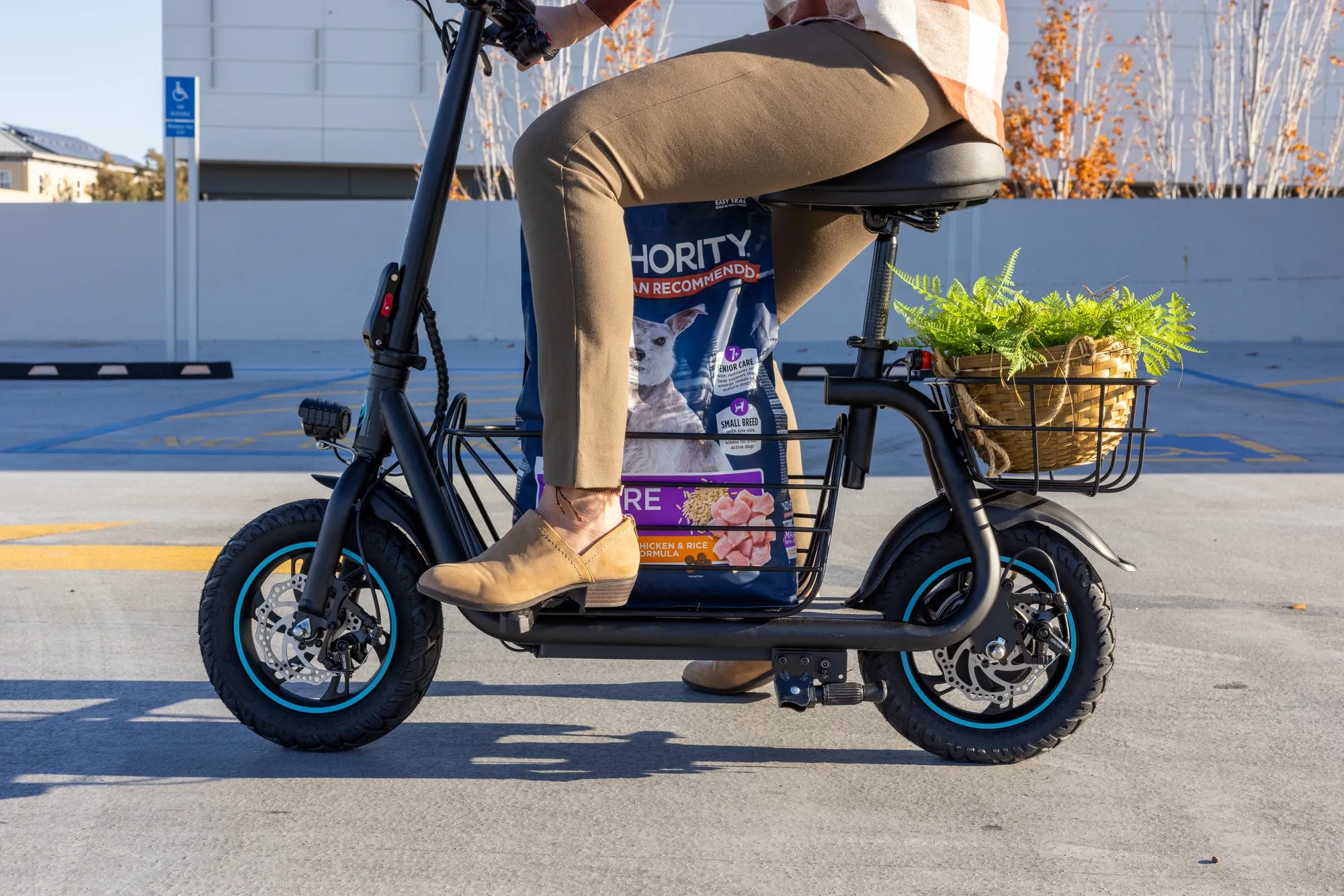
Electric scooters are transforming how people move through Irish cities. This shift represents more than a trend; it's a practical response to congestion, cost, and climate goals. This article provides a data-driven analysis of the e-scooter landscape in Ireland, covering legislation, real-world performance, safety, and total cost of ownership. You will learn how to choose a suitable model for Irish conditions, understand your legal responsibilities, and see how this mode of transport compares financially to cars and public transit.
Introduction to the E-Scooter Revolution in Ireland
Irish urban centres are witnessing a quiet revolution in personal mobility. From Dublin's quays to Cork's narrow lanes, electric scooters have become a common sight. Their growth is driven by a confluence of factors: rising fuel costs, chronic traffic congestion in city cores, and a strong national push towards sustainable transport under the Climate Action Plan.
This adoption is not merely organic; it is being shaped by evolving legislation. The Road Traffic and Roads Act 2023 provides a long-awaited legal framework, moving e-scooters from a grey area into a regulated vehicle class. This clarity is accelerating adoption, as both private owners and shared rental schemes gain legal footing.
The practical appeal is undeniable. For many, an e-scooter solves the 'first and last mile' problem—bridging the gap between home, public transport hubs, and the final destination. In a commute that might involve a bus, a Luas, and a 15-minute walk, an e-scooter can consolidate and streamline the journey significantly.
The future of urban mobility in Ireland is leaning towards lighter, cleaner, and more efficient options. Electric scooters sit at the heart of this transition, offering a flexible solution that complements existing infrastructure while reducing individual carbon footprints and travel times.
Why Electric Scooters are Ideal for Irish Commuters
The Irish commuter faces specific challenges: unpredictable weather, dense urban traffic, and often a hybrid work model requiring flexible travel. Electric scooters directly address these pain points. They offer a door-to-door solution that bypasses traffic jams and eliminates the search for parking, a significant daily hassle in cities like Dublin and Galway.
Financially, the argument is compelling. Compared to the ongoing costs of car ownership—fuel, tax, insurance, maintenance, and parking—an e-scooter's upfront cost is quickly offset. A single monthly car parking space in Dublin city centre can exceed €250, more than the typical monthly finance cost for a high-quality e-scooter.
For public transport users, an e-scooter extends your effective range. It turns a 20-minute walk from the Dart station into a 5-minute glide, making previously marginal locations more accessible. This flexibility empowers commuters to choose where they live and work with greater freedom, potentially easing housing pressure near central hubs.
The environmental benefit aligns with both national policy and individual values. With Ireland's target to cut transport emissions by 50% by 2030, switching even short car trips to zero-direct-emission vehicles like e-scooters contributes meaningfully. Each scooter on the road represents one less car idling in traffic, reducing localised air and noise pollution.
Navigating Irish Weather: Durability and Safety Considerations
Irish weather is the foremost practical concern for any rider. Reliability in damp conditions is non-negotiable. The key specification is the IP (Ingress Protection) rating. An IPX5 rating, for example, signifies protection against water jets from any direction, making it suitable for riding in rain. Models with lower ratings risk water damage to electronics and batteries.
Safety systems must be robust. Disc brakes often outperform basic electronic brakes, especially on wet paths where stopping distances increase. Wide, air-filled tyres provide better grip and shock absorption on cobbled streets and uneven surfaces compared to small, solid tyres.
Visibility is paramount. Integrated front and rear lights are essential, but additional high-visibility clothing and reflective accessories are crucial on overcast days and during Ireland's long winter evenings. A helmet is a mandatory safety investment, regardless of the legal minimum.
Regular maintenance after wet rides is simple but vital. Wiping down the deck and brakes prevents corrosion, and checking tyre pressure ensures optimal handling. Choosing a brand known for weather-resistant design, like Gyroor with its IPX5-rated models, provides inherent peace of mind for year-round commuting.
Choosing Your E-Scooter: Key Features for the Irish Market
Selecting an e-scooter for Ireland requires balancing performance with practicality. Advertised range can be optimistic; real-world range is affected by hills, rider weight, temperature, and frequent acceleration. For a typical Dublin commute (e.g., 10km round trip), a model with a 25km real-world range provides a comfortable buffer.
Motor power dictates hill-climbing ability. A 350W motor may struggle on steep inclines in places like Cork or Dun Laoghaire. A 500W motor or higher offers more consistent performance, ensuring you don't lose significant speed on gradients, which is crucial for maintaining safety in traffic.
Portability is key for mixed-mode travel. Weight and folding mechanism are critical if you plan to carry it onto a bus or train or store it under a desk. However, ultra-light models often compromise on battery size and ride stability. A weight between 15-18kg is often the best compromise.
Battery safety is the most critical technical feature. Reputable brands use battery packs from certified manufacturers with integrated Battery Management Systems (BMS) to prevent overcharging and overheating. UL certification is a leading benchmark for safety. This cannot be overlooked, as the battery is the most vital and safety-sensitive component.
| Feature | Why It Matters in Ireland | Recommended Minimum Spec |
|---|---|---|
| Real-World Range | Ensures reliable commute in hilly cities, with buffer for detours. | 25 km |
| Motor Power | Provides torque for hills and acceleration from stops in traffic. | 500W (continuous) |
| IP Water Resistance Rating | Protects electronics from persistent rain and road spray. | IPX5 |
| Braking System | Ensures safe stopping on wet cobblestones and tarmac. | Dual Braking (Disc + Electronic) |
| Battery Certification | Guarantees safety, longevity, and reliability through Irish seasons. | UL-Certified |
| Weight & Portability | Facilitates carrying onto public transport or up stairs. | ≤ 18 kg |
The Gyroor Advantage: Engineered for Reliability
For Irish riders, the choice of brand directly impacts long-term satisfaction and safety. Gyroor, a leading electric scooter and e-bike brand trusted by over 100,000 riders across North America and Europe, designs its products with durability in mind. Its engineering priorities align perfectly with Irish commuting demands.
Every Gyroor scooter uses a UL-certified battery pack, rigorously tested for over 500 charge cycles. This certification is a concrete assurance of safety, reducing risks associated with inferior power cells and ensuring the battery withstands daily charging over years of use.
The IPX5 water-resistant rating on key models is not a marketing claim but a design specification. It means the scooter's electrical components are sealed against the kind of sustained, light rain and road splash that defines a typical Irish commute, enhancing longevity and reliability.
Beyond specs, Gyroor backs its products with a reliable 1-year warranty and accessible customer support. This commitment to post-purchase peace of mind is crucial when investing in a personal transport device. It transforms the e-scooter from a disposable gadget into a dependable tool for urban mobility.
The Legal Landscape: Rules for E-Scooters in Ireland
The legal framework for electric scooters in Ireland is now established under the Road Traffic and Roads Act 2023. E-scooters are classified as "Powered Personal Transporters" (PPTs). Key rules include a maximum design speed of 25 km/h, though they are limited to 20 km/h when used in public places. It is illegal to modify a scooter to exceed these limits.
Regarding where to ride, the rules are clear. E-scooters are permitted on cycle lanes and roads. They are prohibited from footpaths. This is a critical point for rider and pedestrian safety. Riding on a footpath can result in a fixed-charge penalty. Understanding and respecting this distinction is essential for the positive integration of e-scooters into the transport ecosystem.
User requirements are straightforward. Riders must be at least 16 years old. A driving license is not required, nor is mandatory insurance or road tax. However, wearing a helmet is strongly advised. The vehicle itself must have front and rear lights, reflectors, and an audible warning device (like a bell).
Responsible riding is the cornerstone of these laws. This includes not carrying passengers, not using a mobile phone while riding, and never riding under the influence of alcohol or drugs. As the community of riders grows, adherence to these rules will ensure the long-term acceptance and safety of electric scooters Ireland as a legitimate transport mode.
Cost Analysis: E-Scooter vs. Traditional Transport in Ireland
A thorough financial comparison reveals the significant savings potential of e-scooter ownership. The analysis below assumes a 10km daily round-trip commute in Dublin, 220 days per year.
| Transport Mode | Upfront Cost | Annual Running Cost (Est.) | 5-Year Total Cost |
|---|---|---|---|
| Mid-Range E-Scooter (e.g., Gyroor) | €800 - €1,200 | €30 (Electricity) + €50 (Maintenance) | €1,150 - €1,550 |
| Dublin Bus/Leap Card Annual Ticket | €0 | €1,080 (City Centre Annual) | €5,400 |
| Car (Small Engine) | €5,000+ | €2,500 (Fuel, Tax, Insur., Maint., Parking*) | €17,500+ |
| Taxi/Ride-Hailing (One-Way Trip) | €0 | €12-€15 per trip | Prohibitively High |
*Parking cost is a highly variable but major expense for city centre commuters. The scooter's break-even point against an annual public transport pass can be under one year. Against car ownership, the savings are substantial from day one, ignoring the upfront car cost.
Beyond direct costs, time savings have economic value. An e-scooter commute is often more predictable than a bus journey subject to traffic and can be faster than a car for short trips where finding parking is time-consuming. This reliability and time efficiency contribute to the overall value proposition.
Maintenance costs for a quality e-scooter are minimal: occasional tyre replacements, brake pad changes, and software updates. Compared to the servicing, NCT, and repair costs of a car, this represents another layer of long-term savings and simplicity.
FAQ: Electric Scooters in Ireland
Do I need insurance, tax, or a license for an e-scooter?
No, currently there is no legal requirement for insurance, road tax, or a driving license to ride an e-scooter on public roads in Ireland. However, third-party personal insurance is recommended for liability protection. Always check for legal updates.
Can I ride my e-scooter on the footpath?
No. It is illegal and unsafe. E-scooters are permitted on cycle tracks and roads only. Riding on footpaths endangers pedestrians and can result in a fixed-charge penalty for the rider.
How do I maintain my scooter in wet Irish weather?
After a wet ride, wipe down the deck, stem, and brakes with a dry cloth. Ensure charging ports are dry before plugging in. Regularly check tyre pressure and brake function. Storing it in a dry place is ideal.
Where can I charge my electric scooter?
The battery is removable on most models. You charge it by plugging the supplied charger into a standard household socket. Public charging is not typically needed due to the range, but you can charge it at work or in cafes with permission.
What is the typical lifespan of an e-scooter?
With proper care, a quality e-scooter with a UL-certified battery should last 3-5 years of daily use. The battery is the key component; its capacity will gradually reduce over time (around 20% after 500 full cycles).
Are e-scooters safe for hills in cities like Cork?
Yes, if you choose a model with sufficient motor power (500W or higher) and good traction. Check the scooter's specified gradeability (e.g., 15-20 degrees). Strong braking systems are equally important for descending safely.
Conclusion: Embracing a Smarter, Greener Commute
The evidence is clear: electric scooters offer a viable, efficient, and sustainable answer to many of Ireland's urban mobility challenges. They reduce congestion, lower transport costs for individuals, and contribute to national carbon reduction targets. The future of urban mobility in Ireland is multimodal, and the e-scooter is a pivotal piece of that puzzle.
Success hinges on informed choices and responsible behaviour. Selecting a scooter based on safety certifications, weather resistance, and reliable performance—like those engineered by brands such as Gyroor—ensures a positive and long-lasting experience. Adhering to the legal framework protects both riders and the public, fostering a culture of shared respect on our roads and cycle paths.
As infrastructure continues to adapt, with more dedicated cycle lanes and potential charging points, the ecosystem for electric scooters Ireland will only improve. This is not a fleeting trend but a fundamental shift towards personal, electric, and agile transport. The journey towards smarter cities starts with individual choices that collectively make a significant impact.
Ready to explore a new way to commute? Browse the full Gyroor collection, featuring UL-certified, IPX5 water-resistant models built for reliability, at gyroorboard.com.
Electric Scooters Melbourne: The Ultimate Guide to Urban Mobility
People Riding Electric Scooters: The Future of Urban Mobility