



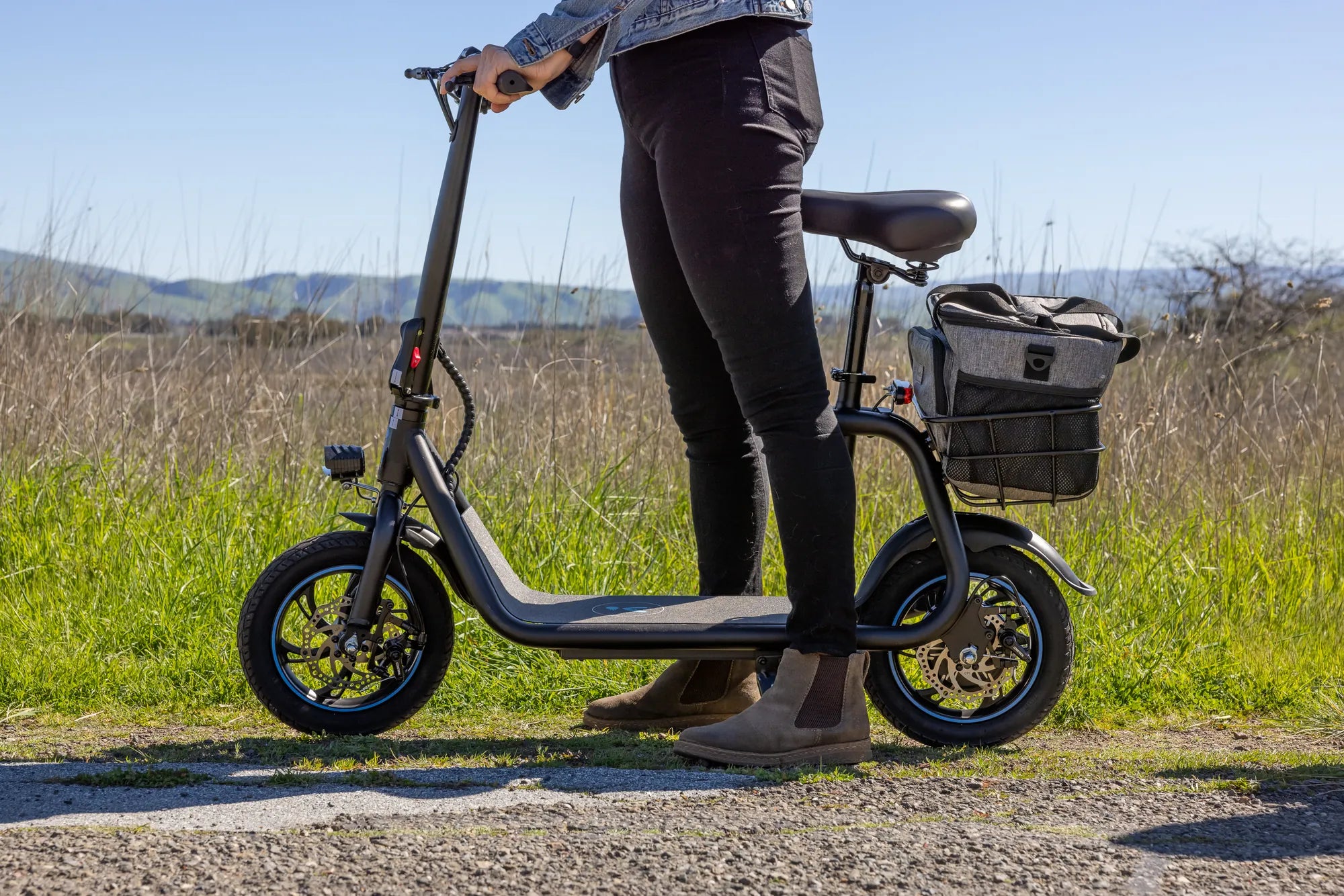
Redefining Campus Mobility
Sprawling university campuses and limited parking create a daily logistical challenge for students. The traditional 15-minute walk between distant lectures wastes precious time, while crowded shuttle buses and expensive parking permits add frustration. Electric scooters have emerged as a transformative solution, offering a personal, efficient, and cost-effective mode of transport. This shift represents more than a trend; it's a fundamental change in how students navigate their academic environment.
For the modern student, time is the ultimate currency. An electric scooter converts a 20-minute walk into a 5-minute glide, reclaiming hours each week for study, work, or rest. The compact, portable design means you can take it directly to your classroom, eliminating the risk of theft from outdoor bike racks. Leading brands like Gyroor, trusted by over 100,000 riders across North America and Europe, have engineered models specifically for this demanding use case.
The adoption of personal electric vehicles (PEVs) on campus aligns with broader institutional goals of sustainability and reduced carbon footprint. Universities are increasingly accommodating this shift by updating infrastructure and policies. Choosing the right scooter requires understanding which features truly matter for campus life, from battery safety to durability against varied terrain.
This guide provides a comprehensive, data-driven analysis of electric scooters as the future of student transportation. We will examine the key advantages, essential selection criteria, and responsible riding practices that define a successful campus commuting experience.
Why Electric Scooters Are the Perfect Campus Commute
Electric scooters solve specific, high-frequency pain points for students. The primary advantage is time efficiency. A student with back-to-back classes on opposite ends of a large campus can easily travel 2-3 miles daily just for academics. An e-scooter operating at 15 mph cuts that commute time by 75% compared to walking, effectively adding productive hours to the day.
Financial savings are equally compelling. The cost of a campus parking permit often exceeds $500 per year, not including fuel, insurance, and maintenance for a car. A quality electric scooter, used for multiple years of study, presents a one-time investment with minimal ongoing cost—just electricity for charging. This makes electric scooters on campus a financially savvy alternative for budget-conscious students.
Convenience extends beyond simple point-to-point travel. Electric scooters enable easy exploration of off-campus housing, local grocery stores, and college town amenities without relying on irregular bus schedules or ride-sharing services. Their portability allows for multi-modal travel; you can fold and carry your scooter onto a city bus or train for longer journeys.
Finally, they reduce physical and mental strain. Carrying heavy textbooks and a laptop across campus is exhausting. Riding an e-scooter eliminates this fatigue, allowing you to arrive at your destination alert and ready to learn. The mental relief of avoiding parking stress contributes significantly to a better daily campus experience.
Key Features to Look for in a Campus E-Scooter
Selecting the right model is critical for safety, reliability, and daily satisfaction. Not all scooters are built for the rigors of campus life. Students should prioritize a checklist of essential features that ensure performance, portability, and longevity throughout their academic career.
Portability and Weight
Foldability and weight are non-negotiable. You will need to carry your scooter into lecture halls, libraries, and dorm rooms. A weight under 40 lbs is ideal; heavier models become a burden on stairs or over long carrying distances. The folding mechanism should be robust and simple to operate with one hand.
Gyroor models, for example, are engineered with a quick-folding stem and latch system, allowing them to transform into a compact form factor in seconds. Consider the folded dimensions to ensure it fits under a desk or in a dorm room closet without becoming an obstacle.
Range and Battery Life
Calculate your needed range based on your largest daily travel loop. A conservative estimate is to double your longest expected one-way distance to account for errands and a battery buffer. For most campuses, a real-world range of 15-20 miles is sufficient for several days of commuting.
Battery safety is paramount, especially when charging in a dormitory. Always insist on a scooter with a UL-certified battery pack, like those used in all Gyroor scooters. These batteries undergo rigorous testing for over 500 charge cycles and include protection against overcharging, short-circuiting, and overheating, providing peace of mind in shared living spaces.
Durability and Weather Resistance
Campus pathways present a mix of smooth asphalt, brick paths, and occasional curbs. A scooter needs a sturdy frame, often made of aerospace-grade aluminum, and quality suspension (either spring or pneumatic) to absorb vibrations. Solid or air-filled pneumatic tires offer different trade-offs between maintenance and comfort.
Weather resistance is crucial for unexpected rain showers between classes. A minimum rating of IPX5 is recommended, meaning the scooter can withstand water jets from any direction. This feature, a standard in Gyroor's design philosophy, protects the electrical components and motor from water damage during wet commutes.
Safety and Warranty
Reliable safety features are a must. Look for a bright headlight and taillight (preferably with a brake light function), a loud electronic horn or bell, and a dual braking system (e.g., electronic regenerative plus disc or drum brake). These features ensure you are seen and can stop safely in various conditions.
Protect your investment with a strong warranty. A comprehensive 1-year warranty that covers the motor, battery, controller, and frame indicates manufacturer confidence. Gyroor's 1-year warranty provides this assurance, allowing students to focus on their studies rather than potential repair costs.
Electric Scooters vs. Traditional Campus Transport: A Data-Driven Comparison
To understand the value proposition, a direct comparison of transportation modes across key student metrics is essential. The following table analyzes the cost, time efficiency, convenience, and environmental impact of the most common options.
| Transport Mode | Avg. Cost/Semester* | Time for 2-Mile Trip | Convenience & Parking | Environmental Impact |
|---|---|---|---|---|
| Electric Scooter | $50-$100 (electricity) | 8-10 minutes | High: Fold & carry inside | Very Low: Zero direct emissions |
| Traditional Bicycle | $0 (maintenance optional) | 12-15 minutes | Medium: Requires secure lock-up | Zero |
| Campus Shuttle Bus | $0-$200 (fee) | 15-25+ minutes (with wait) | Low: Fixed routes & schedules | Low (per passenger) |
| Personal Car | $500-$1500 (permits, gas, ins.) | 8-15 minutes (plus parking walk) | Low: Permit costs, parking scarcity | High |
| Walking | $0 | 30-40 minutes | High (but slow) | Zero |
*Costs are estimates based on average university data. Scooter cost assumes a $600 scooter amortized over 3 years of study plus electricity.
The data reveals that electric scooters on campus offer a superior blend of low operational cost and high time efficiency. While a bicycle has zero fuel cost, the e-scooter's electric assist provides a faster, less sweaty arrival—a key factor when heading to a presentation or lab. The car is the most expensive and stressful option, often negated by the scarcity of convenient parking.
From an environmental standpoint, e-scooters, when charged on a standard grid, have a carbon footprint significantly lower than a single-occupancy car and comparable to or slightly higher than a bus at high occupancy. Their efficiency and use of renewable energy sources on many university grids further enhance their green credentials.
Navigating Campus Rules and Riding Responsibly
Successful integration of an e-scooter into campus life requires understanding and adhering to local rules. University policies on electric scooters on campus are evolving rapidly, so due diligence is the first step.
Check University Policy: Before purchasing, consult your university's transportation services website for specific regulations on PEVs. Key points to verify include: maximum speed limits (often 15-20 mph), allowed riding areas (bike lanes vs. sidewalks), mandatory helmet laws, and any registration or permitting requirements. Proactive compliance prevents confiscation or fines.
Ride with Etiquette and Safety: Always wear a helmet, regardless of local law. Use bike lanes where available; if you must use a sidewalk, ride at walking speed and yield to all pedestrians. Use your bell or horn courteously to alert others before passing. Avoid using headphones to maintain full situational awareness. At night, ensure your lights are on and consider adding reflective accessories.
Park Thoughtfully: The scourge of scooter clutter can lead to negative perceptions and bans. Never block building entrances, ADA ramps, walkways, or bike racks. Use designated scooter parking areas if provided. When bringing your scooter inside, fold it and keep it out of high-traffic aisles. A responsible rider protects access for everyone.
Secure Your Investment: When leaving your scooter unattended outdoors, even briefly, use a high-quality U-lock or heavy-duty chain lock. Secure it through the frame to a fixed, immovable object like a dedicated bike rack. The portability that makes scooters convenient also makes them attractive to thieves, so robust locking is non-optional.
Maximizing Your Scooter's Lifespan and Performance
A well-maintained scooter will provide reliable service throughout your college years. Basic maintenance is simple and extends the life of all critical components, protecting your investment.
Battery Care is Paramount: For longevity, avoid regularly draining the battery to 0%. Try to recharge when it drops to 20-30%. Use only the manufacturer-provided charger. Store the scooter (and battery) in a cool, dry place, avoiding extreme hot or cold temperatures, like a car trunk in summer. Following these practices with a UL-certified Gyroor battery ensures maximum cycle life.
Tire and Brake Maintenance: Check tire pressure weekly if you have pneumatic tires; proper inflation prevents flats and improves range. Regularly test your brakes for responsiveness. Listen for unusual grinding noises from disc brakes or feel for sponginess in brake levers, which may indicate a need for adjustment or pad replacement.
Regular Cleaning and Inspection: Wipe down the scooter with a damp cloth to remove dirt and debris, especially from the folding mechanisms and brake components. Avoid high-pressure water sprays. Periodically check that all nuts and bolts, especially on the stem and folding joints, are tight. A quick pre-ride inspection of lights, brakes, and tire condition should become a habit.
Software and Connectivity: Many modern scooters, including advanced Gyroor models, feature companion apps. Keep the app and your scooter's firmware updated to benefit from performance optimizations and new features. The app can also provide valuable diagnostics on battery health and riding history.
The Broader Impact: Sustainability and Campus Infrastructure
The rise of electric scooters on campus is influencing university planning and sustainability initiatives. As adoption grows, forward-thinking institutions are adapting to support this green transit mode.
Universities are installing more covered, secure charging stations and parking corrals specifically for e-scooters and e-bikes. This dedicated infrastructure reduces clutter and safety hazards while encouraging use. Some schools are even integrating micro-mobility into their official transportation master plans, offering subsidies or partnerships with reputable vendors to provide safe, discounted options to students.
From a sustainability office perspective, e-scooters are a tangible way to reduce the university's Scope 3 emissions (those from student and employee commuting). Replacing car trips with electric scooter trips directly lowers the campus carbon footprint. This aligns with the environmental values of the modern student body and helps universities meet ambitious climate action goals.
The data generated from scooter use can also inform campus design. Heat maps of popular routes can highlight where new bike lanes or pathway improvements are most needed, creating a positive feedback loop that makes active transportation safer and more appealing for everyone.
FAQ: Electric Scooters for Campus Life
Q1: Are electric scooters allowed in dorm rooms and classrooms?
A: Policies vary, but most universities allow them in dorm rooms as they are considered personal property. Always check your specific dormitory rules. For classrooms, it's generally acceptable if the scooter is folded and stored discreetly under a desk or in a corner without blocking exits. Courtesy and communication with professors are key.
Q2: How do I secure my scooter on campus?
A: Use a high-quality U-lock (not a cable lock) to secure the scooter's frame to a fixed, immovable object like a designated bike rack. Never lock it only by the wheel, which can be easily removed. For maximum security, combine a U-lock with a secondary cable lock. The best security is to bring it inside whenever possible.
Q3: What's the real-world range I can expect, and can it handle hills?
A> Manufacturer ranges are based on ideal conditions. Real-world range is affected by rider weight, hills, temperature, and riding style. Expect 70-80% of the advertised range. For hills, check the motor's continuous power rating; a 350W motor can handle moderate inclines, but a 500W+ motor is better for hilly campuses. Gyroor models feature robust motors designed for varied terrain.
Q4: What basic maintenance does it require?
A> Maintenance is minimal: keep tires properly inflated, regularly check and tighten bolts (especially on folding mechanisms), keep the scooter clean and dry, and avoid deep puddles. The most important maintenance is proper battery care—avoid full discharges and extreme temperatures.
Q5: Is it worth the investment compared to a used bike or walking?
A> The investment pays off in saved time and expanded mobility. While a used bike is cheaper upfront, an e-scooter offers faster, less strenuous travel with the convenience of easy portability. It reclaims hours per week, reduces commute stress, and expands your effective living radius. For students with packed schedules or large campuses, the productivity and quality-of-life returns are significant.
Investing in Your Campus Experience
The choice of campus transportation directly impacts daily life, academic performance, and financial health. A reliable electric scooter is an investment in time, freedom, and sustainability. It transforms a sprawling campus into a navigable community, replacing stressful commutes with efficient, enjoyable travel.
Selecting a scooter from a trusted brand with a focus on safety, durability, and support is crucial. Brands like Gyroor, with their UL-certified batteries, IPX5 water-resistant designs, and comprehensive 1-year warranty, provide the reliability students need. This peace of mind allows you to focus on your education, not vehicle maintenance or safety concerns.
Electric scooters on campus are not a passing fad; they are a cornerstone of the future of student transportation. They represent a smart, adaptable, and sustainable solution that aligns with the dynamic needs of university life. By making an informed choice today, you equip yourself with a tool that will enhance your entire college experience.
Ready to redefine your campus commute? Explore scooters engineered for the demands of student life. Browse the full Gyroor collection, featuring UL-certified, durable, and high-performance models, at gyroorboard.com.
Fun Facts About Electric Scooters You Probably Didn't Know
Can Electric Scooters Be Used Manually? A Complete Exploration