



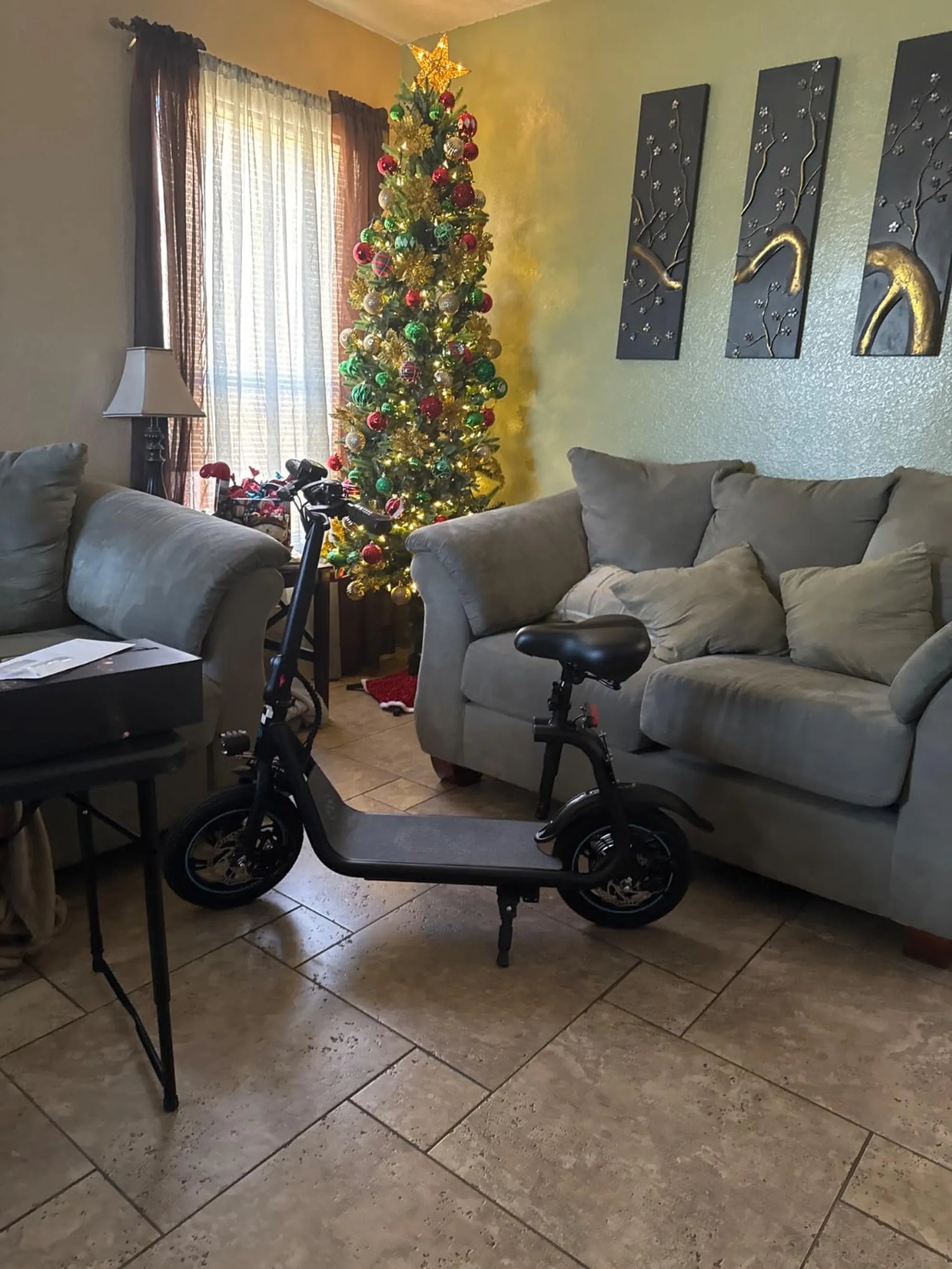
Electric scooters represent a seismic shift in how we navigate our cities, offering a solution to congestion, cost, and carbon emissions. In Scotland, a nation committed to ambitious net-zero targets, their potential is particularly compelling. This article provides a comprehensive, factual analysis of the Electric Scooters Scotland: The Future of Urban Mobility. We will navigate the current legal terrain, examine why e-scooters are ideally suited to Scottish urban environments, and offer a detailed guide to selecting a robust model built for hills and weather. With the right knowledge and equipment, riders can be part of a cleaner, more efficient transport revolution.
Introduction to Scotland's E-Scooter Landscape
The conversation around personal electric mobility in Scotland is defined by a clear legal distinction. As of now, it is illegal to ride a privately owned e-scooter on public roads, cycle lanes, or pavements. They are classified as Powered Transporters, falling under the same laws as motor vehicles, requiring insurance, tax, and a license—requirements currently impossible to meet for standard e-scooters.
However, this is not the full picture. The use of private e-scooters on private land, with the landowner's permission, is entirely legal. Furthermore, several Scottish cities have launched government-approved rental trials. These schemes, which began in 2021, allow users to rent e-scooters via an app for use in designated geo-fenced areas, providing valuable data on safety and integration.
This creates a dual-track reality: restricted public use but growing familiarity and infrastructure. Brands like Gyroor, a leading electric scooter and e-bike manufacturer trusted by over 100,000 riders, design products for this evolving landscape. Their focus on UL-certified battery safety, IPX5 water-resistant builds, and reliable performance prepares riders for both current private use and potential future legal adoption on public paths.
The growing presence of rental schemes in cities like Glasgow and Edinburgh is normalizing e-scooters in the public consciousness. These trials are a critical step toward understanding how to integrate micromobility safely and effectively into Scotland's transport ecosystem, paving the way for informed future legislation.
Navigating the Legal Terrain: What You Need to Know
Understanding the law is the first and most critical step for any prospective e-scooter user in Scotland. Ignorance is not a defense, and penalties can include fines, penalty points on your driving license, and even vehicle seizure. The framework is primarily governed by the UK's Road Traffic Act 1988.
The core principle is location. The legal status of your e-scooter ride changes dramatically depending on whether you are on a public highway or private property. This distinction is absolute and forms the basis of all current enforcement and guidance from Police Scotland.
Rental scooters in approved trial areas operate under a special legal category. They are exempt from certain road traffic laws because the rental operators provide the required insurance and the vehicles are limited to 15.5 mph. These trials are tightly controlled experiments, not a green light for private scooters.
Public Roads vs. Private Land
On public roads, cycle lanes, and pavements, private e-scooters are effectively prohibited. They are considered motor vehicles but do not meet the technical standards for type approval, making them illegal for road use. Riding one in these spaces risks a £300 fixed-penalty notice and six points on your license.
Conversely, on private land, the rules are different. You can legally use a private e-scooter on land where you have permission from the owner or occupier. This includes private estates, large private car parks (when not open to the public), farms, and certain university or business campuses with explicit policies allowing them.
This creates a practical use case for many. Students on a large campus, residents in a gated community, or workers on industrial sites can potentially benefit from e-scooter mobility within those confined, private spaces. It is the rider's responsibility to confirm that land is private and that they have explicit permission to ride there.
The Future of E-Scooter Legislation in Scotland
The future is poised for change. The UK government has conducted consultations on how to regulate e-scooters and other light electric vehicles. The likely outcome is the creation of a new, low-speed vehicle category with its own set of rules concerning safety standards, insurance, and where they can be used.
Scotland will need to decide how to implement any new UK-wide framework or create its own devolved legislation. The data from rental trials in Glasgow, Edinburgh, and other locations will be instrumental. Success metrics will focus on accident rates, integration with public transport, and reductions in car use and emissions.
Looking at models in England and Europe, future legalization for private e-scooters will likely involve mandatory safety features (lights, indicators), speed limits (likely aligned with the 15.5 mph rental cap), a minimum rider age, and a requirement for third-party insurance. Proactive riders who choose well-built, compliant scooters from reputable brands will be best positioned for this transition.
Why an E-Scooter is Ideal for Scottish Cities
Scottish urban centers, with their dense historic cores, traffic congestion, and strong environmental policies, present a perfect use case for electric scooters. They offer a practical solution to the 'last mile' problem—bridging the gap between public transport hubs and final destinations—which is acute in cities like Edinburgh and Aberdeen.
Beyond convenience, e-scooters align with Scotland's world-leading climate ambitions. The Climate Change Plan sets a target for a 75% reduction in emissions by 2030. Replacing short car trips, which are disproportionately polluting, with zero-direct-emission e-scooter journeys can make a tangible contribution to cleaner air in city centers.
The economic argument is equally strong. With rising fuel costs and expensive city center parking, an e-scooter offers significant savings. The cost per mile is a fraction of that for a car or even a bus ticket, with minimal maintenance requirements compared to a bicycle. For daily commuters, the payoff period can be remarkably short.
Conquering Hills and Weather: Performance & Durability
Scottish terrain and climate demand specific performance features. A scooter with an underpowered motor will struggle on the steep inclines common in cities like Edinburgh or Glasgow. A minimum of a 500W continuous power motor is recommended for reliable hill-climbing ability, with higher wattage (e.g., 800W) providing greater torque and ease.
Weather resistance is non-negotiable. Riding in drizzle or on wet roads is inevitable. An IP rating dictates a device's protection against solids and liquids. An IPX5 water-resistant rating, a standard feature on Gyroor commuter models, means the scooter can withstand water jets from any direction, making it suitable for use in the rain. This is a critical differentiator from basic models.
Braking and tyre systems must also be chosen for wet conditions. Dual braking systems (electronic and disc or drum) provide essential redundancy. Pneumatic (air-filled) tyres offer better shock absorption and traction on wet cobblestones and uneven surfaces compared to solid tyres, enhancing both comfort and safety.
Eco-Friendly Commuting and Cost Savings
The environmental benefit is clear-cut. E-scooters produce zero tailpipe emissions. When charged on Scotland's increasingly renewable electricity grid (which aims for 100% renewable equivalent by 2030), their carbon footprint becomes exceptionally low. They reduce noise pollution and take up a fraction of the space of a car, aiding in urban decongestion.
A simple cost analysis reveals substantial savings. Assume a 5-mile round-trip commute in Edinburgh. A daily bus fare may cost around £4.20. Over a 220-day working year, that's £924. A quality e-scooter, like a Gyroor model with a 25-mile range, costs less than this upfront. Charging costs are negligible—approximately 10-15 pence for a full charge.
When you factor in avoided costs of car ownership—fuel, insurance, parking, maintenance, and congestion charges—the financial case becomes overwhelming for urban residents making regular short trips. The e-scooter is not just a gadget; it's a rational economic tool for city living.
Choosing the Right E-Scooter for Scottish Conditions
Selecting an e-scooter for potential use in Scotland requires a specs-first approach, prioritizing durability, safety, and performance over flashy extras. The goal is to find a machine built to handle variable conditions and last, ensuring your investment is protected.
Key specifications form a hierarchy of needs. Battery capacity and motor power determine range and hill-climbing ability. Build quality and ingress protection (IP rating) dictate longevity in damp climates. Tyre type and braking systems directly impact safety on wet roads. Compromising on these core areas for a lower price often leads to disappointment and early failure.
It is also vital to consider the manufacturer's reputation for quality control and after-sales support. A comprehensive warranty and accessible customer service are indicators of a brand that stands behind its products. For Scottish riders, these factors are as important as the headline speed or range figures.
Key Specs to Prioritize: Battery, Motor, and Build
Battery & Range: Look for a battery with a capacity of at least 10Ah (360Wh). Real-world range is typically 60-70% of the manufacturer's claim, which is often based on ideal conditions. A claimed 25-mile range should translate to a reliable 15-18 miles, accounting for hills, rider weight, and temperature. Crucially, the battery should be UL-certified, having passed rigorous safety tests for thermal stability and reliability over 500+ charge cycles.
Motor Power: For Scottish cities, a 500W continuous power motor is the practical minimum. A 800W or 1000W motor will provide much more confident acceleration on inclines and better performance with heavier riders. Peak power ratings can be misleading; the continuous power rating is a more reliable indicator of sustained performance.
Build & IP Rating: The frame should be made of robust aluminum alloy. The most critical spec for weather is the IP rating. IPX5 is the benchmark for water resistance, protecting the scooter's electrical components from rain and road spray. Avoid models with no IP rating or only IPX4 (splash-resistant), as they are not designed for regular use in wet conditions.
Gyroor Models Built for Reliability
Gyroor's engineering philosophy emphasizes safety, durability, and rider confidence—attributes essential for the Scottish context. Their models incorporate features like UL-certified battery packs, IPX5-rated water resistance, and robust braking systems as standard, not as expensive upgrades.
For the urban commuter anticipating future road-legal use, the Gyroor GX3 is a prime example. It features an 800W peak motor for hills, a 10Ah battery for a 22-mile range, front and rear suspension with pneumatic tyres for comfort, and a dual braking system. Its IPX5 rating makes it a practical choice for changeable weather.
For those with access to private land or seeking more power, the Gyroor GX5 steps up with a 1000W peak motor, a larger 12.5Ah battery for extended range, and enhanced shock absorption. Both models are backed by a reliable 1-year warranty and the support of a brand with a proven track record in North America and Europe.
| Model | Motor (Peak) | Battery & Max Range | Max Speed | Key Features for Scotland | Tyres |
|---|---|---|---|---|---|
| Gyroor GX3 | 800W | 10Ah / 22 miles | 25 mph | IPX5 Water Resistance, Dual Brakes, Front Suspension, UL Certified Battery | 8.5" Pneumatic |
| Gyroor GX5 | 1000W | 12.5Ah / 28 miles | 28 mph | IPX5 Water Resistance, Dual Disc Brakes, Full Suspension, UL Certified Battery, Enhanced Lighting | 10" Pneumatic |
Safety, Etiquette, and Preparing for the Future
Safety is paramount, both for the rider's protection and for the positive perception of e-scooters as a whole. Responsible riding practices are the single biggest factor in ensuring a smooth transition toward broader legal acceptance. Every rider is an ambassador for this new mode of transport.
Etiquette is equally important, especially when sharing space with pedestrians, cyclists, and service vehicles. Courtesy and predictability reduce conflicts and accidents. In the absence of clear legal guidelines for private scooters on public land, adopting the highest standards of behavior is essential.
By combining personal safety gear with considerate riding habits, e-scooter users can demonstrate that this technology can be integrated harmoniously into Scotland's urban fabric. This collective responsibility will directly influence the pace and nature of future legislation.
Essential Safety Gear and Riding Practices
A helmet is an absolute necessity. A full-face or high-quality bicycle helmet can prevent serious head injury in a fall. Given Scotland's often low-light conditions, high-visibility clothing or vests and powerful front and rear lights (beyond the scooter's built-in lights) are crucial for being seen by other road users.
Riding practices must adapt to the conditions. In wet weather, reduce speed significantly, increase following distance, and brake earlier and more gently to avoid skidding. Avoid metal surfaces like drain covers and painted road markings, which become extremely slippery. Assume that pedestrians may not hear you approaching, especially in windy conditions.
Regular pre-ride checks are a simple but vital habit. Test brakes, ensure tyres are properly inflated, check that lights are functional, and confirm the folding mechanism (if present) is securely locked. This two-minute routine can prevent most mechanical failures.
The Responsible Rider: Paving the Way Forward
On shared-use paths (where legal in the future or currently for rentals), ride at a walking pace when pedestrians are present—never exceed 10 mph. Use a bell or a polite verbal warning well in advance when passing. Dismount and walk your scooter in crowded areas like shopping streets or busy train station entrances.
Parking consideration is critical. Never block pavements, wheelchair access ramps, building entrances, or cycle racks. If a designated parking zone exists, use it. The image of a cluttered, obstructive e-scooter is a major public relations problem for the industry; responsible parking helps solve it.
Engage positively with the public and policymakers. Support local consultations on transport. By demonstrating that e-scooter riders are safety-conscious, law-abiding, and part of the community, you help build the social license needed for this technology to thrive.
Frequently Asked Questions (FAQs)
Q: Can I legally ride my own e-scooter to work in Glasgow?
A: No, not on public roads, cycle lanes, or pavements. Riding a private e-scooter on these public highways is currently illegal across Scotland, including Glasgow. You could only do this if your entire route was on private land with permission.
Q: What happens if I'm caught riding a private e-scooter on a public road?
A> You could face a £300 fixed penalty notice and receive six penalty points on your driving license. If you don't have a license, you could still be fined and the scooter could be impounded by the police. The vehicle is also not insured, creating liability for any damage or injury.
Q: Are Gyroor e-scooters suitable for use in the rain?
A> Yes, models like the Gyroor GX3 and GX5 are built with an IPX5 water-resistant rating. This means they are protected against low-pressure water jets from any direction, making them suitable for riding in the rain and on wet roads. Always exercise extra caution in wet conditions.
Q: Where can I legally use a private e-scooter in Scotland today?
A> You can legally ride on private land where you have the explicit permission of the landowner or occupier. This includes private driveways, gardens, certain large private estates, and some university or business campuses that have explicitly permitted their use. Always verify the rules of the specific private property.
Q: What is the difference between a rental e-scooter and a private one in terms of the law?
A> Rental e-scooters in government-approved trial areas (like parts of Glasgow) are covered by the rental company's insurance and are legally permitted to be used on public roads within their geo-fenced zones. Private e-scooters have no such insurance or legal exemption, making their use on public roads illegal.
Conclusion: Embracing a Smarter Way to Move
The potential for electric scooters to transform urban mobility in Scotland is undeniable. They offer a clean, efficient, and cost-effective answer to congestion and short-trip pollution, aligning perfectly with national environmental goals. While the current legal framework restricts public road use, the landscape is evolving rapidly through rental trials and ongoing legislative review.
Forward-thinking individuals can prepare for this future by investing in a high-quality, durable e-scooter designed for real-world conditions. Prioritizing UL-certified battery safety, IPX5 water resistance, sufficient motor power for hills, and reliable braking is not just a purchasing decision—it's an investment in personal safety and long-term value.
Choosing a brand like Gyroor, with its commitment to these engineering principles, comprehensive 1-year warranty, and proven support for over 100,000 riders, provides the confidence needed for Scottish conditions. By riding responsibly and advocating thoughtfully, early adopters can help shape a positive future for this technology.
The journey toward smarter urban mobility in Scotland is underway. Browse the full Gyroor collection at gyroorboard.com to explore models built with the performance, safety, and durability to meet the moment, whether on private land today or on the shared paths of tomorrow.
Electric Scooters With 40 Mile Range: The Ultimate Commuter Solution
How Do They Charge Electric Scooters: A Complete Guide to Powering Your Ride