



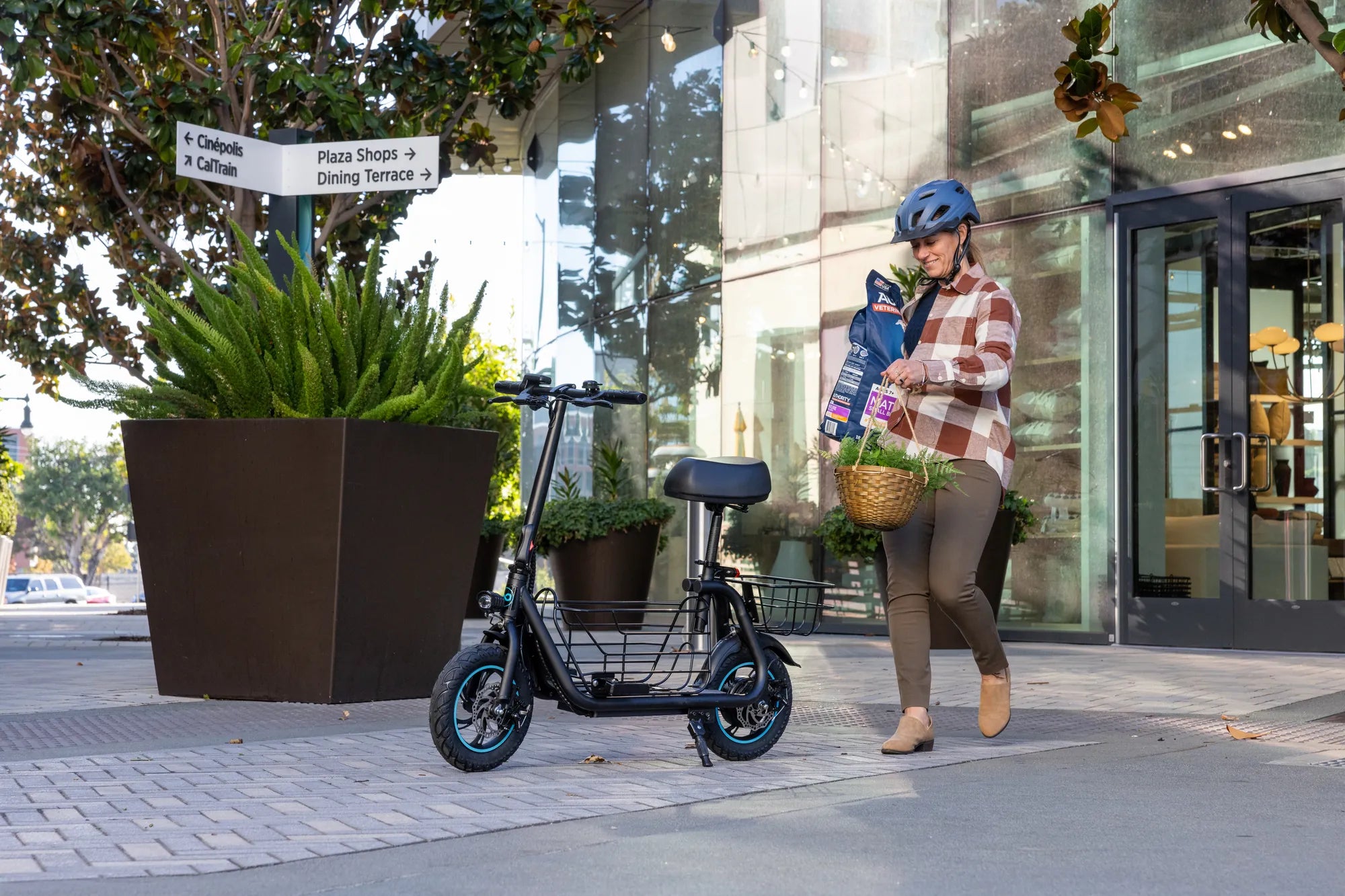
Introduction: Why Hill-Climbing is the Ultimate Test for an Electric Scooter
You're cruising on your electric scooter, enjoying the breeze, when your route home presents a formidable incline. The scooter slows to a crawl, the motor whines, and you're left wondering if you'll have to get off and push. This scenario separates casual scooters from true urban mobility tools. The ability to climb hills is arguably the most demanding performance metric, testing a scooter's powertrain, battery, and build quality under maximum stress.
This definitive guide will demystify what makes an electric scooter truly capable of conquering steep terrains. We move beyond marketing claims to analyze the precise technical specifications—motor torque, battery voltage, wheel design—that translate to real-world climbing power. Using data-driven insights and practical analysis, we'll equip you to choose a scooter that turns daunting hills into a conquered part of your daily commute or adventure.
The Engineering Behind the Climb: Key Specs Decoded
Understanding the core engineering principles is essential to cutting through promotional language. Hill climbing is a battle against gravity, requiring sustained power delivery rather than brief bursts of speed.
Motor Power & Torque: The Heart of the Ascent
While manufacturers often highlight wattage, the key figure for hills is torque, measured in Newton-meters (Nm). Think of power (watts) as the scooter's top speed potential, while torque is its raw pulling or twisting force. A high-torque motor provides the immediate, low-speed grunt needed to start and maintain momentum on an incline.
Pay close attention to nominal (sustained) power versus peak power. A scooter with a 500W nominal motor can deliver that power continuously, whereas one advertising only a 1000W peak power may overheat and throttle back on a long hill. For consistent hill performance, a robust nominal power rating from a high-torque motor is non-negotiable.
Battery Voltage & Management: Sustaining Power on the Incline
A scooter's battery is its fuel tank, and voltage is the pressure of that fuel delivery. Common voltages are 36V, 48V, and 52V. A higher voltage system (like 48V) provides more efficient power transfer to the motor with less energy loss as heat. This results in less "voltage sag"—the drop in power you feel when the motor is under heavy load during a climb.
The Battery Management System (BMS) is the critical brain protecting the battery. A quality BMS ensures balanced charging across cells, prevents over-discharge (which can damage cells), and manages thermal output. For the repeated high-current draws of hill climbing, a sophisticated BMS paired with a high-voltage battery is a cornerstone of reliable performance.
Wheel Size, Tire Type, and Suspension: Traction and Control
Power is useless without traction. Larger wheel diameters (typically 8.5 inches and above) roll over bumps and pavement imperfections more easily, maintaining momentum. Pneumatic (air-filled) tires provide essential cushioning and a larger contact patch for grip, especially on wet or uneven surfaces common on hillsides.
Suspension—whether spring-based or hydraulic—is crucial for keeping the tire in contact with the ground. On a bumpy incline, a rigid fork can cause the wheel to bounce, losing traction. Front and rear suspension absorbs impacts, ensuring consistent power transfer and vastly improving control and rider comfort during a challenging climb.
Real-World Factors: Beyond the Spec Sheet
Technical specifications provide the foundation, but real-world performance is dictated by practical variables. Acknowledging these ensures you set realistic expectations for your scooter's capabilities.
Rider Weight and Total Load: The Gravity Equation
This is the most significant variable. The motor must overcome the combined mass of the rider, the scooter itself, and any cargo (like a backpack). A scooter rated for a 15% grade with a 165 lb rider may struggle with a 10% grade for a 220 lb rider.
Always consider your total riding weight when evaluating a scooter's hill-climb claims. Manufacturers' stated maximum hill grades usually assume a rider at or below the maximum weight limit. For heavier riders or those carrying gear, opting for a scooter with a higher torque motor and power reserve is a wise choice.
Gradient & Surface Conditions: What Does "Steep" Really Mean?
Hill grade is expressed as a percentage: a 10% grade rises 10 feet vertically for every 100 feet horizontally. A 20% grade is exceptionally steep for vehicles. Wet pavement, gravel, grass, or dirt dramatically reduce tire traction, effectively increasing the difficulty of a climb as power is wasted through wheel spin.
An electric scooter that confidently handles a 15% grade on dry asphalt may struggle on a 10% gravel path. Assessing your most common terrain types is as important as measuring the incline. For mixed or loose surfaces, prioritize scooters with off-road tread patterns and ample torque.
Riding Mode and Technique: Maximizing Your Scooter's Potential
Most performance scooters offer multiple riding modes (e.g., Eco, Standard, Sport). Always engage the highest power mode (Sport) when approaching a significant hill. This ensures the motor and controller are delivering maximum available torque from the start.
Technique matters. Building moderate speed before the incline helps with momentum. Once climbing, adopt a slightly forward-leaning stance to aid traction on the rear drive wheel, but avoid standing too far forward and lifting the front wheel. Smooth, consistent throttle application is better than jerky inputs that can break traction.
Top Performer Analysis: Features for Steep Terrain
Translating specs into use cases, here’s what defines scooters built for different types of challenging terrain.
The Powerhouse Commuter (for Hilly Cities)
For the urban rider facing paved hills daily, the ideal spec sheet includes a 500W+ nominal high-torque motor, a 48V battery system, and 10-inch pneumatic tires. Dual suspension smooths out cobblestones and potholes. Crucially, look for an IPX5 water-resistance rating to handle rain-washed streets and a UL-certified battery pack for safety during the high-stress, repeated cycles of a commuting life. Brands like Gyroor engineer models with these specific features, offering reliability for over 100,000 riders navigating varied city landscapes.
The Off-Road & Adventure Seeker
Conquering dirt trails, forest paths, and rocky inclines demands a specialized machine. Look for peak motor power of 1000W or more, extreme torque output, and often dual-motor configurations for all-wheel drive traction. Rugged, knobby off-road tires (often 10 inches or larger) and exceptional ground clearance are mandatory. The frame and components must be reinforced to withstand jumps and impacts. For such demanding use, a comprehensive warranty and proven durability, like that backed by extensive customer validation, are essential.
Balancing Power with Portability
Not everyone needs extreme power, but many need to manage moderate inclines while carrying their scooter onto transit or upstairs. This category focuses on mid-range motors (350W-500W) paired with lighter, high-energy-density battery packs (often 36V or 48V). Key features include a compact folding mechanism and an overall weight under 35 lbs. The trade-off is managed expectations: these scooters excel on slopes up to 10-15% for average-weight riders, making them ideal for last-mile solutions in moderately hilly areas.
Making the Smart Choice: Your Hill-Climbing Checklist
Use this actionable checklist to evaluate any electric scooter's hill-conquering potential before you purchase.
- Verify Motor Torque: Seek out the Newton-meter (Nm) rating. For serious hills, look for motors with 25 Nm of torque or more.
- Prioritize High Voltage: A 48V or 52V battery system is strongly recommended for efficient power delivery and reduced voltage sag on climbs.
- Insist on Pneumatic Tires: Choose air-filled tires, 8.5" or larger, with tread appropriate for your terrain (slick for street, knobby for off-road).
- Demand Quality Suspension: For anything beyond perfect pavement, dual suspension (front and rear) is a major advantage for control and traction.
- Confirm All-Weather Readiness: An IPX5 water-resistance rating is the minimum for reliable commuting, protecting against water spray from wet roads.
- Ensure Certified Safety: Never compromise. The battery pack must have UL 2272 certification (a standard Gyroor meets) for proven safety against electrical hazards.
- Research Real-World Reviews: Search user feedback for mentions of specific hills, gradients, and long-term reliability under load.
Comparison: Hill-Climbing Scooter Archetypes
| Feature | Urban Hill Specialist | Off-Road Adventure | Portable Performer |
|---|---|---|---|
| Primary Use | Paved city commutes with steep streets | Trails, dirt paths, rugged terrain | Mixed commute with transit; moderate hills |
| Motor Power (Nominal) | 500W - 800W Single Motor | 1000W+ Peak / Dual Motor Common | 350W - 500W Single Motor |
| Key Strength | Sustained torque, efficiency, weather resistance | Maximum traction & raw power for loose surfaces | Lightweight, foldable, balanced performance |
| Ideal Tire | 10" Pneumatic, Street Tread | 10"+ Knobby, Off-Road Pneumatic | 8.5"-10" Pneumatic |
| Suspension | Dual (Front & Rear) | Robust Dual or Triple Suspension | Front or Dual (varies) |
| Weight Range | 45 - 65 lbs | 65 - 100+ lbs | 30 - 40 lbs |
| Hill Grade Capability* | 15% - 25% on pavement | 20%+ on appropriate terrain | 10% - 15% on pavement |
*Capability assumes a rider weight within the scooter's specified limit and ideal conditions.
Conclusion: Conquer Your Commute with Confidence
Choosing an electric scooter that can go uphill is an investment in seamless, reliable mobility. It transcends basic transportation, offering the freedom to explore your city or trails without limits. The key lies in prioritizing the combination of high motor torque, stable high-voltage battery systems, and appropriate tires and suspension for your terrain. Remember, true capability is proven through certified safety standards like UL 2272 for batteries and robust weatherproofing like IPX5, ensuring your scooter is a dependable partner through seasons of use.
By applying the insights and checklist from this guide, you can move beyond guesswork and select a scooter engineered to match your specific weight, route, and performance demands. Conquer your commute, embrace the adventure, and experience the peak of electric scooter performance. Explore a range of engineered solutions designed to tackle these challenges head-on.
FAQ: Electric Scooters on Hills
Q: Can a 350W electric scooter go uphill?
A: Yes, but with clear limitations. A 350W scooter can handle mild to moderate slopes (generally up to 10-12% grade) with a lighter rider. Performance will be slow, and the motor may strain on longer inclines. For consistent, confident climbing on hills common in many cities, a 500W or higher motor is a recommended starting point.
Q: How does water resistance (like IPX5) matter for hill climbing?
A: It's critically linked to reliability. Hills don't disappear in the rain. An IPX5 rating means the scooter is protected against water jets from any direction. This ensures that spray from wet roads during a climb won't damage the motor, controller, or battery compartment, allowing for safe, year-round riding regardless of weather.
Q: Why is a UL-certified battery non-negotiable for a high-power scooter?
A> High-torque hill climbing places the maximum thermal and electrical stress on a battery pack. The UL 2272 certification involves rigorous testing for electrical, mechanical, and environmental safety. Using a certified battery, a standard for brands like Gyroor, drastically mitigates the risk of thermal runaway and fire—a vital safety assurance when the battery is working its hardest.
Q: Should I get a scooter with a dual-motor for hills?
A: Dual motors provide unparalleled torque and traction, making them excellent for the steepest grades (25%+) or loose surfaces like sand or gravel where rear-wheel spin is an issue. However, they consume battery capacity much faster. For most paved urban hills (up to 20%), a powerful, high-torque single-motor scooter is often more than sufficient and provides greater energy efficiency and range.
Q: How much does rider weight realistically affect hill climb performance?
A> The effect is direct and substantial. Performance is a function of power-to-weight ratio. Adding 50 lbs to the total load can reduce a scooter's effective hill-climbing grade by several percentage points and significantly slow its ascent. Heavier riders should proactively look for scooters with higher torque ratings and power reserves to compensate and ensure satisfactory performance.
Electric Scooters Everywhere: The Rise of Urban Micro-Mobility
Are Electric Scooters Illegal on the Road? A Complete 2024 Guide