



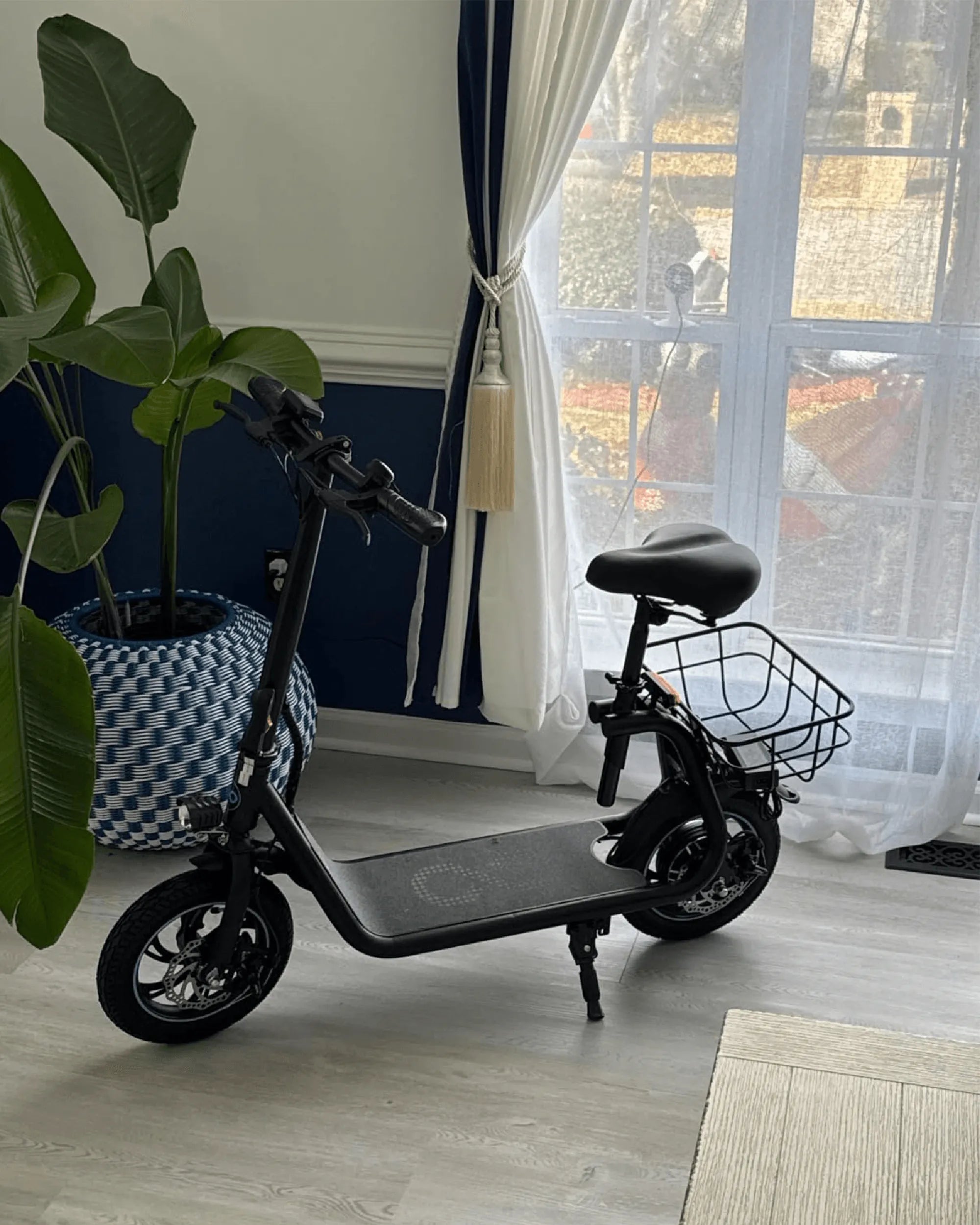
Introduction: The 100 MPH Electric Scooter – Engineering Marvel or Urban Reality?
The concept of an electric scooter that can reach 100 MPH captures the imagination, promising motorcycle-like thrills from a compact, personal vehicle. It represents the pinnacle of performance in the micro-mobility sector, a testament to rapid advancements in battery density, motor power, and controller technology. However, the leap from engineering possibility to practical, legal urban mobility is vast and fraught with significant challenges.
This article will dissect the reality behind electric scooters that go 100 MPH, separating cutting-edge innovation from daily usability. We will explore the extreme engineering required, the complex web of global regulations that restrict their use, and the critical safety considerations that separate these machines from standard commuter scooters. For brands committed to real-world riding, like Gyroor, the focus remains on enhancing urban mobility through reliable, safe, and legally compliant vehicles that riders can actually use every day.
The Engineering Behind the Speed: What Powers a 100 MPH Scooter?
Achieving triple-digit speeds on a scooter platform demands a complete re-engineering of every core component, far beyond the specifications of consumer commuter models. It's a shift from personal transportation to a performance vehicle category. The foundation is a high-voltage battery system, typically 72V or higher, capable of delivering immense, sustained current to power hungry motors.
Dual or even triple motors are standard, with each often rated between 3000W to 5000W. This combined power output, frequently exceeding 8000W total, is what provides the necessary torque and top-end speed. These motors are paired with high-performance electronic speed controllers (ESCs) that can manage the enormous phase currents without overheating. The physical chassis must also evolve, utilizing aerospace-grade aluminum or carbon fiber composites to handle the stresses of high speed while incorporating motorcycle-grade hydraulic disc brakes and premium adjustable suspension.
The Critical Role of Battery and Motor Synergy
The relationship between the battery pack and motor is the most critical engineering challenge. The battery must have an exceptionally high discharge rate (C-rating) to meet the instantaneous power demands of acceleration and maintaining high speed. Standard lithium-ion packs found in commuter scooters would dangerously overheat or fail under such loads.
This necessitates specialized battery architecture with high-grade cells, robust battery management systems (BMS), and advanced thermal management, often involving cooling plates or fans. This synergy is where safety cannot be compromised. Gyroor's engineering philosophy, for instance, emphasizes this foundation with UL-certified battery packs rigorously tested for stability—a principle that would be exponentially more critical in a hyper-performance application where energy density and discharge safety are paramount.
Legality and Regulation: Where Can You *Actually* Ride a 100 MPH Scooter?
The stark reality is that the public road is almost universally off-limits for a scooter capable of 100 MPH. Legal frameworks for electric scooters in North America and Europe were designed for low-speed micro-mobility, not high-performance electric vehicles. In nearly all U.S. states and EU member states, e-scooters are legally restricted to speeds between 15 MPH and 28 MPH (25-45 km/h) when used on public roads, bike lanes, or pathways.
Vehicles capable of and often exceeding highway speeds fall into a different regulatory category, typically requiring registration, insurance, a driver's license, and adherence to motorcycle safety standards (like lighting, mirrors, and specific tire ratings). A 100 MPH electric scooter would likely be classified as a motorcycle or moped, but its lack of standard VIN, compliance with motorcycle manufacturing standards, and safety equipment would make it illegal for street registration. Therefore, their only legal operating environments are private property with owner permission or closed courses designed for motor sports.
Practicality vs. Performance: The Urban Commuter's Reality Check
For the urban commuter, the trade-offs inherent in a 100 MPH scooter render it largely impractical. The first major sacrifice is range. Aerodynamic drag increases with the square of velocity, meaning consuming battery power at a staggering rate. A scooter with a 70-mile range at 20 MPH might only achieve 15-20 miles at full throttle, defeating the purpose of efficient point-to-point travel.
Portability vanishes. These machines often weigh between 80 and 120 pounds, with reinforced frames and massive battery packs, making them impossible to carry up stairs or onto public transit. The extreme performance also demands constant vigilance; the risks associated with a pothole, road debris, or sudden traffic maneuver at 100 MPH are catastrophic. For daily urban mobility, a reliable commuter scooter balancing speed, range, weight, and safety is the rational choice, offering a seamless integration into the urban transport mix without the severe liabilities of hyper-performance.
Data Comparison: 100 MPH Hyper-Scooter vs. Commuter E-Scooter
| Metric | 100 MPH Hyper-Scooter | Typical Commuter Scooter (e.g., Gyroor F1 Pro) |
|---|---|---|
| Top Speed | 90-100+ MPH | 18-25 MPH |
| Real-World Range* | 15-25 miles (at top speed) | 18-25 miles (at average speed) |
| Approx. Weight | 80-120 lbs | 30-45 lbs |
| Primary Motor Power | 6000W - 10000W+ (Dual/Triple) | 350W - 500W (Single) |
| Price Range | $4,000 - $8,000+ | $500 - $1,200 |
| Primary Use Case | Private Land/Closed-Course Performance | Daily Urban Commuting & Errands |
| Legal Road Use Status | Effectively Illegal | Legal within local speed limits |
*Range heavily dependent on speed, rider weight, and terrain.
Safety First: The Non-Negotiable Gear and Skills for High-Speed Riding
Operating any vehicle at 100 MPH demands a professional approach to safety. The mandatory gear transcends standard bicycle helmets. A full-face motorcycle helmet certified by DOT or ECE is the absolute minimum, providing crucial facial and jaw protection. A padded motorcycle or motocross jacket with armor at the shoulders, elbows, and back, along with reinforced gloves, knee and shin guards, and sturdy over-ankle boots are essential to mitigate injury during a high-speed fall.
Equally important are the riding skills. The rider must be proficient in advanced emergency braking techniques, weight distribution for stability, and aggressive hazard avoidance maneuvers. These skills are best and safest learned in a controlled environment like a track or advanced riding course. The idea of acquiring these skills in urban traffic is not only irresponsible but profoundly dangerous. For commuter riding, a certified helmet, reflective clothing, and defensive riding awareness are the appropriate and necessary safety standards.
The Market and Manufacturers: Who Builds These Machines?
The market for ultra-high-speed electric scooters is a niche segment populated by specialized performance brands and custom builders. These companies often operate on a direct-to-consumer, limited-production model, focusing on raw power and top-speed metrics to appeal to enthusiasts and thrill-seekers. Their marketing frequently highlights track performance and private property use, carefully navigating the legal limitations of street use.
Mainstream micro-mobility brands, including Gyroor, strategically focus on the broader market where legality, safety certification, daily reliability, and customer support are primary drivers. Gyroor's commitment, trusted by over 100,000 riders, is to products with IPX5 water resistance for all-weather capability, UL-certified batteries for proven safety, and a reliable 1-year warranty—features that address the real needs of urban commuters rather than pursuing extreme speed benchmarks that have limited practical application.
Maintenance and Reliability at Extreme Performance
The maintenance regimen for a 100 MPH-capable scooter is intensive and costly, akin to that of a performance motorcycle. Components are under extreme stress. Tires must be inspected and replaced frequently, as high-speed wear and the risk of blowouts are significant. Brake pads and hydraulic fluid need regular servicing to ensure peak stopping power. Motor bearings and suspension components require constant checking for wear.
The high-voltage electrical system also demands expertise for diagnostics and repair, which often cannot be handled by standard bike shops. This contrasts sharply with commuter scooters designed for ease of use. For example, Gyroor designs its scooters with user-serviceable components where possible and clear maintenance guidelines, supporting long-term reliability for daily riders without requiring specialized mechanical knowledge.
FAQ: Your Questions About Ultra-High-Speed Electric Scooters Answered
Q: Are 100 MPH electric scooters street legal?
A: Almost universally, no. They far exceed the speed limits defined for e-scooters in any municipal, state, or national legislation. They would require motorcycle classification, which they do not meet due to lack of standard compliance, registration, and safety equipment.
Q: How far can a 100 MPH scooter go on a single charge at top speed?
A>Range plummets at top speed due to aerodynamic drag. While battery sizes vary, expect only 15-25 miles at sustained maximum speed, compared to potentially 50+ miles at a steady 20 MPH.
Q: What is the price range for a true 100 MPH-capable scooter?
A>Prices start around $4,000 and can exceed $8,000 for high-end models with the largest batteries and most powerful motor configurations, placing them in a premium performance category.
Q: Can brands like Gyroor make a 100 MPH scooter?
A>From an engineering capability perspective, the technology is accessible. However, Gyroor's product strategy is focused on safe, reliable, and legally compliant urban mobility solutions. The brand's resources are dedicated to innovating within the practical frameworks that serve the majority of riders, emphasizing safety certifications, water resistance, and durable design over extreme speed.
Q: What's the difference between a high-speed e-scooter and an electric motorcycle?
A>The key differences are design, regulation, and intended use. Electric motorcycles (e-mopeds, e-motorcycles) are built on motorcycle frames, meet specific federal safety and manufacturing standards (FMVSS), have a Vehicle Identification Number (VIN), and are legally registered and insured for road use. High-speed e-scooters, despite their performance, lack this standardized compliance and are not designed or certified for public highway use.
The Future of Speed in Personal Micro-Mobility
Electric scooters that go 100 MPH are a fascinating demonstration of technological potential, pushing the boundaries of power and performance in a compact form factor. They cater to a specific enthusiast demographic for whom speed is the primary objective, often for use in controlled, private settings. However, they are not the future of mainstream urban mobility. The real evolution in micro-mobility is centered on integration, safety, and accessibility—making daily travel more efficient, eco-friendly, and enjoyable without introducing extreme risk or legal complexity.
The sustainable future lies in the continuous improvement of commuter-focused electric scooters. This means better energy efficiency for longer range, smarter connectivity for theft prevention and diagnostics, more robust construction for durability, and unwavering commitment to safety standards. Brands that prioritize these aspects, like Gyroor with its focus on UL-certified batteries and IPX5 water-resistant designs, are shaping the true future of urban transportation. They provide the reliability that over 100,000 riders trust for their daily journeys, proving that practical innovation, not just raw speed, drives lasting adoption.
For riders seeking a powerful, safe, and legal electric scooter that enhances urban life, explore the engineering built for reality. Browse the full Gyroor collection at gyroorboard.com to find a scooter that matches your commute, not just a speedometer.
Best Electric Scooters for the Money: Top Picks for Budget-Conscious Riders
Best 20 mph Electric Scooters: Top Picks for Speed and Reliability