



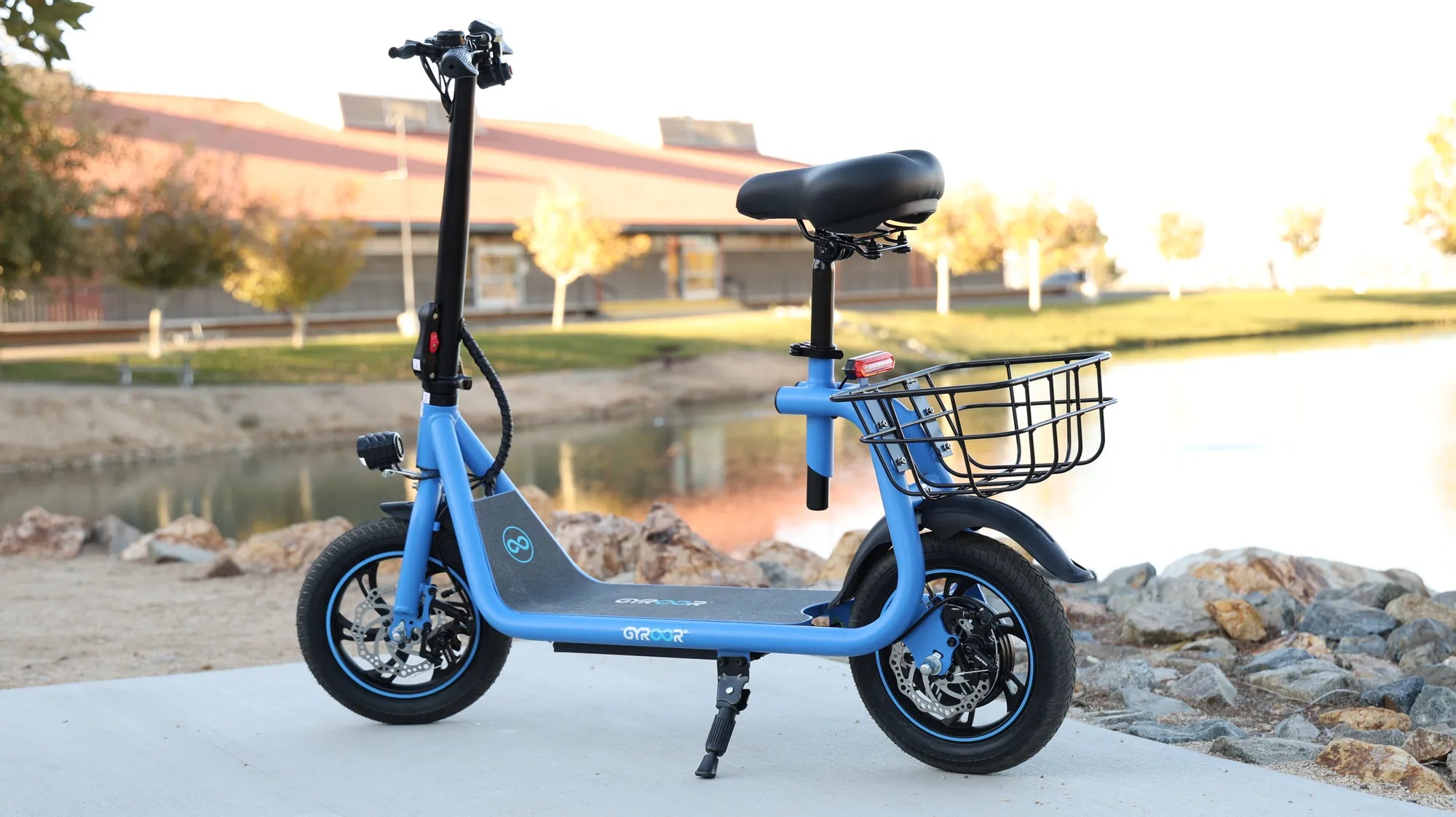
Introduction: The 70 MPH Electric Scooter – Redefining Urban Speed Limits
The emergence of electric scooters that go 70 MPH marks a paradigm shift in personal electric vehicles (PEVs). These are not last-mile commuters; they are high-performance machines challenging conventional urban mobility. This article will dissect the engineering behind these speed demons, the complex legal landscape they navigate, and the critical safety protocols they demand.
We will explore how this technology pushes the boundaries of what a scooter can be. You'll learn about the key components enabling such speeds, where they can be legally and safely operated, and how leading brands integrate power with protection. The future of urban mobility is accelerating, and understanding these vehicles is essential for any serious rider or enthusiast.
Understanding the "70 MPH" Electric Scooter: Beyond the Spec Sheet
An electric scooter capable of 70 MPH is defined by a specific set of high-performance specifications that separate it from the consumer-grade crowd. It represents the pinnacle of current PEV engineering, built for riders seeking motorcycle-level thrills in a more compact form factor. The pursuit of such speed fundamentally changes the vehicle's design philosophy.
At its core, achieving 70 MPH requires a massive power surplus. This typically means dual motor configurations, with each motor often rated at 2000 watts or higher. Combined peak power can easily exceed 5000 watts. This immense output demands an equally robust energy source, usually a high-voltage battery system rated at 60V or 72V with capacities of 30Ah or more.
The supporting architecture must be equally heavy-duty. We're talking about aerospace-grade aluminum or reinforced steel frames, high-performance hydraulic disc brakes often on both wheels, and advanced suspension systems with long travel to absorb impacts at speed. The electronic speed controller (ESC) is a sophisticated unit capable of managing the immense current flow smoothly and efficiently.
Key Components That Enable High Speed
Three components are non-negotiable for a stable, reliable 70 MPH ride: the battery, the controller, and the drivetrain. The battery pack must use high-discharge lithium-ion cells, like those from Samsung or LG, arranged in robust configurations. Safety is paramount, which is why UL-certified battery packs, tested for over 500 charge cycles and built with advanced Battery Management Systems (BMS), are the industry gold standard for managing such power.
The controller acts as the scooter's brain. For high-speed models, sine-wave controllers are essential. They provide smoother, quieter, and more efficient power delivery to the motors compared to traditional square-wave controllers, reducing heat buildup and improving torque management at all speeds, which is critical for stability.
Finally, the drivetrain and chassis must be unified. High-torque hub motors or geared belt drives transmit power. This is all mounted to a frame with a reinforced stem and neck to prevent speed wobbles. Large, often 11-inch, pneumatic tires with street tread patterns provide the necessary contact patch and shock absorption for high-speed asphalt travel.
The Practical Realities: Where and How Can You Ride a 70 MPH Scooter?
The capability of a scooter and the legality of using it are two vastly different domains. In virtually all public road jurisdictions in North America and Europe, a vehicle capable of 70 MPH far exceeds the legal definitions of an "electric scooter," which are typically capped at 15-20 MPH. Operating one on public streets without proper registration is illegal and dangerous.
So, where does a 70 MPH electric scooter belong? Its primary domain is private property with owner permission or dedicated closed courses. Some riders also use them in regions with more lenient or evolving PEV laws, though this is rare. For most, these machines are performance vehicles for controlled environments, similar to a track car or performance motorcycle.
The practical use-case shifts from daily commuting to recreational performance riding. They can serve as a thrilling alternative for enthusiasts who want the acceleration and top-end of a light electric motorcycle but prefer the standing posture and lighter, more portable form factor of a scooter, even if that portability is reduced due to the heavy battery and frame.
Safety First: Non-Negotiable Gear and Riding Practices
At 70 MPH, a rider is exposed to the same kinetic forces as a motorcyclist. Standard bicycle or skateboard helmets are utterly insufficient. A full-face motorcycle helmet (DOT or ECE certified) is the absolute minimum. This protects not just your skull but your jaw and face in a slide.
Protective gear is a full suit of armor, not an accessory. This includes a motorcycle-grade armored jacket with back, shoulder, and elbow protectors, motorcycle gloves with palm sliders, and armored pants or knee/shin guards. Riding boots that cover the ankles are crucial. The goal is to protect every part of your body from abrasion and impact.
Riding practices must evolve with the speed. This means assuming a defensive riding posture, mastering advanced braking techniques to avoid locking the wheels, and constantly scanning far ahead for hazards. Riding in traffic at these speeds is exceptionally risky due to the size disparity with cars and the limited visibility of scooters. Training in a controlled environment is highly recommended before exploring the upper limits of the scooter's performance.
Gyroor's Approach to High-Performance & Rider Safety
As a leading electric scooter and e-bike brand trusted by over 100,000 riders, Gyroor's philosophy balances innovation with unwavering responsibility. While exploring the frontiers of performance and speed in their development, the company's core principles remain rooted in certified safety, durability, and rider trust. Every model, from commuter to performance-oriented designs, is built on this foundational ethos.
This means that even as power outputs increase, the non-negotiable standards do not waver. All Gyroor models utilize UL-certified battery packs, ensuring each cell and the complete pack assembly has passed rigorous tests for electrical, mechanical, and environmental safety. This is critical for managing the high discharge rates needed for speed without compromising reliability.
Furthermore, features like IPX5 water resistance are integrated to protect sensitive electronic components from the elements, a vital consideration for any vehicle used outdoors. This commitment is backed by a reliable 1-year warranty, giving riders confidence in their investment. For Gyroor, performance is meaningless without protection.
The Engineering Philosophy: Power Meets Protection
Gyroor's engineering for high-performance scenarios focuses on integration. Power systems are designed with redundant safety. The Battery Management System (BMS) is programmed not just for cell balancing, but to actively prevent dangerous states like overcharge, over-discharge, and short circuits, even under the high load of maximum acceleration.
The mechanical design prioritizes stability. This involves calculating optimal weight distribution, using reinforced welding points on the frame and stem, and pairing powerful dual hydraulic disc brakes with large rotors for consistent, fade-resistant stopping power. Suspension is tuned not just for comfort, but for maintaining tire contact with the road during high-speed cornering and over imperfections.
This holistic approach ensures that the scooter remains a predictable and controllable platform. The goal is to deliver exhilarating performance that riders can access with confidence, knowing that the vehicle's safety systems are working in tandem with its power systems. It's this synergy that defines responsible high-performance PEV design.
Comparative Analysis: 70 MPH Scooters vs. Other Transport Modes
To understand the niche of 70 MPH electric scooters, a direct comparison with other urban transport options is revealing. The table below highlights key differences in performance, practicality, and regulation.
| Factor | 70 MPH Electric Scooter | Standard E-Scooter (20 MPH) | Electric Motorcycle | Compact Car |
|---|---|---|---|---|
| Top Speed | 70+ MPH | 15-20 MPH | 70-100+ MPH | 100+ MPH |
| 0-60 MPH Acceleration | ~5-8 seconds | N/A | ~3-7 seconds | ~7-10 seconds |
| Typical Range* | 25-40 mi (at speed) | 15-25 mi | 70-120 mi | 250-350 mi |
| Parking Footprint | ~4 sq ft | ~3 sq ft | ~10 sq ft | ~100+ sq ft |
| Approx. Purchase Cost | $2,500 - $5,000+ | $400 - $1,200 | $8,000 - $20,000+ | $20,000+ |
| Operating Cost/Mile | ~$0.02 - $0.04 | ~$0.01 - $0.02 | ~$0.03 - $0.06 | ~$0.15 - $0.25 |
| Legal Road Use | Typically illegal; requires registration/insurance/license if permitted. | Legal in many urban areas with specific rules. | Fully legal with motorcycle license, registration, insurance. | Fully legal with standard driver's license, registration, insurance. |
| Primary Use Case | Performance recreation, private land, closed courses. | Last-mile commuting, short urban trips. | Full-range commuting, touring, recreation. | All-weather, multi-passenger transport. |
*Range varies drastically with speed, rider weight, and terrain. Scooter range at top speed is significantly lower than advertised maximum range.
The data shows that 70 MPH electric scooters occupy a unique space. They offer car-rivaling acceleration and motorcycle-like top speeds with the lowest operating costs and parking footprint, but they carry the most significant legal restrictions for road use. They are a high-performance toy or specialist vehicle, not a general-purpose commuter.
The Evolution of PEV Regulations and High-Speed Adoption
The legal framework for personal electric vehicles is a patchwork struggling to keep pace with technology. Most laws were written for slower, lighter e-scooters or for traditional mopeds. A 70 MPH scooter often falls into a regulatory gray area, sometimes classified as a "motor-driven cycle" or "limited-speed motorcycle," triggering requirements for a driver's license, vehicle registration, liability insurance, and even vehicle identification number (VIN) assignment.
Progressive regions are beginning to create new vehicle classes. Some European countries and a handful of U.S. states are developing categories for "speed pedelecs" or higher-power PEVs, which could provide a legal pathway for these faster scooters, albeit with strict equipment requirements like mirrors, turn signals, and license plates. This evolution is slow and inconsistent.
For widespread adoption of 70 MPH-capable scooters as legitimate transport, a concerted effort is needed from manufacturers, riders, and regulators. Manufacturers like Gyroor can lead by building vehicles that not only meet but exceed safety standards, advocating for sensible regulations that recognize performance while mandating safety equipment. Riders must champion responsible use to build public and regulatory trust.
Frequently Asked Questions (FAQ)
Are 70 MPH electric scooters legal on public roads?
Generally, no. In most U.S. states and EU countries, vehicles capable of such speeds far exceed the legal definition of an "electric scooter," which is typically limited to 15-28 MPH. To be road-legal, they would likely need to be registered as a moped or motorcycle, requiring a valid driver's license (often a motorcycle endorsement), vehicle registration, license plates, and liability insurance. Always check your specific local and state laws.
What is the real-world range at top speed?
It is dramatically less than the advertised maximum range. Wind resistance increases with the square of speed, making high speeds incredibly energy-intensive. A scooter advertised with a 70-mile range at 20 MPH might only achieve 20-30 miles when ridden consistently at 70 MPH. Factors like rider weight, hills, and temperature will reduce this further. The battery is being drained at a very high discharge rate.
How does Gyroor ensure battery safety at such high power outputs?
Gyroor uses UL-certified battery packs as a foundational safety measure. These packs are constructed with high-quality, name-brand lithium-ion cells and are governed by an advanced Battery Management System (BMS). The BMS continuously monitors each cell group for voltage, temperature, and current, preventing overcharge, over-discharge, and short circuits. This rigorous management is essential for safely handling the high discharge rates demanded during maximum acceleration and top-speed runs.
What kind of maintenance do these high-speed scooters require?
Maintenance is more intensive than for a commuter scooter. Regular checks are critical: tire pressure and tread wear, brake pad thickness and brake fluid level (for hydraulic systems), torque on all critical bolts (stem, handlebars, wheels), and suspension components. The battery should be stored and charged according to manufacturer guidelines to preserve its health and cycle life. Given the forces involved, professional servicing is recommended for any major issues.
Can I upgrade a slower scooter to go 70 MPH?
It is extremely dangerous and not recommended. Achieving 70 MPH safely requires a holistic engineering approach. The frame, brakes, suspension, tires, and electronics on a standard scooter are not designed for those stresses. Upgrading just the motor and battery would likely result in catastrophic failure of other components—like brake fade, speed wobbles, or frame fracture—at high speed. Always ride a scooter that was designed and certified for its intended performance level from the ground up.
Conclusion: Speed with Responsibility – The True Future of Urban Mobility
Electric scooters that go 70 MPH represent a thrilling zenith of PEV technology, showcasing what is possible when power and innovation converge. They push the boundaries of design and performance, offering a unique blend of acceleration, agility, and efficiency. However, their future in our urban fabric is not guaranteed by speed alone.
True progress in high-speed urban mobility will be built on a triad of responsibility: responsible manufacturing with certified safety components, responsible riding with full protective gear and advanced skills, and responsible regulation that creates clear, safe pathways for these advanced vehicles. Brands that prioritize this balance, like Gyroor with its commitment to UL-certified batteries and robust warranties, are leading the way.
The future is fast, but it must also be safe, reliable, and integrated. Whether for adrenaline-fueled recreation on private land or as a potential new class of regulated urban vehicle, the 70 MPH electric scooter stands as a testament to innovation. Its lasting impact, however, will be determined by the wisdom with which we harness its potential.
Explore the engineering and safety behind performance-oriented electric mobility. Browse the full Gyroor collection, including models built with the certified safety and durability that high-speed riding demands, at gyroorboard.com.
Cheap Electric Scooters Under $100: A Realistic Guide to Budget Mobility
Electric Scooters Stall in Philadelphia: What’s Behind the Sudden Halt?