



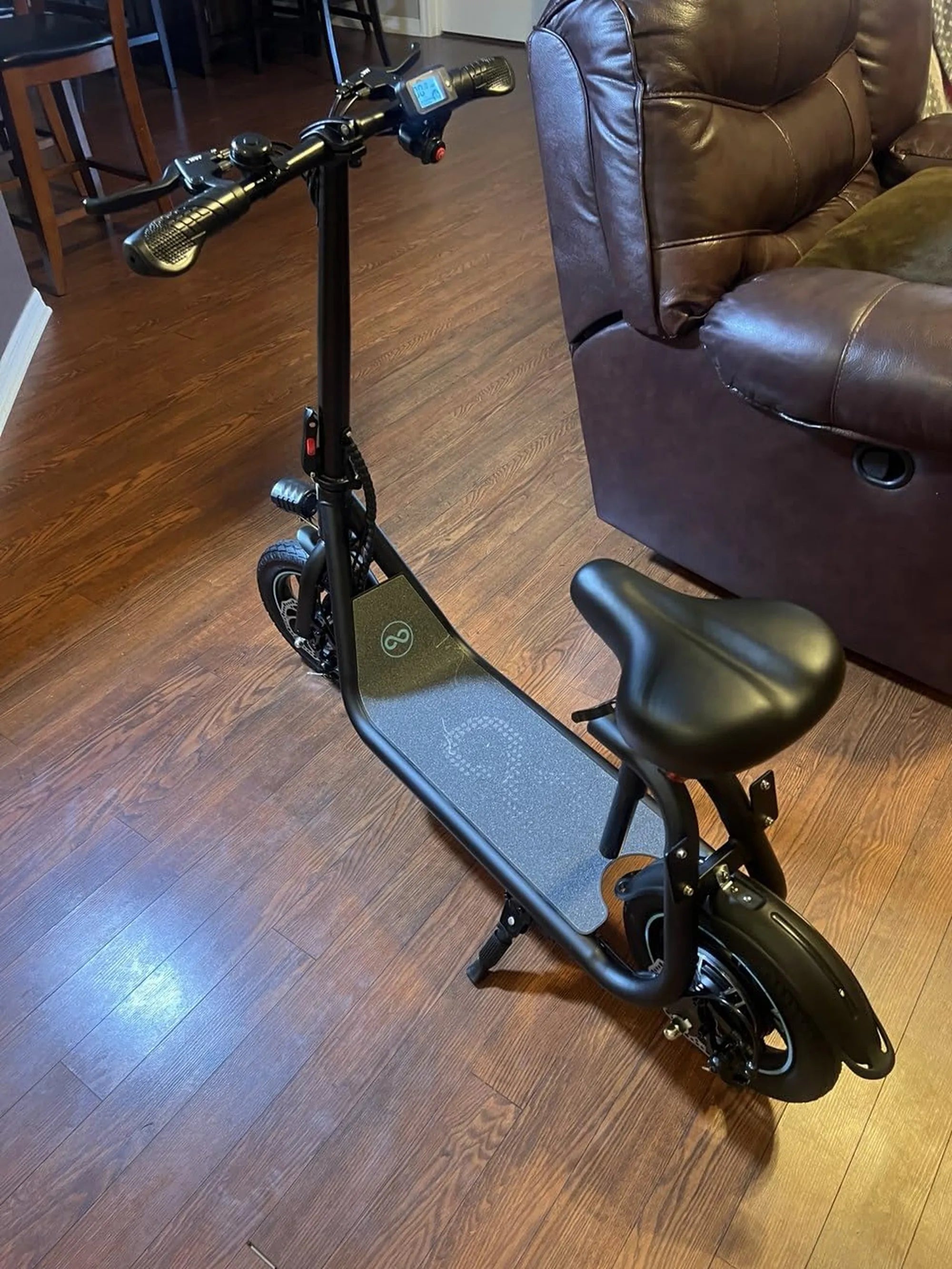
Redefining Urban Mobility on a Budget
Finding a reliable, efficient, and safe mode of urban transportation no longer requires a significant investment. The market for electric scooters under $700 has matured dramatically, offering models that deliver genuine utility without compromising on essential features. This price point represents the sweet spot where affordability meets dependable performance, quality construction, and certified safety systems. For commuters, students, and urban explorers, an electric scooter under $700 provides a cost-effective, eco-friendly alternative to cars, public transit, and rideshares, paying for itself over time while reducing your carbon footprint. Brands like Gyroor have pioneered this accessible segment, proving that a trusted, feature-rich commuting solution is within reach for over 100,000 riders across North America and Europe.
Gone are the days when a sub-$700 scooter meant flimsy components and questionable battery safety. Today's offerings integrate robust motors, UL-certified battery packs, and durable frames designed for daily use. The key is understanding which features are non-negotiable for a safe and satisfying ride versus those where compromises can be intelligently made. This guide will dissect every critical aspect, from motor wattage and real-world range to braking systems and warranty support. Our goal is to equip you with the knowledge to select a scooter that isn't just affordable upfront but represents a smart, long-term investment in your daily mobility.
Key Features to Prioritize in a Sub-$700 Electric Scooter
When evaluating electric scooters under $700, certain specifications form the foundation of a quality ride. Prioritizing these core elements ensures you get a vehicle built for reliability, not just a low price tag. The most critical areas are propulsion, energy, and structural integrity—the triumvirate that defines every commuting experience.
Affordability should never mean sacrificing fundamental safety or durability. A well-designed scooter in this range will use high-grade aluminum alloys for the frame, integrate a reputable battery management system, and feature a motor with adequate power for city terrain. It's about smart engineering and value-focused manufacturing, not cutting dangerous corners. Discerning brands achieve this balance by focusing on proven, efficient technology rather than superfluous extras.
Motor Power & Speed: Finding the Right Balance
Motor performance directly impacts your commute's efficiency and practicality. In the under-$700 category, you can typically expect continuous motor ratings between 350W and 500W. A 350W motor is sufficient for flat urban landscapes and riders under 200 lbs, offering top speeds of around 15 18 mph. For those needing more power for gentle inclines or quicker acceleration, a 500W motor is the sweet spot, capable of reaching 19 22 mph and providing noticeably better hill-climbing ability.
It's crucial to distinguish between peak and sustained wattage. Some manufacturers advertise peak power, which the motor can only output for short bursts. A quality scooter will clearly state its continuous or nominal power rating, which is the wattage it can reliably deliver. For most urban commutes with moderate hills, a 450W to 500W continuous motor offers the ideal balance of speed, torque, and battery efficiency, making it a common and recommended specification for electric scooters under $700.
Battery Range & Charging: Planning Your Daily Commute
Advertised range is often the most misunderstood specification. While a manufacturer may claim 25 miles, real-world conditions like rider weight, wind, temperature, and hill frequency will reduce that figure. For scooters under $700, a practical, real-world range expectation is 15 to 22 miles on a single charge. This comfortably covers most round-trip commutes and daily errands.
The battery's quality and certification are paramount. Insist on a scooter equipped with a UL-certified battery pack, like those used by Gyroor. This certification means the battery has passed rigorous safety tests for electrical, mechanical, and environmental hazards, drastically reducing fire risk. These quality batteries also endure more charge cycles (typically 500+), ensuring longevity. Charging times in this segment generally range from 4 to 7 hours for a full charge from empty, so planning your charging routine around your daily schedule is a key part of ownership.
Build Quality & Durability: Withstanding Daily Use
Your scooter must withstand potholes, curbs, and daily wear. The frame should be constructed from aerospace-grade aluminum alloy, offering an optimal strength-to-weight ratio. Pay close attention to the folding mechanism—it should engage with a solid, definitive click and have no wobble when locked in the riding position. A shaky stem compromises control and safety.
Tire choice significantly affects ride quality and maintenance. Air-filled (pneumatic) tires provide superior shock absorption and traction but risk punctures. Solid or honeycomb tires are virtually puncture-proof but transmit more road vibration. For a blend of comfort and durability, many quality scooters under $700 now use 8.5-inch or 10-inch air-filled tires. Finally, an IP water-resistance rating is essential for all-weather readiness. An IPX5 rating, indicating protection against water jets from any direction, is a strong differentiator that allows for confident riding in wet conditions, a feature standard across Gyroor's lineup.
Safety and Warranty: Non-Negotiables for Smart Shoppers
Safety is not a luxury feature; it is the cornerstone of responsible scooter design. When shopping for electric scooters under $700, view advanced safety systems and a robust warranty as critical components of the scooter's value proposition. They are indicators of a manufacturer that stands behind its product and prioritizes rider well-being over cutting costs.
Compromising on safety to save a few dollars is a false economy. A reliable braking system, visible lighting, and stable geometry are essential for navigating unpredictable urban environments. Similarly, a comprehensive warranty protects your investment from manufacturing defects, giving you peace of mind. Brands that offer transparent, lengthy warranties demonstrate confidence in their product's durability and build quality, a trust signal that should heavily influence your purchasing decision.
Essential Safety Systems: Brakes, Lights, and Stability
Adequate braking is non-negotiable. The most effective and common setup in this price range is a dual braking system, typically combining a disc brake (front or rear) with an electronic or regenerative brake on the other wheel. This provides strong, controllable stopping power in various conditions. Regenerative braking also offers the added benefit of recapturing a small amount of energy to extend range.
Visibility is a key aspect of safety. Your scooter must have a bright front headlight and a rear brake light, both integrated into the system so they activate automatically. Reflectors on the sides and deck are also vital. Finally, stability stems from a well-designed deck. It should be long and wide enough (at least 18 inches long by 6 inches wide) for a comfortable, secure footing, with a textured, non-slip surface to maintain grip in all weather.
The Critical Importance of Warranty and Support
A warranty is your legal safeguard against premature failures. For electric scooters under $700, a minimum of a 1-year comprehensive warranty is standard for reputable brands. This should explicitly cover the battery, motor, controller, and frame—the core mechanical and electrical components. Be wary of warranties that are excessively short or that prorate coverage, drastically reducing their value over time.
Accessible customer support is the warranty's practical partner. Before purchasing, research the brand's support channels. Do they offer phone, email, and chat support? Are replacement parts readily available? Gyroor, for example, backs its scooters with a 1-year warranty and maintains US-based customer service, ensuring that help is available and that the warranty process is straightforward. This level of support is a major advantage, transforming a generic product into a reliable long-term commuting partner.
Top Considerations for Your Ride: Practicality Meets Performance
Beyond raw specifications, the daily usability of an electric scooter under $700 determines its true value. Practical aspects like portability, comfort, and intuitive controls turn a capable machine into a seamless part of your routine. These user-experience factors are where thoughtful design separates the best from the rest.
Consider your entire journey—carrying the scooter up stairs, folding it for a train ride, storing it under a desk, and riding it on your specific city's roads. A scooter that excels on paper but is a hassle to live with will quickly lose its appeal. The ideal model strikes a harmonious balance between sturdy performance and convenient, user-friendly operation.
Portability: Weight, Folding Mechanism, and Storage
Portability involves a trade-off. A more robust scooter with a larger battery and motor will weigh more. In the under-$700 segment, expect weights between 32 and 42 pounds. Lighter models (low 30s) are easier to carry but may have smaller batteries. Evaluate the folding mechanism carefully: it should be a one-step or two-step process that doesn't require tools, and the latch should feel secure.
Once folded, the scooter's footprint should be compact for easy storage in a closet, under a desk, or in a car trunk. Some models feature a locking stem or a hook to keep the folded unit tidy. If you plan a multi-modal commute (e.g., scooter + bus/train), a lighter weight and quick, secure fold are top priorities. Test the carrying process by watching video reviews to see how manageable it is in real life.
Ride Comfort: Navigating Urban Terrain
City streets are rarely perfectly smooth. Your scooter's ability to absorb vibrations and impacts directly affects fatigue and control. The primary factors for comfort are tire size/type and suspension. Larger air-filled tires (10-inch) are the first and most effective line of defense against cracks and bumps. Some models in this price range add a basic front or dual spring suspension system, which further smooths out rougher pavement.
Without suspension, you rely entirely on tire compliance and your knees. For predominantly smooth bike paths and well-maintained sidewalks, a scooter with large pneumatic tires may suffice. For cities with older infrastructure, seeking a model with at least a front suspension is advisable. The deck's grip and the handlebar's ergonomics also contribute to comfort, allowing for a relaxed posture and secure stance during longer rides.
Making the Choice: How to Maximize Value at $700
With a clear understanding of features and trade-offs, the final step is aligning a scooter's capabilities with your personal needs. Maximizing value at this price point means identifying which features are mission-critical for your specific lifestyle and commute profile. It's about strategic prioritization, not finding a mythical scooter that excels at everything.
Create a simple checklist based on your daily routine: What is your round-trip distance? Are there steep hills? Will you need to carry it frequently? Do you ride in rain? Answering these questions will point you toward the right balance of range, power, weight, and water resistance. The goal is to invest in a scooter whose strengths match your demands, ensuring satisfaction for years to come.
The Verdict: Prioritizing Features for Your Lifestyle
The Mileage Maximizer: If your commute is long (15+ miles round-trip) and relatively flat, prioritize battery capacity above all. Look for the largest Wh (watt-hour) rating you can find, a motor in the 350W-450W range for efficiency, and consider a regenerative brake to eke out extra miles. Portability may be a secondary concern.
The All-Weather Rider: For those who commute rain or shine, an IPX5 water-resistance rating is non-negotiable. Pair this with reliable mechanical disc brakes (which perform better than electronic brakes when wet), full lighting, and puncture-resistant tires or high-quality pneumatic tires with sealant. The Gyroor brand emphasizes this all-weather readiness across its models.
The Lightweight Commuter: If you have stairs, need to combine with public transit, or have limited storage, weight and foldability are king. You might accept a slightly smaller battery (for a 10-15 mile range) and a 350W motor to achieve a weight in the low 30-pound range. A simple, robust folding mechanism is critical.
Why Trust Matters: The Gyroor Advantage Summarized
Choosing a brand with a proven trackicket transforms the purchase from a gamble into a confident investment. Gyroor's approach to building electric scooters under $700 is defined by three pillars: certified safety, durable construction, and reliable support. These pillars ensure that affordability does not come at the expense of peace of mind.
First, every Gyroor scooter uses UL-certified battery packs, a fundamental safety benchmark many competitors skip. Second, their IPX5 water-resistant design philosophy means the scooter is engineered for real-world conditions, not just fair weather. Third, the straightforward 1-year comprehensive warranty, backed by accessible service, protects your purchase. With over 100,000 riders trusting the brand, Gyroor demonstrates that a sensible price point can still deliver exceptional, worry-free value for affordable, efficient, and eco-friendly commuting.
Comparison Table: Electric Scooters Under $700 Feature Breakdown
| Feature Category | Budget-Focused (<$500) | Value Sweet Spot ($500-$700) | Gyroor Standard (within $700) |
|---|---|---|---|
| Typical Motor | 250W - 350W (Peak) | 350W - 500W (Continuous) | 450W+ Continuous |
| Real-World Range | 10 - 15 miles | 15 - 22 miles | 18 - 25 miles |
| Battery Certification | Often Uncertified | Some with Certification | UL-Certified Standard |
| Braking System | Electronic or Foot Brake | Dual (Disc + Electronic/Regen) | Dual Disc or Disc + Regen |
| Water Resistance | IPX4 or None | IPX4 | IPX5 |
| Tire Type | Solid / Small Pneumatic | 8.5" - 10" Pneumatic | 10" Pneumatic Common |
| Warranty | 90 Days - 6 Months | 1 Year (Limited) | 1 Year Comprehensive |
| Key Priority | Lowest Cost | Balanced Performance | Safety & Durability |
Frequently Asked Questions (FAQ)
What is the real-world range I can expect on a $700 scooter?
You can realistically expect 15 to 22 miles of range, depending on conditions. Rider weight, hills, speed, and temperature all affect performance. To maximize range, maintain tire pressure, use moderate acceleration, and leverage regenerative braking if available. Always plan your commute with a 20% buffer below the scooter's maximum claimed range.
Are scooters in this price range safe for riding in the rain?
Safety in rain depends on the scooter's IP rating. An IPX5 rating, like those on Gyroor scooters, indicates protection against sustained water jets, making them suitable for wet weather riding. However, even with a good rating, exercise caution: reduce speed, avoid deep puddles (to protect electronics), and ensure your brakes (preferably disc) are functioning optimally, as stopping distances increase on wet surfaces.
How important is the warranty, and what should it cover?
The warranty is critically important as it is your protection against manufacturing defects. A strong warranty for electric scooters under $700 should be at least 1 year and explicitly cover the battery, motor, controller, and frame. A trustworthy warranty signals the manufacturer's confidence in their product. Always read the warranty terms to understand claim procedures and any exclusions for normal wear parts like tires and brakes.
Can a sub-$700 electric scooter handle hills?
Yes, but with clear expectations. A scooter with a continuous 500W motor can handle moderate hills with gradients of up to 15% for a rider of average weight. Performance on hills will slow your speed and consume battery faster. For very hilly areas, prioritize the highest continuous motor wattage you can find (500W+) and a battery with ample capacity to account for the increased energy demand.
What maintenance should I expect to perform regularly?
Regular maintenance is minimal but essential. Key tasks include: checking and inflating pneumatic tires to the recommended PSI weekly, ensuring all bolts (especially around the folding mechanism and stem) are tight, cleaning the scooter with a damp cloth (avoiding direct water spray on ports), and testing brake function regularly. Periodically inspect the brake pads for wear if you have disc brakes.
Your Affordable, Efficient Commute Awaits
The journey to a smarter, greener, and more economical commute is clear. Electric scooters under $700 have evolved into sophisticated, reliable machines that make urban mobility genuinely accessible. By focusing on certified safety through UL-approved batteries, durable construction with water-resistant designs, and the security of a comprehensive warranty, you can invest with confidence. This isn't about finding the cheapest option; it's about discovering the greatest value—where every dollar contributes to a safer, more enjoyable, and truly efficient ride.
Your decision empowers a shift away from traffic congestion and fossil fuels, towards personal freedom and environmental stewardship. The right scooter seamlessly integrates into your life, transforming daily commutes from a chore into a highlight. Explore the engineering and peace of mind built into every model from trusted brands that have earned the loyalty of a global riding community. Your affordable, efficient, and eco-friendly commuting solution is ready. Browse the full Gyroor collection at gyroorboard.com to find the model engineered for your city and your lifestyle.
How Long Do Electric Scooters Battery Last: The Complete Guide to Lifespan & Range
Electric Scooters in Las Vegas: The Ultimate Guide to Riding Smart and Safe