



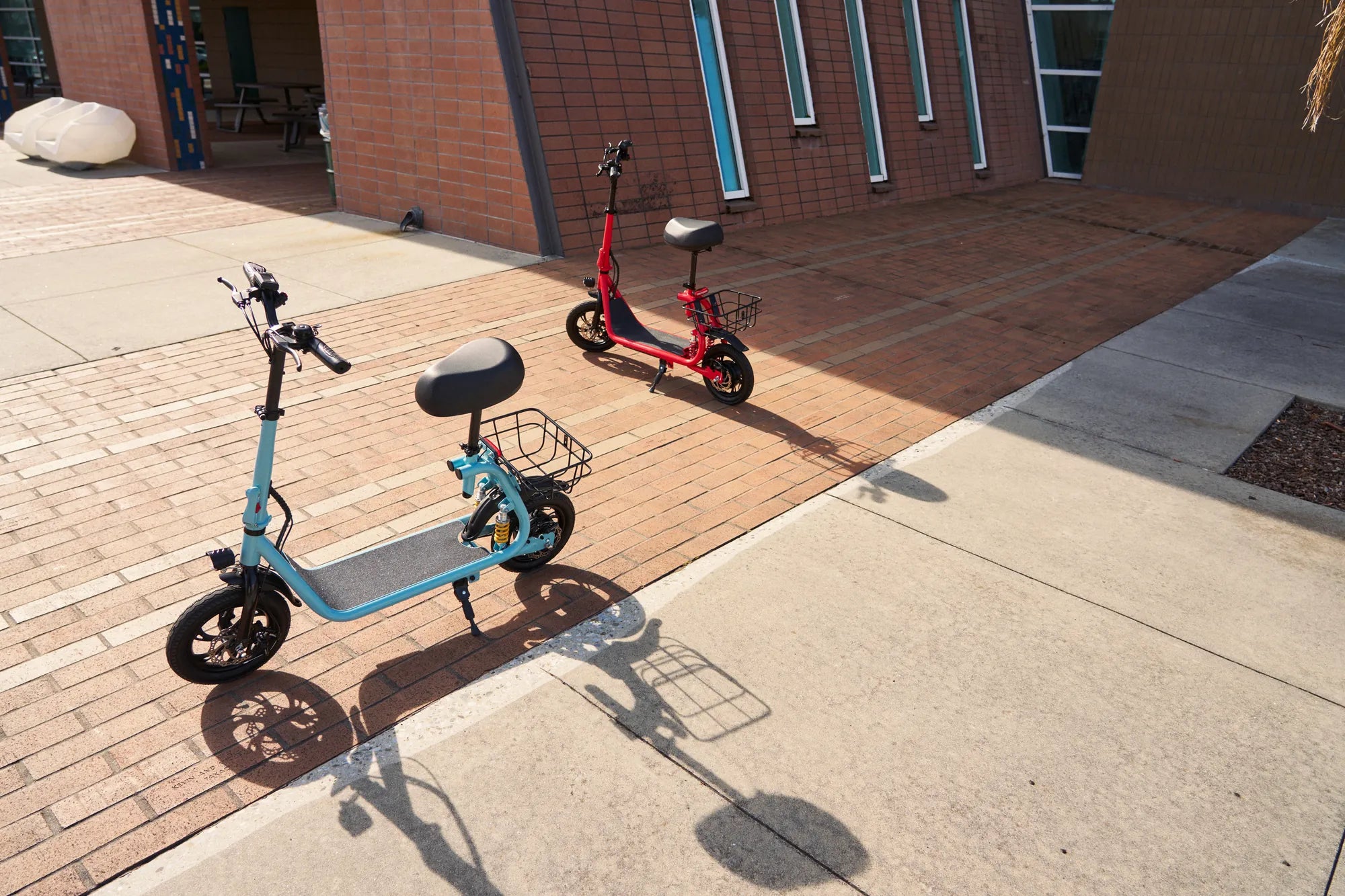
Introduction: The Rise of Smart, Safe Electric Scooters
Urban transportation is undergoing a silent revolution, and the electric scooter is at its forefront. The evolution has moved beyond just adding a motor to a kick scooter. Today's advanced models are integrating automotive-grade safety and communication features, fundamentally changing how riders navigate city streets. Central to this transformation is the integration of turn signals, or blinkers.
These are not mere add-ons but critical components for visibility and intent communication. This article delves into why Electric Scooters With Blinkers represent a significant leap forward. We will examine the compelling safety data, the shifting legal requirements, and the technical considerations that make this feature essential. Leading brands like Gyroor, trusted by over 100,000 riders, are now embedding these systems directly into their designs, signaling a new era of responsible urban mobility.
Why Blinkers Are a Game-Changer for Urban Commuters
The primary function of a blinker is communication. On crowded city streets, a scooter rider's greatest vulnerability is being unpredictable. A study by the Transportation Research Board found that a significant portion of micromobility collisions involve turning or crossing movements where intent was unclear. Integrated turn signals solve this by providing a clear, universal language to drivers, cyclists, and pedestrians.
This clarity directly translates to enhanced safety. By signaling a turn or lane change 50-100 feet in advance, a rider gives motorists crucial time to react appropriately. This is especially vital at intersections, where a high percentage of conflicts occur. The flashing light also dramatically increases a rider's side-profile visibility at dawn, dusk, or night—times when scooter accidents are more frequent.
Beyond raw safety, blinkers instill greater confidence in the rider. Knowing you can communicate your movements effectively allows you to focus on the road ahead and practice defensive riding. This confidence encourages more people to adopt scooters for practical, daily commutes rather than just recreational use. The psychological shift from seeing a scooter as a toy to viewing it as a legitimate vehicle begins with these fundamental safety features.
Finally, blinkers contribute to the overall normalization and acceptance of e-scooters in the traffic ecosystem. When riders act predictably and communicate like other road users, it fosters respect and shared understanding. This is a crucial step for the long-term integration of micromobility into our urban fabric, making cities safer for everyone.
The Legal Landscape: Are Blinkers Required?
The regulatory environment for electric scooters is a complex and evolving patchwork across the United States and Europe. While federal vehicle safety standards for scooters are still developing, cities and states are creating their own rules. Currently, no major jurisdiction universally mandates turn signals on electric scooters, but the trend is moving decisively in that direction.
Many regulations already require front and rear lights for operation at night. The logical next step, being explored by traffic safety boards, is mandating active signaling. For example, several California municipalities are considering amendments to their micromobility codes that would require turn signals on scooters used on public roads. In Europe, certain countries classify higher-speed e-scooters as motor vehicles, subjecting them to stricter equipment requirements that often include blinkers.
Possessing an electric scooter with blinkers future-proofs your investment against these regulatory changes. More importantly, it demonstrates a commitment to safety that can be favorable in the event of an incident or traffic stop. Proactively equipping your scooter with this feature shows due diligence, which is always advantageous in a legally gray area.
Riders should always check their local Department of Motor Vehicles or transportation authority website for the most current rules. Choosing a scooter with integrated signals, like those from Gyroor, ensures you are prepared for both today's recommendations and tomorrow's potential mandates, avoiding fines and ensuring uninterrupted rides.
Beyond the Blink: Other Essential Safety Features to Look For
Blinkers are a pivotal feature, but they are most effective as part of a comprehensive safety system. A holistic approach is necessary for true urban readiness. The foundation of this system is robust lighting: a bright, wide-beam headlight (preferably 300 lumens or more) to illuminate the path and a solid tail light that acts as a brake light.
Brake lighting is critical. When you engage the brake, the tail light should intensify significantly to alert traffic behind you. This immediate visual cue can prevent rear-end collisions. Furthermore, physical reflectors on the sides, front, and rear are non-negotiable for passive visibility, catching the headlights of cars from multiple angles.
Audible signaling is another key component. A loud, electronic horn is essential for alerting pedestrians who may be distracted or drivers who might not see you. It's a tool for proactive safety. Finally, the scooter's physical design contributes to safety. Wide, air-filled or honeycomb-puncture-proof tires provide better stability and traction. A strong, responsive dual braking system (electronic and mechanical) ensures quick, controlled stops.
When evaluating an electric scooter, view these features as an interconnected suite. A blinker tells drivers where you're going, a brake light tells them you're slowing, a horn alerts them to your presence, and good tires help you maintain control through it all. Brands that prioritize this integrated philosophy, such as Gyroor with its IPX5 water-resistant designs and UL-certified components, are building vehicles for the real world.
Key Considerations When Choosing an Electric Scooter with Blinkers
Not all blinker systems are created equal. Discerning buyers must look beyond the simple checkbox of "has blinkers" and evaluate the implementation. The quality, integration, and usability of the system are what determine its real-world effectiveness and reliability. This decision impacts daily safety, not just a one-time purchase.
The first consideration is system integrity. How well are the lights integrated into the scooter's frame and electrical system? The second is performance impact. Does the feature compromise the scooter's core functionality? The third is human factors. Is the system intuitive and easy to use while riding? Answering these questions requires a closer look at the scooter's design and specifications.
Durability is paramount. Urban riding exposes equipment to vibrations, weather, and occasional bumps. A flimsy, poorly mounted light will fail quickly. Look for lights with robust housing and secure mounting points that are part of the scooter's core design language, not an obvious afterthought. The wiring should be internally routed where possible to prevent snags and damage.
Finally, consider the brand's overall commitment to safety and quality. A company that invests in a well-engineered blinker system is likely to have applied similar rigor to the battery management, motor controller, and frame construction. This holistic quality assurance is a strong indicator of a reliable product built for long-term use.
Integration vs. Add-Ons: Built-in Systems for Reliability
The debate between integrated factory systems and aftermarket add-ons is decisive for safety equipment. Integrated blinkers, like those found on Gyroor models, are engineered as a core component of the vehicle. They draw power seamlessly from the main battery, with wiring protected inside the stem or deck. This design offers superior weather resistance, leveraging the scooter's existing IPX5 or similar rating against rain and dust.
Aftermarket clip-on lights, while better than nothing, present multiple drawbacks. They rely on separate, often disposable batteries that can die at critical moments. Their mounting is typically less secure, prone to vibration-induced misalignment or falling off entirely. The external wiring or brackets can be hazardous, creating snag points. They also detract from the scooter's clean aesthetic and can be easily stolen.
An integrated system ensures consistent performance. The lights are always there, always charged with the scooter, and activated by intuitive controls on the handlebar. There's no fumbling with separate switches or worrying about a secondary battery. This reliability is crucial in traffic situations where hesitation or equipment failure can have serious consequences.
For the serious urban commuter, the choice is clear. A factory-integrated blinker system represents a mature, thoughtful approach to product design. It reflects a brand's understanding that safety features are not accessories but fundamental requirements. This philosophy aligns with the standards of other road vehicles, where turn signals are never an optional extra.
Battery Life and Performance Impact
A common concern is whether running blinkers and other lights will significantly drain the scooter's battery, reducing its range. With modern technology, this concern is largely mitigated. Today's blinker systems use highly efficient LED technology, which consumes a minimal amount of power—often less than 1-2% of the total battery capacity on a full charge.
The real factor in battery performance and safety is the quality of the battery pack itself. A high-quality, UL-certified battery, like those used by Gyroor, is engineered for stable output and longevity. These packs undergo rigorous testing for over 500 charge cycles and include advanced Battery Management Systems (BMS) that prevent overcharging, over-discharging, and short circuits. A robust BMS efficiently allocates power to all systems, including lights, without compromising motor performance.
Therefore, the focus should shift from "do blinkers drain the battery?" to "does the scooter have a battery robust enough to power all its features safely and reliably?" A scooter with a cheap, uncertified battery is a risk regardless of its features. The integration of safety lights should be seen as a marker of a quality electrical system, not a drain on it.
In practical terms, the range impact of using blinkers is negligible compared to variables like rider weight, terrain, temperature, and riding style. Choosing a scooter with a reputable, certified battery pack ensures you get the advertised range and performance, with the added safety of integrated lighting as a standard, efficient part of the operation.
Visibility and Control: Placement and Activation
The ergonomics of the blinker system are as important as its existence. Optimal placement is on the handlebar ends or within easy thumb reach on the control panel. This allows activation without removing a hand from the grip, maintaining full steering control. Some advanced systems incorporate self-canceling signals that turn off after a set time or upon detecting straight-line riding via accelerometer data.
The activation mechanism should provide clear tactile or audible feedback to the rider. A distinct click or beep confirms the signal is on, preventing the common error of leaving a blinker activated unintentionally. The indicator lights on the dashboard must be bright and obvious in daylight to provide this confirmation to the rider.
Visibility to others is the other half of the equation. Front and rear blinkers should be bright, with a distinct flash pattern. Amber lights are the universal standard for turn signals. They should be mounted at a height and angle that makes them clearly visible to drivers in sedans and SUVs, not just at ground level. Some designs add secondary indicator lights on the side of the deck or stem for improved side visibility.
A well-designed system makes the act of signaling second nature. It becomes an integral part of the riding ritual: check mirror (or blind spot), press button, confirm dashboard light, execute maneuver. This seamless integration is what transforms a safety feature from a gadget into an instinct, fundamentally improving riding habits and situational awareness.
Gyroor’s Approach to Integrated Safety: A Case Study in Design
Gyroor exemplifies the industry shift toward integrated safety-first design. Their philosophy treats the electric scooter not as a recreational device but as a serious urban transport solution. This is evident in their systematic integration of blinkers and other safety features across their lineup, built upon a foundation of core technical reliability.
Their systems are not retrofitted; they are designed into the scooter's architecture from the start. The wiring for the blinkers, headlight, and brake light is internally routed, protected from the elements and physical damage. This aligns with their IPX5 water-resistant rating, ensuring the entire electrical system, including safety lights, can withstand rain and wet conditions, a critical factor for daily commuting.
Powering these systems are their UL-certified battery packs. This certification is a testament to safety and quality, indicating the battery has passed stringent tests for electrical, mechanical, and environmental safety. The peace of mind this offers is significant, knowing the power source for both propulsion and critical safety lights is inherently reliable. This is backed by a comprehensive 1-year warranty, underscoring their confidence in the product's durability.
By making features like bright LED headlights, responsive brake lights, and intuitive handlebar blinkers standard or key options, Gyroor is helping to elevate industry standards. They demonstrate that safety and performance are not a trade-off but complementary aspects of a superior product. For over 100,000 riders, this approach translates to confidence on the road, proving that good design is, fundamentally, safe design.
Comparison: Electric Scooter Safety Features
The table below compares key safety-related specifications and features to look for when evaluating electric scooters, highlighting how integrated systems differ from basic models.
| Feature | Basic / No Blinkers | With Add-On Blinkers | Integrated System (e.g., Gyroor) |
|---|---|---|---|
| Turn Signals | None | Separate battery-powered units, clip-on mounting. | Factory-installed, powered by main battery, handlebar controls. |
| Weather Resistance | Varies, often low. | Lights may not be rated; wiring is exposed. | Part of scooter's IP rating (e.g., IPX5). Fully protected wiring. |
| Reliability & Power | N/A for signals. | Dependent on separate battery charge; prone to failure/vibration. | High. Draws from reliable main pack with BMS. Consistent operation. |
| Brake Light Function | Often just a constant tail light. | Usually not affected by add-ons. | Integrated bright LED that intensifies upon braking. |
| Aesthetic & Theft Risk | Clean but lacking. | Cluttered look; lights are easily removable/stolen. | Sleek, unified design. Components are non-removable. |
| Rider Experience | Must use hand signals. | Fumbling with extra switches, battery checks. | Intuitive, seamless activation as part of normal riding. |
The Future of Urban Mobility: Connected and Communicative
Integrated blinkers are merely the first step in a broader evolution toward connected micromobility. The future points to scooters that don't just signal to human drivers but communicate directly with the urban infrastructure and other vehicles. Imagine a scooter whose brake light modulates intensity based on deceleration rate, providing clearer intent to following drivers, or whose turn signal interfaces with smart intersection systems.
Vehicle-to-Everything (V2X) communication, currently in development for cars, could trickle down to scooters. A connected scooter could broadcast its position and intended path to nearby vehicles, potentially preventing collisions through early warnings. This technology, while nascent, underscores the direction of travel: scooters as intelligent, networked participants in traffic.
Smartphone integration will also deepen. Future apps might allow for customizable light patterns, automatic signaling based on GPS navigation turns, or diagnostics that alert the rider if a light is malfunctioning. The blinker becomes a node in a digital safety ecosystem, enhancing both individual rider safety and overall traffic flow data.
This connected future relies on the foundational step of having reliable, integrated hardware today. You cannot build smart, communicative features on top of flimsy, aftermarket accessories. The current generation of Electric Scooters With Blinkers is laying the essential physical groundwork for the data-driven safety networks of tomorrow, making today's investment a step into the next phase of urban transport.
Frequently Asked Questions (FAQs)
Q: Are electric scooters with blinkers legal everywhere?
A: Laws vary significantly by city, state, and country. While not universally mandated yet, they are increasingly recognized as a critical safety feature. In many jurisdictions, having them helps you comply with broader requirements for being visible and signaling intent. They are never illegal and always improve safety. Always check your local Department of Transportation or micromobility regulations for the most accurate, up-to-date information.
Q: Can I add blinkers to my old electric scooter?
A: Yes, you can install aftermarket blinker kits. These typically include battery-powered LED lights and clip-on mounts. However, this solution has major drawbacks compared to an integrated system: lower reliability, poor weather resistance, frequent battery changes, insecure mounting, and a cluttered aesthetic. For consistent safety and convenience, a scooter designed with built-in blinkers from the factory is a far superior choice.
Q: Do blinkers make a scooter much more expensive?
A: Not necessarily. As the feature becomes standard on mid-to-high-tier models, the cost premium is minimal, especially when considered as a vital safety investment. Brands like Gyroor incorporate them into their value proposition, offering them alongside other premium features like UL-certified batteries and robust construction. The slight potential increase in initial cost is outweighed by the enhanced safety, compliance, and resale value.
Q: How do I use scooter blinkers effectively in traffic?
A: Use them as you would in a car: signal your intent well in advance (at least 50-100 feet before a turn or lane change). Check your blind spot manually before moving. Make eye contact with drivers when possible to ensure they see you. Cancel the signal after completing your maneuver. Always combine electronic signals with defensive riding practices—never assume a blinker guarantees you the right of way.
Q: Do the blinkers work when the scooter is turned off?
A: On most integrated systems like Gyroor's, the blinkers only function when the scooter's main electrical system is powered on. They draw power from the main battery. This is by design to prevent battery drain when parked. Aftermarket battery-powered kits may have a separate on/off switch and can operate independently of the scooter's state, but this requires managing another power source.
Conclusion: Signaling the Way Forward
The integration of turn signals into electric scooters marks a definitive maturation of the technology. It moves the category from novelty and recreation into the realm of practical, responsible urban transportation. Blinkers are more than a feature; they are a statement of intent from both manufacturers and riders about taking safety and coexistence on city streets seriously.
The data is clear: improved visibility and communication save lives. The legal trend is evident: regulations are gradually catching up to this reality. The technological path is set: integration, connectivity, and intelligence are the future. Choosing an electric scooter today without considering its communication capabilities is choosing a vehicle for the past.
Investing in a model with a well-engineered, integrated blinker system from a reputable brand is an investment in your own safety, confidence, and compliance. It prepares you for the evolving urban landscape and demonstrates a commitment to being a predictable, visible, and respectful road user. The future of urban mobility is not just electric; it is communicative, connected, and conscientious.
Ready to ride with confidence? Explore Gyroor's range of electric scooters featuring integrated safety systems, UL-certified batteries, and durable IPX5 construction. Browse the full Gyroor collection at gyroorboard.com and find the model that signals your commitment to safe, smart urban travel.
Electric Scooters and Powerchairs: The Future of Personal Mobility
Electric or Gas Powered Scooters: Which One Is Right for You? A Data-Driven Guide