



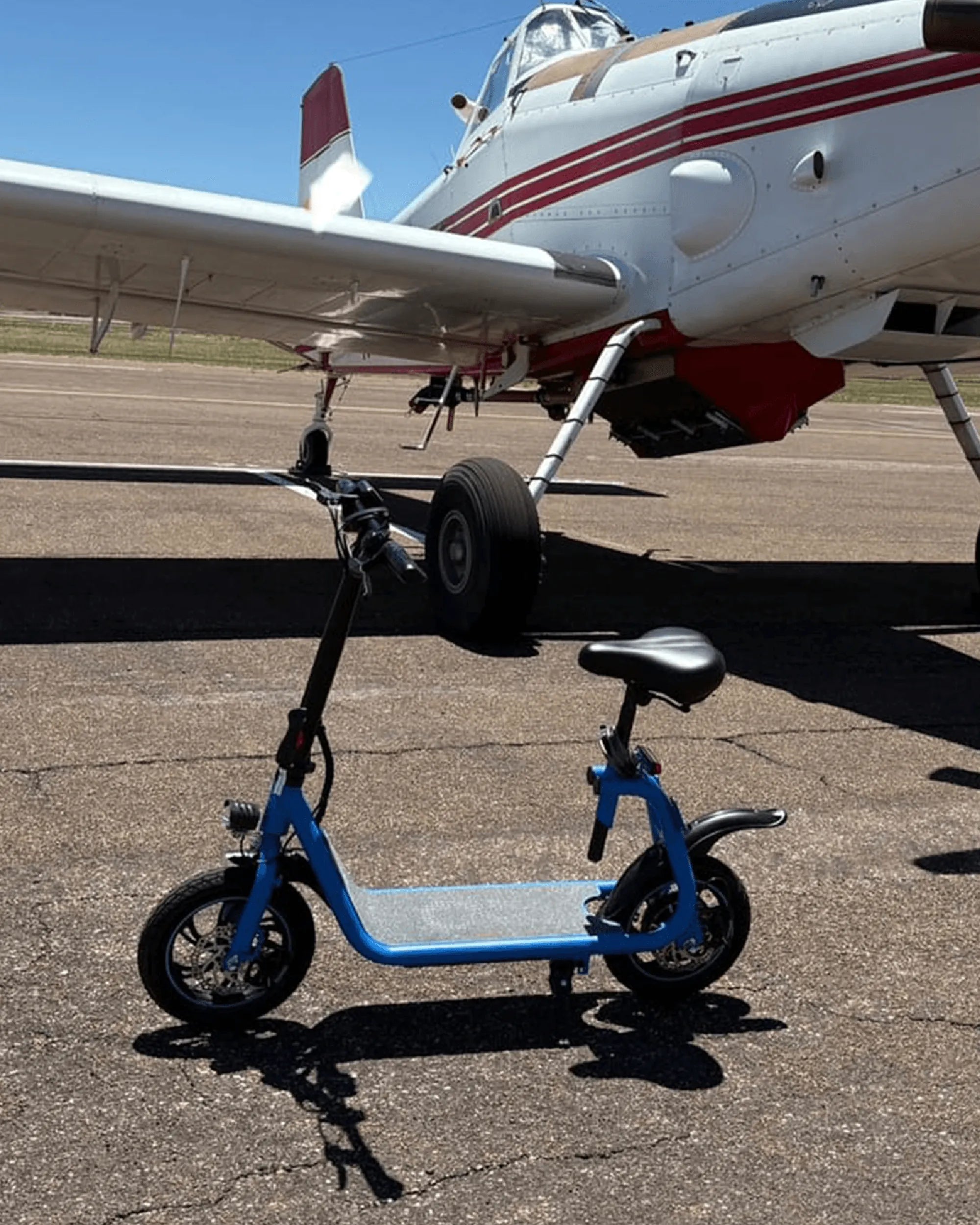
Introduction: Why Tire Size is the Secret to Your Best Ride
If your scooter rides feel jarring, unstable, or nerve-wracking on anything but pristine pavement, the culprit is likely right beneath your feet. The small, hard wheels common on many budget scooters amplify every crack, pebble, and imperfection directly into your body and the scooter's frame. This guide is about the definitive solution: electric scooters with large tires. For riders seeking a truly comfortable and stable experience, moving to a model with larger wheels isn't just an upgrade—it's a fundamental shift in how a scooter interacts with the world.
We will explore the physics behind this transformation, compare tire technologies, and detail the multi-angle benefits that make large-tired scooters superior for real-world conditions. As a leader in personal electric mobility, Gyroor engineers its scooters with this rider-first philosophy, focusing on stability systems built around larger contact patches and robust construction to deliver confidence on every journey.
The Science of Stability: How Larger Tires Transform Your Ride
The improvement offered by electric scooters with large tires is rooted in fundamental physics, not marketing hype. A larger wheel diameter is the single most effective design change for enhancing comfort and stability. The primary mechanism is the reduction of the "angle of attack." When a small wheel hits a bump or pothole, it strikes at a steep angle, causing a sharp, upward jolt. A larger wheel, however, meets the same obstacle at a shallower angle, allowing it to roll over it more smoothly with significantly less vertical displacement.
This translates directly to stability. Larger wheels possess a greater gyroscopic effect, which helps maintain straight-line tracking and reduces high-speed wobble. Furthermore, they lower the scooter's effective center of gravity. A larger wheel often allows for a lower deck height relative to the axle, creating a more planted, secure feeling, especially during cornering. The longer contact patch also improves traction for both acceleration and, critically, braking.
From an engineering perspective, the larger air volume in a pneumatic tire acts as a primary suspension system, absorbing high-frequency vibrations from rough asphalt, concrete seams, and gravel. This not only spares your wrists, knees, and back but also drastically reduces stress on the scooter's frame, electronics, and mechanical joints, contributing to long-term durability and reliability.
Air vs. Solid: Choosing Your Large Tire Type
Once you commit to a larger wheel, the next decision is between pneumatic (air-filled) and solid or honeycomb tires. Each has distinct advantages tailored to different rider priorities and environments.
Pneumatic (Air-Filled) Tires offer the pinnacle of ride comfort. The compressible air acts as a superb shock absorber, providing a plush, smooth feel that solid tires cannot match. They generally offer superior traction in various conditions, including wet pavement. The trade-off is maintenance: they are susceptible to punctures and require periodic pressure checks. For the rider who prioritizes comfort above all and doesn't mind basic maintenance, pneumatic tires are ideal.
Solid (Honeycomb) Tires are the ultimate in convenience and reliability. Made from a dense, puncture-proof foam or rubber honeycomb structure, they are completely maintenance-free—no flats, no air pressure checks. This makes them perfect for urban commuters who need absolute dependability. The ride is firmer than with pneumatics, as the tire itself absorbs less vibration, though this is partially mitigated by the larger diameter and often supplemented by a separate suspension system.
| Feature | Pneumatic Tires | Solid/Honeycomb Tires |
|---|---|---|
| Ride Comfort | Excellent (Best-in-class) | Good (Firm, but stable) |
| Maintenance | Required (air pressure, puncture risk) | Minimal to None |
| Puncture Risk | Present | Zero |
| Traction | Generally Superior | Consistent, weather-resistant |
| Best For | Comfort-focused riders, mixed terrain | Urban commuters, low-maintenance users |
For most riders navigating typical cityscapes with potholes and cracks, a large pneumatic tire provides the best balance. For those in dense urban areas with debris-covered bike lanes who value zero downtime, a large solid tire paired with a good suspension system is a compelling choice.
Beyond the Bump: The Multi-Angle Benefits of Big Wheels
The advantages of opting for electric scooters with large tires extend far beyond a smoother ride over bumps. This foundational choice creates a cascade of benefits that enhance safety, performance, and overall riding enjoyment.
Enhanced Safety: Stability is a core component of safety. A scooter that tracks straight, resists wobble, and inspires confidence allows the rider to focus on traffic and surroundings. The improved traction from a larger contact patch directly shortens braking distances, especially on wet or loose surfaces. Furthermore, the increased ride height and visibility of larger wheels can make you more noticeable to drivers, adding a passive safety benefit.
Increased Performance and Range: While larger wheels require more torque to accelerate initially, they often lead to higher efficiency at cruising speeds. A larger wheel rolls over obstacles with less energy loss than a small wheel that must constantly lift itself and the rider over imperfections. On smooth pavement, this can translate to marginally better range per charge, as the motor works more consistently rather than in sharp bursts to overcome bumps.
Expanded Terrain Capability: This is where large-tired scooters truly become versatile vehicles. What would be a jarring, potentially dangerous obstacle on an 8.5-inch wheel—a deep pavement crack, a raised manhole cover, a patch of gravel—becomes a minor event. This capability opens up routes that would be off-limits otherwise, including packed dirt trails, grassy park paths, and poorly maintained suburban roads, effectively turning your scooter into a true car replacement for more trips.
Gyroor's Engineering Edge: Building Large-Tired Scooters You Can Trust
At Gyroor, the commitment to rider confidence begins with the platform. Engineering a stable, comfortable scooter starts with the tire and wheel size, but it must be supported by a holistic design philosophy. Gyroor integrates large-tire technology with its core brand pillars to deliver a reliable and safe riding experience trusted by over 100,000 riders.
The stability provided by a large-wheeled platform is perfectly complemented by Gyroor's focus on UL-certified battery safety. A stable ride reduces sudden impacts and vibrations that can stress electronic components, including the battery pack tested for 500+ charge cycles. This synergy between mechanical stability and electrical safety is a cornerstone of durable design.
Furthermore, the IPX5 water-resistant rating on key models is essential for a scooter built to handle real-world conditions. Large tires are often the first point of contact with wet roads and puddles. Gyroor's water-resistant engineering ensures that splashes and rain won't compromise the scooter's electronics, allowing you to ride confidently in various weather conditions where larger tires provide crucial traction.
This robust build quality is backed by a reliable 1-year warranty and accessible US-based customer support. When you invest in a Gyroor scooter with large tires, you're investing in a system designed for longevity, where the durable tires, powerful motor, and resilient frame work in harmony for the long haul.
Real-World Scenarios: Who Needs a Scooter with Large Tires Most?
Understanding the practical applications makes the value proposition clear. Here are the primary rider profiles that benefit immensely from upgrading to a scooter with large tires.
The Urban Commuter: Navigating city streets is an obstacle course of potholes, construction plates, trolley tracks, and curb cuts. A large-tired scooter transforms this stressful commute. It absorbs the shocks from unavoidable imperfections, provides stability when crossing uneven surfaces at intersections, and offers the traction needed for safe braking in traffic, making the daily ride to work not just feasible but enjoyable.
The Suburban Explorer: Riders using paved trails, bike paths, and neighborhood roads often encounter unexpected patches of gravel, sand, or cracked asphalt at transition points. A scooter with large tires handles these transitions seamlessly, preventing the sudden loss of control that can occur when a small wheel gets caught in a groove or on loose material. It's the ideal choice for running errands or recreational rides where pavement quality is inconsistent.
The Light Off-Road Adventurer: For those who want to venture onto hard-packed dirt trails, grassy fields, or campground paths, large tires are non-negotiable. They provide the necessary clearance and shock absorption to tackle uneven ground safely. While not substitute for a mountain bike, a robust electric scooter with 10-inch pneumatic tires can significantly expand your riding playground, offering a fun and stable way to explore beyond the pavement.
Making the Choice: Key Specifications to Compare
When evaluating electric scooters with large tires, looking at a few key specifications will help you identify the right model for your needs. It's about finding a harmonious system, not just one big number.
Tire Diameter and Width: Diameter is the most critical metric. Look for a minimum of 10 inches for a transformative comfort difference over standard 8.5-inch wheels. Some performance models feature 11-inch or even 12-inch tires. Width is equally important; a wider tire (e.g., 3.0 inches) provides more stability and an even larger contact patch than a narrow large-diameter tire.
Motor Power and Torque: Larger, heavier wheels require more power to accelerate. A scooter with a 500W nominal motor might struggle with 10-inch tires, while a 650W or 750W motor is better suited. Peak power and torque ratings are key—look for motors rated for at least 800W peak to ensure responsive acceleration and the ability to tackle mild inclines even with the larger wheels.
Suspension System: A suspension system (spring or hydraulic) works in tandem with large tires. On a scooter with pneumatic tires, a front or dual suspension handles the larger impacts, while the tires manage high-frequency vibrations. On a model with solid tires, a robust suspension is absolutely essential to deliver an acceptable level of comfort. Always consider the tire and suspension as a combined comfort package.
Deck Height and Geometry: Pay attention to the deck height—the distance from the ground to the standing platform. A lower deck, enabled by larger wheels, enhances stability. Also, examine the wheelbase (distance between axles). A longer wheelbase, often found on scooters designed for larger tires, contributes significantly to high-speed stability and a more planted feel.
Your Ride, Upgraded: Maintenance and Safety for Large-Tired Scooters
Owning a high-performance scooter requires understanding its maintenance needs to preserve its advantages. Proper care ensures your large-tired scooter remains the ultimate ride for comfort and stability for years to come.
Tire Maintenance is Paramount: For pneumatic tires, check air pressure weekly with a quality gauge. Under-inflated tires increase rolling resistance, reduce range, and are more prone to pinch flats ("snake bites") when hitting sharp edges. Over-inflation makes the ride harsher and reduces traction. Keep a small repair kit handy. For solid tires, visually inspect for embedded debris or unusual wear periodically, though they require no pressure checks.
Pre-Ride Safety Checks: Incorporate a quick 30-second check into your routine. Visually inspect tires for cuts, bulges, or significant wear. Ensure all bolts, especially axle nuts, are tight. Test your brakes for responsiveness. The stability of a large-tired scooter allows you to brake more progressively and confidently, but only if the braking system is in top condition.
Battery Care Synergy: The reduced vibration from large tires is inherently better for your scooter's battery and electronics. Complement this by following good charging practices: avoid letting the battery fully deplete regularly, store the scooter in moderate temperatures, and use only the provided UL-certified charger. This integrated care approach maximizes the lifespan of your entire investment.
Frequently Asked Questions (FAQ)
Q: Are electric scooters with large tires much heavier and harder to carry?
A: They are typically heavier due to larger wheels, more robust motors, and stronger frames. However, the weight increase is often marginal (a few pounds) compared to the dramatic improvement in ride quality. Many models still fall within a portable weight range (under 40 lbs), and the comfort benefit far outweighs the minor extra weight for most users.
Q: Can I replace a large pneumatic tire myself if I get a flat?
A> Yes, but it requires more effort than a bicycle tire. You'll need tire levers, possibly a hex key set to remove the wheel, and patience. The process is manageable for a mechanically inclined person. Many riders opt to carry a small puncture sealant kit or slime to repair minor flats without removing the tire, which is a highly recommended preventative measure.
Q: Do large tires really make a difference on perfectly smooth pavement?
A> Yes, but the difference is more subtle. On glass-smooth surfaces, the primary benefit is the enhanced gyroscopic stability at higher speeds and the generally more planted, confident feeling. The dramatic difference becomes immediately apparent the moment you encounter any real-world imperfection, which is nearly always.
Q: Are Gyroor's large-tired models suitable for taller or heavier riders?
A> Absolutely. Models designed around larger tires, like the Gyroor Z8 or similar platforms, often feature a longer deck, longer wheelbase, and more powerful motors specifically to accommodate a wider range of rider sizes and weights. The large tires provide the necessary stability and load capacity, making them an excellent choice for riders over 6 feet tall or 220+ lbs.
Q: Is the higher initial cost of a large-tired scooter worth it?
A> If you plan to use your scooter regularly as transportation or for serious recreation, it is one of the most worthwhile investments you can make. You are paying for superior safety, reduced fatigue, expanded terrain capability, and greater long-term durability. It transforms the scooter from a novelty into a reliable, enjoyable vehicle.
Conclusion: Your Path to a Smoother, More Confident Journey
The pursuit of the ultimate ride leads directly to the foundational engineering choice of wheel size. Choosing an electric scooter with large tires is an investment in your comfort, safety, and riding pleasure. It future-proofs your journey against the unpredictable nature of real-world terrain, from city streets to park paths. The data is clear: larger wheels provide objectively better shock absorption, traction, and stability, creating a riding experience that is not just tolerable but genuinely enjoyable.
This approach is central to brands like Gyroor, which build reliability and safety into every model, from UL-certified batteries to water-resistant designs, all supported by a stable, large-tired platform. Stop compromising with a jarring, nervous ride. Step up to the confidence that comes from a scooter engineered to handle the ground as it actually is, not as we wish it to be.
Ready to experience the ultimate ride for comfort and stability? Explore Gyroor's collection of high-performance electric scooters, where large-tire technology meets rigorous safety standards and reliable engineering. Browse the full Gyroor collection at gyroorboard.com and find the model that will transform your daily commute or weekend adventure.
Best Rated Electric Mobility Scooters for Enhanced Independence and Comfort
Electric Scooters in Bulk: The Ultimate Guide to Buying and Selling