



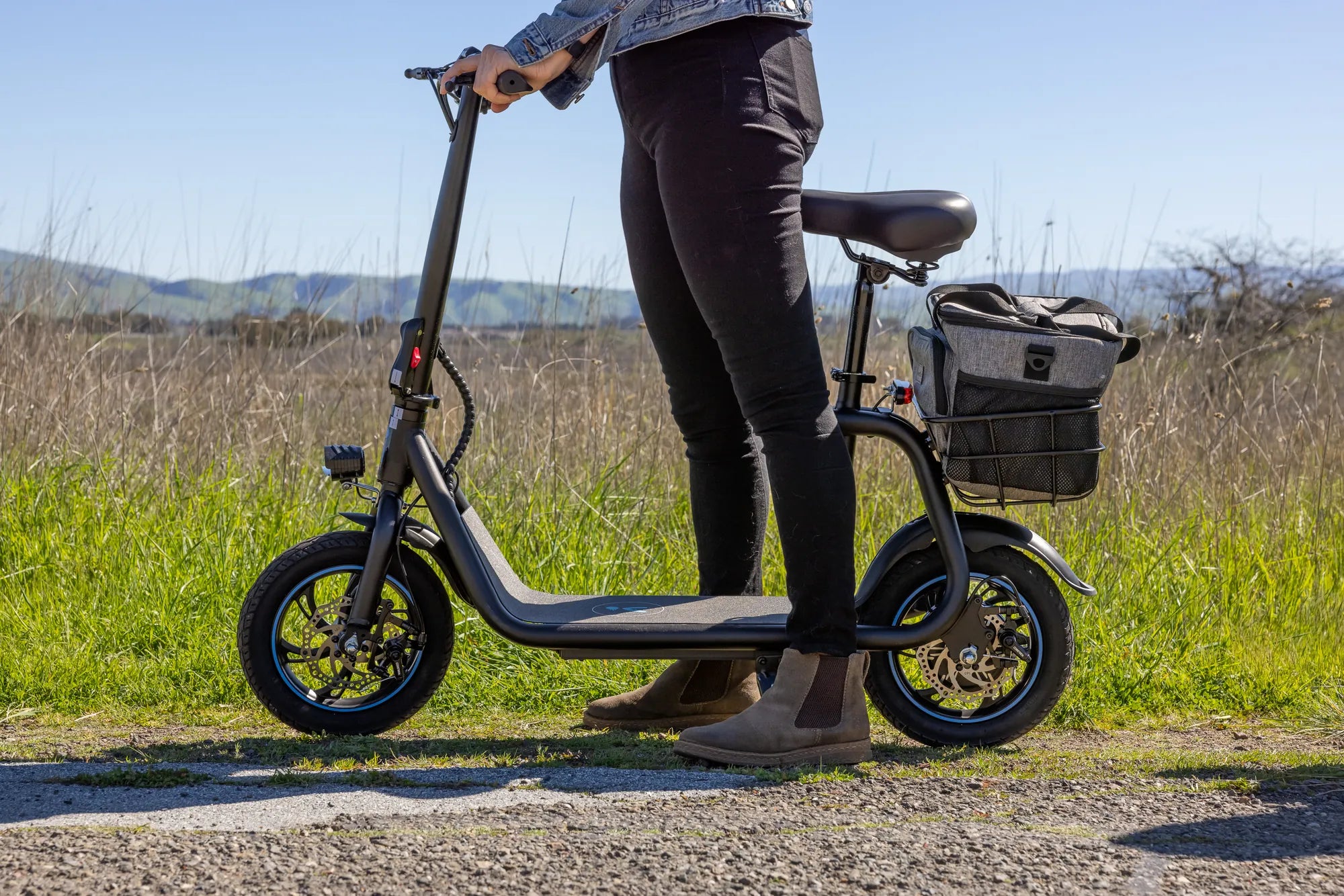
The Rise of the Enclosed Electric Scooter
Urban mobility is at a crossroads. Traditional solutions are failing under the weight of congestion, cost, and environmental impact. Enter the enclosed electric scooter: a fully or partially covered personal electric vehicle designed to bridge the gap between an open-frame e-scooter and a microcar. This innovative category is not just an incremental upgrade; it’s a fundamental rethinking of the personal commuter vehicle.
The core proposition is powerful. It combines the agility, efficiency, and low operational cost of a scooter with the protection and practicality traditionally reserved for cars. For commuters, this means a viable, year-round alternative that sidesteps traffic, eliminates fuel costs, and drastically reduces one’s carbon footprint. The evolution towards enclosed electric scooters: the future of urban mobility is driven by a demand for sustainable, personal, and comfortable transportation.
Data from urban planning studies consistently show that a significant portion of car trips in cities are under five miles and often carry only one person and a few items. This is the perfect use case for a compact, efficient vehicle. Enclosed electric scooters directly target this inefficiency, offering a tailored solution for the daily urban grind. They represent a logical progression in the electrification of personal transport.
Leading brands like Gyroor, trusted by over 100,000 riders, are at the forefront of this shift. By integrating advanced battery technology and durable construction into user-centric designs, they are making the vision of a practical, all-weather personal electric vehicle a tangible reality for city dwellers across North America and Europe.
The Core Advantages: Why Enclosed Design is a Game-Changer
The shift from an open-frame scooter to an enclosed model is significant. It transforms the riding experience from a fair-weather novelty to a dependable primary commute vehicle. The advantages are rooted in practical, daily-use improvements that address the major pain points of urban travel.
The most immediate benefit is the creation of a personal microclimate. An enclosure provides a substantial barrier against the elements. This means commuting in a light rain shower no longer requires a panicked search for shelter or arriving at work soaked. It also means protection from biting cold winds in winter and harsh sun in summer, making the vehicle usable across three or even four seasons in many climates.
Beyond comfort, the structure inherently enhances safety. A rigid cabin or frame offers a degree of crash protection absent on open scooters. Integrated lighting systems are more robust and legally compliant for road use. Furthermore, when parked, the enclosure can be locked, securing belongings inside and deterring casual theft or tampering with the vehicle’s controls, a common concern with shared open scooters.
Practicality sees a massive boost. Many enclosed models feature built-in storage compartments within the cabin—space for a laptop bag, groceries, or a small parcel. This utility turns the scooter from a simple people-mover into a tool for daily errands. The ability to carry a week’s worth of groceries or your work gear securely and protected from the weather is a transformative feature for urban living.
Weatherproof Commuting, Year-Round
The promise of year-round usability is central to the value of an enclosed scooter. An effective enclosure does more than just keep rain off; it manages the rider’s microenvironment. High-quality models use polycarbonate or acrylic windscreens and side panels that deflect wind, reducing rider fatigue on breezy days.
In colder climates, some riders supplement this with heated grips or even small cabin heaters, though this impacts battery range. The key is that the enclosure makes these additions possible and effective. Conversely, in hot weather, ventilated designs or the ability to open panels prevent the cabin from becoming an oven, ensuring comfort across a wide temperature range.
Enhanced Safety and Security Features
Safety is multi-faceted. Structurally, a well-built enclosure can offer a roll cage-like effect in a tip-over, protecting the rider’s limbs. Integrated lighting—including headlights, brake lights, turn signals, and hazard lights—becomes standard, making the vehicle more visible and its intentions clearer to other road users, which is critical for safety in mixed traffic.
From a security standpoint, the ability to lock the cabin door or cover is a significant upgrade. It allows riders to securely store helmets, bags, or purchases inside while running a quick errand. This addresses a major logistical hurdle of open vehicles, where you must carry all belongings with you at all times or risk theft.
Storage and Practicality for Daily Life
The inclusion of storage fundamentally changes the vehicle’s role. It transitions from a recreational device to a practical tool. Enclosed scooters often feature under-seat storage, lockable trunks, or dash compartments. This capacity, often ranging from 10 to 50 liters, is sufficient for a backpack, a helmet, or several bags of groceries.
This utility directly replaces short car trips. The mental calculus for a quick trip to the store shifts when you have a vehicle that is cheaper to operate than a car, easier to park, and can carry your goods securely. It’s this everyday practicality that cements the enclosed electric scooter’s place as a legitimate alternative for a wide range of urban travel needs.
Technical Deep Dive: Key Specifications and Features
Choosing a quality enclosed electric scooter requires understanding key performance metrics. The added weight of the enclosure and potential cargo demands a more robust powertrain and battery system than a standard kick-scooter. Informed buyers should focus on a core set of technical specifications that dictate real-world performance.
Motor power is paramount. Look for a continuous power rating, not a peak rating. For enclosed models carrying an adult rider and possibly cargo, a motor of 500W or higher is typically the entry point for adequate performance. A 750W or 1000W motor, like those found in higher-end Gyroor models, provides confident acceleration and reliable hill-climbing ability, essential for varied urban terrain.
Range is the most critical battery metric, but it is highly variable. Manufacturers often advertise a maximum range under ideal conditions (light rider, flat ground, low speed). A realistic rule of thumb is to expect 60-70% of the advertised maximum in real-world urban use with stops, starts, and mild inclines. Battery capacity, measured in Watt-hours (Wh) or Amp-hours (Ah), is a more consistent number for comparison.
Build quality separates durable investments from disposable gadgets. The chassis should be made of high-grade steel or aluminum. The enclosure materials—whether hard plastic, fiberglass, or fabric—should feel sturdy and be securely mounted. A high Ingress Protection (IP) rating for water and dust resistance is non-negotiable for a vehicle designed for all-weather use; IPX5, meaning protection against water jets from any direction, is a strong standard.
Powertrain and Performance Metrics
Performance hinges on the motor and controller. A brushless hub motor is standard for its reliability and efficiency. Torque, which determines hill-climbing ability, is as important as top speed. A scooter that can maintain 15-20 mph on a 10-15% grade is far more practical than one that slows to a crawl. Top speeds for street-legal models typically range from 20 mph to 30 mph, aligning with most city bike lane and residential street speed limits.
The controller manages power delivery from the battery to the motor. A quality controller ensures smooth acceleration and regenerative braking, which can recapture energy during deceleration and extend range. It also protects the electrical system from overloads, contributing to long-term reliability.
Battery Technology and Safety Certifications
The battery is the heart of the vehicle and the most critical safety component. Insist on models that use lithium-ion battery packs with certifications from recognized testing laboratories like UL (Underwriters Laboratories). UL-certified batteries, a standard feature for Gyroor, have undergone rigorous testing for electrical, mechanical, and environmental safety, drastically reducing the risk of fire.
Battery management systems (BMS) are equally important. A good BMS monitors cell voltage and temperature, ensures balanced charging, and prevents over-discharge. This not only safeguards against failure but also maximizes the battery’s lifespan, which is typically rated for 500+ full charge cycles before significant capacity degradation.
Build Quality, Durability, and Warranty
Durability is proven through component choice and design. Look for name-brand tires (e.g., pneumatic for comfort or solid for puncture resistance), hydraulic or high-quality mechanical disc brakes for reliable stopping power, and sturdy suspension (if offered) to handle urban potholes. The fit and finish of panels, the quality of latches and locks, and the wiring harness’s organization are all indicators of overall build quality.
A comprehensive warranty is the manufacturer’s vote of confidence in their product. A 1-year warranty on the entire vehicle, like that offered by Gyroor, provides essential peace of mind. It should cover defects in materials and workmanship for the frame, motor, battery, and electronics, protecting your investment from unforeseen failures.
The Urban Mobility Landscape: A Comparative Analysis
To understand the value proposition of an enclosed electric scooter, it must be positioned within the broader ecosystem of urban transport options. Each mode of transport has its trade-offs between cost, convenience, speed, and practicality. The enclosed e-scooter carves out a unique niche by blending attributes from several categories.
Compared to a traditional car, the enclosed scooter wins on operational cost, parking ease, and environmental impact. It loses on passenger capacity, top speed, and long-distance weather protection. Compared to public transit, it wins on point-to-point speed, schedule freedom, and hygiene. It loses on the ability to multitask (e.g., read, work) during the commute and has a higher upfront cost.
The most direct comparison is with other personal electric vehicles. The following table breaks down the key differences between an enclosed e-scooter, an open-frame e-scooter, and a commuter e-bike.
| Feature | Enclosed E-Scooter | Open-Frame E-Scooter | Commuter E-Bike |
|---|---|---|---|
| Weather Protection | Excellent (Full cabin) | Poor (Rider exposed) | Fair (Can add accessories) |
| Storage Security | Excellent (Lockable interior) | None (Must carry all items) | Fair (Panniers can be removed) |
| Comfort & Fatigue | High (Seated, protected) | Low (Standing, exposed) | Medium (Seated, active posture) |
| Portability / Parking | Low (Larger, may need dedicated space) | Very High (Foldable, lightweight) | Medium (Requires bike rack/lock) |
| Typical Upfront Cost | $$$ ($1,500 - $4,000+) | $ ($300 - $1,200) | $$ ($1,000 - $3,000) |
| Ideal Use Case | Primary all-weather commuter, errands | Last-mile solution, recreational rides | Fitness-oriented commute, longer range trips |
This analysis shows that enclosed electric scooters: the future of urban mobility are not meant to replace every other option. They are a specialized tool optimized for the rider who needs a dedicated, protected, and practical vehicle for a daily commute and local errands, regardless of the weather, and who values the lower cost and footprint compared to a car.
Comparison with Traditional Open-Frame E-Scooters
The open-frame scooter excels in portability and low-cost entry. It is a brilliant solution for the "last mile" of a multimodal commute or for casual, fair-weather use. However, its limitations become stark for daily, primary commuting. The rider is fully exposed to the elements, has no secure storage, and standing for a 30-minute commute can be tiring.
The enclosed model solves these problems but sacrifices portability. It is a vehicle you ride to a destination and park, not one you fold and carry into an office or onto a train. The choice, therefore, hinges on whether your primary need is a portable supplement or a dedicated primary vehicle.
Comparison with E-Bikes, Public Transit, and Cars
E-bikes offer excellent exercise benefits and often longer range, but they provide less inherent weather protection and storage security (without adding bulky accessories). An enclosed scooter is often more stable at lower speeds and can feel safer in heavy traffic due to its more vehicle-like presence and integrated lighting.
Against public transit, the enclosed scooter provides autonomy, consistency in travel time, and a private, clean space. Financially, the break-even point versus a monthly transit pass can be surprisingly short, often within a year or two, after which the scooter provides "free" transportation aside from minimal electricity costs.
Versus a car, the financial argument is overwhelming. There is no gas, minimal insurance (if required), negligible maintenance (no oil changes), and often free parking. The annual cost of ownership can be less than 10% of that for a compact car, making a compelling case for one-car households to replace a second vehicle with an enclosed e-scooter.
Addressing Common Concerns and FAQs
Prospective buyers often have practical questions and concerns before investing in this new vehicle category. Addressing these head-on is crucial to understanding the real-world viability of enclosed electric scooters: the future of urban mobility.
Are They Street Legal? Regulations and Licensing
Legality varies significantly by country, state, and even municipality. In most U.S. jurisdictions, enclosed electric scooters are classified similarly to low-speed electric bicycles or electric scooters. Common regulations include a maximum speed limit (often 20-28 mph), a minimum rider age (16 or 18), and a requirement to use bike lanes where available. They are typically prohibited on sidewalks.
Licensing, registration, and insurance requirements are less common for lower-speed models (under 20-30 mph) but are becoming a topic of regulatory evolution. It is the rider’s responsibility to check local laws. Generally, models with a top speed under 20 mph have the fewest regulatory hurdles, often requiring no license, registration, or insurance.
Parking, Charging, and Daily Logistics
Parking is far easier than for a car. An enclosed scooter can often be parked in a bicycle rack, a motorcycle spot, or a compact corner of a parking garage. At home, it can be stored in a garage, shed, or even a ground-floor apartment if there is accessible entry. A sturdy lock (chain or U-lock) is recommended for public parking.
Charging is simple. The battery is removable on most quality models, allowing you to bring it inside to a standard wall outlet. A full charge typically takes 4-8 hours. For daily commuters, plugging in overnight ensures a full "tank" every morning. Electricity cost is trivial, often less than $0.30 for a full charge that provides 20-40 miles of range.
Cost Analysis: Initial Investment vs. Long-Term Savings
The upfront cost is the biggest barrier, with quality models starting around $1,500 and ranging to $4,000 or more for premium features. However, the total cost of ownership tells a different story. Compare to a car: no gas ($1,500+/year saved), minimal maintenance ($500+/year saved), often no insurance ($1,000+/year saved), and reduced parking fees.
Even compared to public transit at $100/month ($1,200/year), the scooter can pay for itself in 2-3 years. After that, your transportation costs drop to nearly zero. For a commuter replacing a second car or a consistent transit user, the investment offers significant long-term financial benefits and a rapid return on investment.
Frequently Asked Questions (FAQ)
Q: How far can an enclosed electric scooter go on a single charge?
A: Real-world range varies based on rider weight, terrain, speed, and temperature. For a typical 48V 15Ah battery, expect 20-30 miles. Larger capacity batteries (e.g., 20Ah+) can provide 35-50 miles. Always consider your round-trip commute distance with a safety margin.
Q: Are they safe to ride in the rain?
A> With a proper enclosure and a high IP water-resistance rating (IPX5 or higher), they are designed for wet weather. However, riders should exercise increased caution, as road surfaces are slicker, and braking distances increase. Ensure tires have good tread and lights are on for visibility.
Q: Do I need a driver's license to operate one?
A> This depends entirely on local laws. In many areas, for models with a top speed under 20-28 mph, no driver's license is required. Always verify with your local Department of Motor Vehicles or transportation authority for the most accurate and current regulations.
Q: Can I carry a passenger?
A> The vast majority of enclosed electric scooters are designed and certified for a single rider only. The seat, powertrain, and brakes are not rated for the additional weight and balance shift of a passenger. Carrying a passenger is unsafe and likely illegal.
Q: How do I maintain an enclosed electric scooter?
A> Maintenance is minimal compared to a car. Key tasks include: keeping tires properly inflated, checking and tightening bolts periodically, cleaning the vehicle (especially brakes and moving parts), and storing the battery in a cool, dry place when not in use for extended periods. Following the manufacturer's guidelines is essential.
Conclusion: Is an Enclosed Electric Scooter Your Next Commute Vehicle?
The evidence points to a compelling case for enclosed electric scooters as a cornerstone of future urban mobility. They offer a unique synthesis of protection, practicality, and efficiency that directly addresses the shortcomings of both traditional scooters and cars for short-range urban travel. The transformation of enclosed electric scooters: the future of urban mobility from a niche concept to a mainstream solution hinges on their ability to provide reliable, all-weather, and cost-effective transportation.
Your decision should be guided by a clear assessment of your needs. If your daily commute is under 15 miles each way, you have a secure place to park and charge at home and work, and you are frustrated by the cost and hassle of car ownership or the limitations of public transit, an enclosed e-scooter is a powerful alternative. It represents not just a vehicle purchase, but an investment in personal mobility freedom, financial savings, and a smaller environmental footprint.
The critical factor for success is choosing a reputable brand that prioritizes safety, durability, and support. Brands like Gyroor, with their commitment to UL-certified batteries, IPX5 water-resistant builds, and comprehensive 1-year warranties, provide the reliability needed for a vehicle you depend on daily. This peace of mind is invaluable when your commute relies on it.
Explore the potential for yourself. Assess your commute, calculate the potential savings, and imagine a daily trip free from traffic stress and weather worries. The future of urban mobility is personal, electric, and intelligent. Browse the full Gyroor collection at gyroorboard.com to see how leading engineering and thoughtful design are making that future accessible today.
Fastest Electric Scooters 2024: Speed, Power, and Cutting-Edge Tech
Budapest Tour on Electric Scooters: The Ultimate Way to Explore the City