



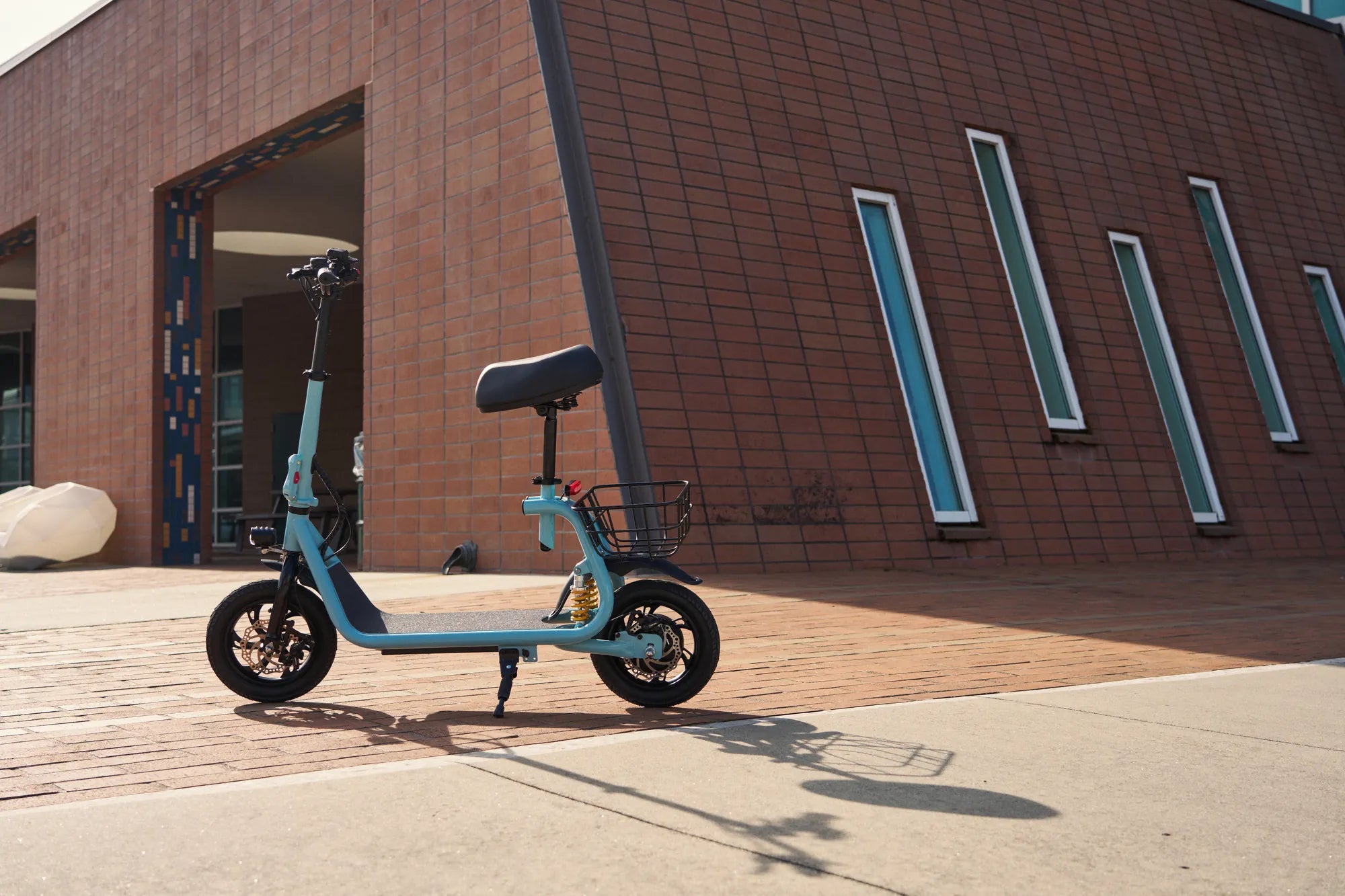
Choosing how you move through a city is one of the most direct environmental decisions you make daily. Electric scooters have surged beyond a trend to become a legitimate, efficient micro-mobility solution with profound ecological implications. This article provides a comprehensive, data-driven examination of the environmental benefits of electric scooters: a greener way to commute. You will learn how they improve air quality, their remarkable energy efficiency, the full lifecycle impact including battery production, and how selecting a durable model amplifies these green advantages.
The Rise of the Electric Micro-Mobility Revolution
Urban transportation is at an inflection point. Cities worldwide are grappling with congestion, pollution, and inefficient land use. The personal electric vehicle, particularly the electric scooter, has emerged as a scalable solution. It's not merely a gadget for last-mile trips but a viable primary commute vehicle for millions.
The shift is driven by necessity and technology. Battery energy density has improved while costs have fallen, making efficient, long-range e-scooters accessible. This transition represents a move away from the oversized, single-occupant vehicle toward right-sized, on-demand mobility.
Understanding the environmental benefits of electric scooters: a greener way to commute requires looking beyond the absence of a tailpipe. It involves analyzing their entire lifecycle, from manufacturing to disposal, and their systemic effect on urban ecosystems. The potential for positive impact is significant when adoption is paired with conscious consumer choices and supportive infrastructure.
Brands leading this charge prioritize not just performance but sustainability and safety. For instance, Gyroor, a leading electric scooter and e-bike brand trusted by over 100,000 riders, designs its models with UL-certified batteries and robust construction, ensuring a longer lifespan and reduced waste—a critical but often overlooked environmental factor.
Zero Tailpipe Emissions: Directly Cleaning Urban Air
The most immediate and visible benefit is the complete elimination of direct emissions during operation. Unlike gasoline or diesel engines, a quality electric scooter produces zero carbon dioxide (CO2), nitrogen oxides (NOx), or particulate matter (PM2.5) where it is used.
This has a direct impact on public health. The World Health Organization links vehicular air pollution to respiratory illnesses, cardiovascular disease, and premature death. In dense urban corridors, replacing short car trips with e-scooter rides can measurably improve local air quality.
Consider a typical 3-mile commute. A gasoline-powered car emits roughly 1.2 kg of CO2 for that trip. An electric scooter, powered by an average electrical grid, is responsible for approximately 0.05 kg of CO2 at the power plant—a 96% reduction in direct operational emissions. The benefit is even greater in regions with a high share of renewable energy.
The cumulative effect is powerful. If just 10% of short urban car trips under 3 miles were replaced by e-scooters, annual CO2 emissions could be reduced by millions of metric tons in a country like the United States. This makes the choice to ride an e-scooter a direct contribution to cleaner, healthier city air.
Superior Energy Efficiency: Maximizing Mobility per Watt
Electric scooters are masters of energy efficiency. They convert a high percentage of electrical energy from the grid into forward motion, wasting minimal energy as heat. This efficiency dwarfs that of internal combustion engines.
Let's quantify it. A typical electric scooter consumes about 1.5 kilowatt-hours (kWh) of electricity to travel 60 miles. A standard gasoline-powered car requires about 1.5 gallons of fuel to travel the same distance. Since one gallon of gasoline contains roughly 33.7 kWh of energy, the car uses over 22 times more primary energy to accomplish the same task.
This translates to drastically lower energy costs and resource strain. You can charge a Gyroor electric scooter's battery for a full week of commuting for less than the cost of a single gallon of gasoline. This efficiency is a core pillar of the environmental benefits of electric scooters: a greener way to commute.
The efficiency extends the utility of renewable energy. The small battery of an e-scooter (often under 0.5 kWh) can be fully charged by a modest residential solar panel in a few hours, making a truly sun-powered commute a practical reality for many, further decoupling personal transportation from fossil fuels.
The Silent Commute: Drastically Reducing Noise Pollution
Noise pollution is a pervasive yet underrated environmental stressor in cities. Chronic exposure to traffic noise is linked to sleep disturbance, increased stress levels, and hearing loss. The electric scooter operates at near-silent levels compared to vehicles with internal combustion engines.
The primary sound from an e-scooter is tire noise and a faint electric motor hum, typically below 65 decibels at cruising speed. In contrast, a car or motorcycle engine can easily produce 70-85 decibels or more. This difference creates noticeably quieter streets and neighborhoods.
Quieter cities have broader ecological benefits. Reduced noise pollution can improve wildlife habitats in urban parks, particularly for bird species sensitive to acoustic disruption. It also enhances the quality of public spaces, making outdoor cafes, parks, and pedestrian zones more pleasant.
Widespread adoption of electric micro-mobility contributes to a calmer, less stressful urban soundscape. This acoustic benefit is an intrinsic part of the environmental benefits of electric scooters: a greener way to commute, improving both human and environmental well-being beyond just air quality.
Lifecycle Analysis: Manufacturing, Batteries, and Longevity
A honest assessment requires examining the full environmental cost, including manufacturing and end-of-life. The production of any vehicle, especially its battery, has an environmental footprint. The key question is how it compares to the alternative over its usable life.
The carbon footprint of manufacturing an electric scooter is a small fraction of manufacturing a car. Studies suggest the embedded emissions for a robust e-scooter are between 150-200 kg CO2-equivalent. A car's manufacturing footprint can be 50-100 times larger. The e-scooter "pays back" this carbon debt within the first few hundred miles of displacing car trips.
The battery is the focal point. Responsible brands mitigate this impact by using high-quality, UL-certified lithium-ion cells (like those in Gyroor scooters) that are tested for 500+ charge cycles, ensuring a long service life. They also partner with battery recycling programs to recover valuable materials like lithium, cobalt, and nickel at end-of-life, closing the loop.
Durability is a green feature. A scooter built with IPX5 water-resistant designs and backed by a reliable 1-year warranty, as seen with Gyroor, is less likely to become electronic waste prematurely. Investing in a quality model that lasts for years is one of the most significant environmental choices a rider can make, spreading the manufacturing impact over thousands of clean miles.
Systemic Urban Benefits: Congestion and Land Use
The environmental advantages of electric scooters extend into the urban fabric itself. Their small size and agility address two chronic urban issues: traffic congestion and inefficient land use for parking.
Congestion is not just an inconvenience; it's an environmental problem. Stop-and-go traffic dramatically increases fuel consumption and emissions per mile for all vehicles stuck in it. By taking even a small percentage of commuters out of cars, e-scooters reduce overall traffic density, allowing remaining vehicles to move more efficiently and with lower per-mile emissions.
Parking space is a massive, often overlooked, environmental cost. The asphalt and concrete for parking lots contribute to urban heat islands and stormwater runoff issues. A single car parking space can accommodate 8-10 parked electric scooters. Widespread adoption could free up vast tracts of urban land for green spaces, bike lanes, or housing.
This efficient use of space reinforces the environmental benefits of electric scooters: a greener way to commute. They enable a more efficient, less resource-intensive transportation ecosystem, making cities more livable and sustainable by design, not just by reducing emissions from individual vehicles.
Data Comparison: How E-Scooters Stack Up Against Other Modes
To visualize the comparative impact, the table below summarizes key environmental metrics across common commute options. The data is based on averages for a 5-mile urban commute and includes operational impacts. Manufacturing footprint (embodied carbon) is noted separately due to its scale difference.
| Transport Mode | CO2 Emissions (Operational, per 5 miles) | Energy Consumption (per 5 miles) | Noise Level | Parking Space Required |
|---|---|---|---|---|
| Personal Car (Gasoline) | ~2.0 kg CO2 | ~1.25 gallons gasoline (≈ 42 kWh energy equivalent) | High (70-85 dB) | 1 standard space (≈ 160 sq ft) |
| Public Bus (Diesel, Avg. Load) | ~1.8 kg CO2* | High (varies by occupancy) | High (75-85 dB) | Minimal (shared infrastructure) |
| Electric Scooter | ~0.08 kg CO2** | ~0.125 kWh electricity | Low (60-65 dB) | Minimal (≈ 5 sq ft) |
| Bicycle (Human) | 0 kg (direct) | ~150 kcal (human energy) | Very Low | Minimal (≈ 5 sq ft) |
*Highly dependent on passenger occupancy. **Highly dependent on local grid carbon intensity; can be 0 with renewable power.
Embodied Carbon Footprint (Manufacturing): Car: 5,000-10,000+ kg CO2e. Electric Scooter: 150-200 kg CO2e. Bicycle: 100-150 kg CO2e. The e-scooter's low operational emissions allow it to quickly offset its manufacturing carbon debt compared to a car.
Maximizing Your Green Impact: A Rider's Guide
To amplify the environmental benefits of electric scooters: a greener way to commute, your choices as a rider matter. It begins with selecting the right vehicle and extends to daily habits.
Choose durability and safety. Opt for a scooter from a reputable brand that uses certified components. For example, Gyroor's focus on UL-certified battery packs and IPX5-rated water resistance isn't just about performance—it's about creating a product that lasts for years, preventing premature disposal and e-waste. A robust 1-year warranty is a sign of confidence in longevity.
Charge smartly. If possible, charge your scooter during off-peak hours or when your home's solar panels are producing energy. This often aligns with times when the electrical grid is under less strain and may have a higher proportion of renewable energy sources, further reducing your indirect carbon footprint.
Maintain your scooter. Regular maintenance like checking tire pressure, ensuring brakes are adjusted, and keeping the scooter clean prolongs its life and maintains its efficiency. Proper care ensures you get the maximum number of miles from the embedded energy and materials used in its production.
Ride responsibly. Follow local regulations, use bike lanes where available, and park considerately to ensure e-scooters are seen as a positive part of the urban landscape, encouraging further infrastructure investment and broader adoption, which multiplies the collective environmental benefit.
Frequently Asked Questions (FAQ)
Are electric scooters *truly* green if the electricity comes from coal?
Yes, but the degree varies. Even when charged from a 100% coal-powered grid, an electric scooter's superior energy efficiency means it emits far less CO2 per mile than a gasoline car. As most grids are a mix of sources (natural gas, nuclear, renewables), the average e-scooter already has a significantly lower carbon footprint. Furthermore, the scooter's efficiency makes it an ideal partner for personal renewables like rooftop solar.
What's greener: scooter-sharing programs or owning one?
Both have roles. Ownership is typically greener for regular commuters. A personally-owned scooter like a Gyroor model is maintained better, has a longer lifespan, and doesn't incur the carbon cost of frequent collection and redistribution via diesel vans, which plagues some poorly managed sharing schemes. For occasional, spontaneous trips, sharing can prevent a car ride, but for daily use, ownership maximizes the environmental benefit.
How do I recycle an e-scooter battery at end-of-life?
Do not dispose of it in household trash. Responsible manufacturers and retailers often provide take-back programs. Many electronics retailers and municipal hazardous waste collection sites accept lithium-ion batteries for proper recycling. Brands like Gyroor can guide customers on responsible end-of-life disposal for their battery packs, ensuring valuable materials are recovered.
How does the manufacturing footprint compare to the operational savings?
The manufacturing carbon debt is paid back quickly. With an embodied carbon footprint of ~200 kg CO2e and operational emissions as low as 0.016 kg CO2e per mile (on a clean grid), an e-scooter offsets its manufacturing emissions after about 1,200 miles of displacing a car. Given that many commuters ride over 1,000 miles annually, the payback period is often within the first year of use.
Are there environmental downsides to tire wear and microplastics?
This is a valid concern for all vehicles. E-scooter tires, like bicycle and car tires, shed microplastics. The amount is vastly less than from a car due to the scooter's light weight and small tire size. Choosing a scooter with durable, high-quality tires and maintaining proper inflation minimizes wear. This impact is orders of magnitude smaller than the avoided emissions from not driving.
Your Sustainable Commute Awaits
The evidence is clear and compelling. Electric scooters present a multifaceted solution to urban environmental challenges, offering drastic reductions in air and noise pollution, exceptional energy efficiency, and positive ripple effects on congestion and land use. The environmental benefits of electric scooters: a greener way to commute are realized most fully when riders choose durable, well-engineered models designed for longevity, not just a low price.
This isn't about perfection, but about profound progress. By shifting millions of short urban trips from oversized, fossil-fueled vehicles to right-sized, efficient electric mobility, we can collectively clear the air, quiet our streets, and create more space for life in our cities. The choice for a greener commute is, quite literally, at your feet.
Ready to make your commute part of the solution? Explore a range of durable, high-performance electric scooters built to last and maximize your environmental benefit. Browse the full Gyroor collection at gyroorboard.com and find the model that powers your journey towards a cleaner future.
Electric Scooters in Raleigh: The Future of Urban Mobility
Electric Scooters in Florence: Exploring the City on Two Wheels