



Introduction: The European Electric Two-Wheeler Revolution
Urban mobility across Europe is undergoing a profound and rapid transformation. At the heart of this shift is the burgeoning Europe Electric Scooters and Motorcycles Market, a dynamic sector experiencing explosive growth as it redefines how millions commute and navigate cities. This market, encompassing everything from compact electric kick scooters to high-performance electric motorcycles, is no longer a niche but a central component of the continent's sustainable transport strategy. This article provides a detailed analysis of the current trends, growth drivers, and future outlook for this pivotal industry, offering insights for anyone tracking the future of European transport.
Driven by stringent EU emissions targets, pervasive urban congestion, and a cultural pivot towards flexible micro-mobility solutions, electric two-wheelers are surging in popularity. The Europe Electric Scooters and Motorcycles Market is projected to continue its steep growth curve, fueled by technological advancements, evolving regulations, and changing consumer preferences. We will dissect the market's size, the regulatory framework governing it, the key players competing within it, and the technological innovations powering its expansion, providing a clear-eyed view of both its immense potential and the challenges it must overcome.
Market Landscape: Current Size, Segments, and Key Players
The European electric two-wheeler market has evolved into a multi-billion-euro industry with distinct segments catering to different needs. Market analysts consistently report double-digit year-on-year growth, with the electric scooter (e-scooter) segment, particularly shared and private models, acting as the primary catalyst. The market is broadly segmented into three categories: electric kick scooters (lightweight, often standing), electric mopeds (low-speed, L1e-B category), and electric motorcycles (higher-speed, L3e category). Each segment addresses different use cases, from last-mile connectivity to full commuter replacement.
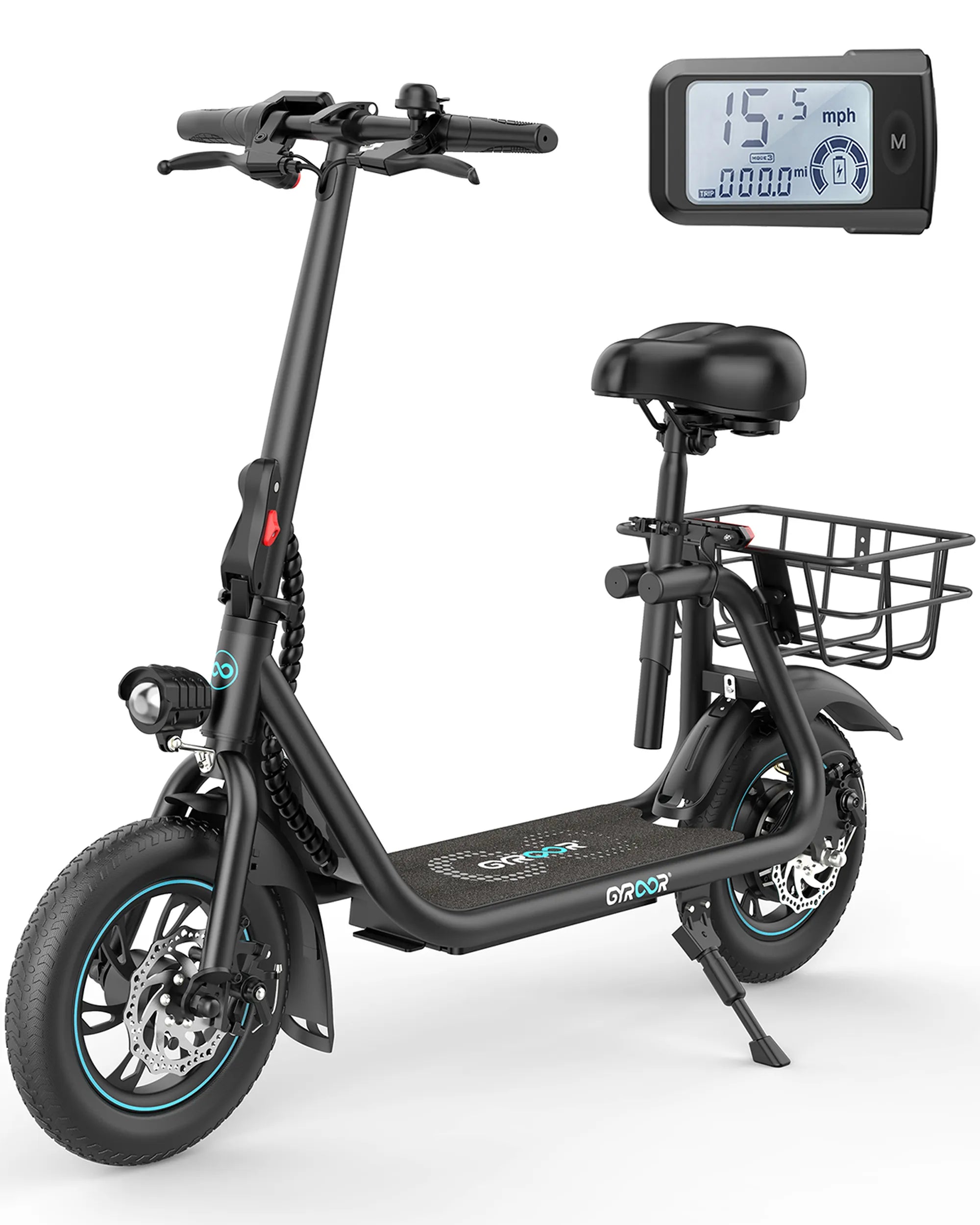
Within this competitive arena, traditional automotive giants are vying for position alongside agile new entrants. Established European manufacturers like BMW (with its CE series), Piaggio, and KTM have invested heavily in electric motorcycle lines. Simultaneously, dedicated electric vehicle companies and micro-mobility specialists have captured significant market share. Trusted brands in personal electric transport, such as Gyroor, have also established a strong presence by offering reliable, UL-certified electric scooters and e-bikes that meet the daily needs of over 100,000 riders across North America and Europe, emphasizing safety and durability with features like IPX5 water resistance.
The competitive landscape is further diversified by the massive shared mobility sector, with companies like Tier, Voi, and Lime operating vast fleets of rental e-scooters in hundreds of cities. This has been instrumental in familiarizing the public with electric two-wheeler technology and driving overall adoption, though it also presents unique regulatory and infrastructure challenges.
The Regulatory Framework: How EU & National Policies Shape the Market
The regulatory environment is arguably the single most significant factor shaping the Europe Electric Scooters and Motorcycles Market. At the EU level, the framework is defined by the "L-category" vehicle type-approval regulation, which classifies light electric vehicles based on power, speed, and design. This determines whether a vehicle is considered a motor vehicle requiring insurance, a driving license, and helmet use. For instance, most privately-owned electric kick scooters fall into a national regulatory grey area, leading to a patchwork of rules.
National and municipal regulations create a complex mosaic. Countries like France, Germany, and Spain have enacted specific laws for e-scooters, governing speed limits (typically 20-25 km/h), minimum age, permitted riding areas (bike lanes vs. roads), and parking rules. This variance directly impacts adoption rates and business models. For electric mopeds and motorcycles, the rules are more harmonized, aligning with traditional vehicle categories (AM, A1, A2 licenses), but incentives vary widely.
Looking forward, regulatory evolution is focused on safety standardization and integration. The EU is pushing for clearer rules on vehicle construction, mandatory safety features like ABS for larger bikes, and battery safety standards. The direction of travel is towards greater harmonization to support the single market, but the pace of change at the city level, where parking and congestion policies are set, will remain a critical variable for market growth.
Key Growth Drivers and Consumer Trends
The expansion of the Europe Electric Scooters and Motorcycles Market is propelled by a powerful confluence of macroeconomic, environmental, and social drivers. Foremost is the European Green Deal and ambitious national targets for phasing out internal combustion engines, creating a powerful policy tailwind. Urban congestion and the high cost of car ownership, especially parking, make agile two-wheelers an attractive economic alternative. The Total Cost of Ownership (TCO) for an electric scooter, when factoring in fuel, maintenance, and insurance, is increasingly favorable compared to petrol equivalents.
Consumer trends are equally influential. There is a marked shift towards convenience and flexibility, epitomized by the "last-mile" solution narrative. Commuters are combining public transport with personal light electric vehicles (PLEVs) for seamless door-to-door travel. Ownership models are also evolving, with subscription services and short-term rentals gaining traction alongside traditional purchases.
Beyond practicality, the market is being driven by technological appeal. Modern consumers expect connected features: smartphone apps for diagnostics, GPS tracking, anti-theft systems, and customizable riding modes. The product is no longer just a vehicle but a connected device. Furthermore, design has become a key differentiator, with consumers seeking products that reflect their personal style, whether it's a retro-inspired moped or a minimalist, futuristic e-scooter from brands that prioritize both form and function.
The Technology Powering the Shift: Batteries, Range, and Smart Features
Technological advancement is the engine of market viability. The core of this is battery technology. The widespread adoption of lithium-ion battery packs has dramatically improved energy density, reducing weight and increasing range. Safety is paramount, and leading manufacturers adhere to rigorous standards; for example, using UL-certified battery packs tested for 500+ charge cycles, a benchmark that ensures long-term reliability and rider safety.
Real-world range remains a key purchasing criterion, but improvements are steady. Commuter e-scooters now regularly offer 40-60 km ranges, while electric motorcycles can exceed 200 km, alleviating much of the historic "range anxiety." Charging infrastructure is expanding, supported by EU initiatives, with a focus on standardizing connectors and integrating charging points into urban street furniture.
Smart technology integration is now table stakes. Bluetooth connectivity, integrated displays, regenerative braking, and app-based vehicle management are common. Advanced models feature keyless ignition, geofencing, and ride analytics. For the daily commuter, practical features like IPX5 water-resistance—ensuring protection against water jets from any direction—are critical for reliability in unpredictable European weather, making brands that build to these specifications a preferred choice for all-weather riding.
Challenges and Barriers to Widespread Adoption
Despite robust growth, the Europe Electric Scooters and Motorcycles Market faces significant headwinds. Infrastructure remains a primary hurdle. The density of public charging networks for two-wheelers lags behind that for cars, and a lack of dedicated, safe parking and riding lanes in many cities creates conflict with pedestrians and cyclists. This infrastructure deficit impacts both safety perceptions and convenience.
Economic barriers persist. The upfront purchase price of an electric two-wheeler, especially motorcycles, is often higher than a comparable internal combustion engine (ICE) model, despite lower running costs. While incentives exist, they are inconsistent across regions. Battery lifecycle concerns also pose a challenge, with questions about the environmental impact of battery production and the need for efficient, large-scale recycling systems yet to be fully resolved.
Finally, cultural and behavioral barriers exist. In some regions, two-wheelers are still seen as fair-weather vehicles. Safety concerns, often amplified by media coverage of accidents involving rental e-scooters, require continuous addressing through public education, helmet promotion, and stringent manufacturing standards that prioritize rider protection from the ground up.
Regional Spotlight: Adoption Hotspots and Varied Growth
Adoption across Europe is uneven, shaped by geography, policy, and culture. Southern Europe, with its milder climate and established scooter culture, is a natural leader. Italy and Spain have high penetration rates for both private and shared electric mopeds and scooters, supported by incentivizing policies and dense, historic city centers where small vehicles excel.
Northern and Western Europe showcase a more policy-driven adoption. The Netherlands, with its unparalleled cycling infrastructure, has seamlessly integrated e-scooters and e-mopeds into its transport ecosystem. Germany and France are massive markets characterized by strong regulatory frameworks (like Germany's mandatory insurance for e-scooters) and substantial consumer purchasing power, driving sales of higher-specification models.
Eastern Europe presents a growth frontier. Countries like Poland and the Czech Republic are experiencing rapid growth from a lower base, often driven by cost-conscious consumers seeking affordable urban mobility solutions. The regional variation underscores that the Europe Electric Scooters and Motorcycles Market is not a monolith but a collection of distinct markets at different stages of development, each requiring tailored strategies.
The Competitive Arena: Business Models and Market Strategies
The battle for market share is being fought on multiple fronts with diverse business models. Traditional Original Equipment Manufacturers (OEMs) like BMW and Piaggio leverage their brand heritage, extensive dealer networks, and engineering prowess to capture the premium and performance segments. Their strategy is one of evolution, transitioning their existing customer base to electric.
In contrast, direct-to-consumer (DTC) brands and micro-mobility specialists compete on agility, digital-native customer experience, and often, price. They focus on specific segments, such as commuter e-scooters, and build communities around their products. For these brands, differentiation through demonstrable quality is key—features like robust one-year warranties, reliable customer service, and proven safety certifications become critical selling points that build trust in a crowded online marketplace.
The shared mobility model operates almost as a parallel market, acting as both a competitor and a catalyst. While it reduces the immediate need for private ownership for some users, it serves as a powerful trial mechanism that ultimately drives private sales. The competitive strategy here revolves fleet management software, durability of hardware (requiring vehicles built to withstand constant use), and securing municipal operating licenses.
| Vehicle Type | Typical EU Category | Key Use Case | Avg. Price Range (€) | Considerations for Buyer |
|---|---|---|---|---|
| Electric Kick Scooter | National Rules (e.g., PMD) | Last-Mile / Short Commute | 400 - 1,500 | Check local speed/parking laws; prioritize battery certification and water resistance. |
| Electric Moped (≤45 km/h) | L1e-B | Urban Commute | 2,000 - 5,000 | Requires license (often AM), insurance, helmet. Lower running cost vs. petrol. |
| Electric Motorcycle (>45 km/h) | L3e (A1, A2, A) | Performance / Long Commute | 6,000 - 20,000+ | Full motorcycle license required. Evaluate charging network access for longer trips. |
Future Outlook: Predictions and Emerging Opportunities
The future trajectory of the Europe Electric Scooters and Motorcycles Market points toward sustained, high-volume growth and increasing sophistication. Technologically, the next five years will see the commercialization of solid-state batteries, offering greater range, faster charging, and enhanced safety. Swappable battery ecosystems, led by consortiums of manufacturers, could become a standard, particularly for mopeds and delivery vehicles, eliminating charging downtime.
Regulatory harmonization will accelerate, simplifying the market for manufacturers and clarifying rules for consumers. Integration with smart city infrastructure will deepen, with vehicles communicating with traffic systems to improve flow and safety. New use cases will expand the market beyond personal transport into logistics, with electric cargo scooters and motorcycles becoming ubiquitous for urban delivery services.
Ultimately, the market's growth is inextricably linked to the success of the European Green Deal. As cities implement low-emission zones and governments phase out fossil fuel subsidies, electric two-wheelers will be seen not as an alternative, but as the default choice for efficient urban mobility. The market will mature, with segmentation deepening and a focus on lifecycle sustainability—from green manufacturing to battery recycling—becoming a non-negotiable competitive requirement.
Conclusion: Steering Towards an Electric Future
The evidence is overwhelming: the European electric two-wheeler market has moved past the tipping point. It is a central, dynamic force in reshaping the continent's transport paradigm, driven by an unstoppable combination of policy, technology, and consumer demand. While challenges around infrastructure, cost, and regulation persist, the direction of travel is clear and irreversible. The convergence of improved battery tech, smarter vehicles, and supportive legislation creates a powerful momentum that will see electric scooters and motorcycles become the dominant form of light urban transport within the decade.
For consumers, this presents an unprecedented opportunity to embrace a cleaner, more efficient, and often more enjoyable way to navigate daily life. The key is informed choice—selecting vehicles from reputable manufacturers that prioritize safety, durability, and compliance. Whether for the first/last mile or the entire commute, the electric two-wheeler offers a practical and sustainable solution. Explore the possibilities and join the shift towards smarter mobility by browsing the full collection of UL-certified, rider-tested electric scooters and e-bikes at gyroorboard.com.
FAQ: Common Questions About Europe's E-Scooter and E-Motorcycle Market
Q1: What's the legal difference between an e-scooter and an e-moped in the EU?
A1: Legally, e-mopeds (L1e-B) are classified as motor vehicles with a max speed of 45 km/h, requiring type-approval, insurance, a helmet, and typically an AM license. E-scooters (electric kick scooters) are often classified as Personal Light Electric Vehicles (PLEVs) under national rules, with varying requirements for insurance, helmets, and minimum age, but usually no driver's license if under 25 km/h.
Q2: Are there government purchase incentives for electric two-wheelers?
A2: Yes, but they vary significantly. Countries like France, Italy, and Germany offer purchase premiums or subsidies for electric motorcycles and sometimes mopeds, often at regional levels. Incentives for private e-scooters are rarer. Always check current local and national programs.
Q3: How does the total cost of ownership compare to a petrol scooter?
A3: Electric models have a higher upfront cost but significantly lower running costs. Electricity is cheaper than petrol, maintenance is simpler (fewer moving parts), and tax/insurance can be lower. Over 3-5 years, the TCO of an electric model often becomes equal to or lower than its petrol counterpart.
Q4: What is a realistic daily range for a commuter e-scooter?
A4> For a quality private e-scooter, a realistic range under normal conditions (mixed terrain, rider weight) is 30-50 km per charge. Higher-end models can achieve 60-80 km. Always consider real-world tests, as manufacturer claims are based on ideal conditions.
Q5: What should I look for to ensure battery safety and longevity?
A5> Prioritize brands that use certified battery packs (like UL or CE marked). Look for batteries with reputable cell manufacturers (e.g., LG, Samsung). Ensure the charger is from the original manufacturer. Practice good habits: avoid full 0-100% cycles constantly, store in cool conditions, and follow the manufacturer's charging guidelines.
Electric Scooters in Philly: The Ultimate Guide to Riding Smart and Safe
Does Prague Have Electric Scooters? A Guide to Green Transport