



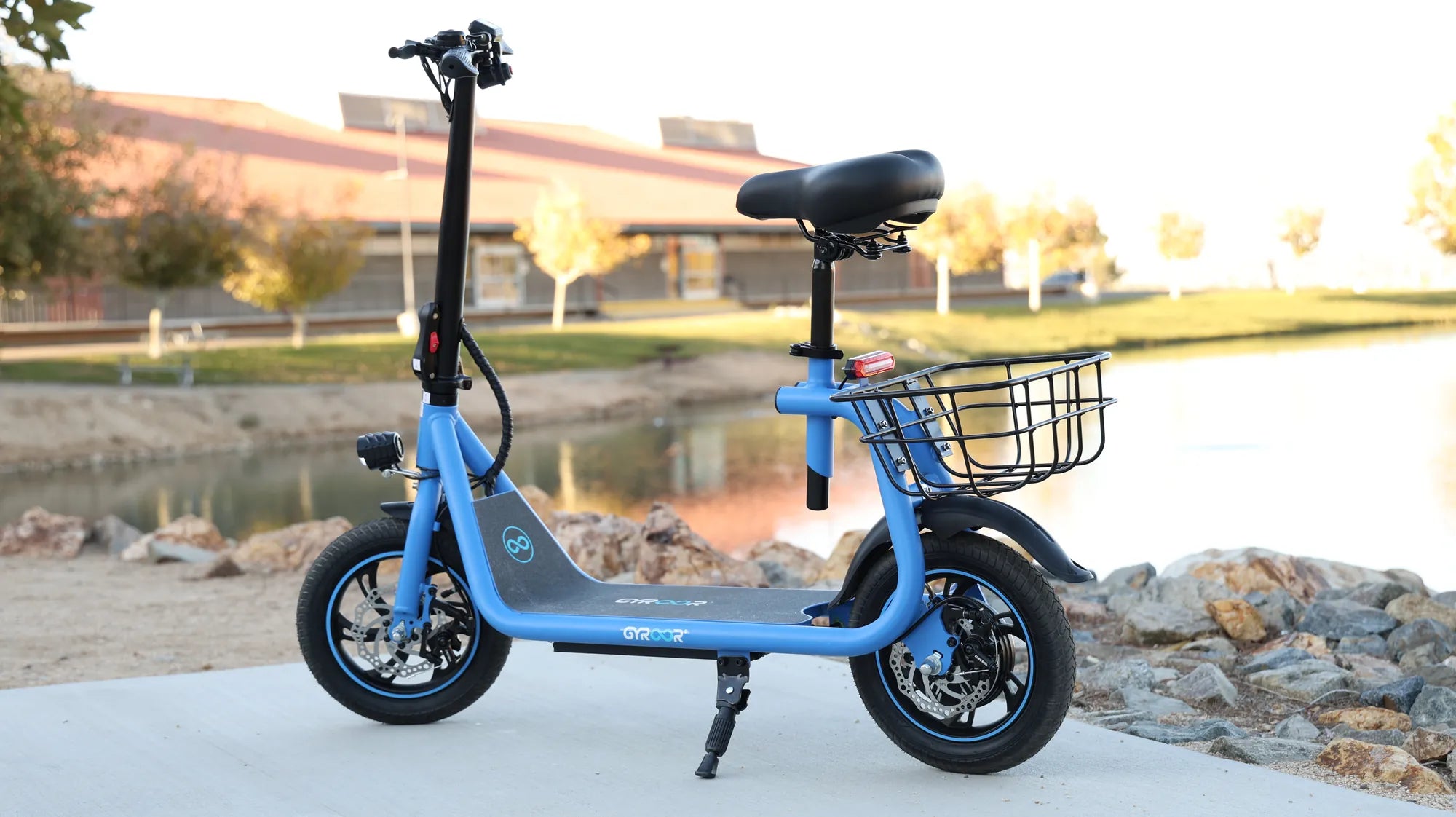
Introduction: The Need for Speed and Safety in Kids' Electric Scooters
The landscape of children's recreation is evolving, with fast electric scooters for kids company offerings leading a charge towards more dynamic outdoor play. These aren't the simple kick scooters of the past; they are sophisticated, motorized vehicles capable of delivering genuine excitement. For parents, this presents a dual priority: facilitating fun, active adventures while ensuring those adventures are fundamentally safe.
This guide delves into the engineering, features, and responsible ownership practices that define the best fast electric scooters for kids. We position Gyroor as a brand that has successfully engineered this critical balance, trusted by over 100,000 families across North America and Europe for delivering reliable, exhilarating, and secure rides. You will learn how to evaluate performance specifications, identify non-negotiable safety components, and match a scooter's capabilities to your child's development.
What Makes an Electric Scooter "Fast" for Kids?
In the context of children's mobility, "fast" is a relative term centered on controlled, age-appropriate performance. For most reputable models, this translates to a top speed range of 10 to 15 miles per hour. This speed provides a thrilling sense of freedom and adventure for young riders while remaining within bounds that proper safety systems and gear can effectively manage.
The perception of speed is influenced by several interlocking technical components. It's not merely about a high maximum number on a spec sheet. True, responsible speed is about consistent, controllable power delivery that a child can handle confidently.
Understanding Motor Power and Speed Modes
Motor power, measured in watts (W), is the engine of performance. A typical fast electric scooter for kids might feature a motor ranging from 250W to 350W. This wattage directly influences acceleration and the scooter's ability to maintain speed on gentle inclines. A more powerful motor provides a more consistent ride experience, especially useful for slightly older or heavier riders.
The most crucial feature for managing this power is the inclusion of multiple, selectable speed modes. These are often labeled as Beginner (or Mode 1), Eco (Mode 2), and Sport (Mode 3). A beginner mode might cap speed at a walking pace of 4-5 mph, perfect for initial learning in a driveway or empty parking lot.
Eco mode often offers a balanced 7-9 mph for confident cruising, while Sport mode unlocks the scooter's full potential, typically 12-15 mph. This graduated system allows a child to progress safely, building skills and judgment at each level. Parents can restrict the scooter to a lower mode indefinitely, ensuring the vehicle grows with the child.
The Role of Battery and Range in Consistent Performance
A high-quality battery is the silent partner to a powerful motor. It determines not just how far a scooter can go, but how well it maintains its performance throughout the ride. A scooter with an inferior battery may start strong but quickly lose power and speed as the charge depletes, which can be disconcerting and unsafe.
Brands committed to safety, like Gyroor, use UL-certified lithium-ion battery packs. These batteries are tested for over 500 charge cycles and provide stable voltage output. This means the scooter delivers consistent speed and torque from a 100% charge down to a safe low-battery cutoff, without unexpected surges or drops in power.
Advertised range is always a variable estimate. Riding in the fastest Sport mode, carrying a heavier rider, or traversing hilly terrain will reduce the maximum distance. Understanding this helps set realistic expectations and prevents a child from being stranded far from home due to a depleted battery.
Safety First: Non-Negotiable Features for Fast Kids' Scooters
Capability for higher speed intrinsically demands enhanced safety engineering. When evaluating a fast electric scooters for kids company product, certain features must be considered non-negotiable. These systems work in concert to protect the rider, giving parents confidence that the thrill of speed is backed by a foundation of security.
The best designs integrate safety at a fundamental level, rather than treating it as an afterthought. This philosophy is evident in every aspect, from the braking mechanism to the deck's grip texture. Safety is the essential counterbalance that makes the fun of a fast ride sustainable and responsible.
Reliable Braking Systems: Disc vs. Electronic
Effective braking is the most critical safety system on any vehicle. For a fast kids' scooter, a single braking method is often insufficient. The industry standard for safer, higher-performance models is a dual-brake system. This typically combines a rear disc (or drum) brake with a front electronic (E-ABS) or regenerative brake.
A mechanical disc brake offers immediate, progressive stopping power controlled directly by the rider's hand. It is highly effective in all conditions, including wet pavement. The electronic brake, often activated by a separate lever or integrated with the throttle release, provides smooth, supplemental stopping power and helps recharge the battery slightly.
Some models also include a rear fender foot brake as a third, fail-safe option. This layered approach ensures that if one system were to fail, another is immediately available. It also allows for controlled braking where applying only the electronic brake can prevent skidding on loose surfaces.
Stable Design: Wheel Size, Deck, and Suspension
Stability is a product of design geometry and component quality. Larger wheels, typically 8.5 inches in diameter or more, roll over cracks, pebbles, and minor road imperfections more easily than smaller, solid rubber wheels. This improves control and comfort, reducing the chance of a sudden stop or fall caused by a small obstacle.
Air-filled (pneumatic) tires offer superior shock absorption and traction compared to solid honeycomb tires, providing a smoother and more stable ride at speed. The deck should be wide enough for a child to place both feet comfortably side-by-side, with a pronounced, non-slip surface to maintain footing during acceleration and braking.
Front suspension, often a spring-based system, is a key differentiator for fast scooters. It actively absorbs impacts from bumps, further enhancing stability and rider control. This combination of large pneumatic tires, a wide deck, and suspension creates a confident and planted riding experience, which is essential for safety at higher speeds.
Parental Controls and Speed Limiters
Hardware safety is complemented by digital safeguards. Parental control capabilities are a hallmark of a responsible fast electric scooters for kids company. The most effective systems allow a parent to lock the scooter to a specific speed mode via a companion smartphone app or a physical PIN code entered on the scooter's display.
This means you can permanently set your 8-year-old's scooter to a maximum of 8 mph (Eco mode), even if they know how to change the mode on the display. The app-based controls from leading brands often include additional features like ride history tracking, battery status monitoring, and remote locking of the scooter itself to prevent unauthorized use.
This level of control is not about limiting fun, but about managing progression. It ensures the scooter's performance is always matched to the rider's demonstrated skill and maturity, providing a crucial layer of oversight for parents.
Gyroor's Commitment: Engineering Speed with Security
As a leading fast electric scooters for kids company, Gyroor's product philosophy is built on the principle that performance and protection are inseparable. Their engineering choices directly address the core concerns of parents seeking a thrilling yet trustworthy ride for their children. This commitment is materialized in specific, verifiable standards and features.
Trust is earned through transparency and adherence to high safety benchmarks. Gyroor has cultivated a loyal customer base by focusing on these fundamentals, ensuring that every scooter delivers not just a fun ride, but a reliably safe one. Their approach demonstrates how a brand can lead in performance without compromising on security.
UL-Certified Battery: The Foundation of Safe Power
The battery is the heart of an electric scooter, and its safety is paramount. Gyroor mandates UL-certification for all its battery packs. This independent certification means the battery cells, circuitry, and housing have undergone rigorous testing by Underwriters Laboratories for electrical, mechanical, and fire safety risks.
In practical terms, a UL-certified battery is far less likely to overheat, swell, or catch fire during charging or high-drain use. For a fast scooter that draws significant power, this certification is not a luxury—it is an essential safeguard. It provides families with tangible peace of mind, knowing the power source propelling their child is held to a recognized safety standard.
Furthermore, these quality batteries support the promised 500+ charge cycles, ensuring the scooter remains a dependable part of a child's life for years, not just months.
IPX5 Water Resistance: Durability for Real-World Fun
Children ride in the real world, where puddles, wet grass, and light rain are inevitable. An IPX5 water-resistance rating signifies that a scooter's electrical components are protected against low-pressure water jets from any direction. This means it can safely handle splashes from riding through a puddle or being caught in a sudden drizzle.
This rating protects the motor controller, wiring, and display from moisture-related corrosion and short-circuiting. For a fast electric scooter, maintaining consistent electrical performance is key to safety; a sudden loss of power or control due to water ingress is unacceptable. Gyroor's IPX5 design ensures that minor wet conditions won't end the fun or compromise the scooter's integrity.
The 1-Year Warranty and U.S. Support Promise
A comprehensive warranty is a brand's vote of confidence in its own product. Gyroor's standard 1-year warranty on the scooter, coupled with a 6-month warranty on the battery, signals a commitment to durability and quality. It acts as a safety net for parents, covering defects in materials or workmanship.
Perhaps just as important is the accessibility of customer support. Gyroor maintains U.S.-based support channels, ensuring that if a question or issue arises, parents can get timely, clear assistance without language barriers or long international delays. This support structure transforms the warranty from a piece of paper into a practical promise of ongoing safety and satisfaction.
Choosing the Right Fast Scooter: A Parent's Checklist
Armed with knowledge about components and safety, selecting the perfect scooter becomes a structured decision. This checklist transforms technical specifications into practical parenting considerations. The goal is to find a scooter that aligns with your child's current abilities while offering room to grow, all within a framework you can trust.
Every child and family situation is unique. Use this guide as a flexible framework to prioritize features based on your specific needs, whether that's a focus on hill-climbing ability for a hilly neighborhood or maximum speed limiting for a cautious first-time rider.
Matching Scooter Specs to Your Child's Age and Skill
A scooter that is too powerful can be intimidating and dangerous, while one that is underpowered will quickly become boring. Use this reference table as a starting point for your evaluation. Always defer to your personal assessment of your child's coordination, judgment, and riding experience.
| Age & Experience | Recommended Max Speed | Motor Power Guide | Key Features to Prioritize |
|---|---|---|---|
| 6-8 years (Beginner) | 8-10 mph | 150W - 250W | Speed limit lock, beginner mode, lower deck height, wide handlebars. |
| 9-12 years (Intermediate) | 10-13 mph | 250W - 350W | Dual braking, pneumatic tires, multiple speed modes, app controls. |
| 13+ years (Advanced) | 13-15+ mph | 350W+ | Front suspension, longer range, high-load capacity, robust construction. |
Remember, these are guidelines. A small, lightweight 10-year-old might be best suited to a scooter from the lower range, while a tall, athletic 9-year-old with prior riding experience could safely handle a more capable model. The "start slow" principle is always the safest path.
Pre-Ride Safety Protocol: Gear and Inspection
The safest scooter is only part of the equation. Establishing consistent pre-ride habits is essential for long-term safety. This protocol should become as routine as putting on a seatbelt in a car.
Essential Safety Gear (Non-Negotiable):
- Helmet: Must be CPSC-certified, properly fitted, and worn for every ride.
- Knee and Elbow Pads: Crucial for protecting joints during falls.
- Wrist Guards: Highly recommended to prevent common scooter injuries.
- Closed-Toe Shoes: Secure footwear like sneakers, never sandals or flip-flops.
Pre-Ride Scooter Checklist (60-Second Inspection):
<- Brakes: Squeeze the levers to ensure they engage firmly and the scooter stops smoothly.
- Tires: Check for proper inflation (for pneumatic tires) and any visible damage.
- Bolt Check: Gently try to wiggle the handlebars and folding mechanism (if present) to ensure everything is tight and secure.
- Lights: Test the headlight and taillight if riding near dusk or dawn.
- Battery: Confirm there is adequate charge for the planned ride.
Maintenance and Care for Long-Term Performance and Safety
Proper maintenance extends the life of a fast electric scooter and ensures it remains safe to operate. A well-maintained scooter performs predictably, which is a cornerstone of safety. These tasks are generally simple and can be incorporated into regular care routines.
Neglecting basic maintenance can lead to degraded performance, sudden failures, and increased risk. Spending a few minutes every few weeks on upkeep is an investment in both the scooter's longevity and your child's ongoing safety.
Battery Care and Charging Best Practices
Treating the battery correctly is the most important maintenance task. Always use the manufacturer-provided charger. Avoid leaving the scooter plugged in for extended periods after it reaches 100% charge. For long-term storage (over a month), store the scooter with the battery charged to about 50-60% in a cool, dry place.
Do not allow the battery to fully discharge and sit empty for weeks. Avoid charging the battery immediately after a ride if the scooter is very hot; let it cool to room temperature first. Following these practices will maximize the battery's lifespan and maintain its safe, reliable operation.
Mechanical Inspection and Cleaning
Every month, perform a more thorough inspection. Check all bolts and screws, especially those on the stem, handlebars, and brake assemblies, and tighten them if necessary with the provided tools. Examine the brake pads for wear and ensure the braking system is adjusted properly—the levers should not touch the handlebars when fully engaged.
Clean the scooter with a damp cloth to remove dirt and grime. Avoid high-pressure water jets or submerging any part of the scooter, even with an IPX5 rating. Keep the charging port cover closed when not in use. Periodically check the tire tread for excessive wear and ensure pneumatic tires are inflated to the PSI rating listed on the sidewall.
FAQ: Your Top Questions Answered
Q1: What is a safe age for a 15 mph electric scooter?
There is no universal "safe age," as it depends heavily on a child's individual maturity, size, coordination, and prior riding experience. Generally, a scooter capable of 15 mph is most appropriate for responsible teenagers (13+) or younger children who are exceptionally experienced, cautious, and under direct parental supervision. For most children under 12, limiting top speed to 10-13 mph via parental controls is a wiser choice.
Q2: How do I maintain the battery for maximum lifespan?
Follow the "20-80 rule" when possible: avoid routinely draining the battery to 0% and try not to charge it to 100% every time. Keeping it between 20% and 80% charge for daily use is ideal for lithium-ion health. Store it in a temperate environment, away from extreme heat or cold. Use only the official charger, and never leave it charging unattended for excessively long periods, such as overnight regularly.
Q3: Can the top speed be permanently locked for a younger rider?
Yes, on quality scooters from reputable brands like Gyroor. This is a core function of the parental control system, accessible via a smartphone app or a PIN code on the display. You can lock the scooter into its slowest speed mode (e.g., Beginner mode at 5 mph), and the child cannot change it without your password or app authorization, even if they power the scooter off and on again.
Q4: What is the real-world range on the fastest speed mode?
The advertised range is usually a best-case scenario, often tested at a constant lower speed with a lightweight rider on flat ground. In Sport (fastest) mode, you can typically expect 50-70% of the advertised maximum range. For a scooter rated for 15 miles, expect 8-11 miles at full speed, depending on rider weight, hills, acceleration habits, and temperature. Always plan rides with a significant buffer.
Q5: Are fast electric scooters safe for riding on sidewalks?
Local laws vary greatly, so checking your municipal ordinances is essential. From a safety perspective, sidewalks present hazards like pedestrians, driveway cutways, and uneven slabs. If sidewalk riding is permitted and necessary, it must be done at very low speeds (beginner mode) with extreme caution, yielding right-of-way to every pedestrian. For practicing higher speeds, a deserted parking lot, cul-de-sac, or paved bike path is a far safer and more appropriate environment.
Conclusion: Fun, Freedom, and Peace of Mind
The journey to finding the right fast electric scooter for your child culminates in a powerful realization: the ultimate ride seamlessly blends exhilarating performance with uncompromising safety engineering. It delivers the freedom and joy that kids crave, wrapped in the security and control that parents demand. This balance is not achieved by accident but through deliberate design choices—UL-certified batteries, dual braking systems, robust parental controls, and stable, suspension-equipped frames.
Brands that prioritize this integrated approach, like Gyroor, demonstrate that being a leading fast electric scooters for kids company means more than just posting high speed numbers. It means building trust through verifiable safety standards, durable construction, and supportive customer care. By choosing a scooter with these principles at its core, you invest in more than a toy; you invest in countless hours of confident, outdoor adventure and the priceless peace of mind that comes with it. Empower your child's exploration with the right tools, and let the safe, fun rides begin.
Ready to explore a range of high-performance scooters engineered for safety? Browse the full Gyroor collection at gyroorboard.com to find the perfect match for your young rider's next adventure.
Top 10 Electric Scooters UK: The Best Picks for 2024
How Long Do Electric Scooters Stay Charged? The Ultimate Guide to Battery Life