



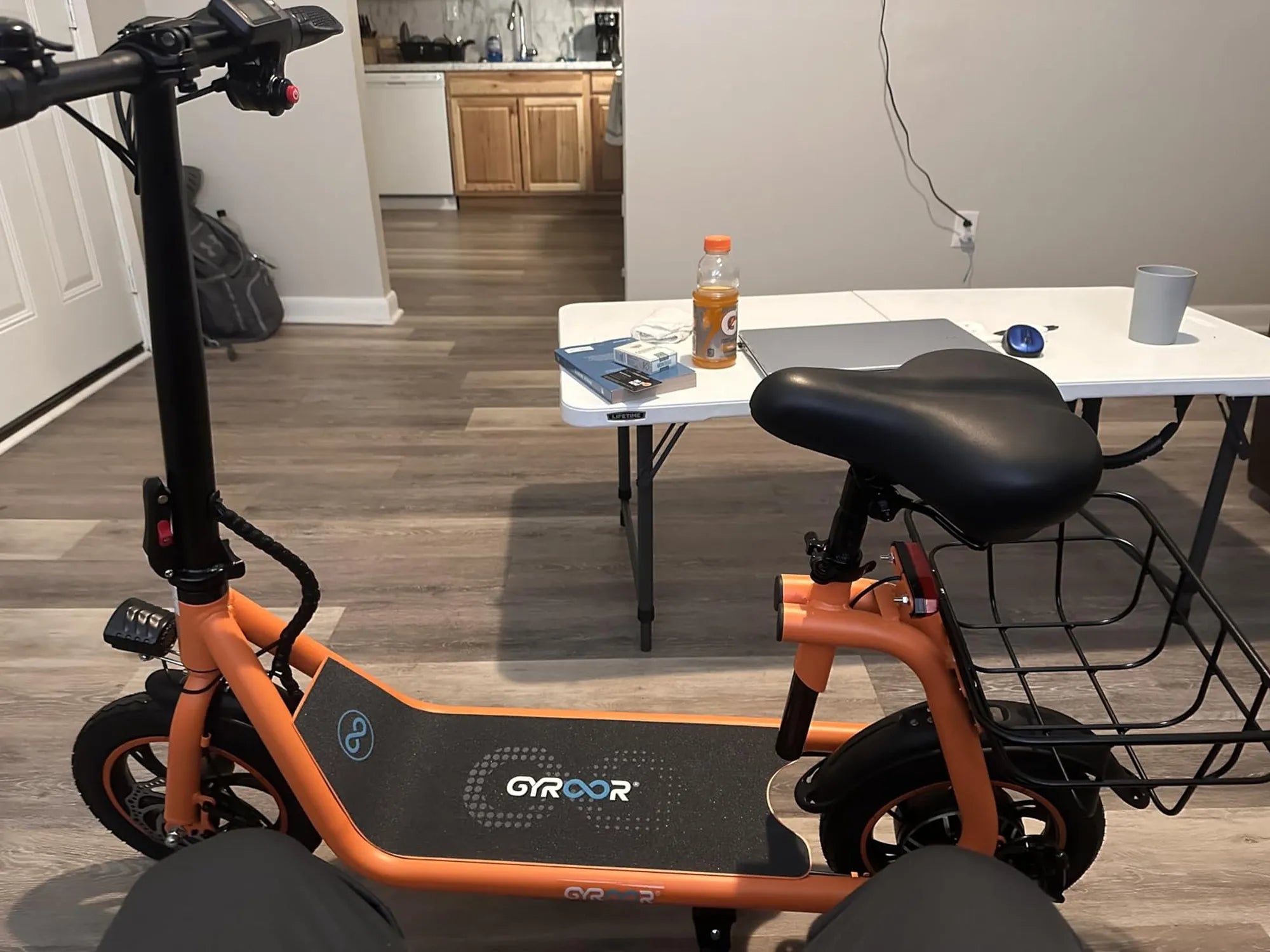
The urban commute is evolving from a slow crawl to an efficient glide. Fast electric scooters, typically defined by speeds exceeding 20 miles per hour, are redefining personal transportation by slashing travel times and injecting excitement into daily travel. This shift represents more than just velocity; it's about practical efficiency for longer commutes and the pure thrill of dynamic movement. For over 100,000 riders across North America and Europe, brands like Gyroor have demonstrated that speed must be intrinsically linked with safety, reliability, and durable engineering. This article will dissect the technology enabling these thrilling rides, outline the non-negotiable safety protocols, and provide a clear framework for selecting your ideal high-performance scooter.
The Engineering Behind the Velocity: Core Performance Specifications
Speed on an electric scooter is not a singular feature but the result of a finely tuned system. Three primary components work in concert: the motor, the battery, and the electronic controller. Understanding their interaction is key to evaluating true performance.
The motor's nominal and peak power, measured in watts, determines acceleration and hill-climbing capability. A 500W motor may sustain 20 mph on flat ground, while models reaching 28+ mph often feature 800W to 1000W dual-motor setups. The controller acts as the brain, regulating power flow from the battery to the motor for smooth acceleration and efficient operation.
Battery voltage and capacity are equally critical. A 48V system provides more power and higher potential top speeds than a 36V system. Capacity, measured in Amp-hours (Ah), dictates range. However, a crucial trade-off exists: riding consistently at top speed dramatically increases power consumption, reducing the maximum range advertised under ideal conditions.
True engineering excellence lies in balancing these elements for sustained performance, not just a high peak speed on a spec sheet. Reliability under load separates premium scooters from basic models.
Motor and Powertrain: The Heart of Acceleration
Most fast electric scooters utilize brushless DC hub motors, prized for their reliability and direct-drive efficiency. Single rear-wheel motors are common, but high-performance models often feature dual motors—one in each wheel—for exceptional torque and acceleration.
Motor wattage is a primary indicator. A 350W motor suits casual riding, but for the category of fast electric scooters, 500W is the effective entry point. Riders seeking brisk acceleration and the ability to maintain speed on moderate inclines should look for motors rated at 800W or higher.
Torque, the rotational force, is what you feel during acceleration. A high-torque motor delivers a quick launch from a stop, which is essential for safely merging with urban traffic flow. This characteristic is often more perceptible and useful in daily riding than top speed alone.
Battery and Range: The Power Compromise at High Speed
The relationship between speed and range is not linear. Aerodynamic drag increases exponentially with speed, meaning the energy required to maintain 25 mph is significantly more than that needed for 15 mph. Manufacturers typically state a maximum range based on optimal conditions: a light rider on flat terrain at a moderate, steady pace.
In real-world use, a scooter advertised for 40 miles of range might only achieve 20-25 miles if ridden aggressively at top speed. This makes battery quality and management paramount. High-quality, name-brand lithium-ion cells with robust Battery Management Systems (BMS) ensure stable voltage output and protect against over-discharge.
For commuters, the key is to identify a scooter with a battery capacity (often shown as Watt-hours, or Wh) that provides a realistic range buffer for your daily distance, even when factoring in high-speed segments. This ensures you won't be left stranded.
Safety at Speed: Non-Negotiable Features for Fast Riding
Increased velocity demands a proportional increase in safety infrastructure. A fast scooter without the components to manage that speed safely is a liability. Essential safety systems must be designed to handle the higher kinetic energy and stopping distances involved.
The rider's responsibility escalates with speed. This makes features like bright lighting, audible horns, and reflective elements critical for visibility. However, the core mechanical and electronic systems form the foundation of safe high-speed operation.
Investing in a scooter from a reputable brand that prioritizes these integrated safety systems is not an optional upgrade; it is a fundamental requirement for responsible riding. Brands like Gyroor engineer these features into their performance models from the outset.
Braking Systems: Stopping Power to Match the Go
Effective braking is the most critical safety system on any vehicle. For fast electric scooters, a single braking method is insufficient. The industry standard for performance models is a dual or even triple braking system, combining mechanical and electronic brakes.
Disc brakes, similar to those on bicycles and motorcycles, provide strong, consistent, and modulated stopping power. Hydraulic disc brakes offer superior feel and require less maintenance than mechanical cable-actuated discs. These are essential for reliable stopping in all weather conditions.
Electronic or regenerative brakes use the motor to create resistance, slowing the scooter and converting some energy back to the battery. While not as powerful as disc brakes for emergency stops, they are excellent for speed modulation and reducing wear on physical brake pads. The combination ensures redundancy—if one system fails, the other can still bring the scooter to a halt.
Stability and Control: Frame, Tires, and Suspension
Stability at speed is achieved through a rigid frame, appropriate wheel size, and proper suspension. A wobbly or flexible frame can induce dangerous speed wobbles. High-performance scooters use reinforced aluminum or alloy frames to maintain integrity.
Tire choice is vital. Larger, air-filled (pneumatic) tires, typically 10 inches in diameter or more, provide better shock absorption, traction, and stability than small, solid tires. They smooth out road imperfections and improve grip during cornering and braking.
A full suspension system—combining front and rear shocks—is a hallmark of serious performance scooters. It keeps the wheels in contact with the road over bumps and potholes, maintaining control and rider comfort. Without suspension, hitting a bump at high speed can cause loss of control or a painful jolt.
Gyroor's Engineering Philosophy: Speed Built on Trust
As a leader trusted by a global community of riders, Gyroor's approach to fast electric scooters is defined by a commitment to foundational safety and durability. The brand understands that thrilling performance must be delivered without compromising on the core promises of reliability and rider peace of mind.
This philosophy is executed through stringent component standards, rigorous testing, and transparent warranties. It transforms a high-speed scooter from a mere product into a dependable tool for daily mobility and adventure. The focus extends beyond the initial purchase to the entire ownership experience.
By integrating professional-grade safety certifications and robust construction into their performance lineup, Gyroor ensures that the excitement of speed is matched by the confidence of a secure ride. This balance is what defines the future of premium urban micro-mobility.
UL-Certified Battery Packs: The Foundation of Reliable Power
UL (Underwriters Laboratories) certification is one of the most rigorous safety standards for lithium-ion batteries. Gyroor's use of UL-certified battery packs means each cell and the complete battery assembly has been independently tested for electrical, mechanical, and environmental safety.
This certification mitigates risks associated with overheating, short-circuiting, and thermal runaway—a critical concern for high-performance applications where batteries are consistently pushed. It also signifies quality construction, leading to more consistent performance over the battery's lifespan, which is tested for 500+ charge cycles.
For the rider, this translates to a fundamentally safer energy source, greater long-term value, and reliable power delivery every time the throttle is engaged. It is a cornerstone feature that should be non-negotiable for any scooter capable of high speeds.
IPX5 Water Resistance: Engineered for Real-World Conditions
Urban commuting is unpredictable. An IPX5 water-resistance rating indicates a scooter can withstand water jets from any direction, making it resistant to rain, puddles, and wet roads. This is a significant step above basic splash resistance.
This rating protects the scooter's vital electronics—the controller, motor connectors, and battery compartment—from moisture ingress that can cause corrosion, short circuits, or component failure. It allows riders to commute confidently without constant anxiety over weather changes.
Gyroor's integration of IPX5 resistance across its performance models ensures that the scooter is built for the realities of daily use, not just fair-weather cruising. This durability is essential for a vehicle meant to be a primary mode of transportation.
Warranty and Support: The Confidence to Ride
A comprehensive warranty is a brand's vote of confidence in its own product. Gyroor's standard 1-year warranty on the scooter, coupled with accessible US-based customer support, provides a tangible safety net for riders investing in a performance machine.
This coverage typically includes the motor, battery, controller, and frame, protecting against manufacturing defects. It assures owners that their significant investment is protected and that assistance is available should an issue arise.
This level of after-purchase support is rare in the personal electric vehicle market and is a key differentiator for riders who prioritize long-term reliability alongside immediate performance.
Choosing Your Fast Electric Scooter: A Practical Comparison
Selecting the right high-speed scooter requires matching specifications to your specific use case. Consider your typical commute distance, terrain (hills vs. flats), need for portability, and desired balance between speed and range. The following comparison outlines key considerations across performance categories.
| Use Case / Model Type | Typical Top Speed | Real-World Range* | Motor Power | Key Features & Best For |
|---|---|---|---|---|
| The Urban Commuter | 20 - 22 mph | 18 - 25 miles | 500W - 650W | Good suspension, IPX5 rating, reliable brakes. Best for daily 5-10 mile commutes on city streets. |
| The Performance Enthusiast | 25 - 28 mph | 20 - 30 miles | 800W - 1000W Single/Dual | Dual braking, hydraulic suspension, larger tires. Best for longer commutes and riders seeking thrilling acceleration. |
| The Long-Distance Cruiser | 22 - 25 mph | 30 - 40+ miles | 650W - 800W | Extra-large battery capacity, comfort-focused design. Best for riders prioritizing maximum range over peak speed. |
*Real-world range estimates factor in varied riding conditions and speeds. Always check battery capacity in Watt-hours (Wh) for the most accurate comparison.
For example, a rider with a 7-mile flat commute who values portability might prioritize a robust 500W commuter model. Another rider with a 12-mile hilly route and a desire for weekend recreation should invest in a performance enthusiast model with a powerful motor and superior brakes. Always prioritize the safety features outlined earlier within your chosen category.
Riding Tips and Maintenance for High-Performance Scooters
Owning a fast scooter comes with increased responsibility for both operation and upkeep. Proper maintenance ensures safety, performance, and longevity. Begin every ride with a pre-ride check: inspect tire pressure, test brake function, ensure lights are working, and verify the folding mechanism (if present) is securely locked.
Adapt your riding style to your speed. At higher velocities, you must increase your following distance, anticipate stops much earlier, and scan the road further ahead for hazards. Always wear a helmet certified for cycling or skating; for speeds over 20 mph, consider additional protective gear like gloves, knee pads, and a durable jacket.
Regular maintenance is simple but crucial. Keep tires inflated to the recommended PSI. Check and tighten bolts periodically, especially on the stem, handlebars, and brakes. Clean the scooter with a damp cloth, avoiding direct high-pressure water sprays on electronic components. Store the scooter in a dry, temperate environment and avoid leaving the battery fully depleted for extended periods.
The Road Ahead: Fast E-Scooters and Urban Ecosystems
The proliferation of fast electric scooters is more than a trend; it's a meaningful component of evolving urban mobility networks. By offering a legitimate alternative for trips between 2 and 10 miles, they reduce reliance on single-occupancy cars, alleviating traffic congestion and lowering per-capita carbon emissions.
City planners are increasingly recognizing this potential, integrating dedicated micro-mobility lanes and secure parking into infrastructure projects. The efficiency gain from higher-speed personal electric vehicles can make them a more compelling choice for a wider segment of the population, accelerating adoption.
The future will likely see further technological integration, such as connectivity for theft prevention, advanced rider aids, and even more efficient powertrains. The core promise remains: providing a swift, enjoyable, and sustainable way to navigate the urban landscape, making cities more livable and connected.
Frequently Asked Questions (FAQ)
How fast can electric scooters legally go?
Laws vary significantly by jurisdiction. In many US cities and states, the legal limit for electric scooters on public roads and bike lanes is 15-20 mph. Some areas allow higher speeds in certain zones. It is the rider's absolute responsibility to know and obey local laws, which always take precedence over a scooter's maximum capability. Responsible riding often means using speed modes to limit your scooter to the legal limit.
Are fast electric scooters safe for beginners?
It is not recommended for a complete beginner to start on a high-performance scooter capable of 25+ mph. The learning curve for balance, braking, and hazard reaction is steep. Beginners should start with a lower-powered model, master the fundamentals in a safe, open area, and gradually progress to faster scooters as their skills and confidence develop. Always prioritize models with comprehensive safety features regardless of experience level.
Do I need a license or insurance to ride a fast e-scooter?
Regulations are evolving. Currently, in most US states, a driver's license is required to operate an e-scooter on public roads, but a special license or registration is not. Insurance is typically not mandatory but is highly recommended. Some homeowner's or renter's insurance policies may offer limited coverage. Always check your specific state and municipal regulations, as they are subject to change.
How much do high-performance electric scooters cost?
Quality fast electric scooters represent a significant investment. Reliable commuter models (20-22 mph) start around $700-$900. True high-performance models (25-28+ mph) with dual brakes, suspension, and large batteries typically range from $1,200 to $2,000+. Premium brands justify this cost with superior components, safety certifications, warranties, and build quality that ensure durability and safety.
Can I ride a fast electric scooter in the rain?
This depends entirely on the scooter's official water-resistance rating. A scooter with an IPX5 rating, like many Gyroor models, is designed to withstand rain and wet roads. However, no consumer scooter is submersible. Avoid deep puddles, and never charge a scooter when it is wet. Even with a good rating, reduce speed in wet conditions, as braking distances increase and traction decreases.
Your Next Ride Awaits
The era of the fast electric scooter is here, offering a compelling synthesis of practical utility and sheer enjoyment. They stand as a testament to smart engineering, where speed is responsibly harnessed through robust safety systems, quality batteries, and durable construction. Choosing the right model empowers you to reclaim time from your commute, reduce your environmental footprint, and experience the city from a thrilling new perspective.
This future of urban mobility is defined by intelligent choice. It's about selecting a vehicle that doesn't force you to choose between excitement and safety, between performance and peace of mind. The technology has matured to deliver on all fronts, making the high-speed electric scooter a legitimate and transformative tool for modern life.
Ready to explore models that combine thrilling performance with Gyroor's commitment to UL-certified safety, IPX5 water resistance, and reliable warranty support? Discover the engineering difference for yourself and join a global community of riders. Browse the full Gyroor collection at gyroorboard.com and find the scooter built for your pace of life.
Electric Scooters for Adults: The Ultimate Guide to Urban Mobility
Cheap Electric Scooters: Affordable, Efficient, and Eco-Friendly Commuting Solutions