



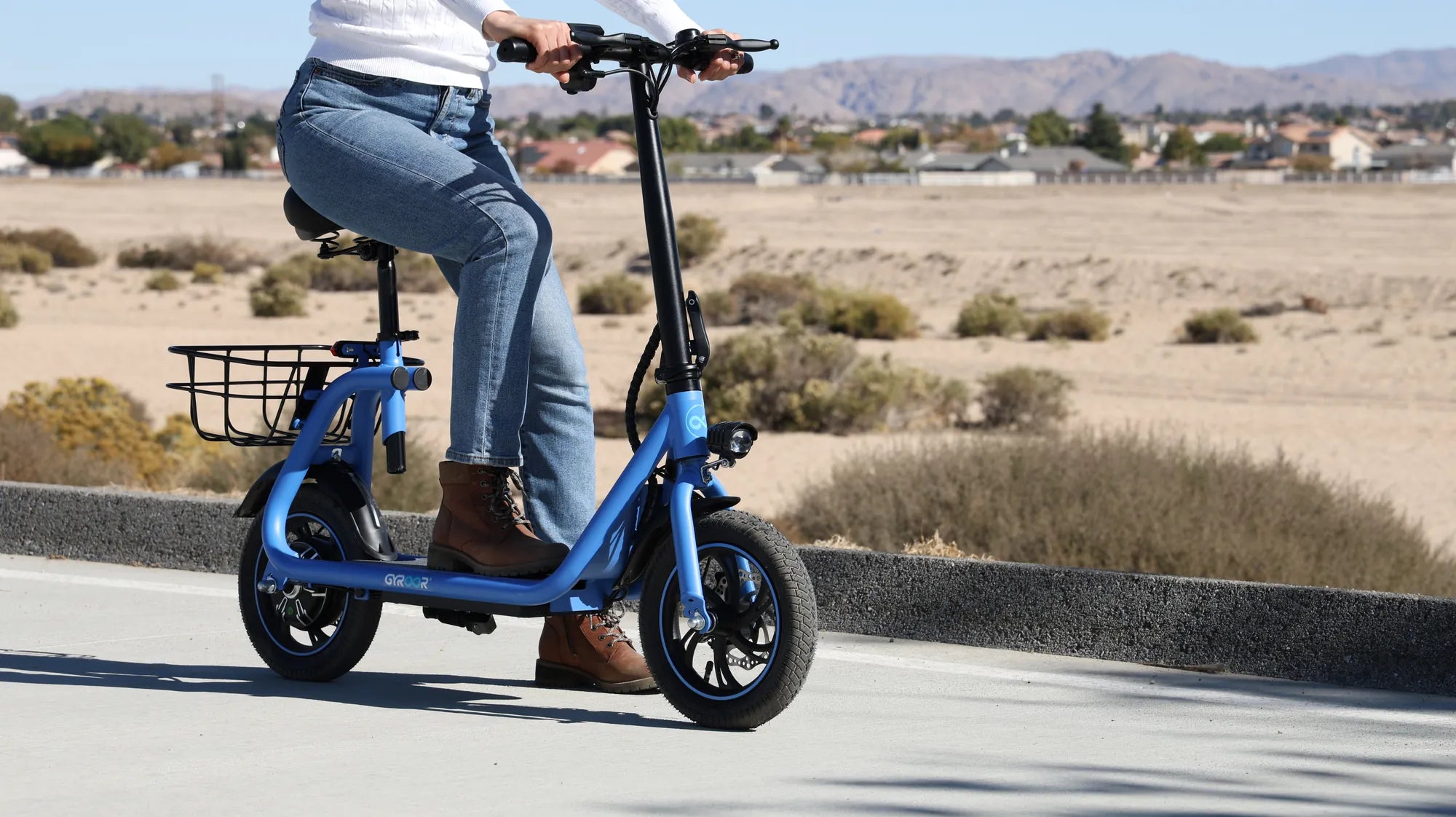
Navigating UK cities demands a transport solution that is both swift and efficient. For commuters looking to slash journey times and enthusiasts seeking an exhilarating ride, fast electric scooters represent a transformative mode of personal mobility. This guide cuts through the noise to deliver a data-driven analysis of speed, performance, and legality, equipping you to make an informed choice. We will examine the technical specifications that define a high-performance scooter, explore the UK's unique regulatory environment, and demonstrate how brands like Gyroor—a leader trusted by over 100,000 riders—engineer models that deliver responsible power and reliability. Whether your priority is a speedy urban commute or off-road adventure on private land, understanding the balance between speed, safety, and compliance is paramount.
What Defines a "Fast" Electric Scooter in the UK?
The term "fast" is relative and must be understood within the UK's specific legal and practical framework. For private electric scooters, used legally only on private land, performance potential is largely defined by engineering. Models designed for performance typically feature motors ranging from 500W to over 1000W, with higher-wattage motors providing stronger acceleration and better hill-climbing capability.
Battery voltage is a critical, often overlooked factor. While a 350W motor on a 36V system may be peppy, a 500W motor on a 48V or 52V system will deliver more power efficiently, sustaining higher speeds for longer, especially under load from rider weight or inclines. Real-world top speed is a product of motor power, battery voltage, controller programming, rider weight, tire pressure, and terrain.
It's crucial to distinguish this technical potential from the legal reality for public road use. The government-approved rental trials operate under strict conditions, including a maximum design speed of 15.5 mph (25 km/h). This benchmark has become a de facto standard for discussing public road legality, though privately owned scooters remain illegal for use on public roads, pavements, and cycle lanes outside these designated trial areas.
UK Legal Speed Limits vs. Performance Potential
The UK's approach to electric scooter regulation creates a clear dichotomy. On one hand, the rental trials enforce a strict 15.5 mph limit for use on public roads. This speed is governed by the scooter's software and is a condition of their insurance and approval.
On the other hand, privately owned performance scooters are capable of significantly higher speeds, often between 20 mph and 40 mph. Their legal use is restricted to private property with the landowner's permission. Reputable manufacturers like Gyroor design their high-performance models with this context in mind, ensuring robust construction and safety features suitable for the speeds they can achieve.
This distinction means UK riders must self-regulate based on their riding environment. Choosing a scooter with multiple speed modes is a practical solution, allowing a compliant, lower-speed setting for permitted areas and access to full performance where it is legal and safe to do so.
Top Performance Features to Look For in a Fast E-Scooter
Selecting a high-speed electric scooter requires looking beyond the headline top-speed figure. True performance is a symphony of components working in harmony. The key is to identify specifications that contribute to acceleration, sustained power, and stable, safe handling at velocity.
Focus on the integrated system: a powerful motor needs a high-voltage battery to feed it, a robust controller to manage the power delivery, and a solid frame with reliable brakes to control it. Compromising on any one of these elements can lead to underwhelming performance, reduced safety, or premature component failure.
Build quality is non-negotiable. A scooter that vibrates or feels unstable at its top speed is not truly performant; it's dangerous. Look for reputable brands that use aerospace-grade aluminum alloys, mention specific IP water-resistance ratings (like IPX5), and provide detailed specifications for all critical components.
Motor Power and Type: The Heart of Acceleration
Motor wattage is the primary indicator of potential power. For urban performance, a 500W motor is a strong starting point, offering good acceleration and the ability to handle moderate hills. For more demanding use or higher top speeds, 800W to 1000W+ motors are common.
The type of motor matters. Most performance scooters use brushless hub motors for their efficiency and reliability. Single-motor setups drive one wheel, while dual-motor configurations power both wheels, offering exceptional torque for steep inclines and off-road traction, albeit with a trade-off in battery consumption.
Peak power ratings are also important. A motor may have a nominal (continuous) power rating and a higher peak rating it can sustain for short bursts, such as during acceleration up a hill. Understanding both figures gives a clearer picture of real-world capability.
Battery & Range: Sustaining High Speeds
The battery is the fuel tank for your scooter's engine. For performance riding, voltage is as important as capacity (measured in Amp-hours, Ah). A 48V or 52V system provides a higher "electrical pressure," allowing the motor to draw more power efficiently, which translates to better acceleration and the ability to maintain top speed, especially under load.
Battery capacity determines range. However, riding consistently at high speeds drains the battery much faster than eco-mode cruising. A high-performance scooter needs a large-capacity battery (e.g., 15Ah or higher) to offer a practical range when using its power. Safety is paramount; always opt for models with UL-certified, fire-resistant battery packs like those used by Gyroor, which undergo rigorous testing for over 500 charge cycles.
Build Quality and Stability at Speed
Speed magnifies every flaw. A sturdy frame constructed from reinforced aluminum alloy is essential to resist flex and provide a stable platform. The deck should be wide enough for a secure footing.
Suspension is critical for maintaining tire contact with the road and rider comfort. A combination of front and rear spring or hydraulic suspension absorbs bumps, increasing control at high speeds. Larger wheel diameter (10 inches or more) also improves stability and roll-over ability compared to smaller wheels.
Braking must match the power. A dual braking system—combining an electronic (regenerative) brake with a mechanical disc brake—is the gold standard. Disc brakes offer consistent, powerful stopping power in all weather conditions, a vital safety feature for a fast electric scooter.
Gyroor's High-Performance Lineup: Engineered for the UK Rider
With a commitment to UL-certified safety, IPX5 water resistance, and robust engineering, Gyroor designs scooters that meet the demands of performance-oriented UK riders. Their lineup balances power with the practicalities of urban commuting and the thrill of off-road exploration, all backed by a reliable 1-year warranty and proven customer support.
The philosophy is one of responsible performance. Models are built to deliver power reliably, with attention to the details that matter at speed: responsive brakes, stable frames, and high-capacity, safe battery systems. This approach ensures that the performance is accessible and sustainable, not just a headline figure.
Whether navigating city streets or exploring private trails, the right tool for the job matters. Gyroor's range offers distinct models tailored to different aspects of the high-performance riding experience, from agile commuters to rugged all-terrain vehicles.
Model Spotlight: The Commuter Powerhouse
Models like the Gyroor C1 series are engineered for the urban performance seeker. Featuring a potent 500W motor, these scooters provide more than enough acceleration for city traffic and hill climbs, while a compact, foldable design ensures easy portability for multi-modal journeys.
The IPX5 water-resistant rating is a key feature for the UK climate, offering protection against rain and road spray. Paired with a high-capacity 48V battery, it delivers a range that supports longer commutes even when utilizing its higher power outputs. The focus is on efficient, reliable speed that integrates seamlessly into daily life without compromising on safety or durability.
Model Spotlight: The Off-Road & Performance Specialist
For riders with access to private land or seeking maximum capability, models like the Gyroor X1 represent the pinnacle of the brand's performance engineering. Equipped with a powerful 800W motor (often with a dual-motor option), it is designed for higher top speeds and conquering rugged terrain.
This capability is supported by a full suspension system, large off-road tires, and a high-voltage, high-capacity battery pack to sustain performance on longer adventures. The reinforced frame and advanced braking system provide the control needed to handle the increased power safely. It exemplifies how performance is delivered through a complete system, not just a single component.
Data-Driven Comparison: Speed vs. Practicality
Choosing the fastest scooter often involves trade-offs. The table below compares key attributes across a spectrum of performance-oriented models to illustrate how specifications impact real-world use. This data helps balance the desire for speed with factors like portability, range, and cost.
| Model Type | Typical Motor Power | Est. Max Speed* | Real-World Range* | Weight | Key Practicality Note |
|---|---|---|---|---|---|
| Lightweight Commuter | 350W - 500W | 15 - 20 mph | 15 - 25 miles | ~30 lbs | Highly portable, ideal for multi-modal travel. |
| Performance Urban (e.g., Gyroor C1) | 500W - 800W | 20 - 28 mph | 20 - 35 miles | 35 - 50 lbs | Great balance of speed, range, and manageable weight. |
| High-Performance/Off-Road (e.g., Gyroor X1) | 800W - 1000W+ | 25 - 40+ mph | 25 - 45 miles | 50 - 70+ lbs | Superior power & suspension; less portable, for dedicated rides. |
*Speed and range are highly variable based on rider weight, terrain, mode, and temperature. Figures are estimates for comparison.
The data shows a clear correlation: as potential speed and power increase, so typically does weight and often cost. The "sweet spot" for many UK riders is the performance urban category, which offers a significant speed advantage over basic models while remaining practical for carrying and storing.
Safety and Maintenance at High Speeds
Riding a fast electric scooter demands a heightened commitment to safety and proactive maintenance. The forces involved at higher speeds mean that equipment failure or rider error can have more serious consequences.
Essential safety gear is non-negotiable. A certified bicycle or multi-impact helmet is the absolute minimum. For speeds over 20 mph, full-face helmets, motorcycle-grade gloves, knee pads, and elbow pads are strongly recommended. High-visibility clothing and lights (front and rear) are crucial for being seen, even in daytime.
Pre-ride checks should become ritualistic. Inspect tire pressure and for wear or damage. Test brakes for responsiveness. Ensure all bolts, especially around the stem and folding mechanisms, are tight. Listen for any unusual noises from the motor or suspension. Regular maintenance, as outlined in the user manual, is key to preserving performance and safety.
The Critical Role of Warranty and Support
When investing in a high-performance machine, the manufacturer's warranty and support network are critical safety nets. A comprehensive warranty, like Gyroor's 1-year coverage, protects your investment against defects in materials and workmanship for critical components like the motor, battery, and controller.
Access to knowledgeable customer support is invaluable for troubleshooting and obtaining genuine replacement parts. Using unofficial parts or attempting unauthorized modifications can void the warranty and compromise the scooter's safety systems, particularly the battery management system (BMS) in UL-certified packs. Reliable support ensures your scooter remains a safe, high-performing asset for the long term.
Frequently Asked Questions (FAQs) on Fast UK E-Scooters
Q1: What is the fastest legal electric scooter I can ride on UK public roads?
Legally, only scooters in official government rental trials are permitted on public roads, and their speed is limited to 15.5 mph. Privately owned e-scooters, regardless of their capability, are not legal for use on public roads, pavements, or cycle lanes. Their higher performance is intended for use on private land only.
Q2: How does rider weight affect the top speed and range of a performance scooter?
Rider weight has a significant impact. A heavier rider increases the load on the motor and battery. This typically reduces the achievable top speed by 1-3 mph and can cut range by 15-30%, as the scooter uses more energy for acceleration and maintaining speed, especially on inclines. Manufacturer range and speed figures often assume a rider weight of approximately 75kg.
Q3: Can I modify my e-scooter to go faster, and is it safe?
While technical modifications (like "de-restricting" or controller swaps) are possible, they are strongly discouraged and extremely dangerous. They void the warranty, bypass critical safety features like the Battery Management System (BMS), and can lead to overheating, component failure, battery fires, or loss of braking control. The scooter's frame, brakes, and tires may also not be rated for the increased stresses.
Q4: Why is a UL-certified battery especially important for a high-power scooter?
High-performance scooters draw more current, putting greater stress on the battery. A UL-certified battery pack has undergone independent safety testing for electrical, mechanical, and environmental hazards. This certification ensures the battery's cells, BMS, and construction can safely handle these high-power demands, significantly reducing the risk of overheating or fire—a non-negotiable safety feature.
Q5: How often should I perform maintenance on a fast e-scooter?
Maintenance frequency depends on usage. For regular riders, a basic check (tires, brakes, bolts) should be weekly. A more thorough inspection, including checking suspension and cleaning, should be monthly. Brake pads may need replacement every 3-6 months with heavy use. Always follow the specific intervals in your scooter's manual, as high-performance models may have more demanding requirements.
Conclusion: Choosing Your High-Speed Companion
Selecting the right fast electric scooter in the UK is an exercise in balancing ambition with responsibility. True performance is defined not just by a top-speed number, but by the integration of a powerful motor, a high-voltage battery, a stable chassis, and reliable brakes. It requires an honest assessment of where you will ride, prioritizing models that excel in your specific environment, whether that's the urban jungle or private trails.
Safety and legality must anchor your decision. Investing in proper protective gear and choosing a scooter from a reputable brand with UL-certified batteries and robust construction is the foundation of enjoyable, long-term performance riding. The peace of mind offered by a comprehensive warranty and accessible customer support is part of the performance package.
Ultimately, a fast electric scooter from a trusted manufacturer like Gyroor represents a smart investment in redefining your commute and expanding your horizons. By focusing on engineered quality, responsible power delivery, and adherence to safety standards, you gain a reliable partner for speed and performance. Explore the engineering and specifications that matter by browsing the full Gyroor collection at gyroorboard.com.
Best Electric Scooters in Kerala 2025: Top Picks for Eco-Friendly Commuting
Best Electric Scooters Under $350: Affordable, Reliable Rides