



Why a Folding Scooter Lock is Essential
A portable, valuable asset like an electric scooter is a prime target for theft. Without a dedicated, robust lock, you are leaving a significant investment vulnerable in seconds. A folding scooter lock is not an accessory; it is a fundamental component of responsible ownership.
The consequences of scooter theft extend beyond financial loss. It disrupts daily commutes, undermines trust in micro-mobility, and can leave riders stranded. A high-security lock transforms your scooter from an easy grab into a hardened target, providing critical minutes of deterrence that often make all the difference.
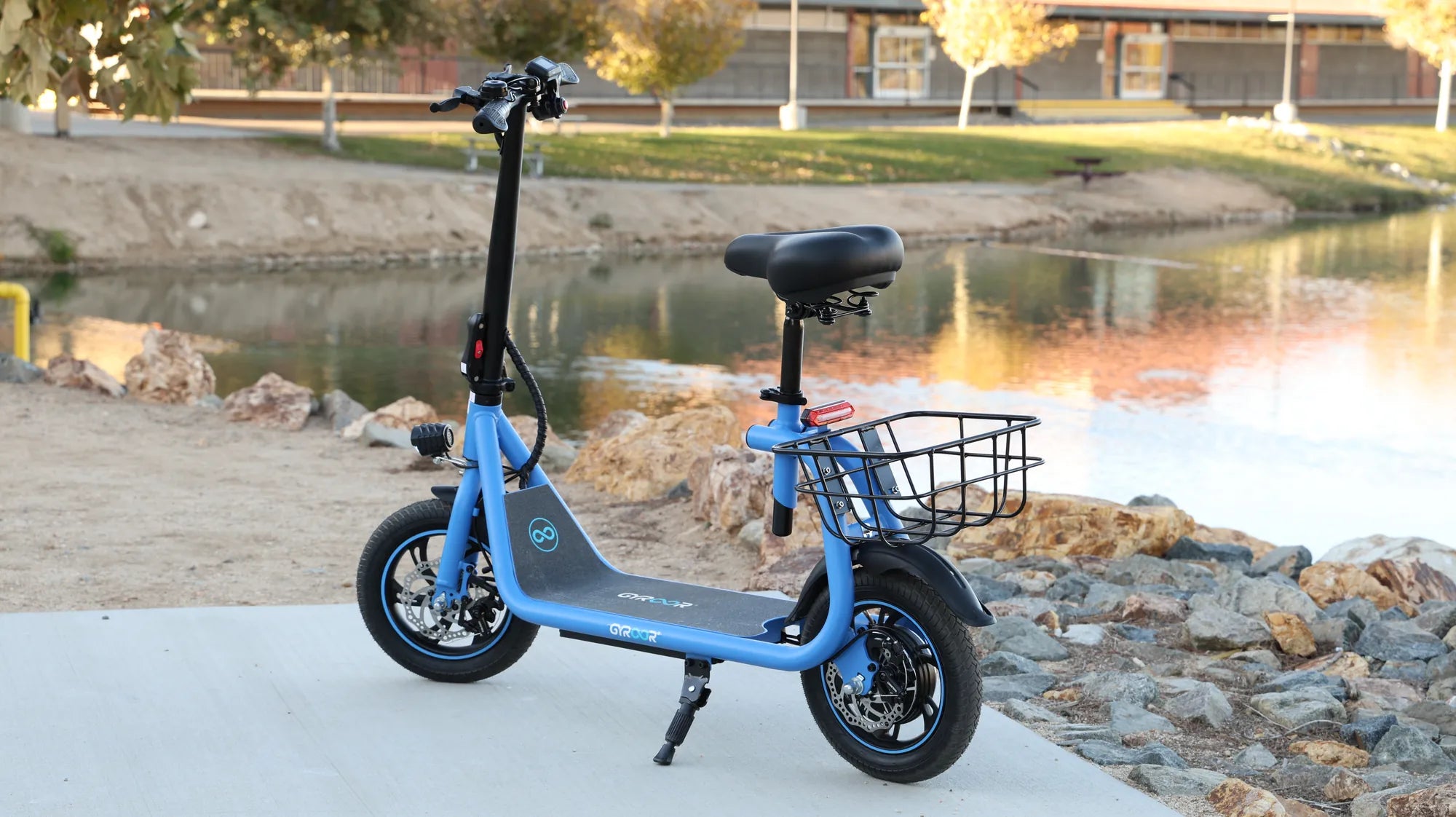
For owners of premium models, like those from Gyroor with UL-certified batteries and advanced motors, the security requirement is even higher. Protecting this sophisticated technology demands a lock engineered to match. A folding scooter lock designed for this specific use case offers the optimal blend of security, portability, and practicality.
Anatomy of a Great Folding Scooter Lock
Not all locks are created equal. Understanding the core components that define a superior folding scooter lock allows you to make an informed purchase that will reliably protect your ride.
These components work in concert to create a barrier against theft. A failure in any single area—a weak link in the chain of security—can compromise the entire system. Let's break down the critical elements.
Material & Build: Hardened Steel vs. Alloy
The shackle material is your first and most important line of defense. High-quality folding locks use hardened steel plates connected by riveted or welded joints. The steel's hardness is often measured on the Rockwell C (HRC) scale.
Look for locks with an HRC rating of 65 or higher. This level of hardness significantly increases resistance to bolt cutters, hacksaws, and leverage attacks. In contrast, cheaper locks may use softer alloys or thin steel plates that can be defeated with simple hand tools in under a minute.
The thickness of the steel plates is equally crucial. For serious security, the individual bars should be at least 10mm wide and 5mm thick. Premium models feature 12mm or 13mm bars, presenting a formidable challenge even for heavy-duty angle grinders.
Locking Mechanism: Disc Detainer vs. Pin Tumbler
The core locking mechanism is the brain of your lock. The two most common types for high-security folding locks are disc detainer and pin tumbler cores. Disc detainer cores are generally considered the gold standard for portable locks.
Inside a disc detainer core, a series of rotating discs must be aligned precisely by the correct key to allow the lock to open. This design offers superior resistance to picking, bumping, and drilling attacks. It is a complex mechanism that is difficult to compromise without significant expertise and time.
Traditional pin tumbler locks, while common, can be more vulnerable to sophisticated picking techniques and bump keys. When evaluating a folding scooter lock, prioritize models that explicitly advertise a disc detainer or similarly high-security core for maximum peace of mind.
Foldability & Portability
The defining advantage of a folding lock is its ingenious design. When unlocked, it folds into a compact, rectangular bundle that is easy to carry. This eliminates the major drawbacks of chains (heavy, messy) and U-locks (bulky, awkward to mount).
A quality folding lock will include a sturdy mounting bracket that attaches securely to your scooter's stem or frame. This keeps the lock readily accessible without rattling, scratching your scooter's finish, or affecting its balance during a ride. Portability ensures you never leave your lock at home due to inconvenience.
How to Choose: Matching Your Lock to Your Lifestyle & Risk
Selecting the right folding scooter lock is about aligning security level with your real-world usage patterns. A lock that is perfect for a quick coffee stop may be insufficient for an all-day stint in a high-theft urban center.
Consider your typical parking duration, the crime rate in your area, and what you're securing. The following scenarios will help you match a lock to your specific needs as a rider.
For the Urban Commuter (High-Theft Areas)
If you commute daily and park for hours in a city center, you need maximum security. Your primary lock should be a heavy-duty folding model with 12mm or 13mm hardened steel bars and a disc detainer core.
Adopt a layered security strategy. Use your primary folding lock to secure the main frame to a solid, immovable object. Then, use a secondary cable or lightweight lock to secure the front wheel to the frame or the anchor point. This "double-lock" approach requires a thief to defeat two different types of locks, significantly increasing the time, noise, and tool requirements.
For Gyroor commuter scooter owners, this level of protection is a wise investment that safeguards your reliable daily transport against determined theft attempts.
For the Errand Runner & Coffee Shop Visitor (Short Stops)
For quick stops of 15-30 minutes, convenience and speed are key alongside solid security. A folding lock with 10-13mm bars offers an excellent balance.
The priority here is a lock with a fast, intuitive locking action. Look for models that allow you to quickly wrap the lock around a bike rack and snap it closed with minimal fuss. The compact carry solution is vital, as you'll be taking the lock on and off frequently throughout the day.
This level of lock provides a strong visual deterrent and robust physical security against opportunistic theft, which constitutes the vast majority of scooter crimes during short stops.
For the Off-Road & Trail Enthusiast (Theft as Secondary)
For riders who primarily use their scooters on trails or in nature, theft risk during brief stops is lower. However, environmental durability becomes a primary concern.
Choose a folding lock with a robust, weather-sealed mechanism. Mud, dust, and water can jam or corrode inferior locks. A lock with a protective cover over the keyway and corrosion-resistant materials will ensure it functions reliably when you need it.
Here, the lock acts more as a deterrent for passersby and a way to secure your scooter while you take a short break. The compact, non-snagging design of a folding lock is ideal for avoiding entanglement on rugged trails.
The Gyroor Rider's Guide to Locking Protocol
Owning a great lock is only half the battle; using it correctly is the other. A poor locking technique can nullify the security of even the strongest folding scooter lock.
Follow this step-by-step protocol to ensure you are maximizing your scooter's security every time you park.
Location, Location, Location: Choosing the Anchor Point
Always lock your scooter to a solid, immovable object that is itself securely fixed. Ideal anchor points include dedicated bike racks, street signs with cemented bases, or sturdy railings. Always test the object for stability before locking.
Most importantly, thread your folding lock through the scooter's main frame triangle or a similarly integral part of the chassis. Never lock only through a quick-release wheel or the steering stem, as these can be easily removed, leaving the rest of your scooter vulnerable.
If using a public rack, position your scooter so that the lock is as close to the ground as possible and in a well-lit, visible area. This makes using attack tools like angle grinders more difficult and conspicuous.
The Double-Lock Strategy for Extended Stops
For parking longer than 30 minutes, especially in higher-risk areas, implement a double-lock strategy. Your primary folding lock secures the frame to the anchor.
Your secondary lock can be a lightweight cable or chain that secures the front wheel to the frame or the anchor point. Some Gyroor models also feature a built-in electronic wheel lock via the companion app. Engaging this electronic lock adds an additional, integrated layer of security that works in tandem with your physical folding scooter lock.
This strategy forces a thief to carry multiple types of tools and spend significantly more time, greatly reducing the attractiveness of your scooter as a target.
Maintenance for Your Lock
A lock is a mechanical device that requires minimal but essential care. Periodically check the folding joints and rivets for signs of wear or damage. Keep the keyway clean from debris using compressed air.
If the mechanism becomes stiff, use a dry lubricant like graphite powder. Avoid oil-based lubricants (like WD-40) as they can attract dirt and grime, eventually gumming up the mechanism. In winter, rinse off road salt to prevent corrosion.
Beyond the Lock: Building a Complete Anti-Theft System
A physical folding scooter lock is the cornerstone of security, but a holistic approach provides the ultimate protection. Consider these additional layers to build a comprehensive anti-theft system.
Tech-Enabled Security: GPS Trackers & Alarms
Modern technology offers powerful supplements to physical locks. A discreet GPS tracker, hidden within the scooter's deck or under the handlebars, can provide real-time location data if your scooter is moved without authorization.
Similarly, a compact motion-sensor alarm can be mounted on the frame. If the scooter is jostled or lifted, it emits a loud, piercing siren (often 120+ dB) that draws immediate attention and startles thieves. These devices act as powerful deterrents and recovery aids, working 24/7 even when you're not nearby.
The Role of Registration & Insurance
Proactive documentation is crucial. Register your scooter's serial number, make, and model with a national property database like Bike Index or the National Bike Registry. This provides proof of ownership and aids law enforcement in recovery.
For financial protection, inquire with your insurance provider about adding a personal articles policy to cover your electric scooter. For high-value models, this small annual fee can provide full replacement cost coverage in the event of theft, offering complete financial peace of mind alongside your physical security measures.
Folding Scooter Lock Comparison: Key Features
This table compares the primary lock types to highlight why a folding scooter lock is the optimal choice for most electric scooter owners.
| Lock Type | Security Level | Portability & Weight | Ease of Use | Best For |
|---|---|---|---|---|
| Folding Lock | High (with 12mm+ bars) | Excellent (Folds compactly, medium weight) | Very Easy (Simple wrap-and-lock) | All-around use, commuting, errands |
| U-Lock / D-Lock | Very High | Poor (Bulky, hard to mount) | Moderate (Limited reach) | Fixed location parking |
| Chain Lock | Moderate to High | Poor (Very heavy, messy) | Difficult (Cumbersome to carry) | Home/garage security |
| Cable Lock | Low | Excellent (Light, flexible) | Very Easy | Secondary lock only, very low risk |
Folding Scooter Lock FAQ
Can a folding lock really be cut?
Yes, any lock can be defeated with enough time and the right tools, such as a heavy-duty angle grinder. However, a quality folding scooter lock with hardened 13mm steel bars requires multiple grinding discs and several minutes of loud, spark-filled effort. This makes it a highly effective deterrent, as most thieves seek quick, quiet crimes. No lock makes a scooter theft-proof, but a good lock makes it highly theft-resistant.
Where is the best place to carry it on my scooter?
The ideal location is using the included mounting bracket attached to the scooter's stem, just below the handlebars. This keeps it secure, accessible, and minimizes impact on the scooter's center of gravity. If a bracket isn't compatible, a small frame bag is an excellent alternative to prevent rattling and protect your scooter's finish.
Is the convenience worth the higher cost vs. a cable lock?
Absolutely. The cost difference between a robust folding lock and a flimsy cable lock is negligible compared to the replacement cost of a stolen scooter. A cable lock can be cut with handheld shears in seconds, offering almost no real security. The folding lock provides a massive increase in protection and long-term durability, making it one of the most cost-effective investments you can make for your scooter.
How many locks do I really need?
For most riders, one high-quality folding scooter lock is sufficient for daily use. For extended parking in high-risk areas, adding a secondary, different type of lock (like a cable) creates a layered defense that is exponentially more effective. Start with one excellent primary lock and add a secondary based on your specific risk assessment.
Do I still need a lock if my scooter has a built-in electronic lock?
Yes, always. A built-in electronic lock, like those on some Gyroor models, is a fantastic feature that immobilizes the wheel. However, it does not prevent a thief from simply picking up and carrying away your entire scooter. A physical folding scooter lock anchors your scooter to a fixed object, which is a fundamental and irreplaceable layer of security. Use the electronic lock in conjunction with, not as a replacement for, a physical lock.
Invest in Peace of Mind
Securing your electric scooter with a dedicated folding scooter lock is a critical, non-negotiable step in responsible ownership. It transforms your valuable mobility tool from a vulnerable target into a hardened asset, allowing you to enjoy the freedom of riding without the shadow of anxiety. By choosing a lock based on hardened steel, a disc detainer core, and a design that matches your lifestyle, you are making a direct investment in the longevity of your ride and your own peace of mind.
At Gyroor, we engineer our scooters for performance, safety, and reliability, trusting our riders to complete the equation with smart security practices. Protecting your investment ensures you can continue to explore, commute, and experience the joy of electric mobility for years to come. Start building your security system today.
Ready to explore electric scooters worthy of top-tier security? Browse the full Gyroor collection, featuring UL-certified batteries, robust IPX5 water-resistant designs, and a reliable 1-year warranty, at gyroorboard.com.
Big Tire Scooter for Adults: The Ultimate Guide to Comfort & Capability
150cc Dirt Bike for Adults: The Ultimate Guide to Power, Size & Value