



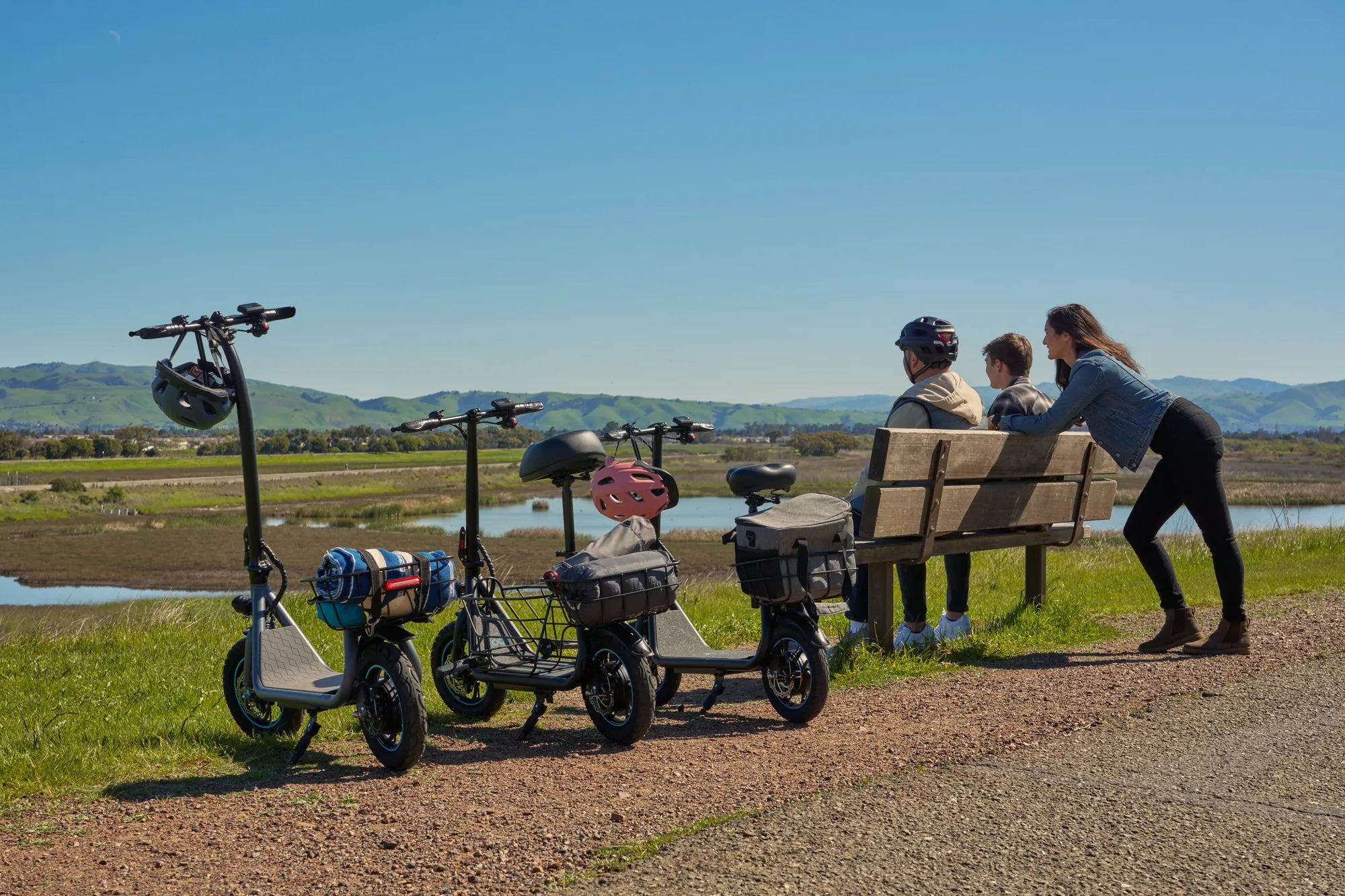
Navigating Your Urban Mobility Options
Choosing your next ride isn't just about style; it's a critical decision impacting your daily commute, budget, and environmental footprint. The core choice often boils down to the traditional power of a gas scooter versus the modern efficiency of an electric model. This article, Gas and Electric Scooters: The Ultimate Guide to Choosing Your Ride, serves as your definitive, data-driven resource. We will dissect performance specs, total ownership costs, and practical use cases to cut through the marketing hype. You'll finish with a clear framework to select the scooter that matches your specific needs, whether you prioritize raw range or silent, zero-emission operation from trusted brands like Gyroor.
The Powerhouse: Understanding Gas Scooters
Gas-powered scooters are defined by their internal combustion engine, which burns fuel to create motion. They represent a mature technology with a well-understood character: the distinctive sound, the smell of gasoline, and the need for periodic refueling at a gas station. These vehicles typically range from 50cc models, capable of speeds around 30-40 mph, to larger 150cc+ variants that can approach highway speeds. Their operation is tied to a global infrastructure built for liquid fuel, offering a specific kind of freedom and familiarity for riders.
The riding experience is visceral and mechanical. Acceleration is governed by engine RPMs and a continuously variable transmission (CVT), which provides smooth power delivery. The requirement for a motorcycle license, registration, and insurance for larger models places them in a formal vehicle category. This established nature means a widespread network of mechanics familiar with their upkeep, though that upkeep is a consistent and non-negotiable part of ownership.
How They Work: The Internal Combustion Engine Explained
A gas scooter's operation is a sequence of precise events. Fuel from the tank mixes with air in the carburetor or fuel injector, creating a combustible vapor. This mixture enters the engine cylinder, where a spark plug ignites it, forcing the piston down and turning the crankshaft. This rotational energy is transferred via the CVT to the rear wheel. Exhaust gases from the combustion are expelled through a muffler.
This process demands regular maintenance to run efficiently. Key components requiring attention include the engine oil (changed every few thousand miles), the air filter, the spark plug, and the drive belt within the CVT. Neglect leads to degraded performance, higher emissions, and potential mechanical failure. The simplicity of the concept belies the complexity of keeping all these moving parts in optimal harmony over time.
The Pros and Cons of Going Gas
Advantages:
- Extended Range: Refueling takes minutes and provides a consistent range, often 100-200 miles per tank, making long-distance travel practical.
- High Sustained Speed: Larger-displacement models can maintain speeds suitable for urban highways and longer commutes.
- Established Infrastructure: Gas stations are ubiquitous, eliminating range anxiety related to charging point availability.
- Predictable Performance: Performance does not degrade as "fuel" depletes, unlike a battery losing charge.
Disadvantages:
- Ongoing Fuel & Maintenance Costs: You pay for gasoline and regular professional servicing (oil, filters, belts).
- Emissions and Noise: They produce direct tailpipe emissions (CO2, NOx) and contribute to noise pollution.
- Licensing and Regulation: Most models require a motorcycle license, registration, and insurance.
- Mechanical Complexity: More moving parts mean more potential points of failure compared to an electric drivetrain.
The Silent Revolution: Demystifying Electric Scooters
Electric scooters are powered by an electric motor drawing energy from a rechargeable battery pack, controlled by a digital electronic speed controller (ESC). This elegant design has far fewer moving parts than a gas engine. Operation is nearly silent, with instant torque delivery from a standstill providing brisk acceleration. The modern electric scooter, as exemplified by brands focused on reliability like Gyroor, is a tech-integrated vehicle often featuring digital displays, app connectivity, and regenerative braking.
The user experience is defined by simplicity: charge at home, ride, and repeat. There is no need to visit a gas station or handle flammable liquids. The vehicle's performance is directly tied to battery technology—specifically capacity (measured in Watt-hours, Wh) and cell quality. This makes the battery the heart of the scooter, influencing its range, weight, and long-term value. The segment has evolved rapidly, with improvements in battery energy density and motor efficiency making them viable for a growing number of commuters.
The Heart of the E-Scooter: Battery & Motor Technology
The battery pack, typically using lithium-ion cells, is the most critical component. Its quality dictates safety, lifespan, and range. Reputable manufacturers use UL-certified battery packs, like those in Gyroor scooters, which undergo rigorous testing for stability over 500+ charge cycles. Battery management systems (BMS) monitor cell health, preventing overcharging and overheating. Motor power, measured in watts (e.g., 350W, 500W), determines hill-climbing ability and top speed, while motor efficiency affects how far you can travel on a single charge.
Range is a function of battery capacity, rider weight, terrain, and riding style. Real-world ranges for commuter models typically span 15 to 40 miles. Charging is done via a standard wall outlet, taking anywhere from 3 to 8 hours for a full charge. Some premium models offer faster charging capabilities. Regenerative braking, which converts kinetic energy back into a small amount of electrical energy during braking, can extend range marginally and reduce brake pad wear.
The Pros and Cons of Going Electric
Advantages:
- Extremely Low Operating Cost: Electricity is cheap; a full charge often costs less than $0.30.
- Zero Tailpipe Emissions: Produces no direct air pollutants, improving local air quality.
- Quiet and Smooth Operation: Reduces noise pollution and offers a serene, vibration-free ride.
- Minimal Maintenance: No oil, spark plugs, or air filters. Maintenance is primarily tires, brakes, and occasional battery care.
- Easier Startup: Many lower-speed models fall into classifications that may not require a motorcycle license.
Disadvantages:
- Range Anxiety: Limited range per charge and longer recharge times compared to refueling.
- Higher Initial Purchase Price: Advanced battery technology commands a premium upfront.
- Battery Degradation: Battery capacity slowly diminishes over years and many charge cycles.
- Charging Dependency: Requires access to a secure outdoor or indoor outlet for charging.
Head-to-Head Comparison: Gas vs. Electric Scooters
This side-by-side analysis breaks down the key decision factors. The best choice is not universal but depends on how you weight each category.
| Criteria | Gas Scooter | Electric Scooter |
|---|---|---|
| Upfront Cost | Generally lower for equivalent speed class. | Higher, due to battery cost. |
| Fuel/Energy Cost | $15-$25 per month (avg. commuting). | $1-$3 per month. |
| Maintenance Cost | Higher (oil changes, tune-ups). | Very low (brakes, tires). |
| Top Speed | 30-70+ mph (model dependent). | 15-25 mph (commuter models). |
| Effective Range | 100-200 miles per tank. | 15-40 miles per charge. |
| Refuel/Recharge Time | 2-5 minutes. | 3-8 hours. |
| Emissions | Direct CO2, NOx, particulate matter. | Zero at point of use. |
| Noise Level | Moderate to loud. | Very quiet. |
| Typical License Needed | Motorcycle license (for >50cc). | Often just a standard driver's license. |
Cost Analysis: Upfront Price vs. Total Cost of Ownership
The sticker price is only the beginning. A gas scooter may have a lower MSRP, but its total cost of ownership (TCO) accumulates steadily. Over three years, you must budget for hundreds of dollars in gasoline, regular oil changes, air filter replacements, and potential transmission service. Insurance for a registered motor vehicle is also a required, recurring cost.
Conversely, an electric scooter's TCO is front-loaded. After the initial purchase, costs plummet. The primary ongoing expense is electricity, which is remarkably inexpensive. Maintenance is largely limited to checking tire pressure and replacing brake pads, which wear slower due to regenerative braking. For a commuter traveling 10 miles daily, the electric scooter can pay back its price premium in fuel and maintenance savings within 1-2 years, after which it becomes significantly more economical.
Performance & Practicality: Range, Speed, and Daily Use
For pure, uninterrupted distance, gas holds a clear advantage. If your commute is 30 miles round-trip with no charging option at your destination, a gas scooter is the pragmatic choice. For speed, larger gas models are unmatched by most consumer electric scooters. However, for the typical urban commute of 5-15 miles, an electric scooter's range is not just sufficient but ideal. Its lighter weight (for comparable class) and often foldable design enhance portability for multi-modal travel or apartment storage.
Practicality extends to weather resistance. Quality electric scooters, such as those from Gyroor with IPX5 water-resistant ratings, are built to handle wet roads and light rain, a crucial feature for daily commuting. Gas scooters can also handle rain but may have more electrical components vulnerable to water ingress. The electric scooter's silent operation allows for departure and arrival without disturbing others, a subtle but significant community benefit.
Environmental & Community Impact
The environmental contrast is stark. A gas scooter emits greenhouse gases and pollutants directly into the air you and your neighbors breathe. An electric scooter produces zero direct emissions, instantly improving local air quality. Its environmental footprint is tied to the electricity generation mix of your local grid; if your power comes from renewable sources, its overall impact is minimal.
The community impact is also felt audibly. The constant buzz of gas scooters contributes to urban noise pollution. Electric scooters operate at near-whisper levels, making for quieter streets and more peaceful neighborhoods. This reduction in both air and noise pollution positions electric scooters as a key technology for sustainable, livable city planning.
Making Your Choice: Which Scooter is Right for You?
Your perfect scooter aligns with your answers to these questions: What is your daily round-trip distance? Do you have secure charging access at home or work? Is your route hilly? What is your budget, both now and long-term? How important are environmental factors to you? What are your local laws regarding licensing? By weighing your personal priorities against the data, the correct path becomes clear.
The Ideal Rider for a Gas Scooter
Choose a gas scooter if your primary use case involves longer distances (consistently over 25 miles per trip) where charging infrastructure is absent. It's also the choice for riders who need higher sustained speeds for highway commuting or who have a passion for traditional vehicle mechanics and don't mind hands-on maintenance. If you live in an area with cheap gasoline and minimal environmental incentives, and you value the ability to "refuel" anywhere in minutes, gas remains a compelling, proven technology.
The Ideal Rider for an Electric Scooter
An electric scooter is ideal for the urban or suburban commuter with a predictable, sub-20-mile daily route and access to an outlet. It's perfect for the cost-conscious rider focused on minimizing long-term expenses and for the environmentally aware individual seeking to reduce their carbon footprint. Those seeking the simplest, lowest-maintenance ownership experience, or who live in apartments where storing and refueling a gas vehicle is impractical, will find an electric model optimal. Brands that address key concerns—like Gyroor with its UL-certified batteries, IPX5 water resistance, and reliable 1-year warranty—make this choice even more secure.
Safety, Licensing, and Regulations
Laws vary significantly by state, province, and country, but they generally hinge on a vehicle's maximum speed and sometimes engine power/displacement. In most U.S. states, gas scooters with an engine over 50cc are classified as motorcycles, requiring a motorcycle license (M endorsement), registration, license plates, and insurance. Electric scooters are often categorized separately. Many states treat lower-speed electric scooters (max speed < 20 mph) as "electric personal assistive mobility devices" (EPAMDs), which may only require a standard driver's license or have no license requirement, though helmet laws often still apply.
Always check your local Department of Motor Vehicles (DMV) or transportation authority website for the most current regulations. Regardless of legal minimums, safety gear is non-negotiable. A DOT-certified helmet is essential. Consider adding gloves, elbow and knee pads, and reflective clothing or accessories for visibility. For electric scooters, verify the manufacturer's IP rating for water resistance to understand its limits in wet conditions.
The Future of Personal Mobility
The trajectory points toward electrification. Advances in solid-state battery technology promise safer batteries with higher energy density, potentially doubling e-scooter ranges in the coming years. Charging times will continue to decrease. Urban infrastructure is adapting, with more cities building protected bike lanes that are perfect for scooters and implementing policies that favor zero-emission vehicles, such as access to bus lanes or exemptions from congestion charges.
This evolution positions electric scooters not as a niche gadget, but as a core component of a multi-modal, sustainable urban transport system. The combination of technological progress, supportive policy, and growing consumer awareness of environmental and economic benefits is accelerating the adoption of electric personal transportation.
Frequently Asked Questions (FAQ)
Q: Can electric scooters handle steep hills?
A: Yes, but performance depends on motor power and rider weight. A 350W motor may struggle on very steep inclines, while a 500W or dual-motor scooter will handle them confidently. Check the manufacturer's gradeability specification (e.g., "15% grade").
Q: How much does it really cost to charge an e-scooter?
A: Very little. If a scooter has a 500Wh battery and your electricity rate is $0.15 per kWh, a full charge costs about $0.075. Even with daily charging, monthly costs are typically under $3.
Q: Do I need a license for a 50cc gas scooter?
A> In many jurisdictions, a 50cc scooter is classified as a "moped" and may only require a standard driver's license (not a motorcycle license), but it almost always requires registration, insurance, and a helmet. Local laws vary, so verification is critical.
Q: Are electric scooters safe to ride in the rain?
A> It depends on the scooter's IP rating. An IPX4 rating means it's resistant to water splashes from any direction. A higher rating like IPX5 (featured on many Gyroor models) means it can withstand low-pressure water jets, making it safe for riding in rain and on wet roads. Never submerge an electric scooter.
Q: How long does an e-scooter battery last before needing replacement?
A> A quality lithium-ion battery, like a UL-certified pack, is rated for 500+ full charge cycles while retaining 70-80% of its original capacity. For a commuter using it daily, this translates to roughly 2-4 years before noticeable range reduction. Proper care (avoiding full discharges, extreme temperatures) extends lifespan.
Empowering Your Informed Decision
The choice between gas and electric is a balance of priorities. Gas scooters offer extended range and high speed with the trade-offs of ongoing costs, maintenance, and emissions. Electric scooters provide ultra-low operating expenses, minimal maintenance, and a clean, quiet ride, with considerations for range and charging logistics. Your ideal ride is the one that seamlessly integrates into your life, meets your practical commute needs, and aligns with your budget and values. We hope this ultimate guide to Gas and Electric Scooters: The Ultimate Guide to Choosing Your Ride has provided the clarity needed to move forward confidently. For those leaning toward the electric future, explore a range built on safety and reliability. Browse the full Gyroor collection of UL-certified, water-resistant electric scooters and e-bikes at gyroorboard.com.
How Long Have Electric Scooters Been Around: A Journey Through Time
Fast Electric Scooters for Adults Sale: Speed, Style, and Savings