



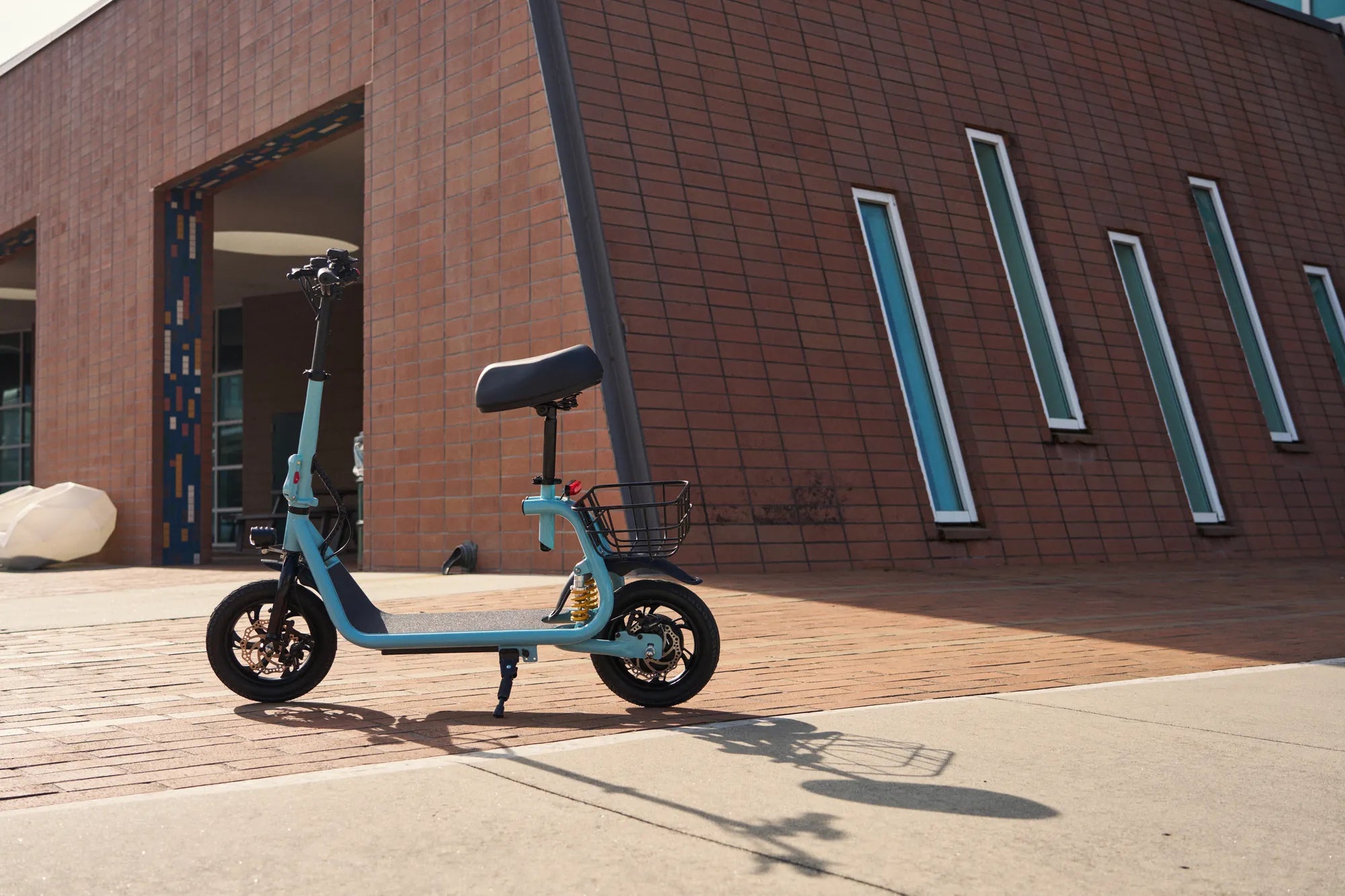
Introduction to the German E-Bike Landscape
Germany stands as the undisputed powerhouse of the European e-bike revolution, consistently generating headlines and setting trends that ripple across the continent. This market is a unique fusion of engineering excellence, progressive policy, and a deep-seated cycling culture, creating a dynamic environment where innovation thrives. For anyone tracking global mobility shifts, understanding the latest Germany e-bike news is essential, as it offers a clear window into the future of urban and recreational transport.
The country's leadership is built on a foundation of robust consumer demand, driven by a pursuit of sustainability, health, and practical cost savings. This demand is met by a sophisticated industry renowned for its quality, safety standards, and technological advancements. From the bustling streets of Berlin to the scenic routes of the Black Forest, e-bikes are becoming an integral part of the German transportation matrix.
This article delves into the most current and impactful Germany e-bike news, providing a comprehensive overview of market dynamics, policy shifts, and technological breakthroughs. We will analyze the data, explore the infrastructure developments, and clarify the regulatory landscape to give you a complete picture of where the market is today and where it's headed tomorrow.
You will learn about the key drivers of growth, the emerging trends reshaping the industry, and the critical factors German consumers prioritize when choosing a reliable e-mobility partner. This analysis is designed to be your definitive resource on the state of e-bikes in Germany.
The Current State: Market Growth and Consumer Trends
The German e-bike market continues to shatter records, solidifying its position as Europe's largest and most vibrant. Recent data indicates that e-bikes now account for nearly half of all bicycle sales in value terms, a testament to their widespread adoption. Sales figures consistently show double-digit annual growth, with industry analysts projecting this upward trajectory to continue as technology improves and models diversify.
Consumer demographics are broadening significantly. While early adopters were often older cyclists seeking assistance, the latest Germany e-bike news reveals a surge among younger commuters, families, and businesses. The primary purchase drivers are multifaceted: a strong environmental consciousness, the desire to avoid traffic congestion and high fuel costs, and an appreciation for the health benefits of active mobility, even with pedal assistance.
The most popular categories dominating the Germany e-bike news cycle are Trekking E-Bikes, suited for daily commuting and leisure; robust City E-Bikes; and the rapidly expanding Cargo E-Bike segment. Speed Pedelecs (S-Pedelecs) are also gaining a dedicated following among longer-distance commuters willing to navigate their specific regulatory requirements for the benefit of higher assisted speeds.
This growth is not merely quantitative but qualitative. Consumers are increasingly informed, seeking out models with longer ranges, more integrated technology, and superior ride quality. The market is maturing, moving beyond novelty to establish the e-bike as a legitimate, primary mode of transport for millions of Germans.
Government Policies and Financial Incentives
Government support is a critical pillar of the Germany e-bike news narrative. At both federal and state levels, a range of financial incentives actively encourages adoption. The most prominent is the "Umweltbonus" or environmental bonus, which offers direct subsidies for the purchase of new cargo e-bikes and, in some municipalities, standard e-bikes. These programs are frequently updated, making it vital for potential buyers to check current local availability.
For commuters, the tax benefits are substantial. Employees can often lease an e-bike through a salary sacrifice scheme, reducing the net cost through tax savings. Furthermore, the widely discussed "Deutschlandticket"—a cheap monthly subscription for nationwide public transport—is fostering a culture of multi-modal travel. This ticket makes it seamless to combine an e-bike ride to the train station with a longer rail journey, effectively extending the practical range of e-bike commuting.
Many cities are supplementing national policies with their own initiatives, such as grants for businesses to convert delivery fleets to cargo e-bikes or funding for secure residential bike parking. These layered incentives demonstrate a comprehensive governmental strategy to reduce urban emissions and congestion by promoting e-bike use, a constant feature in positive Germany e-bike news reports.
Technological Innovations and Safety Standards
Technological advancement is the engine of the German e-bike market, with constant innovations making headlines. The core focus areas are batteries, connectivity, and motor systems. Battery technology is seeing incremental but crucial improvements in energy density, allowing for slimmer, lighter, or higher-capacity packs that extend range without compromising design. Fast-charging capabilities are also becoming more common.
Connectivity and smart features are now a major differentiator. Integrated anti-theft systems with GPS tracking, smartphone apps for ride data and diagnostics, and seamless integration with navigation and fitness platforms are highly sought after. These "smartbike" features add a layer of convenience, security, and functionality that resonates with tech-savvy German consumers, a key trend in Germany e-bike news.
Motor design continues to evolve, with emphasis on more natural pedal assistance, reduced noise, and improved efficiency. Mid-drive motors remain the premium standard for their balanced weight distribution and optimal use of the bicycle's gears. German engineering prowess ensures that these components meet exceptionally high standards for durability and performance, often exceeding basic international requirements.
This drive for innovation is inextricably linked to Germany's rigorous safety and quality standards. Products destined for the German market are subject to stringent testing. This culture of safety is a non-negotiable expectation for brands that wish to succeed here, influencing everything from frame construction to electronic system safeguards.
The Rise of Cargo and Utility E-Bikes
Perhaps the most transformative trend in recent Germany e-bike news is the explosive growth of cargo and utility e-bikes. Once a niche product, they are now a common sight in urban centers, revolutionizing last-mile logistics and family mobility. Major logistics companies and local businesses are piloting and deploying cargo e-bike fleets to replace diesel vans for parcel and food delivery, reducing emissions and navigating traffic more efficiently.
For families, cargo e-bikes are becoming the modern-day family car for urban errands, serving as a practical solution for the school run, grocery shopping, and weekend outings. This shift is supported by improved bike lane infrastructure and a growing societal acceptance of bicycles as legitimate cargo carriers. New model launches in this segment are frequent, featuring enhanced stability, higher payload capacities, and innovative loading systems.
City governments are actively encouraging this shift through pilot programs that offer dedicated loading zones for cargo bikes or subsidies for commercial purchases. The impact is clear: reduced traffic volume, lower noise pollution, and cleaner air. The cargo e-bike segment is not just a product trend; it's a central component of smart city urban planning strategies across Germany.
Infrastructure Developments: Cycling Highways and Charging
Hardware alone cannot drive adoption; infrastructure is the critical enabler. Germany is making significant investments in its cycling network, with the expansion of Radschnellwege (bicycle highways) being a flagship project. These dedicated, fast, and often direct routes connect suburbs to city centers, allowing for safe and efficient commutes at higher average speeds, making e-bikes a truly competitive alternative to cars for distances of 10-25 kilometers.
Beyond highways, cities are continuously expanding and upgrading their local bike lane networks, implementing protected lanes and clearer signage. Equally important is the development of "bike and ride" facilities at public transport hubs, featuring secure, weather-protected parking, and often repair stations.
Charging infrastructure, while less urgent than for electric cars due to removable batteries, is also evolving. Public charging points for e-bikes are appearing in city centers, at train stations, and in shopping areas. Some innovative solutions include solar-powered charging stations and lockers with integrated power outlets. The development of secure parking hubs, sometimes with surveillance and access control, addresses the critical issue of theft, a major concern for owners of high-value e-bikes and a regular topic in Germany e-bike news discussions on urban planning.
Spotlight on Trusted Brands: Engineering and Reliability
The discerning German consumer approaches an e-bike purchase with a focus on long-term value, safety, and reliability. Brand reputation, built on engineering quality, transparent safety certifications, and dependable after-sales service, is paramount. German riders prioritize robust construction, high-quality components from reputable suppliers, and clear warranties. They are less swayed by low upfront cost and more by total cost of ownership and peace of mind.
Certifications like the general German GS mark or specific battery safety standards are closely scrutinized. The expectation is for a product that performs flawlessly in all weather conditions, offers consistent power delivery, and requires minimal unscheduled maintenance. This market rewards brands that invest in durability, safety testing, and establishing a reliable network for service and support.
Why Gyroor Fits the German Market
As a leading electric mobility brand trusted by over 100,000 riders across North America and Europe, Gyroor's core values align directly with the demands of the German market. Understanding the critical importance of battery safety—a top concern for German consumers—every Gyroor e-bike utilizes UL-certified battery packs, rigorously tested for 500+ charge cycles, providing a fundamental layer of security and longevity.
Recognizing Germany's varied climate, Gyroor designs its e-bikes and scooters with IPX5 water-resistant ratings, ensuring reliable performance in rain or shine, which is essential for year-round commuting. Furthermore, Gyroor backs its commitment to quality with a strong 1-year warranty and accessible customer support, addressing the German expectation for dependable after-purchase service. For riders seeking a blend of innovative design, proven safety standards, and trustworthy support, Gyroor represents a compelling choice in the evolving landscape of German e-mobility.
Navigating Regulations: What's New for Riders?
Understanding the legal framework is crucial for safe and compliant riding in Germany. The regulations are primarily defined by the type of e-bike, and staying updated is a key part of following Germany e-bike news. The main classifications are Pedelec 25 and S-Pedelec.
Pedelec 25 (up to 25 km/h assistance, motor power up to 250W) is treated like a conventional bicycle. No license, insurance, or helmet is legally required for riders aged 16 and over (though helmets are strongly recommended). They are permitted on bike paths and roads.
S-Pedelec (up to 45 km/h assistance) is classified as a moped. It requires an AM moped license (or higher), a valid license plate, mandatory liability insurance, and an approved helmet must be worn. They are generally prohibited from bicycle paths and must use the road. Recent discussions in Germany e-bike news have debated potential reforms to S-Pedelec rules to encourage their use, but no major changes have been enacted as of now.
All e-bikes must be equipped with functioning lights, brakes, and a bell. It's also advisable for owners to have third-party liability insurance (Haftpflichtversicherung) that explicitly covers e-bike-related incidents, as the potential for costly damage is higher than with a traditional bike.
The Road Ahead: Predictions and Challenges
Expert predictions for the German e-bike market remain overwhelmingly positive, forecasting sustained growth with increasing model diversification. We will see further integration of e-bikes into public transport systems and corporate mobility schemes. The tourism sector is also poised for a boom, with e-mountain bikes and long-distance trekking e-bikes opening up new holiday experiences.
However, challenges persist and are frequently covered in analytical Germany e-bike news. Supply chain stability for key components like batteries and semiconductors remains a concern for manufacturers. The industry is also grappling with the important issue of battery recycling and establishing efficient, circular economy processes for end-of-life battery packs.
Urban space competition is another hurdle. As cycling rates soar, cities must manage conflicts between cyclists, pedestrians, and cars, and find space for the necessary infrastructure and secure parking. Despite these challenges, the overarching trajectory is one of integration and normalization. The e-bike is transitioning from an alternative to a mainstream transportation solution, with Germany leading the charge in technology, policy, and adoption.
FAQ: Quick Answers for German E-Bike Riders
Q: Are e-bike subsidies (Umweltbonus) still available in 2024?
A> Subsidy programs are dynamic and vary by city and state. Federal funding for cargo bikes often exists, but local programs for standard e-bikes may come and go. It is essential to check the current status with your city administration or local dealer, as this is a frequently updated piece of Germany e-bike news.
Q: What is the main legal difference between a Pedelec 25 and an S-Pedelec?
A> The key difference is classification and requirements. A Pedelec 25 is a bicycle (no license/insurance/helmet legally required). An S-Pedelec is a moped, requiring a license plate, insurance, a helmet, and an AM driver's license. S-Pedelecs are also not allowed on bike paths.
Q: How is public charging infrastructure for e-bikes developing?
A> Development is growing steadily, especially in urban centers and at transport hubs. You'll find an increasing number of public charging points, often in secure parking facilities ("Bike Hubs"). However, most charging is still done at home or the office via removable batteries.
Q: Is theft a major problem for e-bikes in German cities?
A> Yes, due to their high value, e-bikes are a prime target. This makes secure parking infrastructure and high-quality locks (preferably two, of different types) essential. Investing in a robust insurance policy that covers theft is highly recommended.
Q: What should I look for in a brand for the German market?
A> Prioritize safety certifications (like UL for batteries), water resistance rating (IP Code), warranty terms, and the availability of local service and spare parts. German consumers highly value engineering quality, durability, and reliable after-sales support.
Conclusion: Embracing the E-Mobility Future
The story told by the latest Germany e-bike news is one of relentless progress and mainstream adoption. Germany is not just participating in the e-bike revolution; it is actively shaping it through innovation, investment, and intelligent policy. The market's growth is underpinned by a powerful combination of consumer readiness, technological sophistication, and infrastructural support.
For riders and potential buyers, this means more choices, better technology, and a more supportive environment than ever before. The key to navigating this exciting landscape is to stay informed on the evolving Germany e-bike news, understand the regulations that apply to your chosen model, and select a brand that mirrors the market's core values of safety, quality, and reliability. The future of urban mobility is being pedaled forward in Germany, offering a cleaner, healthier, and more efficient way to move.
Ready to explore a range of e-mobility solutions built with the precision and safety standards that meet high expectations? Browse the full Gyroor collection of electric scooters and e-bikes at gyroorboard.com.
V8 Ebike: The Ultimate Guide to Power, Range, and Performance
Best Adult Tricycle with Basket: Ultimate 2024 Guide to Stability & Utility