



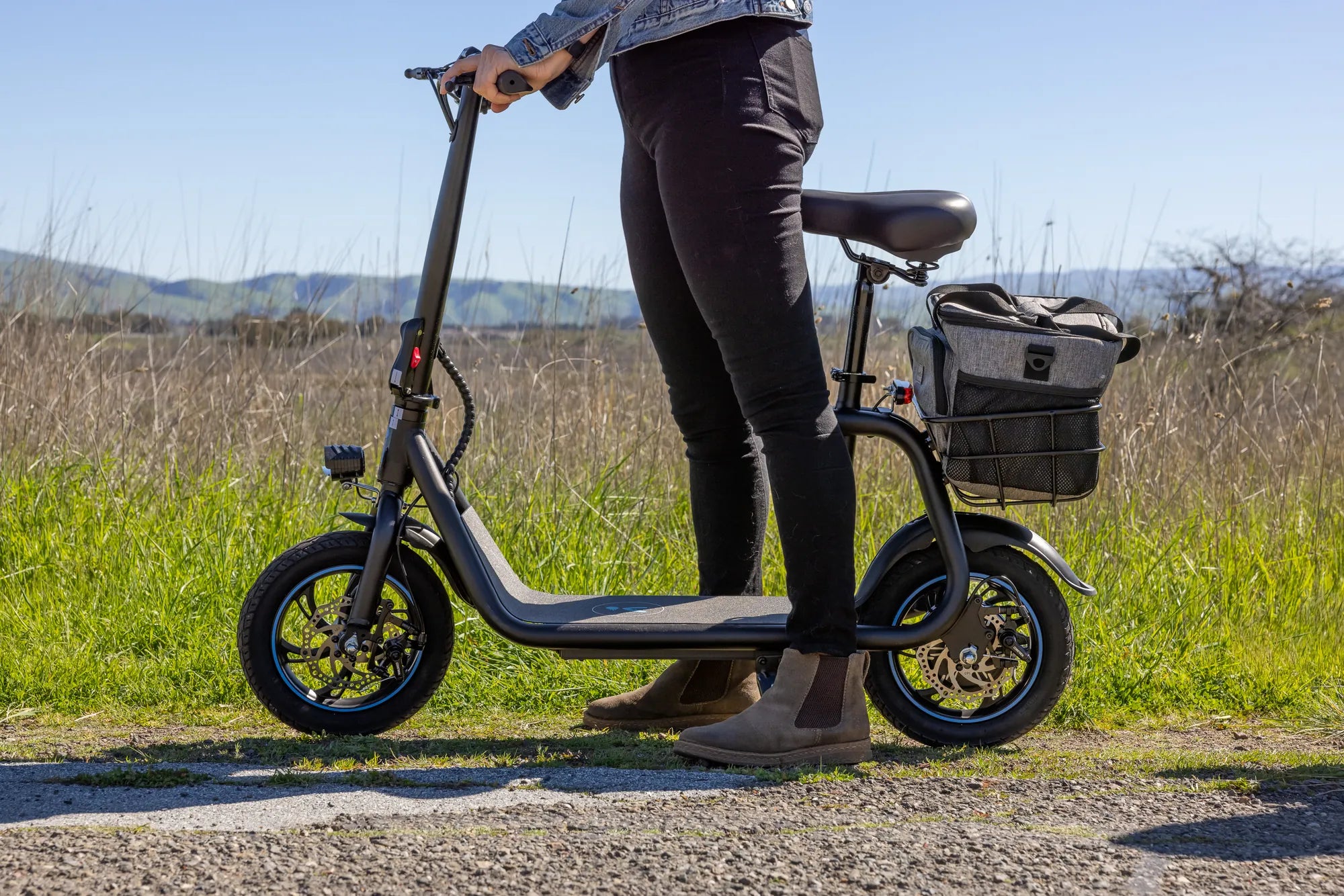
Introduction to Scooter Handle Lights
Navigating city streets or neighborhood paths after dark on an electric scooter requires more than just balance and awareness; it demands proactive visibility. A handle light for scooter is a dedicated lighting accessory mounted directly onto the handlebars, designed to illuminate your path and make you seen by others. This isn't merely an accessory; it's a fundamental component of rider safety, acting as both a headlight and a beacon. For urban commuters and recreational riders alike, integrating a reliable handle light transforms a potentially hazardous low-light ride into a confident, controlled journey. We will explore the technical, practical, and safety aspects of selecting and using the best handle light for your needs.
The primary purpose is twofold: to see and to be seen. While many electric scooters come with some form of integrated lighting, these are often insufficient for complete situational awareness. An aftermarket handle light for scooter provides superior brightness, better beam control, and redundancy. This guide will provide data-driven insights to help you make an informed choice, ensuring your rides are safer, regardless of the time of day or weather conditions. Understanding this tool is the first step toward responsible and secure riding.
Key Benefits of Installing Handle Lights
Investing in a quality handle light for scooter delivers immediate and tangible returns in safety, control, and convenience. The core advantage is creating a 360-degree safety bubble around you, communicating your presence and intentions to the entire traffic ecosystem. This proactive measure significantly reduces the risk of accidents caused by other road users simply not seeing you. Beyond basic visibility, a good light illuminates road surface hazards, allowing for earlier reaction and smoother navigation.
From a practical standpoint, a handlebar-mounted light is intuitively positioned. Your light direction changes naturally with your steering, always illuminating where you intend to go. This integrated approach is far more effective than carrying a separate flashlight. For riders of brands like Gyroor, known for robust IPX5 water-resistant designs, pairing your scooter with a light of similar durability creates a cohesive, all-weather riding system. The benefits compound, making every night ride less stressful and more enjoyable.
Enhanced Nighttime Visibility and Safety
The most critical function of a handle light for scooter is to elevate your visibility. In low-light conditions, a scooter's small profile can easily disappear in a driver's blind spot or against complex urban backgrounds. A bright, focused beam from a handle light creates a distinct visual signature. Studies in traffic safety consistently show that illuminated vehicles are detected earlier and from greater distances, giving others more time to react.
This visibility is not just for cars. It alerts pedestrians, cyclists, and other scooter riders to your approach, especially at intersections and shared pathways. Using a flashing mode during dusk or dawn can further increase conspicuity. For a rider on a Gyroor scooter commuting in North American or European cities, this added layer of visibility is a non-negotiable aspect of defensive riding. It transforms you from a passive participant in traffic into an active, visible entity, drastically lowering collision risk.
Improved Path Illumination and Control
While being seen is crucial, seeing your path is equally important for control and stability. A dedicated handle light for scooter casts a beam directly ahead, revealing potholes, cracks, debris, wet leaves, or changes in terrain that could cause a loss of traction or a crash. This direct illumination allows you to plan your line and adjust your speed proactively, rather than reacting to hazards at the last second.
The quality of light matters greatly here. A well-designed beam with a good spread (flood) and reach (spot) combination lights up both the immediate foreground and the mid-distance path. This is essential for maintaining a safe speed; if you can only see 10 feet ahead, you must travel slowly enough to stop within that distance. A powerful handle light extends your visual horizon, enabling safer, more confident riding at reasonable speeds, whether you're on a paved bike lane or a dimly lit park trail.
What to Look for in a Quality Scooter Handle Light
Selecting the right handle light for scooter involves evaluating several key technical specifications. A data-driven approach ensures you get a product that performs reliably and lasts. The market offers a wide range, from basic blinkers to high-lumen professional lights. Your choice should be guided by your typical riding environment, commute length, and the need for durability that matches a reliable scooter like those from Gyroor.
Prioritize lights from reputable manufacturers that provide clear specifications. Look for objective metrics like lumens, beam distance, waterproof ratings, and battery capacity. Avoid vague marketing terms and focus on verifiable data. A quality light is an investment in safety, and its features should complement the engineering found in trusted e-mobility brands, which prioritize components like UL-certified battery packs for over 500 charge cycles.
Brightness (Lumens) and Beam Pattern
Brightness, measured in lumens, is the starting point. For urban commuting, a light output between 300 and 800 lumens is typically sufficient. This range provides enough power to be seen in well-lit city streets and to illuminate dark paths without being excessive. For off-road or very dark rural areas, 1000+ lumens may be necessary. The beam pattern is equally critical. A combination beam with a focused central spot for distance and a wider flood for peripheral vision offers the best utility.
A pure spot beam throws light far but leaves your immediate sides dark, while a pure flood lights a wide area close up but lacks reach. The optimal handle light for scooter use offers a balanced beam. Consider also the light modes: a high mode for unlit areas, a medium mode for battery conservation, a low mode for well-lit streets, and a flashing mode for daytime or dusk visibility. Adjustable brightness allows you to tailor output to conditions, extending battery life.
Mounting System and Durability
The best light is useless if it falls off. A secure mounting system is paramount. The most common and effective types are silicone strap mounts and hard plastic clamp mounts. Silicone straps are versatile, fitting various handlebar diameters, and are naturally vibration-dampening. Hard clamps offer ultimate security for rough terrain. The mount should allow for easy angle adjustment and remain firmly in place despite scooter vibrations.
Durability is defined by build quality and ingress protection. Look for lights with an IPX5 rating or higher, matching the water-resistant standard of many Gyroor scooters. This ensures protection against water jets from any direction, making the light suitable for riding in rain. The housing should be made of impact-resistant materials like aluminum or high-grade plastic. A robust light withstands the occasional drop and daily wear-and-tear, ensuring it remains a reliable part of your safety kit for years.
Power Source and Battery Life
Modern handle lights predominantly use integrated, rechargeable lithium-ion batteries via USB-C or micro-USB ports. This is the most convenient and cost-effective solution. Key metrics are battery capacity (often in mAh) and runtime on various modes. A light with a 2000mAh battery might offer 2 hours on high, 6 hours on medium, and 12+ hours on flash. Always check manufacturer-provided runtime charts.
Battery safety is critical. Opt for lights that use high-quality, UL-certified battery cells, similar to the safety standard Gyroor applies to its scooter battery packs. This minimizes risks of overheating or failure. Some lights offer removable batteries, allowing you to carry a spare for extended trips. While disposable battery options exist, they are less economical and environmentally friendly. For daily commuters, a rechargeable light with a runtime exceeding your round-trip commute is essential to avoid being left in the dark.
Installation and Optimal Usage Tips
Proper installation and smart usage maximize the effectiveness and lifespan of your handle light for scooter. The process is generally straightforward but requires attention to detail to ensure a secure, stable, and correctly aimed light. Taking a few extra minutes during setup prevents problems during your ride. Following best practices for commuting not only keeps you safe but also makes you a considerate road user.
Before your first night ride, do a test installation during the day. Check the tightness of the mount, the stability of the light, and the beam angle. Ensure cables, if any, are neatly secured and won't interfere with braking or steering. Familiarize yourself with the button functions and mode sequences. A well-installed light should feel like a natural extension of your scooter, not an awkward add-on.
Step-by-Step Mounting Guide
First, clean the handlebar area where the mount will attach. Any grease or dirt can cause slippage. If using a silicone strap mount, wrap it around the handlebar, typically near the stem for central placement. Thread the strap through the buckle and pull tight until the mount is firmly seated with no wobble. For clamp-style mounts, position the two halves around the bar and tighten the securing screw or bolt with the provided tool until snug, but avoid over-tightening which can damage the bar or mount.
Second, attach the light to the mount. Most systems use a quick-release bracket or a slide-in mechanism. Ensure it clicks securely into place. Third, and most importantly, adjust the beam angle. The beam should be aimed slightly downward, illuminating the road 10 to 20 feet ahead. A good rule is to stand the scooter upright on a flat surface, turn on the light, and adjust it so the brightest part of the hotspot hits the ground at that distance. This lights your path without blinding oncoming cyclists or pedestrians.
Best Practices for Commuting
Use your light modes strategically. In well-lit urban areas, a low steady mode or flashing mode may be sufficient for visibility. On unlit bike paths or roads, switch to a higher steady mode for adequate path illumination. The flashing mode is highly effective for daytime riding to increase conspicuity. Always start your commute with a charged battery. For commutes longer than your light's runtime on high, carry a USB power bank to recharge during the day or use a lower brightness setting.
Practice good lighting etiquette. When approaching other riders or pedestrians head-on, briefly angle your light down or shield it with your hand if possible to avoid dazzling them. Be mindful that your light reflects off wet surfaces and rearview mirrors. Regularly check the mount's tightness, as vibrations can loosen it over time. By integrating these habits, your handle light for scooter becomes a seamless and responsible part of your daily travel routine.
Comparing Handle Lights to Other Lighting Solutions
While a handle light for scooter is a primary safety tool, riders often consider other lighting options. A comprehensive safety strategy may involve multiple light types. Understanding the strengths and weaknesses of each solution allows you to build a layered lighting system tailored to your riding environment. No single solution is perfect for every scenario, but a handlebar light often serves as the foundational piece.
Other common solutions include helmet lights, wheel lights, under-deck lights, and reflective gear. Each serves a different purpose: creating a visible silhouette, indicating movement, or enhancing passive visibility. The following comparison table outlines how a primary handle light stacks up against these alternatives, helping you decide on the right combination for your needs.
| Lighting Type | Primary Function | Pros | Cons | Best Used For |
|---|---|---|---|---|
| Handlebar Light | Path illumination & forward visibility | Stable beam, intuitive direction, high brightness, often rechargeable | Fixed to scooter, doesn't indicate vehicle width | Primary lighting for all night riding; essential for seeing the road |
| Helmet Light | Directed illumination where you look | Beam moves with head, excellent for looking into turns, high placement | Can blind others if not angled carefully, adds weight to helmet | Secondary light for off-road or technical riding; complements handle light |
| Wheel or Spoke Lights | Side visibility & indicating motion | Creates a highly visible moving circle, great for being seen from the side | Does not illuminate path, often battery-powered with shorter life | Enhancing side visibility in urban traffic; fun aesthetic addition |
| Under-Deck or Frame Lights | Ambient visibility & vehicle silhouette | Makes the scooter itself glow, indicating its size and presence | Very little path illumination, can be distracting if too bright | Increasing passive visibility in conjunction with active lights |
| Reflective Clothing/Tape | Passive visibility when light shines on it | Always on, no batteries, works with any light source (car headlights) | Only effective when external light hits it, does not illuminate | Critical backup layer; should be used by every rider |
Integrated vs. Aftermarket Systems
Some electric scooters, including higher-end models, come with integrated handlebar lighting. These systems are convenient and maintain a clean aesthetic. However, their performance is often limited by design constraints—they may be less bright, have fixed beams, or lack multiple modes. Their reliability is tied to the scooter's main electrical system and battery.
Aftermarket handle lights, like those you would add to a Gyroor scooter, offer significant advantages. They provide choice, allowing you to select the exact brightness, beam pattern, and features you need. They represent an upgrade path. If an integrated light fails, an aftermarket light provides immediate redundancy. Furthermore, you can transfer a high-quality aftermarket light between different scooters or vehicles. This flexibility and performance potential make a strong case for investing in a dedicated, high-performance handle light for scooter use, even if your scooter has built-in lights.
Frequently Asked Questions (FAQ)
Q1: How many lumens do I really need for city commuting?
For typical city commuting with streetlights, 300-500 lumens is adequate for being seen and supplementing ambient light. For darker residential areas or bike paths without lighting, aim for 600-800 lumens. This range provides enough output to see obstacles without being overly powerful for shared spaces.
Q2: Is a flashing mode safer than a steady beam?
They serve different purposes. A flashing mode is excellent for daytime or dusk to attract attention, as the human eye is drawn to movement and changing light. At night, a steady beam is safer for illuminating your path and allowing others to judge your distance and speed accurately. Use a steady beam as your primary night mode.
Q3: Can I use a regular bike light on my scooter?
Yes, most handlebar lights are designed for standard cylindrical handlebars (22.2mm to 31.8mm diameter), which are common on both bikes and scooters. Ensure the mount is compatible with your scooter's handlebar diameter and material. The vibration on scooters can be higher, so a secure mount is even more critical.
Q4: How do I maintain my handle light?
Keep the lens clean for maximum light output. Check the mount's tightness weekly. Recharge the battery before it is fully depleted to prolong battery health. Store the light in a dry place. If the light has a USB port, ensure the rubber seal is properly closed after charging to maintain its waterproof rating.
Q5: Are there legal requirements for scooter lights?
Laws vary by region, but many localities require a white front light and a red rear light/reflector for riding at night. Some may specify a minimum visibility distance (e.g., 500 feet). A bright white handle light for scooter typically satisfies the front light requirement. Always check your local Department of Transportation or traffic codes for specific regulations.
Conclusion: Light Your Way to a Safer Ride
Equipping your electric scooter with a dedicated handle light is one of the most effective decisions you can make for personal safety. It transforms you from an invisible hazard into a predictable, visible road user while granting you the vision needed to navigate safely. The data is clear: proper illumination prevents accidents. By prioritizing specifications like lumens, beam pattern, a secure mount, and waterproof durability, you invest in a tool that pays dividends on every ride.
Pairing a high-quality handle light with a reliable, well-engineered scooter like those from Gyroor creates a synergistic safety system. Gyroor's commitment to UL-certified batteries and IPX5 water resistance sets a standard that your accessories should match. Don't treat lighting as an afterthought; treat it as essential as the brakes on your scooter. Illuminate your path, announce your presence, and ride with the confidence that comes from being prepared. Explore lighting options that complement your ride and commit to making every journey a safe one.
Ready to upgrade your ride's visibility and safety? Browse the full Gyroor collection of electric scooters and compatible safety accessories at gyroorboard.com.
Big Boy Tricycle: The Ultimate Guide to Adult Three-Wheel Freedom
Whats a Scooter: The Ultimate Guide to Modern Personal Transport