



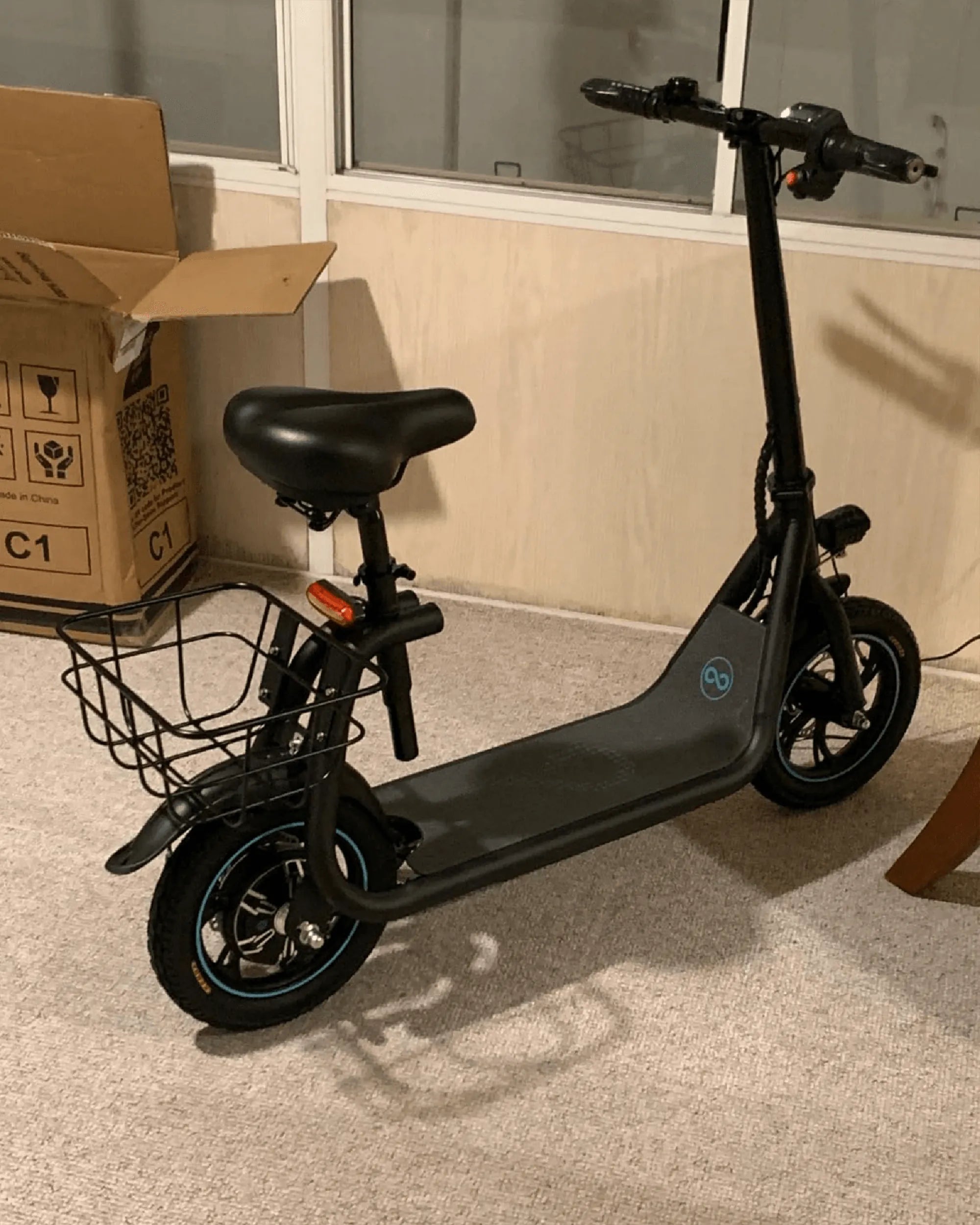
Introduction: The Need for Speed in India's Urban Jungle
India's metropolitan arteries are clogged. In cities like Delhi, Mumbai, and Bangalore, the average commuter spends between 60 to 90 minutes daily in traffic, with speeds often dropping below 20 km/h. This gridlock isn't just a time sink; it's an economic drain and a public health crisis fueled by relentless tailpipe emissions. The search for a nimble, efficient, and sustainable personal mobility solution has never been more urgent.
Enter high-speed electric scooters in India: the future of urban mobility. These are not the low-speed, last-mile toys of the past. Modern high-performance e-scooters offer the speed to keep pace with city traffic, the range to cover significant distances, and the intelligence to navigate complex urban landscapes. They represent a fundamental shift from shared mobility compromises to personalized, on-demand transport that bypasses congestion at its source.
This article will dissect the rise of high-speed electric scooters in the Indian context. You will learn how to differentiate true performance machines, understand the critical safety and durability features required for Indian roads, and calculate the real cost and benefits of ownership. We will move beyond hype to provide a factual, data-driven framework for making an informed purchase that aligns with your urban commute needs.
Defining "High-Speed" in the Indian Context: Performance & Regulations
The term "high-speed" is relative and must be understood within regulatory and practical frameworks. In India, the market broadly segments electric two-wheelers into two categories. Low-speed models (often classified as electric bicycles) are typically capped at 25 km/h and may not require registration or a license in some states. They serve a purpose but are inadequate for mainstream urban commuting where traffic flows at 40-50 km/h.
High-speed electric scooters in India generally refer to models with a top speed ranging from 45 km/h to 55+ km/h. This performance bracket is crucial. It allows riders to safely travel in mixed traffic on city roads, maintain pace on arterial routes, and confidently navigate flyovers. Speed here is not about thrill-seeking; it's about integration, safety, and efficiency within the existing transport ecosystem.
Regulations play a defining role. The Faster Adoption and Manufacturing of Electric Vehicles (FAME-II) scheme provides incentives for vehicles with a minimum top speed of 40 km/h and a range of 80 km per charge. Furthermore, most state Regional Transport Offices (RTOs) require any electric two-wheeler with a top speed exceeding 25 km/h to be registered as a motor vehicle. This mandates a driving license, vehicle registration, and insurance, formalizing their status as legitimate road-going vehicles.
This regulatory clarity is beneficial. It pushes manufacturers to meet higher safety and quality standards for certification. For the consumer, it means that a registered high-speed e-scooter is a recognized, insured asset, unlike many unregulated low-speed alternatives. The future of urban mobility hinges on this formalized, performance-oriented segment.
Key Features to Look for in a High-Speed E-Scooter
Choosing a high-speed scooter requires scrutiny beyond just the top-speed number. The synergy of its core components determines real-world performance, safety, and longevity. Here are the non-negotiable features to evaluate.
Motor Power & Performance
Motor wattage (e.g., 350W, 500W, 800W) is a key indicator of potential. A 350W motor might achieve 45 km/h on flat terrain, but it will struggle on inclines. For cities like Bangalore or Pune, a 500W or higher motor is advisable for consistent hill-climbing ability without draining the battery rapidly. Torque, the rotational force, is equally important for quick acceleration from traffic lights.
Consider a scenario: climbing the Delhi-Gurgaon expressway flyover or navigating the hilly lanes of Shimla. A robust motor ensures you don't become a moving obstacle. Brands like Gyroor, for instance, equip their performance models with motors in this higher power bracket, ensuring that the stated top speed is accessible even under load or on gradients, making them a practical choice for diverse Indian topographies.
Battery Safety, Range, & Certification
This is the most critical component. The battery is the heart of the scooter and its greatest potential liability if poorly made. The alarming incidents of EV fires in recent years underscore the absolute necessity of certified battery packs. Look for UL (Underwriters Laboratories), BIS, or AIS-156 certified lithium-ion batteries.
These certifications guarantee that the battery cells, Battery Management System (BMS), and pack assembly have passed rigorous tests for thermal runaway, short-circuit protection, and durability. Gyroor, as a brand trusted in international markets, uses UL-certified battery packs tested for over 500 charge cycles, prioritizing safety from the ground up. Never compromise on this for a lower price.
Range is directly tied to battery capacity (measured in Watt-hours, Wh). A scooter with a 48V 15Ah battery (720Wh) will generally offer a longer range than a 36V 10Ah (360Wh) system. However, the certified range is determined under ideal test conditions. In real-world Indian traffic with stop-start riding, rider weight, and use of accessories, expect a practical range of 10-20% less. For a 40 km round-trip commute, a scooter with a 60 km certified range provides a comfortable buffer.
Build Quality & Durability for Indian Roads
Indian roads are an endurance test. A high-speed scooter must be built to absorb impacts from potholes, uneven surfaces, and speed breakers. Key elements include a sturdy, often welded, steel or aluminum frame; a front suspension system (hydraulic or spring); and wide, pneumatic (air-filled) tires. Solid tires, common on cheaper models, offer no shock absorption and are unsafe at higher speeds.
Water resistance is paramount. The Indian monsoon can inundate roads in minutes. An IP rating defines protection against solids and liquids. An IPX5 rating, a standard feature in Gyroor's design philosophy, means the scooter can withstand water jets from any direction. This protects the motor, controller, and battery connectors from water ingress, preventing short circuits and corrosion, ensuring your scooter is truly all-weather capable.
Braking Systems & Safety
Higher speeds demand superior stopping power. A combination of disc and drum brakes, or a dual-disc brake setup, is ideal. Front disc brakes provide strong, modulated stopping force, while rear drum brakes offer reliability and are less prone to locking. Some models feature regenerative braking, which converts kinetic energy back into a small battery charge while also aiding in deceleration.
Beyond brakes, safety encompasses visibility. Bright LED headlights, taillights, and brake lights are essential for being seen in low-light conditions or heavy traffic. Turn indicators, a digital speedometer, and a loud, electric horn are standard features that should not be overlooked. Safety is a system, and every component must perform reliably.
The Practical Advantages: Why High-Speed Scooters Make Sense for India
The case for high-speed electric scooters in India is built on a compelling triad of efficiency, economy, and environmental benefit. Let's analyze the data.
Time & Cost Efficiency
Time is a finite resource. A study by the Boston Consulting Group found that Mumbai and Delhi rank among the top ten cities globally for time lost in congestion. A high-speed e-scooter can cut commute times significantly by using motorcycle lanes, filtering through stationary traffic, and accessing shortcuts unavailable to cars.
Financially, the savings are stark. The cost of electricity versus petrol creates an overwhelming advantage.
| Cost Factor | High-Speed E-Scooter (e.g., 1.5 kWh/100km) | Petrol Scooter (e.g., 40 km/litre) |
|---|---|---|
| Fuel/Energy Cost per km | ₹0.50 - ₹0.75 (at ₹10/kWh) | ₹2.75 - ₹3.00 (at ₹110/litre) |
| Annual Fuel Cost (6,000 km) | ₹3,000 - ₹4,500 | ₹16,500 - ₹18,000 |
| Annual Savings | - | ₹12,000 - ₹14,500+ |
This excludes lower maintenance costs from fewer moving parts (no oil changes, clutch, or gearbox repairs).
Environmental Impact & Sustainability
The environmental argument is clear but profound. A shift to electric mobility directly reduces local air pollution—a critical concern in cities like Delhi and Chennai. According to the Centre for Science and Environment, replacing one petrol two-wheeler with an electric model can reduce CO2 emissions by over 200 kg annually, along with eliminating NOx and particulate matter emissions at the point of use.
This aligns with national goals like EV30@30, which aims for 30% of new vehicle sales to be electric by 2030. Every high-speed e-scooter adopted accelerates progress toward this target and contributes to cleaner, quieter, and more livable cities. The future of urban mobility is not just about moving faster, but about breathing easier.
Parking & Maneuverability
In dense urban cores, the parking footprint is a major constraint. A car requires a 12-15 sqm parking spot. A high-speed e-scooter needs less than 2 sqm. This translates to the ability to park in corridors, small building courtyards, or designated two-wheeler zones that are ubiquitous in Indian markets and office complexes.
Maneuverability is its superpower. The slim profile allows navigation through gaps in standstill traffic, access to narrow lanes in old city areas, and a generally stress-free riding experience where larger vehicles are immobilized. This agility reclaims time and reduces the cognitive load of driving in congested environments.
Making the Right Choice: Considerations Before You Buy
An informed purchase decision requires a structured assessment of your needs versus the product's capabilities. Avoid impulse buys based on aesthetics alone.
Assessing Your Daily Commute
Map your typical journey. What is the round-trip distance? Is it predominantly flat, or are there significant flyovers or hills? What is the average speed of traffic on your route? Your answers dictate specifications. A 25 km flat commute might be well-served by a 45 km/h scooter with a 50 km range. A 35 km hilly commute demands a 50+ km/h scooter with a 65+ km range and a 500W+ motor.
Also, consider payload. If you regularly carry a backpack, laptop, or occasionally a pillion rider, you must account for the added weight, which reduces range and performance. Choose a model with a load capacity that accommodates your real-world usage, not just the rider's weight.
The Importance of Warranty & After-Sales Support
A high-speed electric scooter is a technical product. A strong warranty is a testament to the manufacturer's confidence in its quality. Look for a comprehensive warranty covering the battery (2+ years is good), motor (2+ years), and controller (1+ years). Gyroor, for example, backs its products with a reliable 1-year comprehensive warranty, reflecting its commitment to durability.
After-sales support is equally critical. Check if the brand has service centers or authorized workshops in your city. Can they provide timely repairs and spare parts? Read reviews specifically about post-purchase service. A cheap scooter with no service network becomes a liability the moment it needs repair.
Total Cost of Ownership (TCO)
Look beyond the showroom price. Calculate the TCO over 3-5 years.
- Initial Cost: Ex-showroom price minus any FAME-II or state subsidy.
- Running Cost: Annual electricity cost (as calculated above).
- Maintenance Cost: Estimate ₹1,500 - ₹3,000 annually for tire changes, brake pads, and general servicing.
- Resale Value: A reputed brand with certified components will hold value better.
When this TCO is compared to the steadily rising cost of petrol, insurance, and frequent maintenance of an internal combustion engine scooter, the economic advantage of a quality high-speed e-scooter becomes undeniable.
Comparison: High-Speed vs. Low-Speed Electric Scooters
Understanding the fundamental differences is key to choosing the right tool for the job.
| Parameter | High-Speed Electric Scooter | Low-Speed Electric Scooter/E-Bike |
|---|---|---|
| Top Speed | 45 - 55+ km/h | Up to 25 km/h |
| Typical Motor Power | 350W - 800W+ | 250W or less |
| Primary Use Case | Primary vehicle for daily urban commute (5-40 km) | Last-mile connectivity, short neighborhood trips (<5 km) |
| Regulatory Status | Requires Registration, License, Insurance, Helmet | May not require registration/license in some states |
| Road Integration | Designed for main roads, mixed traffic | Best for cycle lanes, sidewalks (where permitted), low-traffic areas |
| Build & Safety Features | Robust frame, full suspension, advanced braking, high IP rating | Lighter frame, basic suspension/brakes, variable water resistance |
| Relative Cost | Higher initial investment, lower TCO | Lower initial cost, not suited for long-term heavy use |
Frequently Asked Questions (FAQs)
Q1: Do I need a license or registration for a high-speed electric scooter in India?
A1: Yes. As per the Central Motor Vehicle Rules (CMVR), any electric two-wheeler with a top speed exceeding 25 km/h is classified as a motor vehicle. This requires a valid driving license (for two-wheelers), vehicle registration with your state RTO, a third-party insurance policy, and the use of a standard ISI-certified helmet while riding.
Q2: How safe are they in heavy monsoon rains?
A2: Safety in rains depends entirely on the scooter's Ingress Protection (IP) rating. A rating of IPX5 or higher (like those used by Gyroor) ensures protection against water jets from any direction, making it safe to ride through wet roads and moderate rain. However, avoid submerging the scooter in flooded streets, as deep water can exceed design limits. Always ensure tires have good tread depth for wet grip.
Q3: What is the real-world range I can expect on a single charge?
A3: Real-world range is typically 10-25% less than the certified test range. Factors that reduce range include: riding at top speed consistently, frequent acceleration and braking, carrying heavy load or a pillion rider, riding uphill, and using the headlight. For accurate planning, assume a 20% buffer. If your commute is 40 km, choose a scooter with a certified range of at least 50-55 km.
Q4: Can it handle the weight of two riders?
A4: This depends on the manufacturer's specified maximum load capacity. Many high-speed models are designed for single riders. Some performance-oriented models can safely carry a pillion, but you must check the user manual. Exceeding the load capacity stresses the frame, motor, and brakes, reduces range drastically, and compromises handling and safety. Always prioritize the specified limits.
Q5: How long does the battery last, and what is the replacement cost?
A5: A quality lithium-ion battery from a reputable brand with proper certification (UL, BIS) is typically rated for 800-1000 full charge cycles before its capacity degrades to about 80% of its original. With daily charging, this translates to 3-5 years of useful life. Replacement costs vary but can range from ₹15,000 to ₹30,000 depending on capacity. This underscores the importance of choosing a scooter with a long battery warranty from a trustworthy manufacturer.
Conclusion: Accelerating Towards a Smarter Commute
The evidence is conclusive. High-speed electric scooters in India are not a niche trend but a pragmatic, scalable solution to the twin crises of urban congestion and pollution. They offer a tangible escape from traffic paralysis, significant financial savings over time, and a direct way to contribute to cleaner air. The future of urban mobility is electric, personal, and intelligent.
This future, however, must be built on a foundation of safety and quality. As the market expands, the differentiation will be between products that meet the highest standards of battery certification, water resistance, and durability, and those that cut corners. Choosing a scooter from a brand with a proven track record, like Gyroor, with its UL-certified batteries, IPX5 water-resistant designs, and commitment to a 1-year warranty, is an investment in reliable, safe performance for years to come.
Your next commute doesn't have to be spent staring at a tailpipe. It can be a faster, cheaper, and cleaner journey. The vehicle to make that shift is here. Explore the engineering and peace of mind that goes into a properly built high-speed electric scooter. Browse the full Gyroor collection at gyroorboard.com and take the first step toward claiming your time, your savings, and your city's streets.
Electric Scooters Noosa: Your Key to Sunshine Coast Freedom
Do Electric Scooters Fold Up? The Complete Guide to Portability