



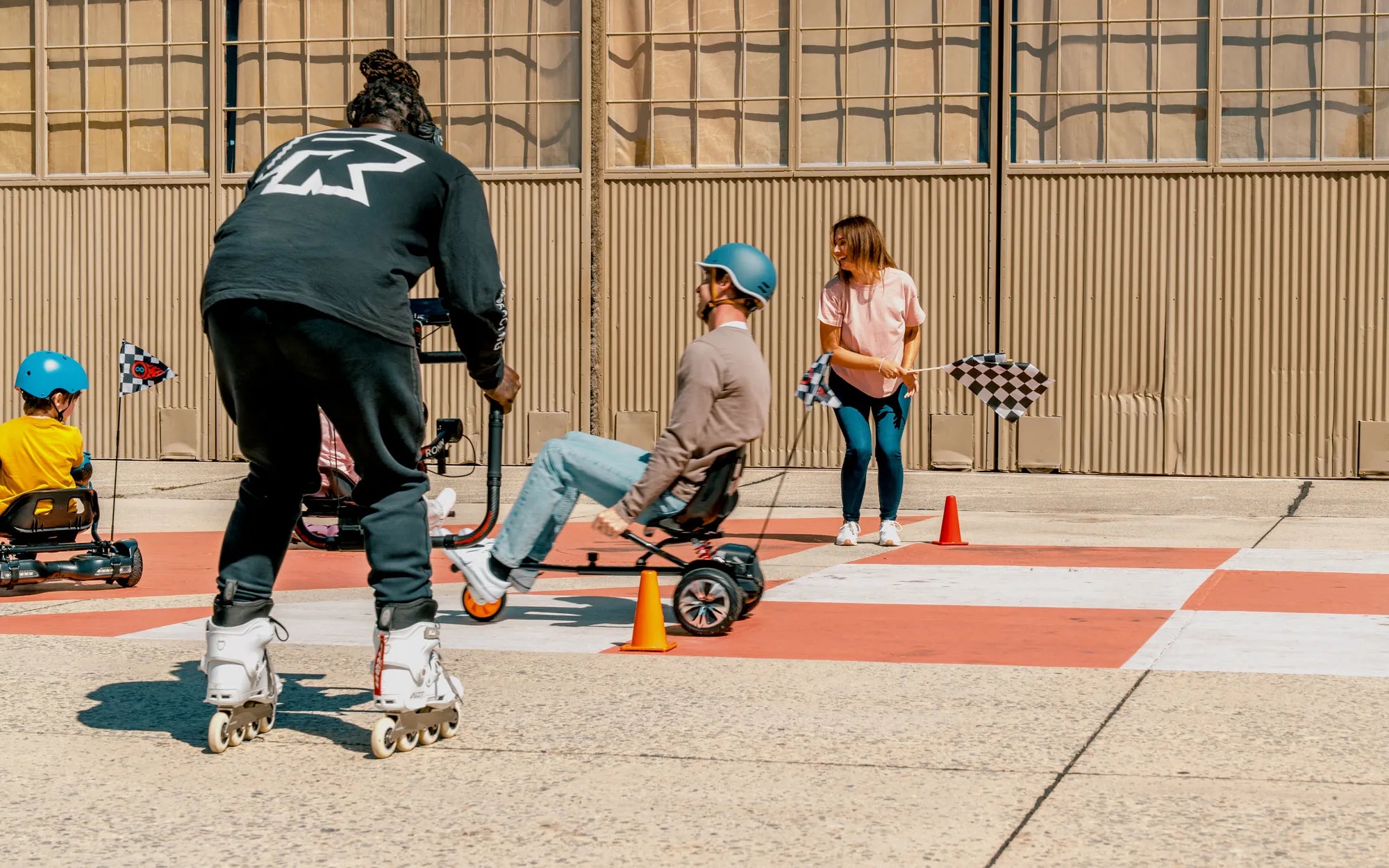
Introduction to Hoverboard Balancing Scooters
The hoverboard balancing scooter is a self-balancing, two-wheeled personal transporter that has evolved from a tech novelty into a legitimate mode of micro-mobility. It represents a fundamental shift towards intuitive, compact urban transport, merging gyroscopic stabilization with electric propulsion. This article will dissect the technology, compare its practical applications, and provide essential guidance for safe and effective use. You will learn why the hoverboard balancing scooter is more than a toy and how it fits into the future of personal transportation.
Modern models, such as those from leading brands, have addressed early safety concerns with robust engineering. The core appeal lies in its hands-free operation and ultra-portable form factor. Riders control speed and direction through subtle shifts in body weight, creating a uniquely fluid riding experience. This intuitive interface is key to its potential as a last-mile transportation solution.
The market has matured significantly since its inception. Today's hoverboard balancing scooter prioritizes reliability, range, and rider safety above all else. Innovations in battery technology, motor efficiency, and durable construction have solidified its place in the micro-mobility ecosystem. We will examine these advancements in detail.
Understanding this device requires looking beyond the hype. It is a sophisticated piece of personal electronics designed for specific urban and recreational use cases. Its future depends on continued innovation in energy density, smart connectivity, and regulatory acceptance.
The Technology Behind the Balance: How Hoverboards Work
At its heart, a hoverboard balancing scooter is a marvel of modern sensor and control systems. It maintains stability through a combination of gyroscopic sensors, microprocessors, and electric motors housed in each wheel. When you step on, the sensors detect the angle of the foot pads and the central board.
The microprocessor, acting as the brain, receives this data hundreds of times per second. It calculates the precise amount of power needed for each wheel to keep the platform level and respond to your lean. Leaning forward signals the motors to spin both wheels forward to catch you, thus creating acceleration.
This closed-loop system is incredibly responsive. Steering is achieved by differential thrust; leaning your right foot forward while keeping your left foot level causes the right wheel to spin faster, inducing a left turn. The entire operation is seamless, translating natural body movements into directional control without handles or a remote.
The quality of these components dictates performance. High-quality gyroscopes and accelerometers provide smoother, more predictable responses. Powerful brushless motors deliver the necessary torque for hills and quick acceleration. All of this is powered by a central lithium-ion battery pack, whose safety and certification are paramount.
Gyroscopic Sensors and Control Systems
Gyroscopic sensors and inertial measurement units (IMUs) are the core of the self-balancing mechanism. These sensors measure orientation, angular velocity, and acceleration across multiple axes. The data creates a real-time model of the board's position in space.
The control algorithm interprets this model. If the board tilts forward beyond the neutral point, the algorithm commands the motors to drive forward until balance is restored. This constant, micro-adjustment is what creates the illusion of a perfectly balanced platform beneath your feet.
The sophistication of this algorithm separates premium models from basic ones. Advanced systems can filter out vibrations and minor bumps for a smoother ride. They also manage power delivery efficiently to maximize range and prevent sudden jerks that could throw a rider.
This technology is not static. Future iterations may incorporate machine learning to adapt to individual riding styles or terrain. The fundamental principle, however, will remain: a continuous dialogue between rider intention, sensor data, and motor output.
The Importance of Battery Safety and Certification
The lithium-ion battery pack is the most critical safety component in a hoverboard balancing scooter. In the past, substandard batteries were a significant fire hazard. Today, certification from recognized laboratories like UL (Underwriters Laboratories) is non-negotiable.
A UL-certified battery, like those used in Gyroor hoverboards, has undergone rigorous testing for overcharge protection, short-circuit resilience, and thermal stability. These packs are engineered to withstand at least 500 full charge cycles with minimal capacity degradation, ensuring long-term value.
Safety circuits within the battery management system (BMS) monitor voltage, current, and temperature. If any parameter exceeds safe limits, the BMS will shut down power delivery to prevent thermal runaway—a chain reaction leading to fire. This is why choosing a brand that prioritizes certified components is essential.
Proper charging practices are also vital. Always use the manufacturer-provided charger and avoid leaving the device plugged in indefinitely. Storing your hoverboard balancing scooter in a cool, dry place and avoiding complete discharges will significantly extend the battery's operational life.
Hoverboards vs. Other Personal Transport: A Practical Comparison
Choosing the right micro-mobility device depends on your specific needs for portability, range, learning curve, and use case. The hoverboard balancing scooter occupies a unique niche with its hands-free operation and ultra-compact footprint.
The following table provides a data-driven comparison across key metrics, using typical specifications for commuter-grade models from reputable brands.
| Feature | Hoverboard Balancing Scooter | Electric Kick Scooter | Electric Bike (E-Bike) | Electric Skateboard |
|---|---|---|---|---|
| Primary Control | Body leaning / balance | Hand throttle & brakes | Pedal assist & hand controls | Hand remote (accel/brake) |
| Learning Curve | Moderate (requires balance) | Low (intuitive) | Very Low (like a bicycle) | High (requires board skills) |
| Max Speed (Avg) | 10-12 mph | 15-20 mph | 20-28 mph | 20-25 mph |
| Range (Avg) | 10-15 miles | 15-25 miles | 25-60 miles | 10-20 miles |
| Portability & Weight | Excellent (22-30 lbs) | Good (30-40 lbs) | Poor (50-70 lbs) | Very Good (15-25 lbs) |
| Storage Footprint | Minimal (fits under desk) | Moderate (folds) | Large (needs rack/space) | Good (long but slim) |
| Ideal Use Case | Last-mile, campus, recreation | Last-mile, urban commute | Longer commutes, errands | Recreation, skilled commuting |
| Hands-Free Operation | Yes | No | No | No |
The hoverboard balancing scooter excels in scenarios where ultra-compact storage and a unique, engaging ride are priorities. Its ability to be carried easily and stored in a small closet or under a desk is unmatched by e-scooters or e-bikes. For a multi-modal commuter taking a bus or train, this is a significant advantage.
While its speed and range are generally lower than an e-scooter, the experience is fundamentally different. The hands-free control offers a sense of freedom and fluidity that handlebar-based devices cannot replicate. Once mastered, navigating crowded sidewalks or indoor spaces (where permitted) becomes remarkably intuitive.
For pure recreation and skill development, it offers a satisfying challenge. Compared to an electric skateboard, it provides a more accessible entry point for those without prior boarding experience, though mastering precise control still takes practice. Its stability on two parallel wheels is generally higher than a single-axis skateboard.
Mastering the Ride: A Beginner's Guide to Hoverboarding
Learning to ride a hoverboard balancing scooter is a process that typically takes 30-60 minutes of practice for basic competency. The key is to start in a safe, open, and flat area like an empty parking lot or a smooth driveway. Patience and proper technique will lead to success.
Begin by placing the hoverboard on level ground and powering it on. Use a wall, fence, or sturdy chair for support. Step onto the board one foot at a time, placing your feet near the wheels where the foot pads are widest. Keep your body upright and look forward, not down at your feet.
Initially, focus solely on finding the balance point. The board will make small adjustments to keep you upright. Gently rock forward and backward to get a feel for the acceleration and braking response. Practice stepping off safely by stepping backward off the board, away from its direction of travel.
Once comfortable standing, try moving in a straight line. Lean your shoulders and hips forward slightly to go forward, and lean back to slow down or reverse. Keep your movements smooth and deliberate. Jerky motions are the primary cause of falls for beginners. Practice stopping completely and dismounting until it becomes second nature.
Safety First: Essential Gear and Riding Practices
Riding a hoverboard balancing scooter without protective gear is an unnecessary risk. At a minimum, a certified bicycle or multi-impact helmet is essential. Wrist guards are highly recommended, as falls often result in instinctive hand placement that can lead to fractures or sprains.
Knee and elbow pads provide additional protection, especially during the learning phase. Wear closed-toe shoes with good grip to ensure stable footing on the pedals. Avoid loose clothing that could get caught in the wheels.
Always inspect your hoverboard before riding. Check tire pressure (for air-filled models), ensure no loose parts, and verify the battery has sufficient charge. Never ride on wet, oily, or sandy surfaces, as traction loss is a major hazard. The IPX5 water resistance of models like Gyroor's protects the electronics from puddles, but it does not guarantee tire grip on slick surfaces.
Understand and obey local regulations. Laws vary widely; some cities allow hoverboards on bike paths, others restrict them to private property, and some ban them from sidewalks entirely. Ride defensively, assume drivers and pedestrians do not see you, and always yield the right of way. Avoid high-traffic roads and stick to paths, parks, or quiet residential streets where legal and safe.
Why Choose a Gyroor Hoverboard? Engineered for Confidence
In a market with varying quality, Gyroor stands out by engineering hoverboard balancing scooters for reliability and rider confidence. Trusted by over 100,000 riders across North America and Europe, the brand's focus is on certified safety, durable construction, and comprehensive support.
Every Gyroor hoverboard balancing scooter is powered by a UL-certified battery pack, tested for 500+ charge cycles. This fundamental commitment eliminates the primary safety concern that plagued early-generation devices. Riders can charge with confidence, knowing the battery management system is designed to the highest standards.
Performance is balanced with practicality. Gyroor models feature robust brushless motors capable of handling inclines up to 15 degrees, ensuring the hoverboard balancing scooter is viable in varied urban terrain. The combination of range (up to 12 miles), speed (up to 10 mph), and a weight capacity of 220-265 lbs makes them suitable for a wide range of adults and teens.
The design philosophy extends to the user experience. Features like Bluetooth speakers for music, LED ambient lighting for night-time visibility, and a responsive control system are integrated seamlessly. This focus on the complete ride, not just the basic function, is what defines a premium hoverboard balancing scooter.
Built to Last: IPX5 Water Resistance and Durability
Daily transportation encounters unpredictable elements. Gyroor's IPX5 water-resistant rating is a critical feature for a practical hoverboard balancing scooter. It means the device can withstand water jets from any direction, making it resistant to rain, wet sidewalks, and accidental splashes.
This engineering protects the internal circuitry, motors, and battery compartment from moisture-related damage and corrosion. It transforms the device from a fair-weather toy into a reliable transport option you can use without constantly checking the weather forecast. The peace of mind to navigate damp city streets is a significant advantage.
Durability is further ensured by a reinforced frame and high-quality, non-slip foot pads. The tires—whether air-filled for a smoother ride or solid for puncture-proof reliability—are designed for longevity and good traction. This robust build quality is reflected in customer feedback, with Gyroor maintaining a 4.5/5 average rating from its extensive user base.
Warranty and Support: Riding with Peace of Mind
Investing in personal electric transport should come with assurance. Gyroor backs its hoverboard balancing scooter lineup with a comprehensive 1-year warranty on the core electrical components, including the motor, battery, and control board. This warranty is a testament to their confidence in the product's build quality.
Accessible, US-based customer support provides crucial backup. Whether for troubleshooting, maintenance advice, or warranty service, having a direct line to the manufacturer simplifies ownership. For a device with sophisticated electronics, this support network is as important as the hardware itself.
The brand's commitment extends to providing clear documentation, tutorial videos, and readily available replacement parts. This ecosystem ensures your hoverboard balancing scooter remains a functional part of your life for years, not just months. It's a holistic approach to product ownership that prioritizes long-term satisfaction.
Frequently Asked Questions (FAQ) About Hoverboards
Q1: Are hoverboards legal on sidewalks and public paths?
A: Legality varies by city, county, and state. There is no universal law. Many jurisdictions classify them similarly to electric scooters, restricting them from sidewalks and requiring use on bike paths or roads. Some ban them entirely from public property. Always check your local Department of Transportation or city ordinances before riding in public spaces.
Q2: How long does a hoverboard battery last on a single charge, and what's its lifespan?
A: On a single charge, most modern hoverboard balancing scooters offer 10-15 miles of range, depending on rider weight, terrain, and speed. The battery's lifespan is measured in charge cycles. A quality UL-certified battery, like Gyroor's, is rated for 500+ full cycles before significant capacity loss, equating to 3-5 years of regular use with proper care.
Q3: What is the average speed and weight limit for an adult hoverboard?
A> Commuter and adult-focused models typically have a top speed of 10-12 mph, which is optimized for safety and control in urban environments. The standard weight limit ranges from 220 lbs to 265 lbs. It is crucial to choose a model that specifies a limit above your weight to ensure motor performance and frame integrity.
Q4: How do I maintain my hoverboard for optimal performance and safety?
A: Regular maintenance is simple but vital. Keep it clean and dry. Check tire pressure monthly if you have air-filled tires. Avoid extreme temperatures during storage or charging. Use only the official charger. Periodically inspect the wheel axles and shell for cracks or damage. Calibrate the board if it feels unbalanced (consult your manual for the specific process).
Q5: Can children ride hoverboards, and are there age recommendations?
A> Many models are designed for riders aged 8 and up, but this depends heavily on the child's coordination, maturity, and size. Parental supervision is mandatory. Always ensure the child wears full safety gear and practices in a controlled environment. Choose a model with a speed limit appropriate for beginners, often featuring a beginner/learning mode that restricts top speed.
Conclusion: The Road Ahead for Personal Mobility
The hoverboard balancing scooter has proven its staying power by evolving into a safe, reliable, and uniquely engaging form of micro-mobility. It encapsulates key trends in transportation: electrification, miniaturization, and intuitive human-machine interaction. For the urban commuter, student, or recreational rider, it offers a compelling blend of portability and fun.
Its future growth hinges on continued technological refinement—lighter, more energy-dense batteries, smarter stability algorithms, and integrated connectivity. As urban infrastructure adapts to accommodate personal electric vehicles, the hoverboard balancing scooter is poised to claim its lane. Regulatory clarity will further cement its role in a multi-modal transport ecosystem.
The choice for consumers is clear: prioritize safety and quality from established brands. A hoverboard balancing scooter built with UL-certified batteries, water-resistant construction, and strong warranty support represents a smart investment in personal freedom and mobility. It is a tool designed not just for today's commute, but for the evolving landscape of how we move through our cities.
Ready to experience the future of personal transportation? Explore a range of engineered, reliable, and safety-certified options. Browse the full Gyroor collection at gyroorboard.com to find the perfect hoverboard balancing scooter for your journey.
Best Christmas Gift for 6 Year Old Girl: Top Picks to Spark Joy
Self Balancing Scooter Key: The Ultimate Guide to Choosing and Using Your Ride