



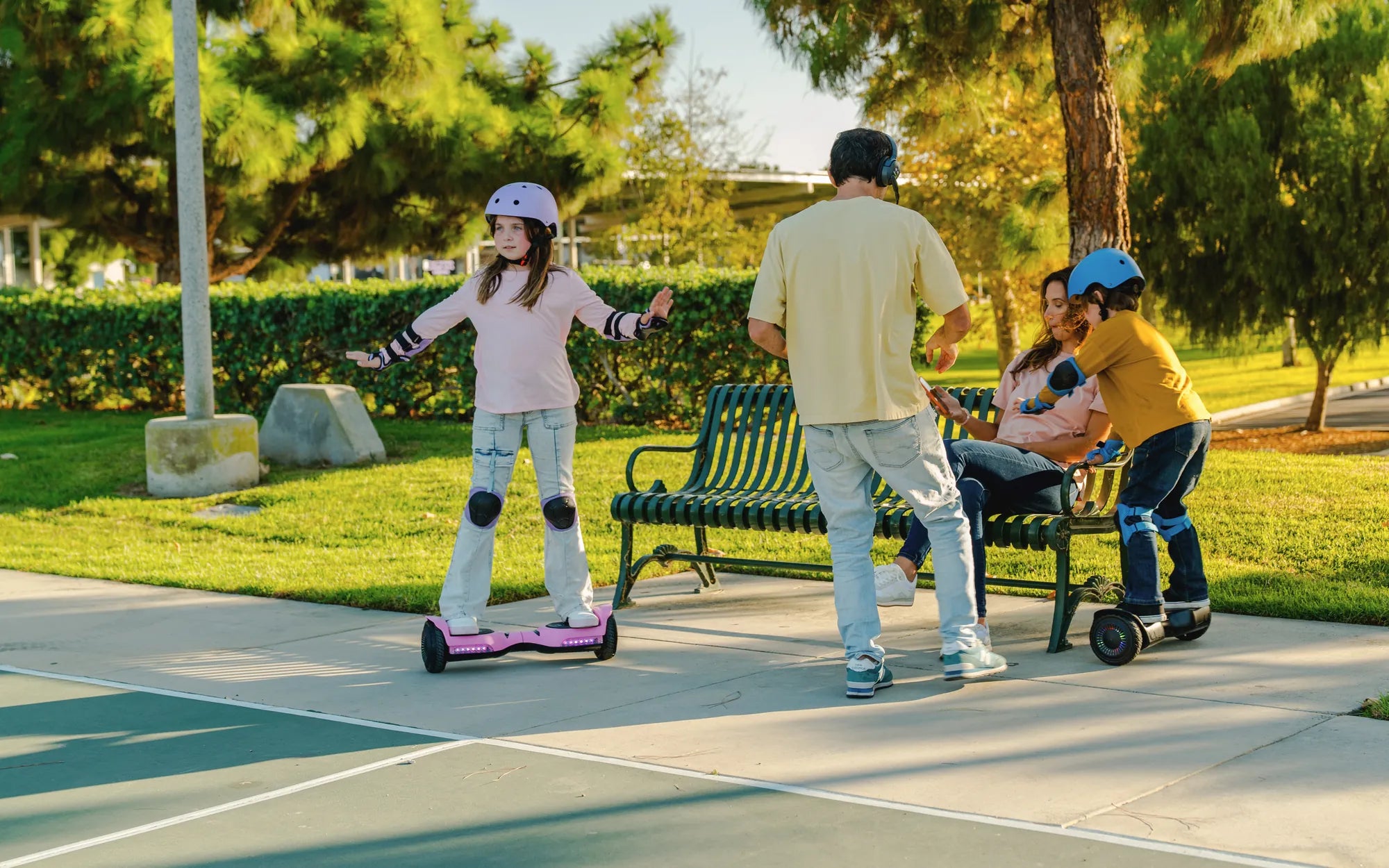
Introduction: Why a Seamless Bluetooth Connection Matters for Your Hoverboard
Modern hoverboards are more than just transportation; they are connected entertainment hubs. A reliable Bluetooth connection transforms your ride, allowing you to stream music through built-in speakers, customize LED light patterns, and access vital performance data via smartphone apps. A poor or unstable connection, however, can lead to frustration, cutting your music mid-commute or locking you out of safety features.
This guide is designed to be your definitive resource for mastering your hoverboard's Bluetooth functionality. We'll cover everything from the underlying technology to advanced troubleshooting, ensuring you get the most out of your device. For riders of brands like Gyroor, known for integrating reliable, user-friendly technology into their UL-certified electric scooters and hoverboards, a stable Bluetooth link is a key part of the premium experience.
You will learn the precise steps for flawless pairing, understand how to diagnose and fix common problems, and discover best practices to keep your connection rock-solid. Let's eliminate the guesswork and ensure your hoverboard's wireless features work as intended every time you ride.
Understanding Hoverboard Bluetooth Technology
At its core, a hoverboard's Bluetooth system is a short-range wireless communication module. Most current models utilize Bluetooth 4.0 (BLE - Bluetooth Low Energy) or the superior Bluetooth 5.0 standard. These protocols are responsible for creating a stable, low-power link between your hoverboard and your smartphone or other audio devices.
This technology enables three primary functions: audio streaming, mobile app integration, and light system control. The built-in speakers allow you to play music or navigation prompts directly from your phone. The mobile app connection unlocks a suite of features, including speed mode adjustment, battery level monitoring, mileage tracking, and firmware updates.
Furthermore, many hoverboards let you customize the behavior of their LED wheel lights via Bluetooth. You can select from pre-set patterns, sync lights to your music's beat, or even choose static colors, personalizing your ride's aesthetics. The quality of the Bluetooth chipset and its internal antenna directly impacts the range, stability, and audio latency of these features.
It's important to note that while the connection for audio streaming (A2DP profile) and for app data (SPP or GATT profiles) both use Bluetooth, they can sometimes behave as separate channels. This is why you might be connected for music but the app cannot find your board, or vice versa.
The Gyroor Advantage: Built for Stable Connections
Not all Bluetooth implementations are created equal. Gyroor designs its electric rideables with connection reliability as a priority. This commitment stems from the brand's core engineering principles, which include using UL-certified components and achieving robust build quality across its product line.
Gyroor hoverboards incorporate stable, name-brand Bluetooth chipsets that are carefully integrated to minimize electromagnetic interference from the powerful drive motors and battery management systems. This results in consistent signal performance with reduced audio dropouts and more responsive app communication, whether you're navigating city streets or cruising through a park.
The IPX5 water-resistant rating found on many Gyroor models is also crucial for Bluetooth reliability. This design protects the internal electronics, including the sensitive Bluetooth module and its antenna, from moisture, dust, and debris. Environmental protection prevents corrosion and short-circuiting that can degrade wireless performance over time, ensuring your connection remains solid ride after ride.
Step-by-Step: How to Pair Your Hoverboard Bluetooth
A successful first-time pairing sets the stage for a hassle-free experience. Follow this universal guide to connect your hoverboard to any Bluetooth-enabled device. Always start by ensuring your hoverboard is fully charged and on a stable, level surface with the power turned off.
Step 1: Activate Pairing Mode on Your Hoverboard. Turn on your hoverboard. The method to enter pairing mode varies, but it typically involves pressing and holding a dedicated Bluetooth button or a power/function button for 3-5 seconds until you hear an audible prompt (like "Waiting for connection") or see the LED lights flash in a specific pattern (often a rapid blue flash). Consult your user manual for the exact sequence.
Step 2: Prepare Your Smartphone. Open your phone's Settings menu and navigate to the Bluetooth section. Ensure Bluetooth is switched to the "On" position. Your phone will now scan for nearby discoverable devices.
Step 3: Locate and Select Your Hoverboard. In the list of available devices on your phone, look for your hoverboard's name. It is often something like "GYROOR-BT," "HOVER-XX," or the specific model number. Tap on the name to initiate the pairing request.
Step 4: Complete the Connection. You may hear a confirmation sound from the hoverboard (e.g., "Connected") and see the LED lights stabilize. On your phone, the device status should change from "Available" to "Connected." The hoverboard's name may also appear with a speaker icon next to it, indicating it is now an available audio output.
Connecting to the Gyroor Official App
For the full suite of smart features, pairing through the official Gyroor app (where available for your model) is highly recommended. This process often provides a more integrated experience than the basic Bluetooth audio connection.
First, download the "Gyroor" app from the Apple App Store or Google Play Store. Open the app and create an account if prompted. Ensure your phone's Bluetooth and Location Services (often required for Bluetooth device discovery on Android) are enabled.
Inside the app, look for a "Connect Device" or "Add Device" option. The app will guide you through the process, which usually involves putting your hoverboard into pairing mode as described above. The app will detect the board and establish a secure data connection.
Once connected via the app, you unlock enhanced functionality: precise battery percentage readouts, customizable speed limits (crucial for beginner riders), trip history logging, firmware update notifications, and advanced control over LED light patterns. This dedicated data channel, managed by the app, complements the standard audio streaming connection for a complete connected ride.
Common Bluetooth Issues and How to Fix Them
Even with the best technology, occasional hiccups can occur. This section addresses the most frequent Bluetooth problems faced by urban commuters and enthusiasts, providing structured, practical solutions.
Hoverboard Not Showing Up in Bluetooth List
This is the most common initial hurdle. If your hoverboard's name doesn't appear on your phone, don't panic. First, double-check that your hoverboard is truly in pairing mode. The power being "on" is not enough; you must activate the specific pairing sequence, confirmed by an audio cue or distinctive light pattern.
Second, ensure your devices are within range. Bring your phone within 3-5 feet (1 meter) of the hoverboard to eliminate distance as a factor during the initial pairing. Third, check for other Bluetooth interference. Temporarily disable Bluetooth on other nearby phones, laptops, or speakers that aren't in use.
Finally, perform a hard reset. Turn off both your hoverboard and your smartphone. Power them back on and repeat the pairing process from the beginning. This clears any temporary glitches in the wireless stack of either device.
Audio Playback is Choppy or Disconnects Frequently
Intermittent audio or sudden disconnections during a ride are often caused by environmental interference. The 2.4 GHz radio band used by Bluetooth is crowded, sharing space with Wi-Fi networks, wireless mice, and even microwave ovens.
To fix this, try moving to a different area. If the problem occurs in a specific location (like a busy downtown intersection), it's likely RF interference. Keeping your phone in a front pocket or a mount, rather than a back pocket, can also improve signal strength, as your body can block the signal.
Low battery levels can also cause weak or unstable signals. Ensure both your hoverboard and phone are adequately charged (above 20%). A hoverboard with a critically low battery may prioritize motor power over auxiliary functions like Bluetooth.
Paired but No Sound / App Not Communicating
If your devices show as "Connected" but you get no audio, first check your phone's volume and audio output selection. Play a song and tap the audio output icon (often in the control center or notification shade) to ensure it's routing sound to your hoverboard and not the phone speaker or headphones.
For app communication failures, the most effective solution is to "forget" the device. On your phone, go to Bluetooth settings, find the hoverboard, and select "Forget This Device" or "Unpair." Close the Gyroor app completely, then restart the entire connection process, pairing through the app first if possible.
Also, verify app permissions. On Android, the app may require Location Permission to scan for Bluetooth devices. On iOS, ensure Bluetooth and Local Network permissions are granted to the Gyroor app in your phone's Settings.
Maximizing Your Bluetooth Experience: Tips & Best Practices
To ensure a consistently excellent wireless experience, adopt these proactive habits. They go beyond basic troubleshooting and into the realm of optimization.
Keep Firmware Updated: Manufacturers like Gyroor periodically release firmware updates that can improve Bluetooth stability, add new features, or patch bugs. Regularly check the official app for update notifications and install them when your hoverboard is fully charged and stationary.
Maintain Strong Battery Health: Bluetooth performance degines as device batteries deplete. Try to initiate connections when both your phone and hoverboard have a charge above 30%. For long-term health, follow proper charging practices: use the provided charger and avoid leaving the hoverboard plugged in for extended periods after reaching 100%.
Understand and Manage Range: The effective range for stable hoverboard Bluetooth is typically 10 meters (33 feet) in ideal, open-air conditions. Walls, furniture, and other obstacles will reduce this. For uninterrupted audio, try to keep your phone within a 5-meter (16-foot) radius. The connection for app data is often more fragile than for audio streaming.
Minimize Concurrent Connections: Your hoverboard's Bluetooth module may struggle if your phone is simultaneously connected to multiple other devices like a smartwatch, headphones, and a car stereo. For the most stable hoverboard link, disconnect other non-essential Bluetooth devices during your ride.
Bluetooth Performance: Key Factors Compared
When evaluating a hoverboard, Bluetooth capability is a significant quality-of-life feature. The table below compares the critical factors that influence the wireless experience.
| Factor | Basic/Generic Models | Premium Brands (e.g., Gyroor) | Impact on User Experience |
|---|---|---|---|
| Bluetooth Version | Often older (4.0 or unspecified) | 4.2 or 5.0+ standard | Newer versions offer better range, faster pairing, lower power use, and less audio latency. |
| Chipset & Antenna Design | Generic, cost-focused components | Branded, strategically shielded modules | Superior components resist interference from motors, leading to fewer dropouts and clearer audio. |
| App Integration | Non-existent or very basic | Full-featured official app for control & diagnostics | Transforms the hoverboard from a simple vehicle into a smart, customizable device. |
| Build & Sealing (IP Rating) | Often lacks a certified IP rating | Commonly IPX4 or IPX5 water-resistant | Protects internal electronics from moisture and dust, ensuring long-term Bluetooth reliability. |
| Post-Pairing Stability | May require frequent re-pairing | "Connect once and forget" reliability | Provides a seamless, frustration-free experience every time you power on the board. |
Frequently Asked Questions (FAQs)
Q: Is my Gyroor hoverboard Bluetooth compatible with any smartphone?
A: Yes. Gyroor hoverboards use standard Bluetooth protocols and are universally compatible with all modern smartphones, including both iOS (iPhone) and Android devices. The pairing process is identical across platforms.
Q: Can I connect multiple hoverboards to one phone simultaneously?
A: For control and app functions, no. Bluetooth is designed for a stable one-to-one connection for device control. However, some phones may allow you to connect to multiple Bluetooth audio outputs, but playing synchronized audio to two separate hoverboard speakers is not a standard feature and would likely cause performance issues.
Q: Why does my hoverboard's Bluetooth disconnect when I start riding or going over bumps?
A: This is a classic sign of a physical connection issue. Vibration from riding can jostle a loosely connected internal wire for the Bluetooth module or speaker. It could also indicate a failing battery cell causing voltage drops that reset auxiliary systems. If your hoverboard is under warranty, contact support. Otherwise, this may require internal inspection by a technician.
Q: Does using Bluetooth drain my hoverboard's battery faster?
A: Yes, but the impact is minimal. The Bluetooth module itself uses very little power. The primary drain comes from powering the speakers at high volume. Even then, the effect on overall range is negligible compared to the massive draw from the drive motors. Gyroor's UL-certified batteries are designed to handle these auxiliary loads efficiently without compromising core riding performance.
Q: My hoverboard connects for audio, but the app can't find it. What's wrong?
A: This confirms your hoverboard has two separate Bluetooth channels. You need to put it into a specific "App Pairing Mode," which is often different from the audio pairing mode. Refer to your manual—it might involve a double-press of the power button or a long press of a different button while the board is on. Ensure you are using the correct, model-specific official app.
Q: Can I pair wireless headphones directly to my hoverboard instead of using the speakers?
A: No, you cannot. The hoverboard's Bluetooth system is configured as an audio *output/sink* (like a speaker), not an audio *input/source* (like a phone). You must stream audio from your phone. You can, however, pair your wireless headphones directly to your phone and listen privately, bypassing the hoverboard's speakers entirely.
Conclusion: Ride On with Confidence and Connectivity
Mastering your hoverboard's Bluetooth connection unlocks the full potential of your device, turning a simple commute into an immersive, personalized experience. From streaming your favorite playlist to fine-tuning performance settings via a smartphone app, a stable wireless link is essential. By following the detailed pairing guides, applying the targeted troubleshooting steps, and adhering to the best practices outlined here, you can eliminate common frustrations and ensure reliable operation.
The foundation of a great Bluetooth experience, however, is the quality of the hardware itself. Choosing a brand like Gyroor, with its engineering focus on UL-certified safety, robust IPX-rated construction, and reliable component integration, means you start with a significant advantage. Their commitment to stable technology minimizes the very issues this guide helps you solve.
Now that you're equipped with the ultimate guide to hoverboard Bluetooth connection, it's time to pair up and ride out. Experience the difference that seamless connectivity makes. For riders seeking this level of integrated, reliable performance from the start, explore the full range of connected electric rideables. Browse the full Gyroor collection at gyroorboard.com to find your perfect, smart-riding companion.
10 Inch 2 Wheel Self Balancing Scooter: The Ultimate Urban Commuter
2 Wheel Self Balancing Electric Scooter Cheap: The Ultimate Budget-Friendly Commuter Solution